Published: 29 August 2026. The English Chronicle Desk. The English Chronicle Online.
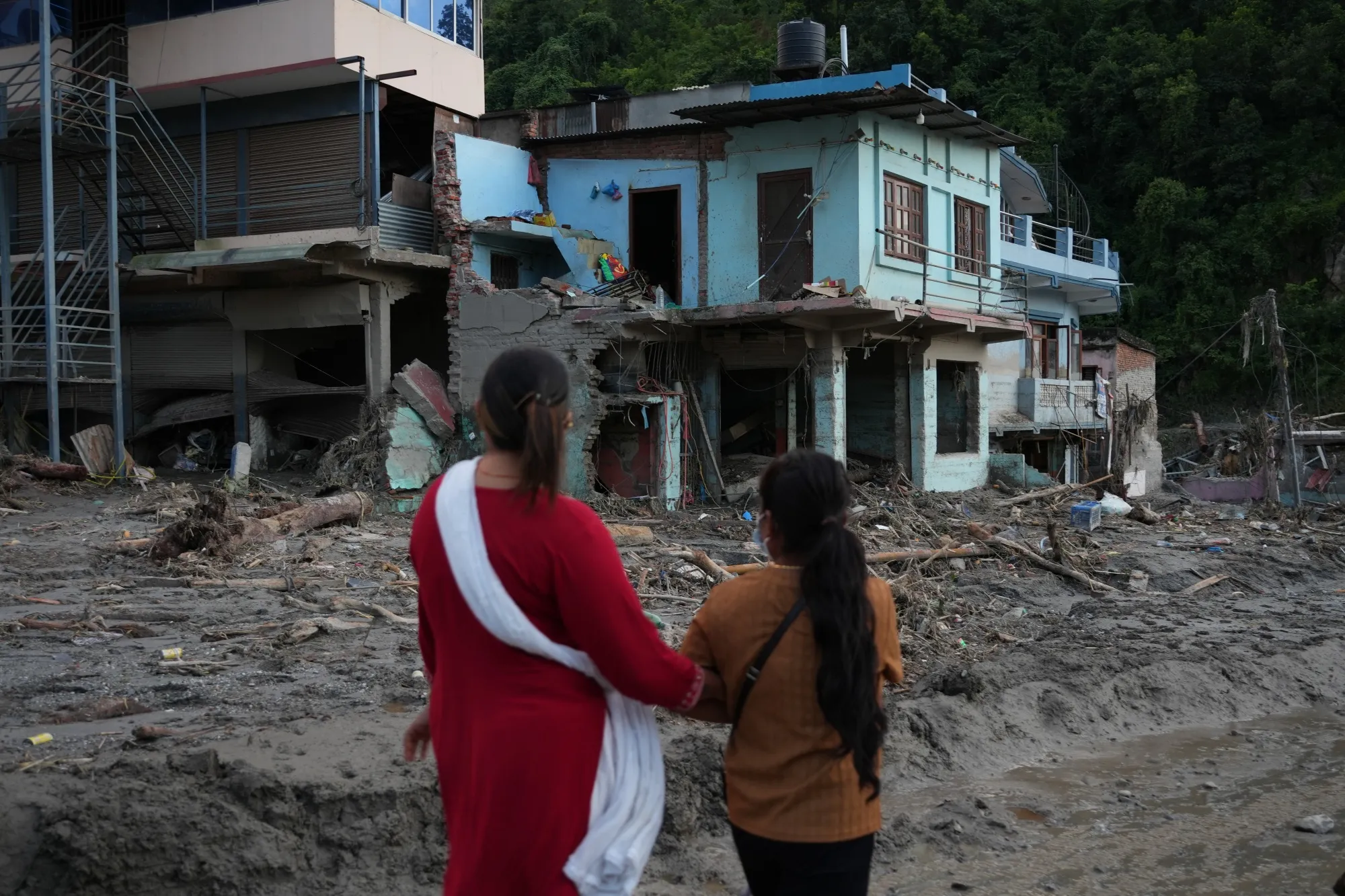
A devastating flash flood along the Nepal-Tibet border has left hundreds dead, thousands missing and entire communities facing an uncertain future, as rescue teams continue searching through vast areas of mud, debris and destroyed infrastructure.
The scale of the disaster became clearer on Saturday after authorities confirmed that the combined number of people missing across Nepal and Tibet had risen to at least 2,478. Nepalese police reported that the death toll in Nepal had climbed to 626, while Chinese authorities had earlier confirmed seven deaths in Tibet.
The catastrophe, which struck the Himalayan border region on Wednesday, has triggered one of the most serious humanitarian emergencies to hit the region in recent years. More than 3,700 people have reportedly been rescued in Nepal, but the search for survivors remains extremely difficult because roads, bridges and communication networks have been severely damaged.
At least 93,000 people are believed to have been affected by the disaster, according to humanitarian assessments. Entire settlements have been damaged or swept away, while thousands of families have been displaced from their homes.

The missing include local residents, hydropower workers, pilgrims, tourists and foreign nationals who had been travelling through the mountainous region. Nepal’s disaster authorities had previously reported that 1,924 people were missing on the Nepalese side of the border, while Chinese authorities said hundreds more remained unaccounted for in Tibet.
The number of foreign nationals missing has added an international dimension to the emergency. Hundreds of foreigners were reported unaccounted for, including tourists and pilgrims travelling towards Mount Kailash, one of the most important sacred sites for Hindu, Buddhist, Jain and Bon religious traditions.
The region was particularly busy with travellers and pilgrims when the disaster struck. Many people were caught with little warning as a massive surge of water, mud and debris swept through valleys and settlements.
Survivors have described scenes of extraordinary destruction. Vehicles were carried away by floodwaters, buildings were buried beneath mud and roads disappeared under landslides and debris.
In one account, a woman travelling by bus with dozens of other passengers described how what initially appeared to be a routine delay quickly turned into a terrifying fight for survival. She recalled fog and smoke-like conditions suddenly engulfing the area before a powerful torrent surged towards the vehicles.
The disaster has also exposed the dangers facing communities living in the fragile Himalayan environment, where extreme weather, unstable slopes, glacial activity and rapidly changing water systems can combine to create catastrophic consequences.
Rescue efforts have been repeatedly complicated by fears of further flooding. Authorities have been monitoring lakes upstream from the disaster zone after debris and landslides blocked rivers and created dangerous accumulations of water.
One of the major concerns has been the possibility that these temporary lakes could burst or overflow, sending another destructive wave downstream. Rescue operations were temporarily affected in some areas because of the continuing flood risk, forcing authorities to balance the urgent need to search for survivors with the safety of emergency personnel.
In Nepal, the army and other emergency teams have been conducting difficult operations in mountainous terrain. Helicopters have been used to reach isolated communities and transport injured survivors to medical facilities.
Rescue teams have also been working to reach people trapped in a tunnel connected to a hydropower project in the flood-hit region. The operation has been described as technically difficult because of thick mud, damaged infrastructure and the unstable conditions surrounding the disaster zone.
Nepal has now indicated that it needs specialised international assistance in certain technical areas, particularly for complex rescue operations and the identification and storage of bodies.
The country’s foreign authorities have also sought assistance with temporary bridge infrastructure to help restore transport and communication links in areas where numerous bridges have been destroyed.
The destruction of roads and bridges has created one of the greatest challenges for relief operations. In many mountainous communities, access is already difficult under normal conditions. The floods have made some of the hardest-hit locations accessible only by air or through dangerous routes across unstable terrain.
The humanitarian consequences are expected to continue long after the immediate rescue operation ends. Thousands of survivors have lost homes, livelihoods and access to essential services.
Emergency supplies including food, clean water and medical assistance are being transported to affected communities as authorities attempt to prevent a wider humanitarian crisis.
The Red Cross and other humanitarian organisations have warned that the full scale of the disaster may not yet be known. Many affected areas remain difficult to access, and the number of casualties could continue to rise as search teams reach more remote locations.
The situation across the border in Tibet has also attracted international attention because information from the affected areas has been limited. Chinese authorities have reported rescue operations and evacuations, including the movement of stranded tourists and residents from dangerous locations.
A Chinese rescue team reportedly reached the heavily damaged Gyirong border crossing area and found extensive destruction. The once-active border complex had been reduced to a landscape of mud, debris and ruins.
Hundreds of people remained unaccounted for in the surrounding area, including foreign nationals who had been travelling through the region.
The disaster has also affected neighbouring countries. Authorities in India reported recovering bodies from rivers flowing downstream from Nepal, raising fears that victims may have been carried vast distances by the powerful floodwaters.
Governments around the world are monitoring the situation as they attempt to establish the whereabouts of their citizens. Australia reported dozens of nationals missing, while the United States and India have also been working to account for citizens affected by the disaster.
For families waiting for news, the uncertainty has become one of the most painful aspects of the tragedy. Relatives have gathered at hospitals and emergency centres, checking lists of missing people and hoping for confirmation that loved ones have survived.
Some families have received encouraging news after people previously listed as missing managed to contact relatives. However, for thousands of others, the wait continues.
Survivors have spoken of losing everything within minutes. Homes, possessions and family members disappeared as floodwaters tore through communities that had existed for generations.
In Nepal’s Rasuwa district and other affected areas, residents who survived by fleeing to higher ground have returned to find villages almost completely destroyed.
The disaster has renewed concerns about the growing vulnerability of Himalayan communities to environmental and climate-related hazards. Scientists have repeatedly warned that warming temperatures can increase risks associated with glaciers, mountain lakes, landslides and extreme rainfall.

Although the precise chain of events behind this catastrophe will continue to be investigated, the destruction has demonstrated the enormous danger posed by sudden changes in the region’s fragile mountain environment.
For now, the immediate priority remains saving lives and finding those still missing. Rescue teams continue to work under dangerous conditions, while authorities monitor rivers and unstable lakes for signs of further flooding.
With at least 2,478 people still unaccounted for and the death toll continuing to rise, the Nepal-Tibet disaster remains a tragedy of extraordinary scale.
For survivors, the recovery will be long and difficult. Rebuilding homes, roads, bridges and communities across the devastated Himalayan region may take years. But as emergency workers continue their search, thousands of families are still holding onto hope that more people can be found alive.
Related News:
 Venezuela Quake Death Toll Surpasses 4,000
 Powerful 7.7-Magnitude Earthquake Hits Eastern Indonesia
 Chornobyl Still at Risk 40 Years After Disaster
 Maldives Cave Diving Tragedy Raises Safety Alarm
 Wildfires Force Mass Evacuations in France And Spain
 Israeli Strike in Southern Lebanon Kills Seven
 Five Years of Taliban Rule Leave Afghanistan in Crisis
 Wildfires rage across Europe as hundreds arrested in France
 Nepal-Tibet Flood Leaves 270 Dead and 1,400 Missing
 Nepal Flood Death Toll Tops 300 as Second Flood Feared
 Nine Killed in Karachi Consulate Protest
 North Korea Fires Missiles Amid US-South Korea Drills
 Cyclone Vaianu Forces Mass Evacuations in New Zealand
 Iran Crisis Tests Trump’s Global Leadership
 Ben Roberts-Smith Denies War Crime Allegations in First Statement
 Southeast Asia Turns to Russia Amid Energy Crisis
 Escobar’s Hippos May Be Moved to India Zoo
 Capitalism ‘Suicidal’, Warns Petro at Climate Summit
 Coalition pushes fossil fuel phaseout plan
 Cartel crackdown raises fears of fresh violence
 US states redraw maps after voting rights ruling
 China Fireworks Factory Blast Kills 21 in Hunan
 Australia pushes Pacific security pact amid China tension
 BJP Sweeps West Bengal in Historic Breakthrough
 US ‘Narco Boat’ Strikes Draw Global Outcry
 Norway Doubles Down on Oil and Gas for Europe Energy Security
 Search Intensifies for Missing Hiker on WA Bibbulmun Track
 Doomsday Clock Nears Midnight Amid Global Crises
 US Awaits Iran Reply on New Ceasefire Proposal
 One Nation Stuns Australia With Historic Farrer Win
 Hormuz Talks Near Critical Stage
 China mine blast death toll rises to 90
 Pope Meets Families in Italy Toxic Waste Zone
 Discontent grows around Putin amid war strain
 UN Issues Urgent Warning: Imminent Return of El Niño
 Germany Summons Chinese Envoy Over Russian Troop Training
 Millions Gather for Khamenei’s Six-Day State Funeral
 New Footage Revives Peter Falconio Mystery
 Olympus Awaits Unesco Heritage Recognition
 Houthis Strike Saudi Arabia as Middle East Tensions Rise
 Taliban global ties grow as rights fears mount
 Seoul proposes historic peace talks to replace Korean War armistice
 Is America Ready for an AOC Presidential Run?
 Vietnam Youth Rally Behind Hanoi ‘Justice Tree’
 Heavy Casualties Feared as Flash Flood Sweeps Nepal-Tibet Border
 Australia Races to Find Tourists Missing in Nepal
 BBC to Apologise Over Edited Trump Speech Amid Backlash
 Greene Pushes Epstein Files Amid Trump Fallout
 Zelenskyy Signs Fighter Jet Deal Amid Russian Drone Attacks
 Shadow Fleet at Sea: Europe’s Battle Against Illicit Oil Shipping
 US Suspends Afghan Immigration After White House Shooting
 ‘Extinct’ Antelope Returns to Sahara, Bringing Hope
 Irish Beach Tragedy: Irish Drown at Whitehaven Beach in Australia
 Sanctioned oil tankers sail Channel amid Russia scrutiny
 Pentagon Signals Reduced Role in Deterring North Korea
 UK and US Drop in Global Corruption Index Rankings
 SA Police Intensify Search in Gus Lamont Case
 Canberra Poster Seizure Sparks Free Speech Row
 Evo Morales Returns After Mysterious Absence
 Jacinda Ardern Moves To Australia Following Her US Fellowships
 Jacinda Ardern Move Sparks Kiwi Reflection
 Middle East Airspace Crisis Strands Thousands
 Kelly Wilkinson Inquest Reveals Bail Failure
 Princess Eugenie steps down as patron of anti-slavery charity
 Injured Mojtaba Khamenei Elevated as Iran Leader
 The Kill Line: A Shifting Vision of the American Dream
 Air Canada CEO Faces Outcry Over Recent Language Misstep
 Extreme Weather: Europe Shivers as Cyclone Narelle Hits
 Asia Turns Back to Coal Amid Middle East Energy Crisis
 Relationship with Trump may be beyond repair, Starmer warned
 Trump’s Six-Week Iranian War: The High Cost of Ignorance
 RFU Backs Borthwick Despite England’s Poor Six Nations
 Trump Rejects Tehran Peace Plan as Regional Truce Crumbles
 NDIS Overhaul Sparks Intense Clash Across Australia
 Britain’s Crowning Butterfly Takes the Nation by Storm
 Fifa Official Under Investigation Over Hand Gesture Controversy
 Grief and Devotion Amidst the Rubble of Nabatieh
 Canada Secure Historic Last 16 Spot with Late Goal
 England and Norway Fans Turn Miami Into World Cup Carnival
 Families Fly to Nepal in Search of 33 Missing Britons