Published: 13 October 2026. The English Chronicle Desk. The English Chronicle Online
The United Kingdom has urged Interpol to reject Argentina’s requests to arrest individuals connected to a major offshore oil development near the Falkland Islands, warning that the measures could be politically motivated and intended to discourage investment in the disputed territory. The diplomatic intervention comes as tensions between London and Buenos Aires intensify over sovereignty, energy exploration and the future economic direction of the South Atlantic islands.
British officials have reportedly written to Interpol’s headquarters in Lyon, France, asking the international policing organisation to exercise caution when considering Argentine requests for so-called red notices. These notices can seek the location and provisional arrest of individuals pending extradition, although they are not international arrest warrants and do not automatically require member countries to detain anyone.
The dispute centres on the Sea Lion oil project in the northern Falkland Islands basin. The development, involving Israeli company Navitas Petroleum and its British partner Rockhopper Exploration, has the potential to transform the islands’ economy. Argentina’s government, led by President Javier Milei, opposes the project and has pursued legal action against the companies involved.

The British government is concerned that Argentina could use criminal proceedings and international policing mechanisms to place pressure on businesses, investors and individuals working in the Falklands. Such measures, London fears, could create uncertainty for people connected to the oil industry and the islands’ wider economy, particularly if they travel internationally.
The request to Interpol reflects growing concern that a longstanding sovereignty dispute is entering a more confrontational phase. Although Argentina has continued to claim the islands, known in the country as Las Malvinas, the current dispute is increasingly linked to commercial development, potential energy revenues and the use of legal instruments to influence activity in the territory.
Andrea Clausen, chief executive of the Falkland Islands government, has acknowledged the potential threat posed by Argentina’s use of Interpol procedures. She expressed hope that the organisation would not take action that could turn a political dispute into an international policing matter.
The islands’ authorities have also examined provisions in Interpol’s constitution to understand how they might apply to requests associated with the oil project. The organisation’s rules prohibit it from undertaking interventions or activities of a political, military, religious or racial character.
According to information reported about the British government’s correspondence, Interpol indicated that it would respect Article 3 of its constitution, which establishes the restriction on political intervention. The provision is central to London’s argument that requests arising from the Falklands dispute require careful scrutiny before being circulated to law enforcement agencies.
Interpol processes red notices as part of its international cooperation system. A notice is a request to locate and provisionally arrest a person while extradition proceedings are considered under the laws of the relevant countries. It is not, by itself, an order that overrides national legal systems. Each member country decides what legal effect to give a notice and whether an arrest can lawfully be made within its jurisdiction.
The scale of the system means that the screening process is significant. Nearly 20,000 red notices were issued during the previous year, according to the information reported in connection with the dispute. Britain’s concern is that politically contentious requests could nevertheless create practical difficulties for those named, even where the notices do not lead to arrests.
A request might affect an individual’s ability to travel, conduct business or engage with international financial institutions. Workers in the Falklands’ oil and fishing industries are understood to be particularly concerned about the possibility of encountering legal problems if they travel to Argentina or other parts of South America where support for Buenos Aires’s sovereignty claim is substantial.
The dispute extends beyond the oil companies themselves. A draft national sovereignty bill introduced in Argentina’s Congress would broaden the potential reach of sanctions to include affiliates of the companies involved, financial intermediaries, shareholders and suppliers. Provisions could also affect people connected with the Falklands fishing industry, a major contributor to the islands’ economy.
If pursued, such measures could have implications for a wide network of commercial relationships. Energy projects depend on investors, contractors, transport providers, financial services and equipment suppliers, while fishing operations rely on access to markets and international business partners. Uncertainty about potential legal consequences could therefore extend well beyond the principal companies involved in Sea Lion.
Milei has repeatedly pledged to oppose the development, arguing for Argentina’s claim to the islands. His government has initiated criminal proceedings against Navitas and Rockhopper, the central companies behind the offshore project. Britain, meanwhile, maintains that the Falkland Islanders’ wishes and the territory’s existing political arrangements must be respected.
The sovereignty dispute has a long and painful history. Argentina invaded the Falkland Islands in 1982, prompting a 74-day war with the United Kingdom. The conflict ended with the surrender of Argentine forces and resulted in the deaths of 649 Argentine military personnel, 255 British service members and three Falkland Islanders.
More than four decades later, the disagreement remains unresolved. Argentina continues to claim sovereignty over the archipelago, which consists of hundreds of islands around 500 kilometres east of the southern Patagonian coast. The UK administers the territory and maintains that its residents have the right to determine their political future.
In a 2013 referendum, 99.8% of participating Falkland Islanders voted to remain a British overseas territory, with only three votes cast against that status. Argentina rejected the referendum as a basis for settling the sovereignty dispute, and the two governments have continued to hold fundamentally different positions.
The current confrontation has added an economic dimension to this longstanding disagreement. Sea Lion could substantially increase the Falklands’ gross domestic product if development proceeds successfully, offering the prospect of new revenues, jobs and investment. For Argentina, the project represents a challenge to its sovereignty claim and an activity its government is determined to oppose.
Buenos Aires is also expected to pursue international arbitration over the oil development under Annex VII of the United Nations Convention on the Law of the Sea, commonly known as UNCLOS. The move follows a deadline issued by Milei on 28 September, when he gave the UK two weeks to halt the project or face legal action. That deadline passed on Monday, with Argentine media reporting that an application for arbitration would follow.
Argentina is expected to argue that British activities violate a United Nations resolution calling on both countries to negotiate their sovereignty dispute and refrain from unilateral changes to the situation. Buenos Aires would seek a binding decision requiring the UK to stop the drilling.
British government sources, however, are confident that an UNCLOS tribunal will not intervene in a dispute fundamentally concerned with territorial sovereignty rather than maritime law. The distinction could prove crucial because an international maritime tribunal’s jurisdiction does not automatically extend to deciding which country owns disputed territory.
Dean Dent, a member of the Falkland Islands Legislative Assembly, told residents at a public meeting that the UK government had assembled a substantial team of legal advisers to respond to Argentina’s anticipated action. He pointed to previous cases in which tribunals had declined to address disputes that primarily concerned sovereignty.
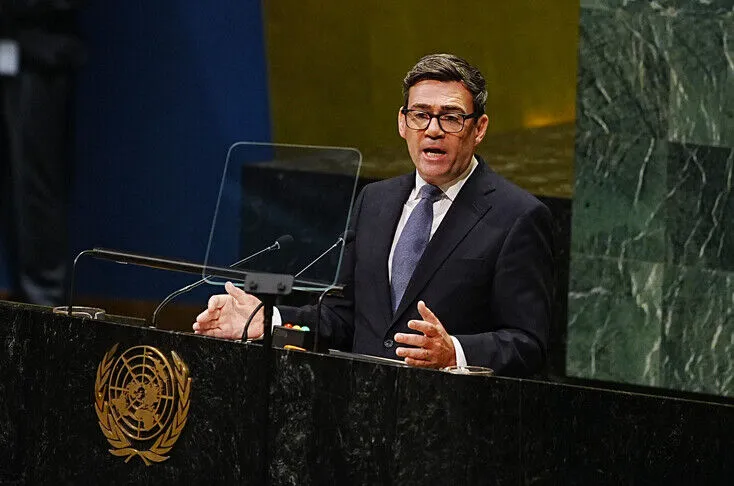
The British government is expected to strengthen its response as the diplomatic and legal confrontation develops. Prime Minister Andy Burnham told parliament on Monday that he had raised the dispute with US President Donald Trump, emphasising the islanders’ clearly expressed wish to remain British.
The Foreign Office had been approached for comment on the reported appeal to Interpol. The outcome of the organisation’s review, the precise scope of any Argentine red notice requests and the progress of the anticipated arbitration proceedings could shape the next stage of the dispute.

For the Falkland Islands, the stakes extend beyond diplomacy. The outcome could affect investment in offshore energy, employment prospects, fishing operations and the confidence of businesses considering working in the territory. For individuals connected to the projects, the possibility of international arrest requests adds a personal dimension to a dispute that has traditionally been fought through diplomacy, legislation and competing claims of sovereignty.
Britain’s appeal to Interpol is therefore an attempt to prevent international policing mechanisms from becoming another instrument in the confrontation. Whether the organisation will receive further requests from Argentina and how its member states respond remain uncertain. What is clear is that the struggle over the Falklands is once again intensifying, with the future of a potentially transformative oil project now intertwined with international law, commercial risk and the unresolved question of sovereignty.
Related News:
 UK plans tougher Israel stance with settlement trade ban
 UK Pauses Chagos Deal Amid US Opposition
 Trump Ads Trigger Fight Over Taxpayer Money
 Burnham Opens Door to Possible UK Return to EU
 Drumcree Talks Falter as Legal Challenge Deepens
 UK-France Returns Deal Faces Expiry as Talks Stall
 Badenoch Raises Prospect of 2027 UK Election
 Report Urges UK to Rethink Overseas Military Spending
 Brazil Court Scandal Threatens Lula as Bolsonaros Rise
 Farage Rejects Claims Reform Would Let Troops Shoot Migrants
 Tories Push to Dilute Labour’s Workers’ Rights Bill
 UK and EU Signal Fresh Push for Defence Cooperation Talks
 City & Guilds Sale Sparks Fees and Pay Uproar
 Cartel crackdown raises fears of fresh violence
 US states redraw maps after voting rights ruling
 City & Guilds Faces Governance Crisis Over Sale
 UK Pushes for New EU Goods Trade Deal
 Reeves Fights to Keep Treasury Role Amid Labour Turmoil
 Murder Probe Continues After Arrest Release
 Unions Warn Labour Over Zero-Hours Contract Reforms
 Trump announces major US oil deal with Venezuela
 Exeter Approves Saudi Military Training Partnership
 Green Leader Targets Starmer’s Former Seat
 Trump Calls Iran War ‘Small Potatoes’ Despite US Deaths
 Reform Faces Fresh Financial Controversy
 UN expert urges UK to rethink Israel policy
 Ukraine Moves to Seize Water Company
 Argentina to file criminal charges over Falklands oil drilling
 Councils spend £125m on illegal children’s care
 Europe’s democracies face a growing far-right threat
 Miliband Rejects Chief Rabbi’s West Bank Warning
 Saudi Arabia Shuts Oil Pipeline After Drone Attack
 Patriot Platform Raises Concern Across Britain
 Reform UK Receives Record £36m Donation From Crypto Billionaire
 Israel Accused of Undermining Palestinian Life
 Election Candidate Abuse Raises Alarm in England
 Reform Faces Questions Over £72m Donations
 Fugitive Developer Rants at NSW Corruption Inquiry
 Slave-Trade Wealth Embedded in Britain’s Financial System
 Trump Threatens EU With Tariffs Over Canada Proposal
 Trump Threatens EU Over Canada Partnership Proposal
 US Sanctions Open New Battle for Cuba Assets
 Trump Media Ban Triggers First Amendment Clash
 Lib Dems Prepare for Election Amid Reform Challenge
 Reform UK Faces Internal Debate Over £72m Spending
 US Networks Suspend Trump White House Pool Coverage
 Burnham Leaves Door Open to Future Brexit Reversal
 King Refers Jamaica Slavery Petition to Privy Council
 UK Plans New Centre to Counter Information Warfare
 Elif Eralp Emerges as Berlin’s Next Political Force
 Tony Blair Calls for Britain to Rejoin EU Within a Decade
 Lula accuses Trump of seeking control over Brazil
 Republican Senator Questions Trump Ad Spending
 Free Speech Emerges as Key UK Election Issue
 Dale Vince Plans New London-Wide News Operation
 Economic growth and political strain reshape Benin
 UK University Strikes Spread as Financial Pressure Grows
 Green Party faces dispute over Zionism motion
 Hundreds of UK prisoners released early amid overcrowding
 Drumcree Talks End Without Agreement Ahead of Appeal
 Royal Nursing Union Ends Partnership With Teva UK
 Palantir Lobbyist Had Role in Burnham Campaign
 UK Diesel Reaches £2 as Inflation Surges Across Europe
 Minister Rejects Fears of UK Diesel Shortage
 Latin America women fear rollback of rights
 Tanker Attacked Near Qatar as Hormuz Tensions Escalate
 UK Mission in East Jerusalem to Remain Open
 Royal Navy Sailor Charged With Alleged Spying
 France Urges UK to Consider Returning to EU
 Trump Says He Deserves Nobel Peace Prize
 Controversial Vaccine Trial Approved in Guinea-Bissau
 Premier League Faces a Crisis of Trust After City Verdict
 Trump Attacks Norway After Nobel Peace Prize Snub
 Delhi Braces for Youth Protests Over Voter Roll Dispute
 Australia Rejects Russian Fuel as Trump Strikes Deal
 UK Gaza Refugee Route Criticised Over False Hope Claims
 UK Greens Face Crisis Over Zionism and Extremism Row
 Millions Face Tougher Medicaid Rules From January
 Ohio Airports Become Key Hubs for ICE Deportation Flights
 England and Wales Begin Second Wave of Early Prison Releases