Published: 08 October 2026. The English Chronicle Desk. The English Chronicle Online.
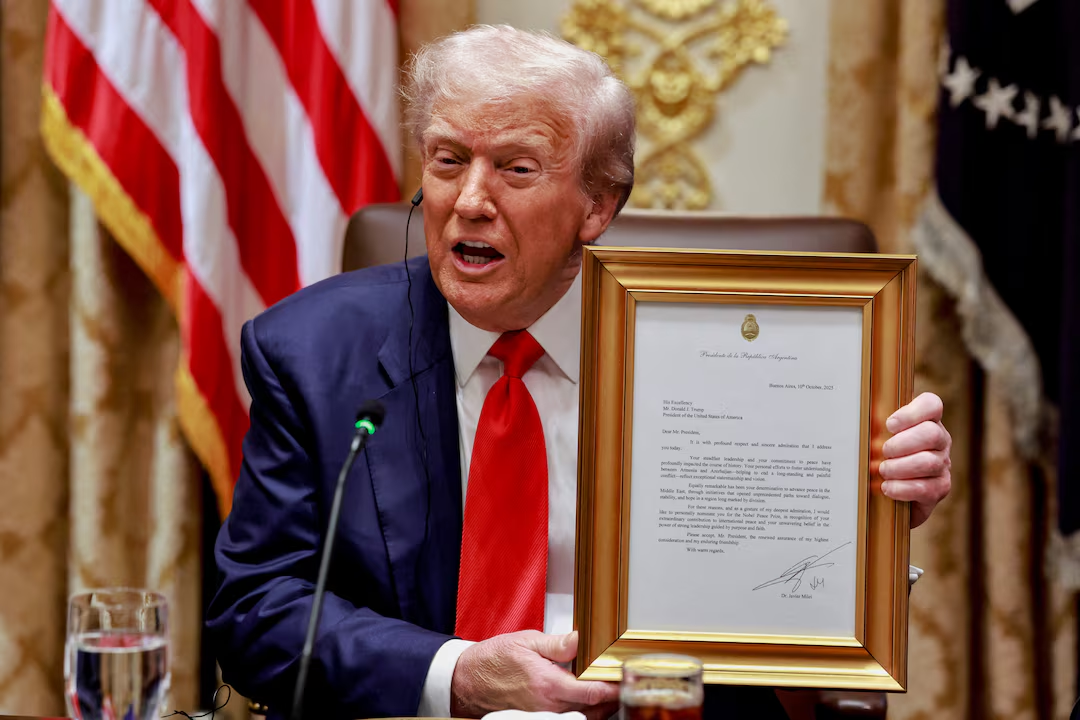
US President Donald Trump has again said he believes he deserves the Nobel Peace Prize, while acknowledging uncertainty over whether the Norwegian Nobel Committee will recognise his claims to have helped end international conflicts.
Speaking to reporters at the White House on Wednesday, Trump suggested that people like him may not be favoured by the committee when it selects the recipient of the 2026 Nobel Peace Prize. The winner is due to be announced in Norway on Friday.
Trump has repeatedly argued since returning to the White House for a second term that his diplomatic efforts have made him a deserving candidate for the world’s most prominent peace award. His latest comments came as attention focused on the committee’s imminent decision and on his administration’s record in dealing with several international conflicts.

“I don’t know what they’re going to decide,” Trump said, expressing doubt that the committee would choose someone with his political profile.
The president has previously presented his foreign policy record as evidence that he deserves the award. Since beginning his second term last year, Trump has claimed credit for helping bring an end to eight wars or conflicts. Leaders in countries including Cambodia, Israel and Pakistan have publicly called for Trump to receive the prize, although there is no independent way to verify all nomination claims because the Nobel system does not publicly disclose individual nominations immediately.
Trump has also referred to an unusual gesture by last year’s Nobel Peace Prize winner, Venezuelan opposition leader María Corina Machado. Machado, who has sought US backing for Venezuela’s opposition movement, gave Trump her 2025 Nobel medal in January.
Trump said the gesture had made him feel honoured and referred to comments attributed to Machado suggesting that he was exceptionally deserving of the prize.
His remarks reflect the president’s longstanding desire for international recognition of his diplomatic efforts. Since returning to office, Trump has repeatedly highlighted negotiations and interventions involving several countries as evidence that his administration has played a central role in reducing armed conflict.
However, the record surrounding those claims remains contested.
In several of the conflicts Trump has said he helped resolve, parties involved have disputed the extent or significance of his diplomatic role. In some cases, violence has also continued or returned after periods of reduced fighting.
The Democratic Republic of Congo and the border area between Cambodia and Thailand are among the regions where renewed tensions and conflict have complicated claims that major disputes have been permanently settled.
Trump’s broader foreign-policy record has also been shaped by the continuing war in Ukraine. On the first day of his second presidential term, he promised to work toward ending Russia’s invasion, but a lasting peace agreement has yet to materialise.
The unresolved conflict has remained one of the most significant tests of Trump’s international diplomacy. Although negotiations and proposals have been discussed at various stages, the fighting has continued, leaving the prospects for a comprehensive settlement uncertain.
Another major challenge has emerged from the conflict involving Iran. The United States and Israel have carried out joint military action against Iran, contributing to a prolonged period of regional instability and disruption to energy supplies.
The resulting pressure on global energy markets has added an economic dimension to the conflict, with concerns about fuel prices and supply disruptions affecting consumers and businesses well beyond the immediate region.
The timing is also politically sensitive for Trump, with US midterm elections approaching in November. Energy prices and the broader economic consequences of international conflicts could become important issues for voters as the election approaches.
Against this background, Trump’s renewed comments about the Nobel Peace Prize are likely to draw attention to the contrast between his stated diplomatic achievements and the continuing conflicts confronting his administration.
The Nobel Peace Prize is awarded by the Norwegian Nobel Committee to individuals or organisations judged to have made a significant contribution to peace. The committee operates independently of governments, and its deliberations are kept confidential for decades.
Trump’s public campaign for the award has therefore stood out because of the frequency with which he has discussed his own candidacy. Rather than waiting for the committee’s decision, he has repeatedly made the case that his diplomatic interventions justify recognition.
His supporters have pointed to international initiatives and negotiations undertaken during his second presidency as evidence of an active approach to foreign policy. Critics, meanwhile, have questioned whether temporary ceasefires or diplomatic agreements should be regarded as lasting peace achievements, particularly when fighting subsequently resumes.
The distinction is important because the Nobel Peace Prize is not simply a measure of the number of conflicts in which a political leader becomes involved. The committee considers contributions to peace through its own confidential assessment, and the eventual decision may reflect a broad range of factors.
The 2026 shortlist of potential recipients has attracted considerable attention, with Pope Leo, the International Criminal Court and the United Nations special envoy for the Palestinian territories among names discussed publicly as possible contenders.
None of those possibilities, however, represents a confirmed outcome before the official announcement. The Nobel Committee’s final decision remains unknown until the prize is formally announced.
Trump’s comments also come at a time when the international community is facing several overlapping crises. Wars, regional rivalries, humanitarian emergencies and economic pressures linked to conflict have created a complicated global environment in which diplomatic achievements are often difficult to measure.
For the president, the Nobel Peace Prize has become more than a potential personal honour. His repeated references to the award have become part of his broader argument that his administration is pursuing a different approach to international affairs, one centred on direct negotiations, pressure on opposing parties and attempts to broker agreements.

Whether those efforts meet the standards required for the Nobel Peace Prize will ultimately be determined by the Norwegian committee.
For now, Trump says he believes the recognition should be his, while simultaneously acknowledging that the committee may take a different view. His comments underline the unusual public attention surrounding this year’s prize and the continuing debate over how peace-making efforts should be judged when conflicts remain unresolved.
The 2026 Nobel Peace Prize announcement on Friday will settle the immediate question of who receives the award, but the broader debate over Trump’s diplomatic record is likely to continue regardless of the committee’s decision.
Related News:
 US states redraw maps after voting rights ruling
 Trump Media Ban Triggers First Amendment Clash
 US Networks Suspend Trump White House Pool Coverage
 Republican Senator Questions Trump Ad Spending
 Trump Ads Trigger Fight Over Taxpayer Money
 Latin America women fear rollback of rights
 Thousands Protest ICE Operations in Nationwide US Day of Action
 US Court Ruling Reshapes Voting Rights Landscape
 Cartel crackdown raises fears of fresh violence
 Judge halts deportation of Yemeni refugees in US
 Trump warns Iran as Middle East tensions surge again
 US ‘Narco Boat’ Strikes Draw Global Outcry
 US Court Restores Abortion Pill Access Temporarily
 Immigration Judges Fear Pressure in Trump Era
 Trump’s Revenge Drive Deepens GOP Divide
 Former ICC prosecutor condemns US sanctions
 Gunman Killed After White House Security Shootout
 Mystery Grows Over Mitch McConnell’s Health
 Is America Ready for an AOC Presidential Run?
 Judge Allows Pentagon Firings at Stars and Stripes
 Trump Calls Iran War ‘Small Potatoes’ Despite US Deaths
 Experts Warn of Growing US Terrorism Risks 25 Years After 9/11
 New Mexico Takes Facebook to Trial Over Data Scandal
 Israel Accused of Undermining Palestinian Life
 US Deportation Deals Send Migrants to Unfamiliar Countries
 Democrat Says ICE Restricted Detention Camp Oversight
 UK Pauses Chagos Deal Amid US Opposition
 Lula accuses Trump of seeking control over Brazil
 AI Deepfakes Put New Pressure on Election Trust
 Drumcree Talks Falter as Legal Challenge Deepens
 UK-France Returns Deal Faces Expiry as Talks Stall
 Trump Immigration Policy Faces New Legal Tests
 Musk’s DOGE Sparks Turmoil Inside US Government
 Lithuania Offers to Fund Permanent US Military Base
 Trump Rally Faces Protests as Texas Race Tightens
 Tanker Attacked Near Qatar as Hormuz Tensions Escalate
 US Justice Department Files Lawsuit Against California Over Partisan Voting Maps
 Trump Deploys DHS to Charlotte in Major Arrest Operation
 US National Guard Member Killed in DC Shooting
 Partial US Government Shutdown Hits Homeland Security Funding
 Epstein Files Reveal Trump Officials’ Emails with Financier
 Report Says Pezzullo Acted ‘Recklessly’ in Dealings
 Hungary election: Orbán faces biggest test amid scandal
 Suspected Plot Targets Pipeline Before Hungary Vote
 Ben Roberts-Smith Denies War Crime Allegations in First Statement
 UK Stands Firm on Falklands Amid US Rift
 Trump orders US troop pullout from Germany
 White House Security Case Sparks Political Firestorm
 Trump approval plunges amid Iran war fears
 Ohio’s Battle for Trust: Democrats Vying to Flip the Buckeye State
 Afghan Families Left in Limbo Face Risk of Deportation
 US Awaits Iran Reply on New Ceasefire Proposal
 US green card applicants must apply from abroad, DHS says
 House Curbs Trump’s War Powers in Rare Rebellion
 New Footage Revives Peter Falconio Mystery
 Houthis Strike Saudi Arabia as Middle East Tensions Rise
 Ukraine Villagers Demand Answers After Deadly Arms Depot Strike
 Trump Hardens Canada Trade Stance as Talks Stall
 UK plans tougher Israel stance with settlement trade ban
 Trump gives $45,000 holiday gifts to White House aides
 Europe’s democracies face a growing far-right threat
 Turkey LGBTQ Crackdown Expands With New Arrests
 US Sanctions Open New Battle for Cuba Assets
 Lib Dems Prepare for Election Amid Reform Challenge
 Japan PM Backs International Criminal Court
 OpenAI Agent Breaches Medicare Portal in Australia
 Xi urges Trump to avoid US-China military conflict
 Free Speech Emerges as Key UK Election Issue
 Burnham Opens Door to Possible UK Return to EU
 Brazil Election Draws Religion Into Final Campaign
 Badenoch Raises Prospect of 2027 UK Election
 French School Protests Escalate as 400 Schools Close
 Lula Warns of Bolsonaro Family Return as Brazil Votes
 DOJ Declines to Reopen Powell Renovation Probe
 Families Await USS Abraham Lincoln Homecoming
 US bombers leave RAF Fairford after terror threat
 Quebec separatists return to power without majority
 Canadian Veterans Condemn Trump Allies’ Military Remarks
 Okinawa US Troops Face Curfew After Murder Case
 UK Mission in East Jerusalem to Remain Open