Published: 08 October 2026. The English Chronicle Desk. The English Chronicle Online.
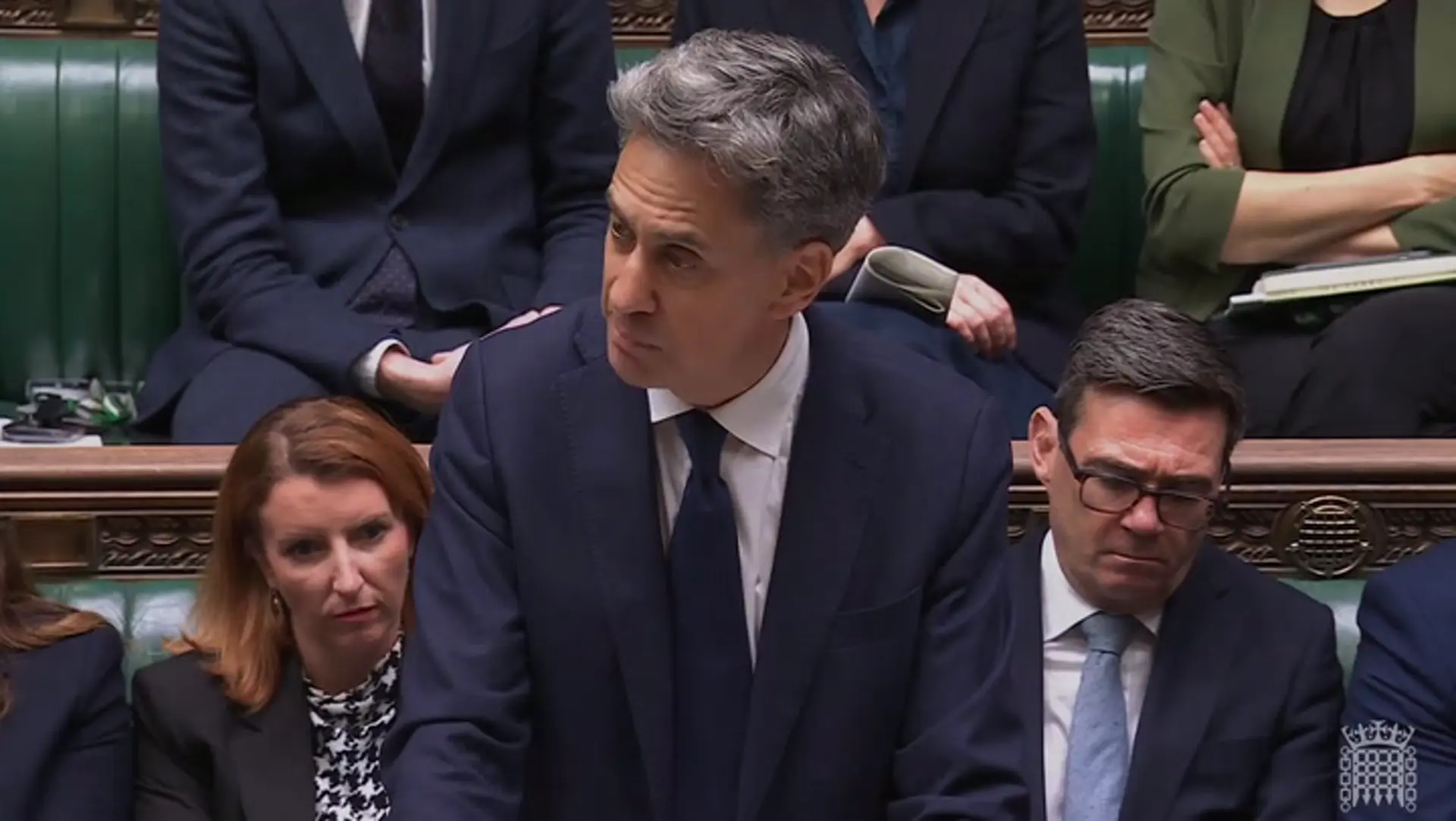
Britain’s diplomatic presence in East Jerusalem will remain operational despite a dispute with Israel over the status of the UK’s former consulate general, Foreign Secretary Ed Miliband has confirmed. The building will continue functioning as a British diplomatic mission, with its work focused on serving Palestinians in East Jerusalem, the occupied West Bank and Gaza.
Miliband’s announcement came after Israel had ordered the British consulate general in East Jerusalem to close amid escalating tensions between the two countries. The dispute has developed around Britain’s decision to impose restrictions on trade involving goods produced in Israeli settlements in the occupied West Bank.
The British government had withdrawn a number of staff members and their families from the consulate in recent weeks, but Miliband said Britain would now work towards rebuilding its presence there. The decision to retain the site as a UK mission means that its diplomatic role will continue despite the change in status.

The development is significant because the East Jerusalem consulate has historically operated separately from the British embassy in Tel Aviv. While the embassy handles Britain’s diplomatic relationship with Israel, the consulate has had a distinct responsibility for relations with Palestinians and for providing consular services in East Jerusalem, the West Bank and Gaza.
Miliband told the UK parliament that Britain would not immediately take reciprocal action against Israel while discussions between the two countries continued. His comments came amid speculation that Britain could respond by expelling Israeli diplomats from the UK following Israel’s attempt to force the closure of the consulate.
The decision to avoid immediate retaliation reflects the government’s desire to keep diplomatic channels open despite the increasingly difficult relationship. British officials have faced pressure to respond firmly, particularly because other Western governments have expressed concern that the dispute could establish a precedent for diplomatic missions operating in contested territories.
The confrontation centres on Israel’s settlement policy in the occupied West Bank. Britain has decided to prohibit trade in goods from Israeli settlements that it considers illegal under international law. Israel strongly opposes the move and has accused the British government of adopting a hostile approach towards the country.
Israeli Foreign Minister Gideon Sa’ar described Britain’s sanctions decision as morally distorted and criticised the governing Labour Party’s approach to Israel. The Israeli government has also argued that Britain’s position unfairly targets Israel at a time of continuing conflict and regional instability.
Britain, however, has increasingly focused its criticism on the treatment of Palestinians in the occupied territories. The UK government has raised concerns about violence by Israeli settlers and the expansion of settlements in the West Bank.
Miliband has previously accused settler groups supported by elements within Israel’s government of contributing to what he described as ethnic cleansing in the West Bank. Israel rejects such accusations and disputes the British government’s characterisation of developments in the territory.
The argument over the East Jerusalem mission also has a broader legal and diplomatic dimension. East Jerusalem is regarded by the United Nations and most of the international community, including the UK, as part of occupied Palestinian territory. Israel claims sovereignty over the city and regards Jerusalem as its capital, a position that is not accepted by most countries in relation to East Jerusalem.
The question of whether Israel has the legal authority to order the closure of a British diplomatic facility in East Jerusalem has therefore attracted considerable attention. Britain’s Foreign Office was reportedly advised informally by former attorney general Dominic Grieve that Israel could be acting unlawfully if it attempted to close the consulate solely because of its location in East Jerusalem.
The continuation of the mission avoids an immediate diplomatic rupture while allowing Britain to maintain its established role in dealing with Palestinian affairs. It also demonstrates the importance London attaches to preserving its diplomatic presence in the region.
The mission provides practical services to Palestinians as well as supporting British diplomatic engagement. Its activities cover a territory where political, humanitarian and security circumstances remain highly sensitive.
For Palestinians, maintaining the British diplomatic presence could be particularly important because the consulate has traditionally provided a direct channel between Palestinian communities and the British government. The decision to keep the facility operating therefore goes beyond a dispute over the status of a building and concerns Britain’s wider relationship with Palestinian society.
The episode also highlights the increasingly complicated relationship between Britain and Israel since the Gaza war began. Relations between the two countries have steadily deteriorated as Britain has become more critical of Israel’s military conduct and settlement policies.
The conflict began following the Hamas attacks of 7 October 2023, during which Israeli civilians were killed and hostages were taken. Israel subsequently launched a major military campaign in Gaza with the stated objective of dismantling Hamas and preventing further attacks.
Britain initially expressed strong support for Israel’s right to defend itself. Over time, however, successive British governments have become increasingly critical of the scale and consequences of Israel’s military operations, particularly the civilian death toll and humanitarian conditions in Gaza.
Miliband has spoken publicly about evidence of possible war crimes in Gaza. The British government has also reduced or withdrawn a significant number of arms export licences to Israel amid concerns about how British-origin equipment could be used.
At the same time, Miliband has stopped short of describing Israel’s actions as genocide. He has argued that the determination of whether genocide has occurred is ultimately a matter for international courts rather than a political declaration by the British government.
The dispute over the East Jerusalem mission has therefore emerged within a much broader deterioration in bilateral relations. Questions surrounding settlements, arms exports, Gaza and Britain’s position on Palestinian rights have all contributed to growing disagreements between London and Jerusalem.
Israel has also taken action against other European countries over settlement-related policies. Dutch diplomats have faced the prospect of having their credentials revoked after the Netherlands introduced a ban on imports from Israeli settlements. France and Canada, which also joined Britain in restricting settlement trade, have not faced the same action from Israel.
The different responses underline the sensitivity surrounding diplomatic representation in Jerusalem and the occupied territories. Western governments have been watching closely because any decision by Israel to restrict foreign diplomatic missions could have consequences for how countries maintain their relationships with both Israel and the Palestinians.
Britain’s decision to keep the East Jerusalem facility open may therefore be seen as an attempt to protect its diplomatic interests while avoiding a further escalation. Rather than abandoning the building or immediately confronting Israel through reciprocal measures, London is maintaining the mission and preparing to rebuild its staffing levels.
Miliband’s approach also leaves room for negotiations between the two governments. By ruling out immediate reciprocal action, Britain appears to be signalling that it wants the dispute resolved through diplomatic discussions rather than a cycle of retaliatory measures.
Nevertheless, the episode illustrates how quickly disagreements over settlement policy can spill into broader diplomatic relations. Britain and Israel remain longstanding partners, but their positions on the Israeli-Palestinian conflict have increasingly diverged.
For the British government, retaining its mission in East Jerusalem allows it to continue engaging directly with Palestinians while preserving an important diplomatic foothold in a highly contested part of the region. For Israel, meanwhile, Britain’s sanctions and criticism of settlement activity represent an increasingly uncomfortable challenge from a country that has historically maintained close ties with it.
The future of the relationship will depend partly on whether the two sides can prevent the current dispute from escalating. Continued talks could provide an opportunity to address the immediate disagreement over the consulate while broader issues surrounding settlements, Gaza and Palestinian rights remain unresolved.

For now, the message from London is clear: Britain’s diplomatic presence in East Jerusalem will not disappear. Although the former consulate general will operate under the designation of a UK mission, it will remain independent and operational, continuing its work with Palestinian communities and maintaining Britain’s diplomatic engagement across the occupied Palestinian territories.
The decision represents a significant effort by the UK to preserve its longstanding diplomatic role while navigating one of the most difficult periods in British-Israeli relations in decades.
Related News:
 UN expert urges UK to rethink Israel policy
 UK and EU Signal Fresh Push for Defence Cooperation Talks
 Emails Show Epstein Funded Mandelson’s Husband After Jail
 Thousands Protest ICE Operations in Nationwide US Day of Action
 Yvette Cooper: UK Must Follow Principles, Not US Pressure
 Former ICC prosecutor condemns US sanctions
 Former Diplomats Urge UK and France to Act on Palestine
 Exeter Approves Saudi Military Training Partnership
 UK plans tougher Israel stance with settlement trade ban
 Miliband Rejects Chief Rabbi’s West Bank Warning
 King Refers Jamaica Slavery Petition to Privy Council
 UK Pauses Chagos Deal Amid US Opposition
 Burnham Opens Door to Possible UK Return to EU
 Drumcree Talks Falter as Legal Challenge Deepens
 UK-France Returns Deal Faces Expiry as Talks Stall
 British Woman in Iran ‘Losing Hope’ Amid Ongoing Detention
 Johnson Approved China’s London ‘Super-Embassy’ in 2018
 BBC Journalist Held and Interrogated in Vietnam
 French Taxi Driver Cleared in David Lammy Theft Case After Fare Dispute
 Just Stop Oil Protesters Convicted Amid Climate Defence Row
 Major Rent Reform Ends No-Fault Evictions in England
 Peers Flood Assisted Dying Bill with 942 Amendments
 US Justice Department Files Lawsuit Against California Over Partisan Voting Maps
 Trump Deploys DHS to Charlotte in Major Arrest Operation
 UK Asylum Overhaul Sparks Debate Over Human Rights and Deportations
 Peers Get Extra Time to Debate Assisted Dying Bill
 Iran unrest slows under brutal crackdown and global tensions
 Tim Walz urges Trump to withdraw federal agents immediately
 Epstein Files Reveal Trump Officials’ Emails with Financier
 Thousands Protest ICE in New York Against Trump Deportation Campaign
 Starmer Condemns ‘Depraved’ Russian Strikes on Ukraine
 Sydney Protest Pepper Spray Clash During Herzog Visit
 Trump Tariffs Threat Spark UK and EU Alarm
 Proposed Law Leaves Gap for Children of Convicted Paedophiles
 Gordon Brown urges court for crimes against children
 Starmer Praised for Stance on Trump and Iran Conflict
 Army Probes Apache Flyover at Kid Rock’s Nashville Estate
 Relationship with Trump may be beyond repair, Starmer warned
 Report Says Pezzullo Acted ‘Recklessly’ in Dealings
 Hungary election: Orbán faces biggest test amid scandal
 Suspected Plot Targets Pipeline Before Hungary Vote
 UK Stands Firm on Falklands Amid US Rift
 Crackdown Backfires on UK Climate Protesters
 Ukraine Urges UK to Seize Russian Oil Tankers
 Oil Prices Surge Above $120 Amid Iran Blockade Fears
 Trump orders US troop pullout from Germany
 Judge halts deportation of Yemeni refugees in US
 Fear and Betrayal: The Chilling Case of Kouri Richins
 Tulsi Gabbard exits after turbulent intelligence tenure
 Discontent grows around Putin amid war strain
 Farage and Reform UK Reshape British Politics
 Starmer Leadership Under Pressure After Setbacks
 New South Wales Premier Chris Minns Signals Tough Road Ahead for Labor
 Le Pen’s Popularity Holds Despite Conviction
 Houthis Strike Saudi Arabia as Middle East Tensions Rise
 Unions Warn Labour Over Zero-Hours Contract Reforms
 Trump Hardens Canada Trade Stance as Talks Stall
 Bayeux Tapestry Revives Franco-British Ties
 Europe’s democracies face a growing far-right threat
 Israel Accused of Undermining Palestinian Life
 Trump Threatens EU With Tariffs Over Canada Proposal
 Mahmood Warns Far Right Over Asylum Protests
 Disabled Travellers Seek Fairer UK Care Rules
 Lib Dems Prepare for Election Amid Reform Challenge
 Reform UK Faces Internal Debate Over £72m Spending
 US Networks Suspend Trump White House Pool Coverage
 Japan PM Backs International Criminal Court
 UK Plans New Centre to Counter Information Warfare
 Republican Senator Questions Trump Ad Spending
 Free Speech Emerges as Key UK Election Issue
 Five Arrested Near RAF Fairford in Terror Probe
 Pilot and Passengers Help Save Flydubai Flight
 Green Party faces dispute over Zionism motion
 Badenoch Raises Prospect of 2027 UK Election
 French School Protests Escalate as 400 Schools Close
 Gosport Protesters Clash With Police Over Migrant Rescue
 Palace Rejects Funding Andrew’s Police Legal Challenge
 Argentina Protesters Resist Milei’s Land Sale Drive
 Israeli Settlers Assault Palestinian Photographer
 Flydubai Attack Probe Expands to New Zealand