Published: 23 September 2026. The English Chronicle Desk. The English Chronicle Online.
Britain has put payments to Mauritius on hold and begun reassessing its agreement over the Chagos Islands after US President Donald Trump reiterated his opposition to the proposed transfer of sovereignty, with Defence Secretary Wes Streeting saying the arrangement cannot proceed in its current form without American support.
Streeting said annual payments to Mauritius of at least £120 million would not be made at this stage as the British government works to find an arrangement that can be supported by Britain, Mauritius and the United States. His comments mark a significant development in the future of the strategically important Indian Ocean archipelago and the joint UK-US military base on Diego Garcia.
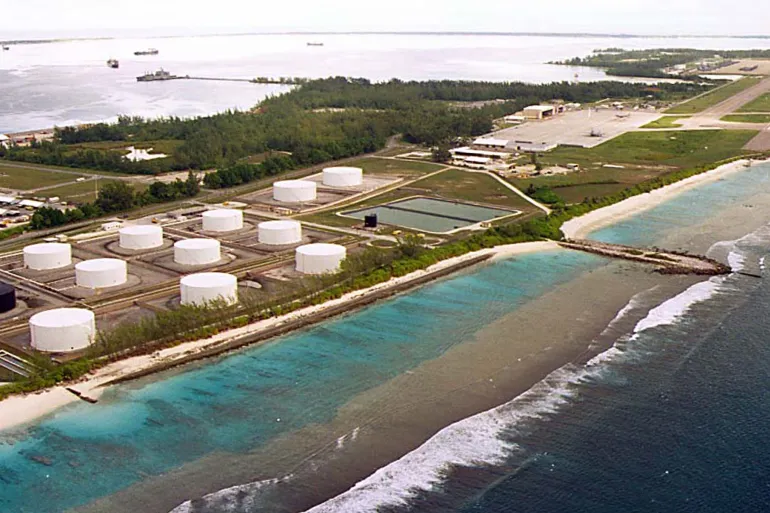
The United Kingdom signed a treaty with Mauritius last year under which sovereignty over the Chagos Islands would be transferred to Mauritius. Under the proposed arrangement, Britain would retain access to the military facility on Diego Garcia through a long-term lease lasting 99 years.
Mauritius was due to receive £165 million a year during the first three years of the arrangement, followed by £120 million annually from the fourth year. The payments were linked to the broader agreement under which Britain sought to secure the continued operation of the Diego Garcia facility while resolving the longstanding sovereignty dispute.

Streeting said the financial commitments would remain on hold while the government examines the concerns raised by Washington. He argued that the central objective was to secure the future of Diego Garcia, which provides military capabilities for both Britain and the United States.
The defence secretary said the financial payments could be justified if they helped secure Britain’s long-term ability to operate from the base. His comments reflected the government’s emphasis on maintaining the military facility as a key element of British and allied security arrangements in the Indian Ocean.
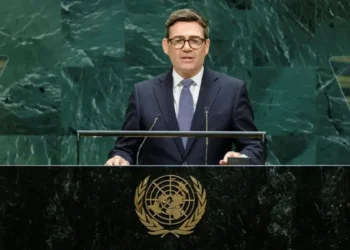
The issue came into sharper focus after Trump criticised the agreement during his meeting with Prime Minister Andy Burnham at the United Nations General Assembly in New York. Trump described the treaty as a bad agreement and said he did not support it.
Burnham subsequently said the British government would work to find a resolution acceptable to the different parties. The prime minister has also indicated that Britain intends to continue discussions with both Washington and Mauritius rather than simply abandoning the treaty.
Streeting said the US position was already known to the British government, but Trump’s latest comments provided greater clarity about Washington’s current stance. He said Britain would examine the details of the American concerns and attempt to develop an arrangement that could secure support from all three governments.
The importance of US backing is closely connected to Diego Garcia. The island hosts a major joint military facility used by Britain and the United States and occupies a strategically important position in the Indian Ocean. Its location provides access to important routes connecting the Middle East, South Asia, East Africa and the wider Indo-Pacific region.
The future of the base has consequently been central to discussions over the Chagos Islands. British officials have argued that any settlement must protect the facility’s long-term operation, while Mauritius has continued to assert its claim to sovereignty over the archipelago.
Streeting warned that Britain could not simply ignore the dispute and wait for political circumstances to change. He said the government needed to work directly with the Trump administration because of the security significance of Diego Garcia.
The defence secretary described resolving the disagreement as difficult and likely to require extensive negotiations. He rejected an approach based on waiting for the dispute to disappear, arguing that the future of a major national security asset was too important for that strategy.
At the same time, Streeting acknowledged that the situation was complicated by Mauritius’s longstanding sovereignty claim. He said ignoring that claim could itself create risks for the future of the military base.
The sovereignty dispute has deep historical roots. Britain retained control of the Chagos Islands when Mauritius became independent in the 1960s. Chagossians were removed from the islands, particularly Diego Garcia, during the period in which the military facility was established and developed. Many former residents and their descendants have subsequently pursued legal and political claims concerning their displacement and rights.
International legal developments have added further pressure on Britain. In 2019, the International Court of Justice issued an advisory opinion concerning the UK’s administration of the Chagos Islands and concluded that the process of decolonisation of Mauritius had not been lawfully completed. The court said Britain should bring its administration of the archipelago to an end as rapidly as possible.
Streeting described the ruling as advisory but warned that Mauritius could potentially pursue further legal avenues. He argued that leaving the sovereignty issue unresolved could therefore create continuing uncertainty around the future of Diego Garcia.
The British government has maintained that its proposed treaty was intended to provide greater long-term certainty for the military facility while addressing the international legal and diplomatic dispute over sovereignty.
Under the proposed arrangement, sovereignty would pass to Mauritius while Britain and the United States would retain the ability to operate from Diego Garcia under the long-term lease. The treaty was therefore designed to separate sovereignty from the continued military use of the base.
However, the United States has raised concerns about the agreement. Trump’s opposition has made it difficult for Britain to proceed with the treaty in its existing form, particularly because the military installation is jointly operated and its continued strategic value depends heavily on US involvement.
The British government now faces the challenge of reconciling three sets of interests. Mauritius wants its sovereignty claim recognised, Britain wants to address the longstanding dispute while preserving its military access, and the United States wants assurances concerning the future security and operation of Diego Garcia.
The financial aspect of the treaty has also attracted attention. The planned payments to Mauritius would represent a substantial long-term commitment by Britain, making the agreement a major financial as well as diplomatic decision. With the payments now paused, the government is effectively delaying an important part of the arrangement while negotiations continue.
The exact future of the treaty remains uncertain. Although the agreement has been signed, the legislative process required to implement the transfer of sovereignty has not been completed. The pause gives the British government an opportunity to examine possible changes before seeking to move the agreement forward.
Burnham has been holding discussions with Mauritius as well as the United States. Before travelling to the United Nations, he spoke with Mauritian Prime Minister Navin Ramgoolam and reaffirmed Britain’s intention to work with Mauritius and Washington on a solution that would secure the operation of Diego Garcia.
The two governments agreed to maintain close contact, while discussions between British and Mauritian officials were expected to continue during the UN General Assembly.
The diplomatic challenge comes at a time when Britain is seeking to maintain close security cooperation with the United States while also managing its relationships with countries across the Indian Ocean and Commonwealth.
Diego Garcia’s strategic importance extends beyond Britain and Mauritius. The facility has played an important role in US and UK military operations in the wider region and has been viewed as a key location for logistics, communications and defence activities.
Any uncertainty surrounding its long-term status therefore has implications beyond the sovereignty dispute itself. For Washington, the priority is maintaining confidence in the future of the facility. For London, the challenge is ensuring that its security relationship with the United States remains strong while pursuing an agreement with Mauritius. For Mauritius, the issue is closely connected to its longstanding demand for sovereignty over the archipelago.
The government must also consider the interests of Chagossians, whose communities were displaced from the islands decades ago. Their rights and future involvement in decisions concerning the territory remain part of the wider political and legal discussion.
The current review does not necessarily mean that Britain has abandoned the principle of transferring sovereignty to Mauritius. Instead, ministers have indicated that the existing agreement must be reconsidered in light of the US position and the importance of securing a durable arrangement for Diego Garcia.
Streeting’s comments suggest that Britain is seeking to renegotiate rather than simply choose between the existing treaty and no agreement at all. The government wants an arrangement that can command support from all the key parties while maintaining the military capability provided by Diego Garcia.

For Mauritius, however, any revised agreement would need to preserve the central principle of its sovereignty claim. That could make negotiations complicated if changes requested by Washington affect the terms originally agreed between London and Port Louis.
The coming months are therefore likely to involve detailed diplomatic discussions over sovereignty, military access, financial commitments and the legal status of the archipelago.
The Chagos Islands dispute has already lasted for decades, and the latest disagreement demonstrates why finding a lasting settlement remains difficult. Britain’s decision to pause payments and review the agreement introduces another stage in that process.
For now, the future of the treaty depends on whether London can find terms acceptable to Mauritius while addressing Washington’s concerns about Diego Garcia. Streeting’s position makes clear that the British government sees continued US support as essential to moving forward, while its discussions with Mauritius indicate that London is still seeking a negotiated solution rather than closing the door on the agreement.
Related News:
 UK and EU Signal Fresh Push for Defence Cooperation Talks
 Cartel crackdown raises fears of fresh violence
 US states redraw maps after voting rights ruling
 Murder Probe Continues After Arrest Release
 Exeter Approves Saudi Military Training Partnership
 UN expert urges UK to rethink Israel policy
 UK plans tougher Israel stance with settlement trade ban
 Europe’s democracies face a growing far-right threat
 Miliband Rejects Chief Rabbi’s West Bank Warning
 Patriot Platform Raises Concern Across Britain
 Reform UK Receives Record £36m Donation From Crypto Billionaire
 Israel Accused of Undermining Palestinian Life
 Election Candidate Abuse Raises Alarm in England
 Trump Media Ban Triggers First Amendment Clash
 Lib Dems Prepare for Election Amid Reform Challenge
 US Networks Suspend Trump White House Pool Coverage
 King Refers Jamaica Slavery Petition to Privy Council
 UK Plans New Centre to Counter Information Warfare
 Jailed Georgian Opposition Leaders Warn UK of Iranian Links to Ruling Party
 British Woman in Iran ‘Losing Hope’ Amid Ongoing Detention
 Johnson Approved China’s London ‘Super-Embassy’ in 2018
 BBC Journalist Held and Interrogated in Vietnam
 French Taxi Driver Cleared in David Lammy Theft Case After Fare Dispute
 Just Stop Oil Protesters Convicted Amid Climate Defence Row
 Major Rent Reform Ends No-Fault Evictions in England
 Peers Flood Assisted Dying Bill with 942 Amendments
 US Justice Department Files Lawsuit Against California Over Partisan Voting Maps
 Trump Deploys DHS to Charlotte in Major Arrest Operation
 UK Asylum Overhaul Sparks Debate Over Human Rights and Deportations
 Rama Rebukes Mahmood for Targeting Albanian Families
 Peers Get Extra Time to Debate Assisted Dying Bill
 Tim Walz urges Trump to withdraw federal agents immediately
 Thousands Protest ICE Operations in Nationwide US Day of Action
 Starmer Condemns ‘Depraved’ Russian Strikes on Ukraine
 Trump Tariffs Threat Spark UK and EU Alarm
 Proposed Law Leaves Gap for Children of Convicted Paedophiles
 Gordon Brown urges court for crimes against children
 Army Probes Apache Flyover at Kid Rock’s Nashville Estate
 Relationship with Trump may be beyond repair, Starmer warned
 Report Says Pezzullo Acted ‘Recklessly’ in Dealings
 Hungary election: Orbán faces biggest test amid scandal
 Suspected Plot Targets Pipeline Before Hungary Vote
 Ben Roberts-Smith Denies War Crime Allegations in First Statement
 City & Guilds Sale Sparks Fees and Pay Uproar
 UK Stands Firm on Falklands Amid US Rift
 Crackdown Backfires on UK Climate Protesters
 Judge halts deportation of Yemeni refugees in US
 US ‘Narco Boat’ Strikes Draw Global Outcry
 Barrister Criticises Trial After Suicide Case Verdict
 Immigration Judges Fear Pressure in Trump Era
 Farage and Reform UK Reshape British Politics
 Starmer Leadership Under Pressure After Setbacks
 New South Wales Premier Chris Minns Signals Tough Road Ahead for Labor
 New Footage Revives Peter Falconio Mystery
 Le Pen’s Popularity Holds Despite Conviction
 Westminster Council Threatens Charing Cross Soup Kitchen
 BBC Warned About Missing Clothes of Murder Victim
 Unions Warn Labour Over Zero-Hours Contract Reforms
 Former Diplomats Urge UK and France to Act on Palestine
 Ghent Professors Questioned Cofnas Appointment
 RAF Barnham Protests Fuel Tensions in Norfolk Town
 Ukraine Villagers Demand Answers After Deadly Arms Depot Strike
 Internal Exclusions Surge in England’s Schools
 Bayeux Tapestry Revives Franco-British Ties
 Trump Calls Iran War ‘Small Potatoes’ Despite US Deaths
 Reform Faces Fresh Financial Controversy
 Councils spend £125m on illegal children’s care
 New Mexico Takes Facebook to Trial Over Data Scandal
 Royal Crown Branded Enslaved Africans in Britain’s Slave Trade
 Fugitive Developer Rants at NSW Corruption Inquiry
 Turkey LGBTQ Crackdown Expands With New Arrests
 Trump Threatens EU With Tariffs Over Canada Proposal
 US Sanctions Open New Battle for Cuba Assets
 Mahmood Warns Far Right Over Asylum Protests
 Disabled Travellers Seek Fairer UK Care Rules
 Harrods Faces Dispute Over Fayed Abuse Compensation
 Reform UK Faces Internal Debate Over £72m Spending
 Democrat Says ICE Restricted Detention Camp Oversight
 Japan PM Backs International Criminal Court
 UK Unveils Centre to Counter Foreign Disinformation