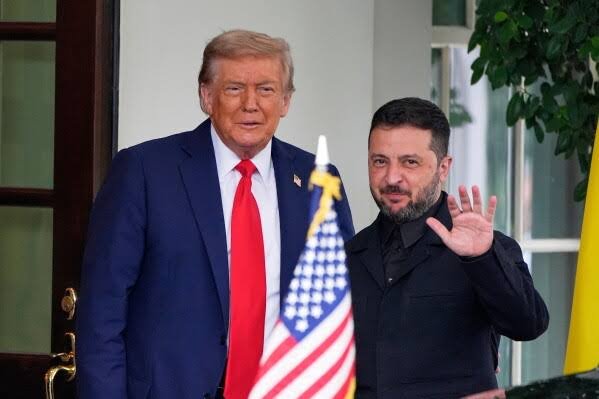
The United States has begun a fresh diplomatic effort to secure what it describes as a definitive end to the Russia-Ukraine war, as senior officials from Washington, Moscow and Kyiv prepare for crucial trilateral discussions in Abu Dhabi. The negotiations, which began on Tuesday, November 10, represent the first substantive peace talks between Russia and Ukraine since February and could mark an important moment in international efforts to end the conflict.
The Trump administration is seeking to move beyond temporary ceasefire arrangements and establish a broader framework intended to prevent another war between the two countries. A central element of the American proposal involves creating a new long-term security architecture between Russia and Europe, potentially reshaping military relations across the continent and influencing the future of European security.
The diplomatic initiative comes at a complicated moment for President Donald Trump. The discussions are taking place following joint US-Israeli military strikes against Iran and midterm elections that have weakened Trump’s domestic political position. Despite these challenges, Washington appears determined to demonstrate progress on one of the most significant foreign policy issues facing the administration.

American officials have indicated that the proposed security framework could include stronger communication channels between Russia and Western countries, military transparency arrangements, mechanisms for managing international crises and reciprocal measures designed to reduce the possibility of further escalation.
However, the initiative has raised considerable concern among European governments, which fear that negotiations could lead to concessions that undermine the continent’s existing security arrangements and weaken the protection of countries bordering Russia.
One of the most sensitive issues is Moscow’s longstanding opposition to NATO’s expansion and military presence in eastern Europe. Russian President Vladimir Putin has repeatedly criticised the alliance’s eastward enlargement, arguing that it threatens Russia’s security interests. Moscow has previously demanded restrictions on NATO’s military activities and sought a fundamental revision of the European security order.
European officials are particularly concerned that the Trump administration could give serious consideration to some of these demands in an effort to secure a rapid agreement. Such concessions could potentially leave eastern European countries more exposed to Russian political and military pressure.
A senior US administration official acknowledged that European participation would be essential to any lasting settlement. Washington has indicated that it wants European governments involved in discussions about the future relationship between Russia and the continent rather than allowing the negotiations to remain exclusively between the United States, Russia and Ukraine.
The American proposal could also include reviving the NATO-Russia Council, which was suspended following Russia’s full-scale invasion of Ukraine in February 2022. The council previously provided a platform for dialogue between the military alliance and Moscow on security matters, although relations deteriorated significantly as tensions increased.
Another possibility under consideration is the gradual removal of certain economic sanctions imposed on Russia. Western countries introduced extensive restrictions following the invasion, targeting Russian financial institutions, energy exports, individuals and strategic industries. Any decision to ease those measures would likely become a major point of disagreement among European governments.
Perhaps the most significant aspect of the discussions concerns potential American security guarantees for Ukraine. US officials have suggested that Washington has discussed arrangements that could resemble NATO’s Article 5 collective defence principle, under which an attack against one alliance member is treated as an attack against all members.
An American administration official described the proposed guarantees as potentially offering Ukraine protection broadly comparable to NATO membership, even if the country does not formally join the alliance.
The official emphasised that a US security commitment would represent a major development for Kyiv, particularly in terms of financial assistance, military resources and long-term defence support. However, the final decision would depend on discussions between Trump and Ukrainian President Volodymyr Zelenskyy.
The proposal could become one of the most important bargaining points in the negotiations. Ukraine has consistently sought reliable international security guarantees to prevent another Russian invasion if a ceasefire or peace agreement is reached.
Nevertheless, questions remain over how such guarantees would operate in practice. NATO’s Article 5 does not automatically require every member to respond with identical military action following an attack. Furthermore, modern conflicts increasingly involve cyberattacks, sabotage, disinformation and other forms of hybrid warfare, making it difficult to determine what circumstances would trigger a military response.
Critics argue that any security arrangement offered to Ukraine must clearly define the responsibilities of participating countries. Without specific commitments and credible enforcement mechanisms, a guarantee could prove insufficient to deter future Russian aggression.
Jared Kushner, Trump’s son-in-law and one of the leading American negotiators, outlined some of the broader principles behind the proposed European security framework on Monday. He said Washington wanted stronger consultation between countries, dependable crisis communication systems, greater military transparency and reciprocal measures to reduce the risk of escalation.
He also stressed that the arrangements should respect the sovereignty and independent decision-making powers of individual nations.
European representatives from Germany, France, the United Kingdom and Italy, alongside officials from the European Union, are expected to engage with American negotiators in Abu Dhabi. Their participation reflects Europe’s determination to remain involved in decisions that could directly affect its future security.
However, European governments have not yet received sufficient details to determine precisely what Washington intends to propose. A European security official from one of the participating countries indicated that governments were preparing for the possibility that the United States could ask them to accept substantial concessions to Russia.
European Union foreign policy chief Kaja Kallas expressed reservations about the American approach during a meeting of G7 foreign ministers on Monday. She argued that Europe already had an established security framework based on international agreements and obligations, including commitments to respect national sovereignty and territorial integrity.
According to Kallas, the central problem was not the absence of an international security system but Russia’s repeated failure to respect the agreements and principles underpinning it.
Her comments reflect a wider European concern that a new arrangement should not reward military aggression or weaken the international rules protecting smaller countries from stronger neighbours.
Territorial concessions are another major obstacle to a potential agreement. Trump has previously suggested that Ukraine may be expected to surrender some territory as part of a final settlement. He has also indicated that the country’s borders could look somewhat different after the war.
Such suggestions are particularly sensitive for Kyiv, which has repeatedly rejected demands to recognise Russian control over occupied Ukrainian territories. Any agreement involving territorial changes would create difficult political and constitutional questions for the Ukrainian leadership.
The possibility of a broader agreement involving European countries has also emerged following Trump’s recent meeting with Kremlin adviser Kirill Dmitriev. The US president described his ambition as reaching a major agreement that could involve the entire European continent.
However, critics fear that Washington and Moscow could attempt to negotiate a settlement without adequately considering the positions of European governments or Ukraine itself. Such an approach could undermine confidence in the negotiations and create divisions among Western allies.
The concerns are partly rooted in Russia’s December 2021 security proposals, which demanded restrictions on NATO expansion and a significant reduction in the alliance’s military presence in eastern Europe. Moscow sought guarantees that Ukraine and other countries would not join NATO, alongside restrictions on military deployments and missile positioning.
NATO rejected those demands, viewing them as incompatible with the sovereignty and security choices of independent countries. Russia launched its full-scale invasion of Ukraine less than two months later, dramatically changing Europe’s security environment.
Against this historical background, European governments are likely to approach the Abu Dhabi negotiations cautiously. They want an agreement that prevents further conflict without creating conditions that could encourage future territorial aggression.
US Secretary of State Marco Rubio indicated on Monday that progress had been made in discussions about the proposed security architecture. However, he acknowledged that negotiators would first need to overcome the immediate challenges of the war before establishing a broader long-term framework.
The American administration believes that the existing security arrangements have failed to prevent the conflict and that a different approach is necessary to achieve a lasting settlement. Officials argue that the objective should be to create a system capable of preventing renewed hostilities rather than simply pausing the current fighting.
Despite the diplomatic activity, significant differences remain between Moscow, Kyiv, Washington and European capitals. The future of occupied territories, Ukraine’s security guarantees, NATO’s role, economic sanctions and Russia’s military ambitions are all likely to influence the negotiations.
For millions of Ukrainians affected by years of fighting, the prospect of renewed diplomatic engagement offers a measure of hope. However, any agreement will need to address the security concerns of all participating countries while protecting Ukraine’s independence and territorial integrity.

The Abu Dhabi discussions could therefore become a defining test of Trump’s diplomatic strategy and the future of relations between Russia and the West. Whether the negotiations produce meaningful progress or expose further divisions will depend on the willingness of the parties to compromise on some of the most difficult questions surrounding Europe’s security.
For now, Washington is presenting the initiative as an opportunity to achieve a final end to the war. Yet a lasting peace will require more than an agreement between political leaders. It will depend on credible security commitments, respect for international obligations and guarantees that prevent the conflict from returning in the years ahead.
Related News:
 UK Prepares Aircraft Carrier for Middle East Crisis
 Houthis Strike Saudi Arabia as Middle East Tensions Rise
 Israeli Strike in Southern Lebanon Kills Seven
 Middle powers seek new alliances amid Trump era
 Trump Asked Xi About Buying US Weapons
 US bombers leave RAF Fairford after terror threat
 Germany Pledges €1bn Military Aid to Ukraine
 Tanker Attacked Near Qatar as Hormuz Tensions Escalate
 Israel Promotes Film Challenging Controversial Gaza Documentary
 Trump Rules Out Iran Attack Before US Elections
 Ukraine Peace Talks Set to Resume in November
 US Strikes Iran Island as Vance Signals Hope for Peace
 Qatar Pushes Iran Deal to Reopen Strait of Hormuz
 Thousands Protest Iran Strikes Outside US Embassy London
 US Bombers Arrive at RAF Base Amid Rising Iran Tensions
 Charles Faces Trump Test in High-Stakes US Visit
 UK Stands Firm on Falklands Amid US Rift
 US states redraw maps after voting rights ruling
 US ‘Narco Boat’ Strikes Draw Global Outcry
 Ceasefire Standoff Deepens in Ukraine War
 US Awaits Iran Reply on New Ceasefire Proposal
 Hormuz Talks Near Critical Stage
 Millions Gather for Khamenei’s Six-Day State Funeral
 Is America Ready for an AOC Presidential Run?
 Trump Calls Strait of Hormuz ‘American Territory’
 Trump Calls Iran War ‘Small Potatoes’ Despite US Deaths
 UN expert urges UK to rethink Israel policy
 Europe’s democracies face a growing far-right threat
 Saudi Pact Raises Risk of Pakistan Entering War
 Lib Dems Prepare for Election Amid Reform Challenge
 US Networks Suspend Trump White House Pool Coverage
 UK Plans New Centre to Counter Information Warfare
 UK Pauses Chagos Deal Amid US Opposition
 Elif Eralp Emerges as Berlin’s Next Political Force
 Xi urges Trump to avoid US-China military conflict
 Lula accuses Trump of seeking control over Brazil
 Republican Senator Questions Trump Ad Spending
 South Korea-Ukraine Row Erupts Over North Korean POWs
 AI Deepfakes Put New Pressure on Election Trust
 Drumcree Talks Falter as Legal Challenge Deepens
 UK-France Returns Deal Faces Expiry as Talks Stall
 New Maps Reveal Gaza’s Vast Destruction
 Green Party faces dispute over Zionism motion
 US Sends Third Carrier to Middle East
 Latin America women fear rollback of rights
 Canadian Veterans Condemn Trump Allies’ Military Remarks
 Vance Demands Iran Cut Nuclear Enrichment
 Israel Marks Three Years Since October 7 Attack
 Trump Says He Deserves Nobel Peace Prize
 India’s Youth Movement Alleges Mass Detentions Before Protest
 Gaza War Deepens India’s Strategic Ties With Israel
 Bolsonaro Gains Key Endorsement Ahead of Brazil Runoff
 Trump’s Russian Diesel Deal Sparks Ukraine Fury
 UK Gaza Refugee Route Criticised Over False Hope Claims
 UK Greens Face Crisis Over Zionism and Extremism Row
 Riyadh Airport Hit Again as Yemen Conflict Escalates
 Brazil Court Scandal Threatens Lula as Bolsonaros Rise
 Millions Face Tougher Medicaid Rules From January
 Ohio Airports Become Key Hubs for ICE Deportation Flights
 Farage Rejects Claims Reform Would Let Troops Shoot Migrants
 India’s Voter Roll Crisis Sparks Nationwide Protests
 Judge Blocks Trump White House Media Ban
 Gadi Eisenkot: Israel’s Anti-Netanyahu Challenger
 Serbia Leader Linked to Controversial Trump Tower Plan
 Trump Slams Ukraine Strikes as Russia Ceasefire Collapses
 Zelenskyy Accuses US of Delaying Ukraine Missile Supplies
 Netanyahu Faces Defining Election Test as Israel Divides
 Xi Jinping Tightens China’s Anti-Corruption Campaign
 Trump’s Midterm Campaign Faces Racism and Political Backlash
 Obama Mocks Trump at Georgia Rally for Democrats
 China Expels Record 33 Officials in Xi Jinping Purge
 Trump’s Global Policies Put Republicans at Risk
 Global Crises Test Diplomacy as Trump’s Policies Face Scrutiny
 Bedouin Women Drive Historic Arab Election Gains
 G20 Photo Cancelled as Russia Deepens Western Rift
 Trump Attacks Abdul El-Sayed in Controversial Iowa Rally
 Australia Reviews UK Visa Rules Amid Worker Influx
 Exiled Journalists Defy Putin’s Growing Media Crackdown
 South Korea Plans Expanded Naval Operations Near Hormuz
 Paraguay President Impeached and Arrested After Banking Crisis