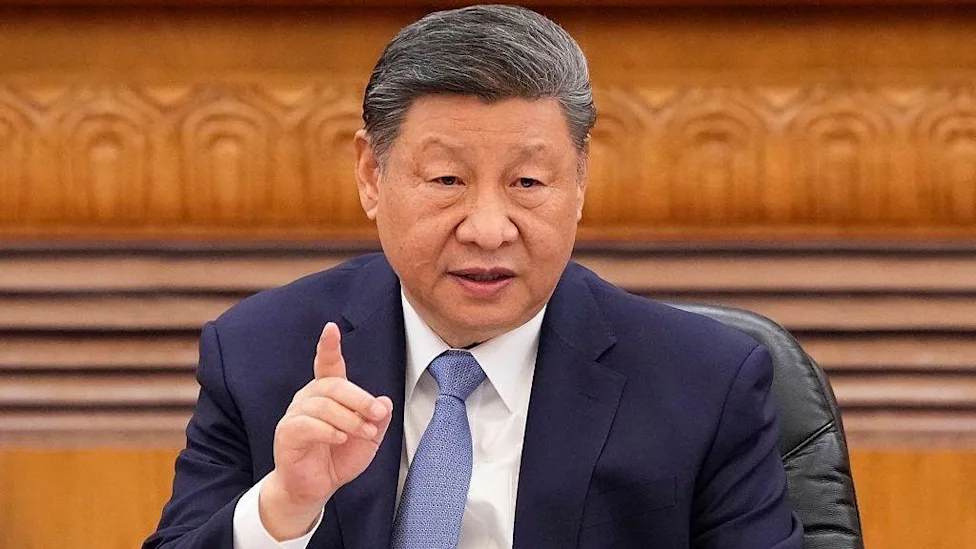
China has expelled a record 33 members of the ruling Communist Party following a major political gathering in Beijing, highlighting the growing scale of President Xi Jinping’s campaign against corruption and alleged indiscipline within the country’s political and military leadership. The unprecedented number of expulsions has drawn international attention, particularly as the latest developments reveal significant changes in the composition of the Communist Party’s most powerful institutions.
The expulsions were confirmed at the conclusion of the Chinese Communist Party’s fifth plenum, a major gathering of senior party officials held approximately once a year. The meeting became particularly notable because of the unusually large number of absent members, with empty seats emerging as a visible indication of the extensive political removals taking place under Xi’s leadership.
A total of 279 full and alternate members of the Communist Party’s Central Committee attended the gathering. This represented a substantial reduction from the 376 members originally identified when the committee was formed in 2022. Consequently, more than a quarter of the original membership was absent from the latest meeting. Although not every absence was officially explained, a significant number were associated with disciplinary investigations, dismissals and political purges.

The scale of the absences has made the latest gathering particularly unusual in the history of modern China. Analysts have described the empty seats as a striking representation of the extent to which Xi’s anti-corruption campaign has affected the upper levels of the ruling party. The meeting also demonstrated how political discipline and internal accountability have become increasingly important elements of Xi’s governing approach.
Among the most prominent officials confirmed to have been expelled were Zhang Youxia, previously regarded as the second-most senior figure in China’s military hierarchy, and Ma Xingrui, the former Communist Party secretary of Xinjiang. Both figures occupied influential positions within the Chinese political establishment, making their removal especially significant.
Zhang Youxia’s departure is particularly noteworthy because of his previous position within the People’s Liberation Army and his seniority in the country’s military command structure. His removal highlights the extent to which even highly influential military figures are not beyond the reach of the leadership’s disciplinary campaign. Meanwhile, Ma Xingrui’s expulsion demonstrates that the latest investigations have also affected senior civilian political officials.
However, the circumstances surrounding several other absences remain unclear. Chinese authorities have not provided detailed public explanations for every missing member, leaving analysts to examine the broader implications of the changing composition of the Central Committee.
The central theme of this week’s plenum was party governance, with particular attention given to internal discipline, political accountability and the fight against corruption. Since becoming China’s top leader in 2012, Xi Jinping has repeatedly presented corruption as a serious threat to the Communist Party’s authority and long-term survival.
His administration has launched extensive investigations targeting officials across government departments, provincial administrations, state-owned enterprises and the armed forces. The campaign has resulted in the removal, investigation or punishment of thousands of officials over the years.
Initially, the anti-corruption drive was widely presented as an effort to strengthen institutional integrity, improve administrative performance and restore public confidence in the ruling party. Xi has repeatedly argued that corruption weakens the Communist Party and undermines its ability to govern effectively.
However, the campaign has become increasingly extensive in recent years, reaching individuals occupying some of the most powerful positions in the country. This has generated questions among political observers about whether the campaign is driven exclusively by concerns over corruption or whether it also serves as a mechanism for consolidating political authority, eliminating potential rivals and enforcing personal loyalty to the leadership.
Xi has increasingly emphasised the need for strict discipline within the party. Earlier this year, he described corrupt officials as sick trees that needed to be uprooted, reinforcing his position that the fight against corruption must continue without interruption. He also characterised the campaign as a never-ending journey, suggesting that his administration does not intend to relax its scrutiny of party members.
The consequences have been particularly significant within the People’s Liberation Army, where repeated investigations and removals have substantially weakened the existing military leadership structure.
A series of purges has left China’s seven-member Central Military Commission, the country’s highest military decision-making body, with only two remaining members. They are Xi Jinping himself and Zhang Shengmin, the military’s senior anti-corruption official, who has played a central role in overseeing disciplinary enforcement within the armed forces.
The development represents a major transformation of China’s military leadership. The Central Military Commission is responsible for exercising the Communist Party’s command over the armed forces, making its composition particularly important for national security, defence planning and military administration.
The removal of several senior military figures has raised questions about institutional stability, leadership continuity and the potential consequences for military decision-making. Although Xi has consistently emphasised the importance of political loyalty and organisational discipline, extensive personnel changes can also create challenges in maintaining experienced leadership and ensuring administrative continuity.
Zhang Shengmin’s promotion to the Communist Party’s Politburo during the latest plenum further illustrates the growing importance of anti-corruption enforcement within China’s political system. The Politburo is the party’s highest-ranking decision-making body, and Zhang’s elevation makes him its only military representative.
His appointment signals that the leadership considers internal discipline and oversight essential to maintaining control over the armed forces. It also demonstrates how anti-corruption officials have acquired increasingly prominent positions within the party’s power structure.
Beyond the immediate expulsions, the latest plenum has also laid important political groundwork for the Communist Party’s 21st National Congress, which is expected to take place during the second half of 2027.
The congress, held once every five years, is one of the most important political events in China. It provides an opportunity for the party to review its leadership arrangements, establish major political priorities and make appointments to key institutions, including the Central Committee and the Politburo.
Xi Jinping is widely expected to seek an unprecedented fourth term as the Communist Party’s leader at the next congress. If he remains in power, he would further strengthen his position as the longest-serving leader of Communist China since the era of Mao Zedong.
His continued leadership would also mark another important stage in the transformation of China’s political system, particularly following the removal of the presidential term limit in 2018. The constitutional change opened the possibility of Xi remaining in office beyond the traditional two-term arrangement that had shaped China’s leadership transitions in previous decades.
Nevertheless, the extensive purges have created an additional challenge for the party ahead of next year’s congress. The Central Committee and Politburo are expected to undergo substantial personnel changes, but the removal of so many senior officials could make the process of identifying suitable replacements more complicated.
Political analysts have expressed concerns that the scale of the investigations has reduced the number of experienced candidates available for promotion. Officials who might otherwise have been considered for senior positions have either been removed, placed under investigation or affected by the broader restructuring of the party and military leadership.
The challenge is not simply replacing individuals. China’s political leadership must also ensure that the next generation of senior officials possesses the administrative experience, institutional knowledge and political credibility necessary to manage the world’s second-largest economy and one of its most powerful militaries.
The latest developments therefore highlight a complicated situation for Xi Jinping. On one hand, the campaign reinforces his authority and demonstrates that senior officials can face serious consequences for violating party rules. On the other, extensive removals risk creating uncertainty within institutions that depend on experienced personnel and stable chains of command.

For international observers, the record number of expulsions represents an important indication of the direction in which China’s political system is moving. The country’s leadership appears increasingly determined to strengthen internal discipline, reinforce political loyalty and maintain tighter control over the party and armed forces.
As China approaches the 2027 party congress, attention will increasingly focus on the officials selected to fill vacant positions and the future structure of the country’s political and military leadership. The choices made during this period could influence China’s domestic governance, military strategy and international relations for years to come.
The 33 expulsions and the unprecedented number of empty seats at the fifth plenum have therefore become more than a matter of internal party discipline. They reflect a major political restructuring under Xi Jinping, whose determination to maintain control over the Communist Party continues to reshape the leadership of modern China.
Related News:
 Israeli Strike in Southern Lebanon Kills Seven
 Five Years of Taliban Rule Leave Afghanistan in Crisis
 Germany Pledges €1bn Military Aid to Ukraine
 Israel Promotes Film Challenging Controversial Gaza Documentary
 India’s Youth Movement Alleges Mass Detentions Before Protest
 Gaza War Deepens India’s Strategic Ties With Israel
 Delhi Braces for Youth Protests Over Voter Roll Dispute
 PTI Announces Swabi Rally Ahead of Long March Plans
 India’s Voter Roll Crisis Sparks Nationwide Protests
 Gadi Eisenkot: Israel’s Anti-Netanyahu Challenger
 Xi Jinping Tightens China’s Anti-Corruption Campaign
 Ukraine Peace Talks Set to Resume in November
 Iran Crisis Tests Trump’s Global Leadership
 Southeast Asia Turns to Russia Amid Energy Crisis
 Cartel crackdown raises fears of fresh violence
 Australia pushes Pacific security pact amid China tension
 US ‘Narco Boat’ Strikes Draw Global Outcry
 US Awaits Iran Reply on New Ceasefire Proposal
 Hormuz Talks Near Critical Stage
 Maldives Cave Diving Tragedy Raises Safety Alarm
 Discontent grows around Putin amid war strain
 Millions Gather for Khamenei’s Six-Day State Funeral
 Venezuela Quake Death Toll Surpasses 4,000
 Houthis Strike Saudi Arabia as Middle East Tensions Rise
 Nepal-Tibet Flood Death Toll Rises as 2,478 Remain Missing
 Ukraine Villagers Demand Answers After Deadly Arms Depot Strike
 Nepal Flood Survivors Face Unimaginable Loss
 Trump Calls Iran War ‘Small Potatoes’ Despite US Deaths
 Nepal Tunnel Rescue Offers Hope Amid Flood Devastation
 Europe’s democracies face a growing far-right threat
 Saudi Arabia Shuts Oil Pipeline After Drone Attack
 Nearly 50,000 Flee as Houthis Advance in Yemen
 Israel Accused of Undermining Palestinian Life
 Yemen War Displaces 125,000 as Fighting Intensifies
 Saudi Pact Raises Risk of Pakistan Entering War
 Lib Dems Prepare for Election Amid Reform Challenge
 US Networks Suspend Trump White House Pool Coverage
 Japan PM Backs International Criminal Court
 UK Plans New Centre to Counter Information Warfare
 Iran Rejects Claims of Shift in US Talks
 Ukraine and Russia Escalate Long-Range Drone War
 Xi urges Trump to avoid US-China military conflict
 Lula accuses Trump of seeking control over Brazil
 Nepal PM calls deadly flood a global climate warning
 Saudi intercepts Houthi missiles as oil fears grow
 Republican Senator Questions Trump Ad Spending
 South Korea-Ukraine Row Erupts Over North Korean POWs
 Economic growth and political strain reshape Benin
 Drumcree Talks Falter as Legal Challenge Deepens
 UK-France Returns Deal Faces Expiry as Talks Stall
 New Maps Reveal Gaza’s Vast Destruction
 Green Party faces dispute over Zionism motion
 North Korea Fires Missile Amid DMZ Tensions
 Former German Intelligence Chief Arrested Over Espionage
 Israel Marks Three Years Since October 7 Attack
 South Korea Probes Fuel Shipments to Russia
 Trump Says He Deserves Nobel Peace Prize
 Sri Lanka Ex-First Lady Arrested Over Donation Probe
 Houthi Missile Claim Sparks Riyadh Airport Disruption
 Turkey Rules Out Troops in Saudi Arabia’s Houthi Conflict
 Bolsonaro Gains Key Endorsement Ahead of Brazil Runoff
 Trump Rules Out Iran Attack Before US Elections
 Delhi Tightens Security Ahead of Election Protest
 Trump’s Russian Diesel Deal Sparks Ukraine Fury
 Delhi Detains Protest Leaders as Youth Rally Escalates
 French Students Protest Poor Conditions in Paris Suburbs
 UK Greens Face Crisis Over Zionism and Extremism Row
 Brazil Court Scandal Threatens Lula as Bolsonaros Rise
 Greta Thunberg Backs French Students in School Protests
 Millions Face Tougher Medicaid Rules From January
 Ohio Airports Become Key Hubs for ICE Deportation Flights
 Ukrainian Soldier Faces Trial Over Nord Stream Blast
 Judge Blocks Trump White House Media Ban
 Serbia Leader Linked to Controversial Trump Tower Plan
 Suu Kyi Appears in Rare Photos After Royal Gift
 Zelenskyy Says US Failed to Warn Kyiv of Russian Strikes
 Japan’s Takaichi Faces a Crucial Second Year in Power
 Taylor Faces Backlash Over Response to Haines Attack
 Serbia’s Student Victory Sparks a ‘Smell of Freedom’
 Spain Mourns 68 Dead After High-Speed Train Crash