Published: 29 September 2026. The English Chronicle Desk. The English Chronicle Online
A diplomatic dispute between South Korea and Ukraine has intensified after Ukrainian President Volodymyr Zelenskyy publicly revealed that two North Korean prisoners of war captured while fighting for Russia had been transferred to South Korea.
What was expected to be a sensitive humanitarian arrangement has instead developed into an unusual disagreement between two governments that have generally maintained cooperative relations since Russia launched its full-scale invasion of Ukraine.
The dispute centres on whether Seoul and Kyiv had agreed to keep the transfer confidential. South Korea says there was a clear understanding that details of the handover would not be disclosed because of security, diplomatic and humanitarian concerns. Ukraine, however, has disputed the existence of such a non-disclosure agreement.
The issue became public after Zelenskyy mentioned the transfer during his address to the United Nations General Assembly last week. He said Ukraine had recently sent two North Korean prisoners of war to the Republic of Korea.

The announcement surprised officials in Seoul, who had previously treated the case with considerable secrecy. South Korean President Lee Jae Myung subsequently criticised the disclosure and said it violated an agreement between the two countries. South Korea has since demanded an explanation and an official apology from Ukraine.
The two prisoners were captured by Ukrainian forces in Russia’s Kursk region in January 2025. They were among North Korean soldiers deployed to Russia to support Moscow’s war effort against Ukraine.
Their capture was highly unusual because North Korean troops had been sent into the conflict under an increasingly close military relationship between Pyongyang and Moscow. Both prisoners reportedly expressed a desire to live in South Korea rather than return to North Korea.
The question of what should happen to the men had therefore become a complicated diplomatic and humanitarian issue. South Korea regards North Koreans as its citizens under its constitutional framework and has procedures for receiving North Korean defectors. At the same time, the men were captured on Russian territory while serving with Russian forces, creating additional diplomatic considerations for Ukraine.
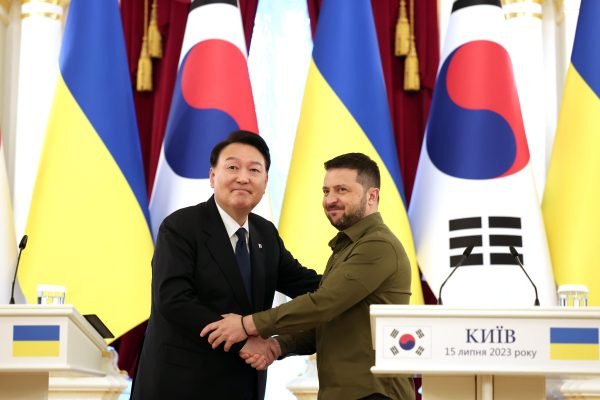
In July, Zelenskyy and Lee agreed to work towards resolving the matter while respecting the soldiers’ free will. The two men reportedly reached South Korea through a third country earlier this month.
Their arrival was not publicly confirmed by Seoul at the time. South Korean authorities had reasons to treat the case cautiously, particularly because the men’s families remained in North Korea and because of the sensitivity surrounding North Korea’s military involvement in Russia’s war.
The South Korean government has said Ukraine itself requested that the transfer remain confidential. According to Seoul, Kyiv was concerned that publicly announcing the handover could generate criticism inside Ukraine because the captured North Koreans might otherwise have been considered potential bargaining assets in efforts to secure the release of Ukrainian prisoners held by Russia.
South Korea agreed to maintain secrecy, officials said, partly because of concerns about the safety of the two men and their families and partly because of broader diplomatic and security considerations.
Zelenskyy’s public announcement at the UN therefore created an immediate political problem for Seoul.
Lee said on social media that the disclosure was regrettable and described it as a violation of a non-disclosure agreement. His presidential office later accused Ukraine of making a false statement when a Ukrainian presidential adviser disputed the existence of such an agreement.
Ukraine has maintained that there was no formal non-disclosure agreement of the kind described by Seoul. The disagreement has consequently shifted from the question of the prisoners themselves to a dispute over what the two governments actually agreed during months of discussions.
South Korea’s Foreign Ministry has insisted that the two sides had reached a clear understanding that the transfer would be handled confidentially. Asked whether the understanding had been formally documented, the ministry did not provide details but maintained that the matter had been agreed to be kept secret.
The Ukrainian embassy in Seoul did not immediately provide a public response to requests for clarification.
The disagreement has now become serious enough to affect diplomatic relations. South Korea summoned Ukraine’s chargé d’affaires in Seoul and demanded an apology at government level. Seoul has said that Ukraine’s disclosure and subsequent denial of a confidentiality arrangement have damaged trust between the two countries.
The dispute is particularly sensitive because of the wider security environment on the Korean Peninsula.
North Korea has not publicly commented on the transfer. South Korean authorities have said they have not identified any related developments from Pyongyang and are continuing to monitor the situation.
For North Korea, the fate of the two soldiers could be politically sensitive. Pyongyang has promoted its troops involved in the war alongside Russia as patriotic figures supporting a close ally. The return of surviving soldiers who chose to live in South Korea could create an uncomfortable contradiction for the North Korean government, particularly if details of their experiences became public.
Analysts have also noted that North Korean soldiers are subjected to strict political control and ideological training. The decision by two captured soldiers to seek life in South Korea therefore carries significance beyond their individual cases.
The transfer could also provide South Korean authorities with an opportunity to learn more about North Korea’s military involvement in the Ukraine war. The men are expected to undergo questioning and security screening under South Korean procedures for North Korean arrivals before being considered for longer-term protection and resettlement.
Their experiences could potentially offer information about North Korean military training, deployment and cooperation with Russian forces. However, the precise value of any information they provide will depend on the authorities’ assessment and verification.
The dispute is unfolding against a broader transformation in relations among North Korea, Russia, Ukraine and South Korea.
North Korea has deepened its military relationship with Russia since the beginning of the full-scale war. Ukrainian and South Korean estimates indicate that thousands of North Korean soldiers have been deployed to Russia, with many involved in fighting in the Kursk region.
Pyongyang has also been accused of supplying Russia with significant quantities of military equipment and ammunition. The growing military cooperation has raised concerns in Seoul because it potentially strengthens North Korea’s military capabilities and its relationship with Moscow.
South Korea, meanwhile, has condemned Russia’s invasion of Ukraine and joined international sanctions against Moscow. Seoul has also provided assistance to Ukraine, although it has maintained a longstanding policy against directly supplying lethal weapons to countries involved in active wars.
The South Korean government’s approach to the Ukraine conflict has therefore been more cautious than that of some European allies of Kyiv. Seoul has sought to support Ukraine while simultaneously managing its own security concerns and maintaining room for diplomacy on the Korean Peninsula.
That balancing act has become more difficult as North Korea’s involvement in the Ukraine war has grown.
The current dispute has also triggered criticism inside South Korea. Some politicians have questioned the government’s handling of the prisoners and the decision to keep their arrival secret. Others have focused instead on the diplomatic consequences of Ukraine’s public disclosure.
The controversy has therefore developed into both a foreign-policy dispute and a domestic political issue.
For Seoul, the immediate concern is not simply that information about the two prisoners became public. Officials have emphasised that confidentiality was intended to protect the men and their families while also preventing the sensitive case from becoming entangled in wider diplomatic disputes.
For Kyiv, the prisoners represent another visible example of North Korea’s direct involvement in Russia’s war. Zelenskyy has repeatedly highlighted the role of North Korean personnel as evidence that Moscow is receiving military support from beyond its traditional allies.
These differing priorities help explain why an arrangement that initially appeared to be a humanitarian solution has developed into a diplomatic confrontation.

The two North Korean soldiers are now in South Korea, but the disagreement between Seoul and Kyiv remains unresolved. South Korea is seeking an apology and clarification, while Ukraine has challenged Seoul’s account of the confidentiality arrangement.
The episode demonstrates how the Ukraine war continues to produce consequences far beyond the battlefield. A decision involving two captured soldiers has become intertwined with the security of their families, North Korea’s military partnership with Russia, South Korea’s policy towards Pyongyang and Kyiv’s efforts to expose international support for Moscow.
As governments continue to navigate those competing interests, the fate of the two prisoners has become a reminder that even humanitarian decisions can carry significant diplomatic consequences when they involve countries caught at the intersection of several major international conflicts.
Related News:
 Houthis Strike Saudi Arabia as Middle East Tensions Rise
 Taliban global ties grow as rights fears mount
 Trump Asked Xi About Buying US Weapons
 Activists allege abuse after Gaza flotilla seizure
 Australia pushes Pacific security pact amid China tension
 Middle East Crisis Escalates as Oil Routes Shake Markets
 Putin Declares Russia Victory at Scaled Victory Day Parade
 Discontent grows around Putin amid war strain
 Millions Gather for Khamenei’s Six-Day State Funeral
 Seoul proposes historic peace talks to replace Korean War armistice
 Israeli Strike in Southern Lebanon Kills Seven
 Russian Missiles Intensify Pressure on Kyiv
 Trump Calls Strait of Hormuz ‘American Territory’
 Trump Faces Iran War Crisis Before Midterm Vote
 UN expert urges UK to rethink Israel policy
 North Korea Expands Uranium Facility at Yongbyon
 Nearly 50,000 Flee as Houthis Advance in Yemen
 Saudi Pact Raises Risk of Pakistan Entering War
 Netanyahu faces protests and pressure at UN
 Iran Awaits Trump Response on Seven-Day Hormuz Plan
 Shock US Raid: Maduro Pleads Not Guilty in Manhattan Court
 Machado Trump medal gesture reshapes Venezuela power struggle
 Trump Receives Machado’s Nobel Medal in White House Meeting
 Iran unrest slows under brutal crackdown and global tensions
 US Considers Asylum for British Jews Amid Rising Antisemitism
 Russia Strikes Kyiv and Kharkiv as Peace Talks Enter Day Two
 Thousands Protest ICE Operations in Nationwide US Day of Action
 Epstein Files Reveal Trump Officials’ Emails with Financier
 Thousands Protest ICE in New York Against Trump Deportation Campaign
 Nine Killed in Karachi Consulate Protest
 UK Prepares Aircraft Carrier for Middle East Crisis
 Yvette Cooper: UK Must Follow Principles, Not US Pressure
 Anti-Regime Iranians Turn Anger Toward Trump
 Southeast Asia Turns to Russia Amid Energy Crisis
 Ukraine Urges UK to Seize Russian Oil Tankers
 US Calls Australia Media Law “Foreign Extortion”
 Oil Prices Surge Above $120 Amid Iran Blockade Fears
 Trump orders US troop pullout from Germany
 Global order shifts amid Trump-era turmoil
 BJP Sweeps West Bengal in Historic Breakthrough
 Ceasefire Standoff Deepens in Ukraine War
 Indiana Republicans Defy Trump in Key Vote Test
 Trump Announces 3-Day Russia–Ukraine Ceasefire Deal
 Tensions Emerge in Netanyahu-Trump Alliance
 US Awaits Iran Reply on New Ceasefire Proposal
 One Nation Stuns Australia With Historic Farrer Win
 Hormuz Talks Near Critical Stage
 Zelenskyy warns over Oreshnik threat as Kyiv hit
 Hunger increasingly weaponised in global conflicts
 Former ICC prosecutor condemns US sanctions
 Trump’s Iran Legacy Hangs on Tehran Deal
 Venezuela Quake Death Toll Surpasses 4,000
 Five Years of Taliban Rule Leave Afghanistan in Crisis
 Trump dismisses concerns over 250-day carrier deployment
 Former Diplomats Urge UK and France to Act on Palestine
 Trump announces major US oil deal with Venezuela
 Nepal-Tibet Flood Death Toll Rises as 2,478 Remain Missing
 Nepal Rescuers Race to Save Hundreds Trapped Underground
 Trump Hardens Canada Trade Stance as Talks Stall
 Nepal Flood Survivors Face Unimaginable Loss
 Nepal Tunnel Rescue Offers Hope Amid Flood Devastation
 Nepal seeks $20m climate compensation after deadly floods
 Saudi Arabia Shuts Oil Pipeline After Drone Attack
 South Korea Rules Out Military Role in Iran War
 Middle powers seek new alliances amid Trump era
 Japan PM Backs International Criminal Court
 Sri Lanka Easter Bombings: 15 Get Long Prison Terms
 Iran Rejects Claims of Shift in US Talks
 Xi urges Trump to avoid US-China military conflict
 Nepal PM calls deadly flood a global climate warning
 Saudi intercepts Houthi missiles as oil fears grow
 Russia Targets Ukraine’s Digital Economy With Strikes
 BBC to Apologise Over Edited Trump Speech Amid Backlash
 Greene Pushes Epstein Files Amid Trump Fallout
 Shadow Fleet at Sea: Europe’s Battle Against Illicit Oil Shipping
 UK and US Drop in Global Corruption Index Rankings
 Investigation Into Anti-Trump Motives After Gala Shooting
 Maldives Cave Diving Tragedy Raises Safety Alarm
 Grief and Devotion Amidst the Rubble of Nabatieh
 Nepal-Tibet Flood Leaves 270 Dead and 1,400 Missing