Published: 23 September 2026. The English Chronicle Desk. The English Chronicle Online.
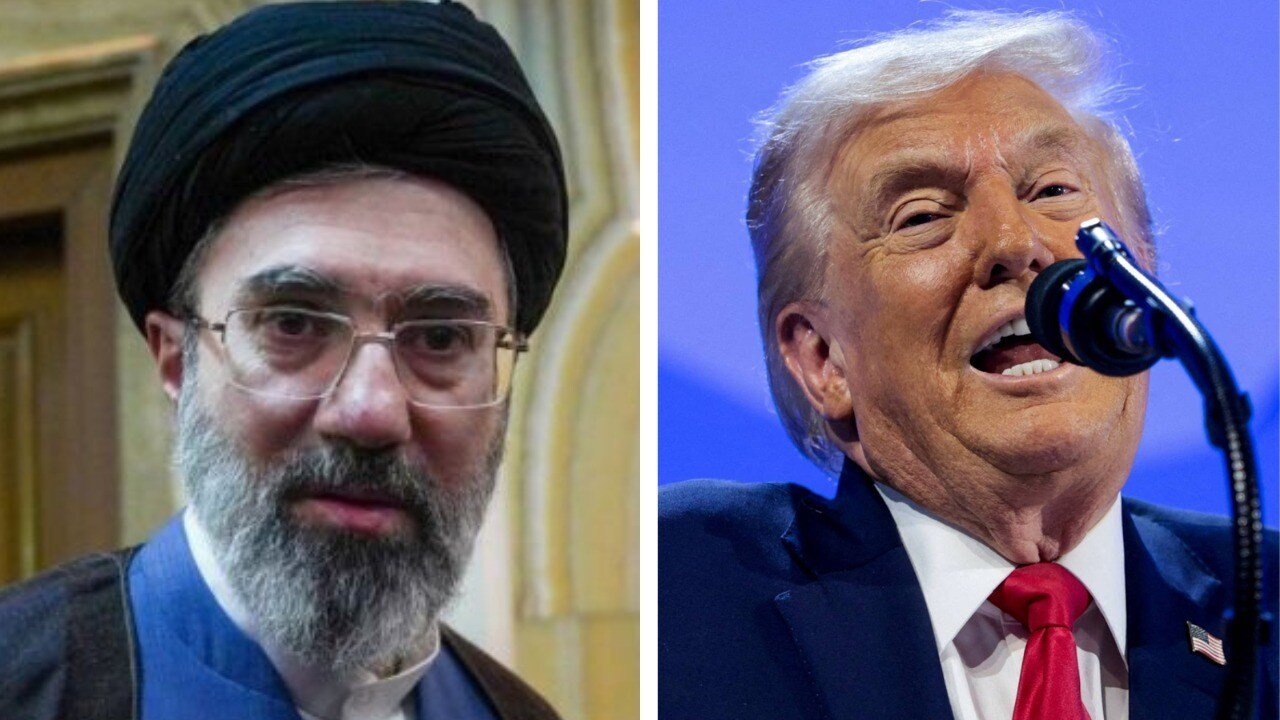
Iran has rejected suggestions that it has abandoned its conditions for reopening the Strait of Hormuz after holding three hours of talks with US representatives in New York, while President Donald Trump described the discussions as highly productive and indicated that further negotiations could take place soon.
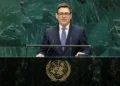
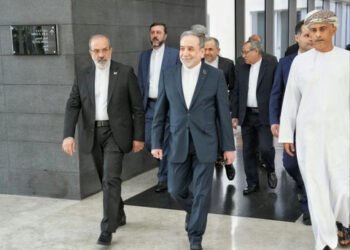
The unexpected meeting brought Iranian Foreign Minister Abbas Araghchi together with Trump’s representatives Steve Witkoff and Jared Kushner, with Qatar acting as a mediator. The discussions took place at the United Nations headquarters as world leaders gathered in New York for the annual General Assembly.
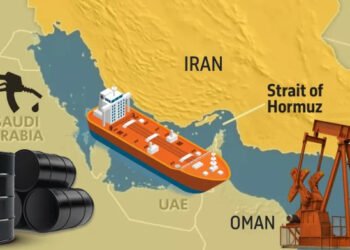
The talks attracted immediate attention because of the strategic importance of the Strait of Hormuz, a narrow waterway through which a substantial volume of global oil and energy shipments normally passes. Restrictions on shipping through the strait have contributed to uncertainty in international energy markets and raised concerns about the potential economic consequences of a prolonged disruption.
Trump said the three-hour meeting had gone very well and described it as productive. Witkoff also characterised the discussions as encouraging, constructive and successful. The comments fuelled expectations that diplomatic contacts could continue, and Brent crude subsequently fell below $100 a barrel for the first time in two weeks.

Iran, however, sought to make clear that the meeting did not represent an abandonment of its negotiating position. Iranian Foreign Ministry spokesperson Esmail Baghaei confirmed that contact with the American side had taken place through Qatari mediation but said Iran’s conditions had been conveyed during the discussions.
Baghaei said those conditions included an end to the war, the cessation of what Tehran describes as American aggressive actions, an end to the naval blockade and economic pressure, and the release of Iranian assets. His comments appeared intended to reassure domestic audiences that Iran had not simply accepted a change in its previous demands.
The disagreement over the conditions is important because the reopening of the Strait of Hormuz has become one of the central issues in the wider confrontation between Washington and Tehran. Iran has previously outlined a series of conditions for returning to negotiations, and officials have recently indicated that the waterway could potentially be reopened within seven days if those requirements were met.
The exact terms of any possible reopening remain a subject of dispute. One issue concerns the navigation arrangements for commercial vessels passing through the strait. Iran has sought a role in managing shipping routes that could require commercial traffic to use a maritime lane situated largely within Iranian waters.
The question of who would exercise authority over navigation and whether Iran or neighbouring Oman would be responsible for aspects of the route has broader implications for regional sovereignty and shipping security. Any agreement would therefore need to address both immediate access for commercial vessels and the longer-term management of the waterway.
The length of the New York meeting has encouraged speculation that the two sides may have explored areas of possible compromise, although neither Washington nor Tehran has publicly announced a comprehensive agreement. The talks took place against significant economic and political pressure on both governments.
For the United States, energy prices and the availability of refined petroleum products have become increasingly important domestic concerns. For Iran, sanctions and restrictions on oil exports have placed additional pressure on an economy heavily dependent on access to international markets and foreign currency.
The disruption around the Strait of Hormuz has also been complicated by uncertainty over another major maritime chokepoint. The Bab al-Mandab Strait connects the Red Sea with the Gulf of Aden and Indian Ocean and has been affected by the activities of Yemen’s Iran-aligned Houthi movement. Concerns over both waterways have increased uncertainty for energy companies and international shipping operators.
Iran itself is facing growing economic pressure. US sanctions have made it more difficult for Tehran to sell oil and receive international payments, while restrictions affecting the country’s civilian aviation sector have created additional problems.
Iranian officials have reportedly sought assistance from neighbouring states to maintain air links while facing the threat of secondary sanctions against organisations dealing with its civilian aviation industry. Restrictions on regional airspace have further complicated travel and transportation arrangements.
Against this background, the diplomatic contacts in New York represent an important channel for communication even though significant disagreements remain. Iranian President Masoud Pezeshkian arrived in New York during the talks and was scheduled to address the UN General Assembly.
Pezeshkian has previously supported negotiations with the United States and has continued to refer to a memorandum of understanding agreed between Washington and Tehran in June as a possible foundation for further discussions. The implementation of that understanding later broke down after the two sides accused one another of violating its terms, particularly in relation to control of the Strait of Hormuz.
Tehran has maintained that the earlier understanding allowed Iran to retain control of the waterway temporarily while a longer-term arrangement could be negotiated. The possibility of Iranian and Omani authorities charging fees for navigation services was also reportedly part of the wider discussion.
Pezeshkian’s appearance at the UN comes at a particularly sensitive moment. He has repeatedly criticised what he regards as Western double standards in responding to international conflicts. Iran has argued that Western governments have been more willing to condemn Russia’s invasion of Ukraine than to criticise military actions against Iran or Israel’s conduct in Gaza.
Those arguments formed part of a wider debate at the UN General Assembly, where European and Arab leaders raised concerns about the ability of major powers to prevent or end conflicts.
French President Emmanuel Macron, speaking in what was described as his farewell UN address, criticised attempts by the United States and Israel to change Iran’s political system, arguing that efforts by outside powers to replace governments can produce greater instability. His remarks reflected broader disagreements among Western and Middle Eastern governments over the appropriate response to the conflict.
Macron also criticised the situation in Gaza and questioned claims that a lasting peace had been achieved while humanitarian access remained severely restricted. His comments prompted a response from the Israeli government after he made remarks concerning the presence and activity of Hamas in the West Bank.
Israel’s government rejected Macron’s suggestion regarding Hamas activity in the territory and said attacks against Israelis continued there. The exchange illustrated the continuing diplomatic tensions surrounding the wider Middle East crisis.
Jordan’s King Abdullah II also used his UN address to criticise Israeli policy in Gaza. He accused the Israeli government of changing the conditions of the conflict and continuing attacks and destruction of civilian infrastructure. He also argued that Palestinians had been confined to an increasingly restricted part of the Gaza Strip.
The Jordanian king called for greater international accountability over developments in Gaza and argued that the consequences of the conflict should not be treated simply as temporary military measures.
These wider disagreements form the diplomatic backdrop to the US-Iran discussions. Although the New York meeting focused primarily on the confrontation between Washington and Tehran, the wider regional conflicts are closely connected through security, energy supplies, military alliances and international diplomacy.
Trump’s own UN speech added another element of uncertainty. He said he faced a decision over whether to pursue further confrontation with Iran or seek a path that could transform the relationship. His language was unusually forceful, reflecting the pressure surrounding the negotiations.
At the same time, the comments from both Trump and his representatives suggested that Washington remains interested in continuing diplomatic contacts. Tehran’s insistence that its conditions remain unchanged indicates that substantial differences persist.
The immediate response from financial markets demonstrated how sensitive energy prices have become to developments around the talks. Brent crude falling below $100 a barrel after the meeting reflected expectations that diplomatic progress could reduce the risk of prolonged disruption to energy supplies, although market movements can change quickly as negotiations develop.

For international governments and businesses, the central question remains whether the talks can produce a practical arrangement that allows commercial shipping to resume while addressing the security and political demands of both sides.
The three-hour meeting has opened a potential diplomatic channel, but it has not yet produced a publicly confirmed settlement. Iran says its conditions remain on the table, while the US side has described the discussions in positive terms and left open the possibility of further meetings.
The coming days are therefore likely to be closely watched for evidence of whether the New York discussions lead to another round of negotiations. Any progress on the Strait of Hormuz could have consequences far beyond the immediate US-Iran dispute, affecting global oil prices, shipping routes and the wider economic outlook.
For now, the contrasting messages from Tehran and Washington underline the uncertainty surrounding the diplomatic process. The talks have demonstrated that communication remains possible, but the fundamental disagreements over the war, sanctions, maritime control and regional security have not been publicly resolved.
Related News:
 US Awaits Iran Reply on New Ceasefire Proposal
 Trump Hardens Canada Trade Stance as Talks Stall
 Saudi Arabia Shuts Oil Pipeline After Drone Attack
 Trump Eyes Major Belarus Fertiliser Deal Amid Canada Trade Dispute
 Southeast Asia Turns to Russia Amid Energy Crisis
 Hormuz Talks Near Critical Stage
 UK Pushes for New EU Goods Trade Deal
 Reeves Fights to Keep Treasury Role Amid Labour Turmoil
 Discontent grows around Putin amid war strain
 Europe Weighs Hormuz Navigation Fee Plan
 Canada to Match Trump’s 50% Tariffs Dollar for Dollar
 Europe Faces Winter Gas Supply Anxiety
 Dutch Bank Moves 86 Tonnes of Gold to London
 Swedish Mining Push Puts Sami Land Rights Under Pressure
 Oil nears $100 as Saudi attacks shake markets
 Japan Raises Rates to 31-Year High
 South Korea Rules Out Military Role in Iran War
 Burnham Leaves Door Open to Future Brexit Reversal
 Thinktank Calls for Abolition of UK State Pension
 MPs Defend UK Economic Watchdog Against Critics
 Canada Passes Carney’s First Budget in Tight Parliamentary Vote
 India’s Labour Law Overhaul Sparks Fierce Debate
 Carney’s Alberta Pipeline Deal Sparks Immediate Pushback
 Mark Carney Walks Diplomatic Tightrope on China Visit
 Nine Killed in Karachi Consulate Protest
 UK Doubles Steel Tariffs to 50% to Protect Domestic Plants
 Trump to Deploy “God Squad” Over Gulf Wildlife Protections
 Trump Slams UK Ties and Threatens To Rewrite Trade Deal
 Trump Faces Crisis as Iran Reopens Hormuz Tensions
 Iran Reimposes Strait of Hormuz Restrictions Amid Tension
 US Calls Australia Media Law “Foreign Extortion”
 Capitalism ‘Suicidal’, Warns Petro at Climate Summit
 Oil Prices Surge Above $120 Amid Iran Blockade Fears
 BBC News Faces Deep Cuts in 2,000 Job Plan
 Trump approval plunges amid Iran war fears
 Ohio’s Battle for Trust: Democrats Vying to Flip the Buckeye State
 Trump Threatens UN Budget Cuts as US Pushes ‘Trade Over Aid’ Agenda
 Australia pushes Pacific security pact amid China tension
 Middle East Crisis Escalates as Oil Routes Shake Markets
 Norway Doubles Down on Oil and Gas for Europe Energy Security
 Beijing Becomes Centerstage for Global Diplomatic Ballet
 Kevin Warsh sworn in as Fed chair amid economic backlash
 China mine blast death toll rises to 90
 Albanese Defends Tax Reforms Amid Emotional Speech
 Victoria Labor Launches Apprenticeship Expansion Plan
 Trump Claims Iran Peace Deal Near Completion
 Millions Gather for Khamenei’s Six-Day State Funeral
 Ukraine Creates Long-Range Strike Command
 Labour MPs Urge Burnham to Revive UK Aid Target
 Venezuela Quake Death Toll Surpasses 4,000
 Houthis Strike Saudi Arabia as Middle East Tensions Rise
 Israeli Strike in Southern Lebanon Kills Seven
 Five Years of Taliban Rule Leave Afghanistan in Crisis
 Shein targets $27bn valuation in Hong Kong debut
 Firms on both sides fear damage from US-Canada trade war
 Trump orders US to rename Lake Ontario ‘Lake America’
 Burnham Faces Mounting Budget Challenges
 Green Leader Targets Starmer’s Former Seat
 Trump Calls Iran War ‘Small Potatoes’ Despite US Deaths
 UK House Prices Fall as Mortgage Rates Rise
 Argentina to file criminal charges over Falklands oil drilling
 UK plans tougher Israel stance with settlement trade ban
 Trump Pledges $5,000 if Republicans Win Midterms
 Nearly 50,000 Flee as Houthis Advance in Yemen
 Oil Prices Surge as Saudi Pipeline Closure Deepens Crisis
 Thames Water Revises Oxfordshire Mega-Reservoir Plan
 UK Pay Growth Slows to 3.9% as Rate Decision Nears
 Bank Urged to Slow Bond Sales as UK Costs Rise
 UK Inflation Hits 3.1% as Household Pressure Grows
 EU Opens Door to Canada as Associate Member
 Trump Threatens EU With Tariffs Over Canada Proposal
 Trump Threatens EU Over Canada Partnership Proposal
 US Sanctions Open New Battle for Cuba Assets
 Indonesia Receives First Aircraft Carrier
 UK Retail Sales Rebound as Consumers Spend More
 Saudi Pact Raises Risk of Pakistan Entering War
 Middle powers seek new alliances amid Trump era
 Macron and Carney deepen France-Canada ties
 Japan PM Backs International Criminal Court
 AI Takes Centre Stage in Trump-Xi Talks