Published: 16 September 2026. The English Chronicle Desk. The English Chronicle Online.
UK inflation has climbed back above 3%, adding to the financial pressure facing households and businesses as higher energy and fuel costs feed through the economy. The latest figures arrive at a particularly sensitive moment, with the Bank of England preparing to decide whether to change interest rates and financial markets reacting sharply to rising oil prices and increased geopolitical uncertainty.
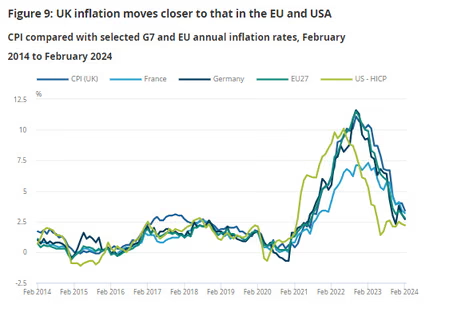
Data from the Office for National Statistics showed that consumer price inflation increased from 2.9% in July to 3.1% in August. The rise was broadly in line with economists’ expectations, but it represents a renewed challenge for households already dealing with elevated living costs.
The August increase was driven in part by energy-related pressures, with international oil and gas prices rising amid intensified fighting in the Middle East. The conflict involving Iran has contributed to turbulence in global energy markets, raising concerns that higher costs could continue to affect transport, household bills and business expenses in the months ahead.
For many families, the impact of higher inflation is felt through everyday spending. Fuel prices have risen significantly, with average petrol prices approaching 170p a litre and diesel moving above 191p. The increase comes as households continue to manage food, housing, transport and other essential expenses that have already become considerably more expensive over recent years.

The return of inflation above 3% also creates a difficult environment for the Bank of England. Policymakers are due to meet on Thursday to determine the next direction of interest rates, with the latest inflation figures providing another important consideration for the Monetary Policy Committee.
The central bank left borrowing costs unchanged in July while warning that a severe escalation of the Middle East conflict could create additional inflationary pressures. Under a worst-case scenario outlined by the Bank, UK inflation could reach 4.5% by the middle of 2027.
That warning has taken on greater significance as oil prices have surged. International crude prices reached about $109 a barrel during the week, increasing concerns over another period of cost pressures. Energy prices have a broad effect on the economy because they influence not only household heating and transport costs but also the expenses faced by companies producing and delivering goods and services.
Higher fuel prices can also have wider consequences. Businesses that depend heavily on transportation may face increased operating costs, while manufacturers can be exposed to higher energy bills. Companies may respond by absorbing some of those costs, reducing spending elsewhere or passing additional expenses on to customers. The eventual effect depends on the strength of demand and the ability of businesses to manage rising costs.
Financial markets have also experienced significant volatility. Government bond yields have increased as investors have responded to changing expectations about inflation, interest rates and public finances. US government bond yields moved above 5% for the first time since 2023, while long-term UK government borrowing costs reached levels not seen for decades.
For the British government, higher borrowing costs could make an already difficult fiscal situation more challenging. Chancellor John Healey is scheduled to present a budget next month, when the government will face decisions over spending, taxation and the funding of its policy priorities.
The combination of rising inflation and higher government borrowing costs could make those decisions more complicated. If market interest rates remain elevated, the cost of servicing government debt can increase, reducing the amount of money available for other public spending priorities.
Households, meanwhile, remain exposed to the effect of inflation even when the overall rate is considerably lower than the exceptionally high levels recorded during the earlier cost-of-living crisis. A lower inflation rate does not mean that prices have returned to previous levels. Instead, it means that prices are increasing more slowly than before.
That distinction is important for families managing monthly budgets. When the prices of fuel, food, housing and other necessities rise, households may have less disposable income available for non-essential spending. A renewed acceleration in inflation can therefore prolong financial pressures even if the headline rate remains well below its previous peak.
The latest figures also illustrate how developments outside Britain can influence the domestic economy. The Middle East conflict has disrupted expectations in energy markets, while the resulting movements in oil prices have been reflected in British petrol and diesel costs.
The potential consequences extend beyond motorists. Oil is an important input for many areas of the economy, directly and indirectly affecting transportation, manufacturing and distribution. If elevated energy prices persist, their influence could gradually spread through supply chains and place additional pressure on consumer prices.
The Bank of England therefore faces a difficult balancing act. Its monetary policy decisions must take account of inflation while also considering economic activity and financial conditions. Higher interest rates can help reduce inflationary pressure by increasing borrowing costs and encouraging saving, but they can also weigh on households and businesses that depend on credit.
Keeping rates unchanged, meanwhile, avoids adding another immediate increase to borrowing costs but leaves policymakers facing the risk that inflationary pressures could remain persistent. The latest inflation reading will consequently form part of a wider assessment of the economy rather than determining policy on its own.
The situation is particularly important for households with mortgages or other variable-rate borrowing. Changes in interest rates can affect monthly repayments, while higher fuel and household costs can reduce the financial room available to meet those payments. Renters and people without mortgages can also be affected indirectly through broader housing and consumer costs.
Businesses face a similarly uncertain environment. Higher energy and transport costs can squeeze profit margins, while elevated interest rates can make investment and expansion more expensive. Smaller companies may be particularly sensitive to changes in financing and operating costs because they often have less capacity to absorb sudden increases.

At the same time, inflation remains a wider economic measure rather than an indication of how every household is experiencing price changes. Individual spending patterns differ, meaning that some families may face considerably higher or lower personal inflation than the headline figure.
The August increase nevertheless provides a clear indication that the downward path in inflation is not guaranteed. External shocks, particularly changes in energy prices, can quickly alter the outlook. The coming months will depend partly on developments in global energy markets and the extent to which higher costs are passed through to consumers.
For policymakers, the challenge is to prevent temporary external pressures from becoming embedded in domestic inflation while avoiding unnecessary damage to economic activity. For households, the immediate concern is more practical: managing rising costs at a time when fuel prices are already increasing and borrowing conditions remain uncertain.
With the Bank of England’s interest-rate decision approaching and the government’s budget due next month, the latest inflation figures have placed renewed attention on the financial pressures facing Britain. The 3.1% annual increase may have been broadly expected, but its arrival alongside sharply higher energy prices means the cost-of-living outlook remains closely tied to developments far beyond the UK economy.
Related News:
 UK Pay Growth Slows to 3.9% as Rate Decision Nears
 Bank Urged to Slow Bond Sales as UK Costs Rise
 UK House Prices Fall as Mortgage Rates Rise
 Thames Water Revises Oxfordshire Mega-Reservoir Plan
 UK State Pension Set to Rise 3.9% as Triple Lock Holds
 UK Parents Cut School Uniform Costs as Prices Rise
 BBC News Faces Deep Cuts in 2,000 Job Plan
 Reeves Fights to Keep Treasury Role Amid Labour Turmoil
 Pubs and Hotels Face Business Rates Reform Review
 UK Households Could Save £173 on Fixed Energy Deals
 Burnham Faces Mounting Budget Challenges
 UK Cost Squeeze Deepens as Mortgages and Gas Rise
 Oil nears $100 as Saudi attacks shake markets
 Fashion Firms Urge UK-Made NHS and Army Uniforms
 North Sea Firms Urge Early End to Windfall Tax
 Wealthy Britons Flee Gulf War but Avoid UK Taxes
 UK Wage Growth Slows as Jobs Market Holds Firm
 UK Doubles Steel Tariffs to 50% to Protect Domestic Plants
 Reform UK funding: mystery billionaire revealed
 New UK advice scheme to boost savings and investing
 UK Pushes for New EU Goods Trade Deal
 UK rejects EV charging VAT cut amid Treasury clash
 Weight-Loss Drugs Transform Fashion Shopping Habits
 Labour MPs Urge Burnham to Revive UK Aid Target
 EasyJet Takeover Sparks Fears Over Passengers’ Future
 Burnham unveils £65m drought aid for farmers
 Firms on both sides fear damage from US-Canada trade war
 US CEOs Earn 614 Times More Than Workers
 Europe Faces Winter Gas Supply Anxiety
 Dutch Bank Moves 86 Tonnes of Gold to London
 Trump Hardens Canada Trade Stance as Talks Stall
 Green Leader Targets Starmer’s Former Seat
 UK Subsidence Claims Surge After Record-Breaking Summer
 Reform Faces Fresh Financial Controversy
 Spire Healthcare Agrees £1bn Takeover by Toscafund
 Billionaire Chris Rokos poised to leave UK
 JPMorgan Boss Warns Against UK Bank Tax Rise
 John Lewis Losses Widen to £124m as Confidence Falls
 Reform UK Receives Record £36m Donation From Crypto Billionaire
 Oil Prices Surge as Saudi Pipeline Closure Deepens Crisis
 Reform Faces Questions Over £72m Donations
 UK Retailers Accused of Breaking Refund Laws
 Farage Threatens Union Funding Ban Over Reform Donations
 JLR Eyes NATO Market With New Defender Military Vehicle
 Chancellor Rachel Reeves Pushes for Sweeping Changes to Environmental Protections to Accelerate Development
 Senior Tories Condemn Badenoch’s Vow to Repeal Climate Change Act as Catastrophic
 Kemi Badenoch Unveils ‘Golden Rule’ to Halve Spending Cuts for Deficit Reduction at Tory Conference
 Trump’s UK Ambassador Urges North Sea Drilling to Strengthen US Ties
 Millionaires group urge Reeves to introduce wealth tax to ‘lift kids out of poverty’
 PM Highlights UK Business at G20 in South Africa
 Starmer Says Labour’s Economic Plan Needs Years to Deliver
 UK Government Borrowing Drops to £11.6bn in December
 UK shelves £110m border project amid trade strain
 Reeves Must Back Defence Plan or Face Dismissal, Says Unite Chief
 OBR Reform Row Deepens Before Spring Forecast
 Farage Faces Backlash Over Crypto Cameo Endorsements
 Rising Costs Force Families to Rethink Days Out
 Glasgow Central Set for Full Reopening After Fire
 Unions Raise Concerns Over Doctors’ Pay Dispute
 Kezia Dugdale Warns of Possible Reversal of Equal Rights Gains
 Albanese Rejects Gas Export Tax Push
 Silent Tracks: Rail Line Without Passengers
 US Awaits Iran Reply on New Ceasefire Proposal
 Kevin Warsh sworn in as Fed chair amid economic backlash
 Albanese Defends Tax Reforms Amid Emotional Speech
 Victoria Labor Launches Apprenticeship Expansion Plan
 Nationwide Faces Governance Scrutiny Ahead of AGM
 Farage and Reform UK Reshape British Politics
 Starmer Leadership Under Pressure After Setbacks
 Andy Burnham Enlists Economic Heavyweights for Leadership Bid
 Trump Refuses to Sign Housing Bill, But Law Takes Effect
 Weight-Loss Drugs Offer Food Savings Mainly to High Earners
 Canada to Match Trump’s 50% Tariffs Dollar for Dollar
 Unions Warn Labour Over Zero-Hours Contract Reforms
 Ghent Professors Questioned Cofnas Appointment
 RAF Barnham Protests Fuel Tensions in Norfolk Town
 Swedish Mining Push Puts Sami Land Rights Under Pressure
 UK plans tougher Israel stance with settlement trade ban
 Councils spend £125m on illegal children’s care
 Saudi Arabia Shuts Oil Pipeline After Drone Attack