Published: 16 September 2026. The English Chronicle Desk. The English Chronicle Online
Saudi Arabia has warned Yemen’s Houthi movement that the security of Islam’s holiest sites is a “red line” after Saudi air defences intercepted and destroyed a drone south of Mecca before it entered the city’s restricted airspace. The incident has intensified regional tensions and prompted condemnation from the Organisation of Islamic Cooperation (OIC).
The Saudi-led coalition said the drone was intercepted on Tuesday evening, 15 September, before reaching prohibited airspace over Mecca. Coalition spokesperson Turki al-Malki said the security of the Two Holy Mosques and pilgrims was a red line and warned that the coalition would take measures intended to deter further attacks.
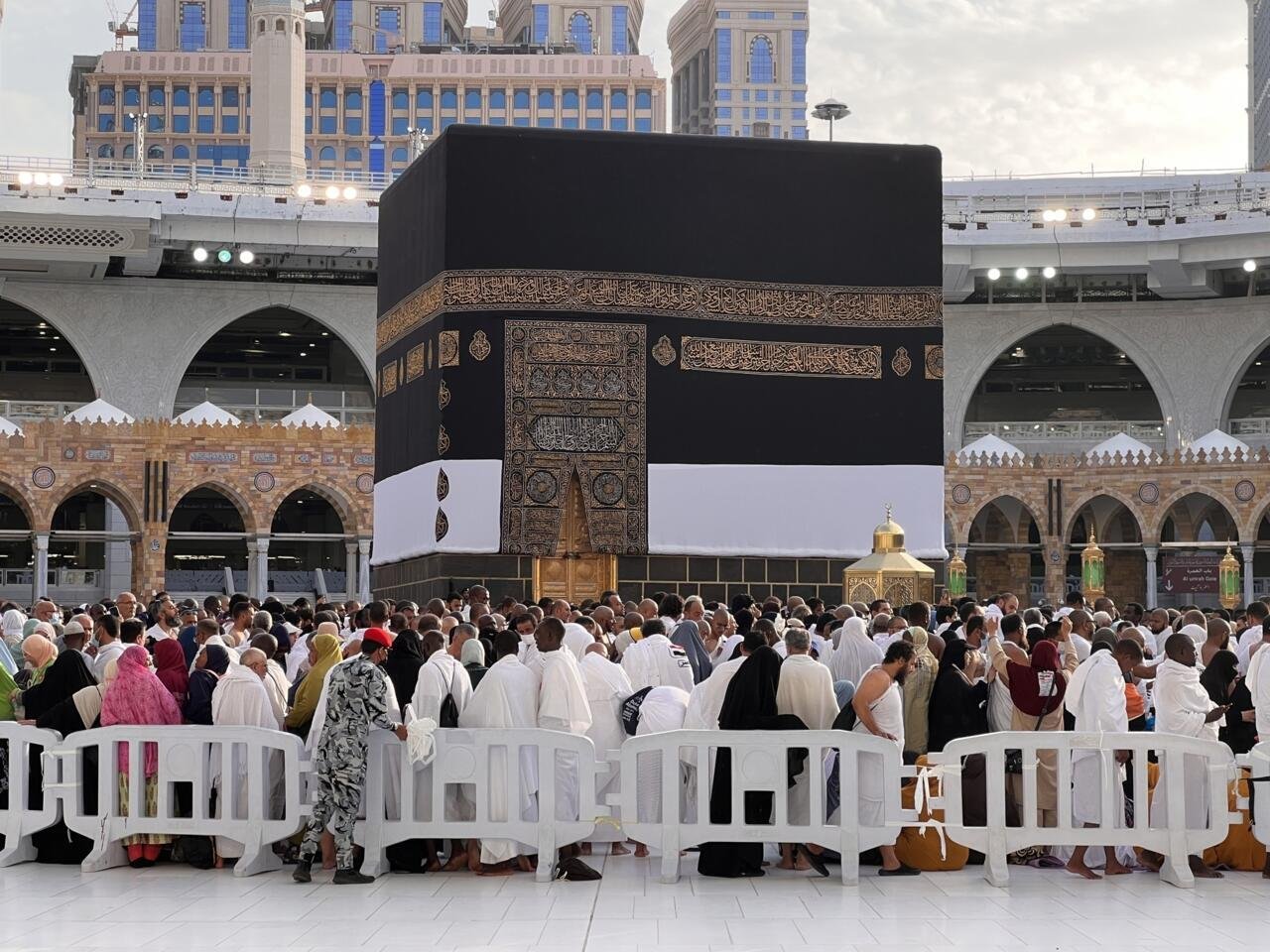
Mecca holds exceptional religious importance for Muslims worldwide. It is home to the Grand Mosque and the Kaaba and is the focal point of the annual Hajj pilgrimage. The Saudi announcement therefore carries significance beyond the country’s immediate military confrontation with the Houthis, particularly because millions of Muslims travel to Saudi Arabia for religious worship each year.
According to the Saudi-led coalition, the latest incident was the second attempted Houthi attack on Mecca. The coalition cited a ballistic missile launch in July 2017 as the previous incident. Saudi authorities have repeatedly stressed that the protection of the holy sites and pilgrims is a central security priority.

The Houthis, however, rejected the Saudi account that Mecca had been deliberately targeted. Houthi spokesperson Hazem al-Assad denied the allegation, describing claims that the group had targeted the holy city as false. The competing accounts mean that the intended target of the intercepted drone remains disputed.
The OIC responded by condemning what it described as Houthi attacks involving Mecca and the wider Medina region. The organisation said the incidents threatened civilians and violated the sanctity of Islamic holy sites and mosques. The OIC represents 57 Muslim-majority countries and is headquartered in Jeddah.
The incident occurred amid a broader escalation involving Saudi Arabia and the Houthis. Saudi authorities had issued security alerts in several parts of the country, including Mecca and other cities, following a series of attacks attributed to Iran-aligned fighters. The developments have drawn Saudi Arabia more deeply into the wider regional conflict.
The security situation has also generated concern among foreign governments. The United States issued an advisory urging Americans to reconsider travel to Saudi Arabia because of risks associated with regional conflict, including possible drone and missile attacks and the security situation near the Yemen border. The advisory also warned against travel to the Yemen border because of terrorism-related risks.
The latest escalation is connected to developments along Yemen’s Red Sea coast. The Houthis have expanded their control in parts of the coastline overlooking the Bab el-Mandeb strait, a strategically important maritime passage linking the Red Sea with the Gulf of Aden. The group’s growing presence in the area has raised concerns over regional shipping and Saudi energy exports.
Saudi Arabia has faced several Houthi attacks in recent days, according to the coalition and other reports. The Houthis have also claimed responsibility for attacks on Saudi military facilities, describing some of their actions as retaliation for Saudi-led airstrikes against targets in Yemen.
The wider confrontation has significant implications because Saudi Arabia occupies a central position in both the Middle East’s security system and the global energy market. Disruptions around the Red Sea and other major shipping routes can affect the movement of energy supplies and commercial goods, adding an economic dimension to the military tensions.
The Bab el-Mandeb is particularly important because it connects shipping routes between the Indian Ocean and the Mediterranean through the Red Sea and the Suez Canal. Any sustained instability around the strait can force shipping companies to consider alternative routes, increasing journey times and potentially raising transportation costs.
For Saudi Arabia, the immediate concern remains the security of its territory and the protection of Mecca and Medina. The interception of the drone before it entered Mecca’s restricted airspace meant that the reported threat did not reach the holy city itself. Saudi officials nevertheless treated the incident as a serious security matter because of the location and the potential risks to civilians and worshippers.
The incident also comes at a particularly sensitive time because Saudi Arabia is responsible for protecting millions of visitors who travel to the country for Islamic religious observances. Any security incident involving the areas around Mecca or Medina can therefore generate concern across the wider Muslim world.

The OIC’s response demonstrates the broader diplomatic significance of the incident. By publicly condemning the reported attacks, the organisation placed the issue within the wider context of protecting Islamic holy sites and Saudi territory. Its statement reflects the concern of member states over developments that could affect places of religious significance to Muslims globally.
At the same time, the Houthi denial is an important part of the developing account. While Saudi authorities attributed the drone to the Houthi movement and said it was headed towards Mecca, the Houthis rejected the suggestion that they had targeted the holy city. Independent confirmation of the drone’s intended target was not immediately available in the reports reviewed.
The episode highlights the increasingly complicated security environment surrounding Saudi Arabia as the conflict involving Yemen’s Houthis becomes linked with wider regional tensions. Attacks involving drones and missiles, developments around strategic waterways and continuing military operations in Yemen are all contributing to uncertainty across the region.
For now, Saudi officials have made clear that they regard any threat to the Two Holy Mosques as an exceptionally serious matter. The interception of the drone south of Mecca has therefore become both a security incident and a significant diplomatic development, with Saudi Arabia warning of further deterrent measures and the OIC calling attention to the protection of Islamic holy sites.
Related News:
 Millions Gather for Khamenei’s Six-Day State Funeral
 Anti-Regime Iranians Turn Anger Toward Trump
 Houthis Strike Saudi Arabia as Middle East Tensions Rise
 Taliban global ties grow as rights fears mount
 Israeli Strike in Southern Lebanon Kills Seven
 North Korea Expands Uranium Facility at Yongbyon
 Nine Killed in Karachi Consulate Protest
 UK Prepares Aircraft Carrier for Middle East Crisis
 North Korea Fires Missiles Amid US-South Korea Drills
 Death, displacement and military duties: children plunged into crisis
 ‘The frontline is like Terminator’: Ukraine’s fighting robots
 Southeast Asia Turns to Russia Amid Energy Crisis
 Ukraine Urges UK to Seize Russian Oil Tankers
 Escobar’s Hippos May Be Moved to India Zoo
 Aid Crisis Grows as Hormuz War Disrupts Supply
 Activists allege abuse after Gaza flotilla seizure
 China Fireworks Factory Blast Kills 21 in Hunan
 Australia pushes Pacific security pact amid China tension
 BJP Sweeps West Bengal in Historic Breakthrough
 Ceasefire Standoff Deepens in Ukraine War
 Middle East Crisis Escalates as Oil Routes Shake Markets
 Trump Announces 3-Day Russia–Ukraine Ceasefire Deal
 US Awaits Iran Reply on New Ceasefire Proposal
 One Nation Stuns Australia With Historic Farrer Win
 Putin Declares Russia Victory at Scaled Victory Day Parade
 Hormuz Talks Near Critical Stage
 China mine blast death toll rises to 90
 Maldives Cave Diving Tragedy Raises Safety Alarm
 Hunger increasingly weaponised in global conflicts
 Discontent grows around Putin amid war strain
 Dreyfus Statue Finally Gets Permanent Paris Home
 Venezuela Quake Death Toll Surpasses 4,000
 UK’s Largest Muslim Convention Scales Up Security Amid Rising Bigotry
 Seoul proposes historic peace talks to replace Korean War armistice
 Powerful 7.7-Magnitude Earthquake Hits Eastern Indonesia
 Five Years of Taliban Rule Leave Afghanistan in Crisis
 Trump dismisses concerns over 250-day carrier deployment
 Russian Missiles Intensify Pressure on Kyiv
 Trump Calls Strait of Hormuz ‘American Territory’
 Trump Faces Iran War Crisis Before Midterm Vote
 Vietnam Youth Rally Behind Hanoi ‘Justice Tree’
 China Probes Alleged Formaldehyde Use on Cabbages
 Shein targets $27bn valuation in Hong Kong debut
 Heavy Casualties Feared as Flash Flood Sweeps Nepal-Tibet Border
 Nepal-Tibet Flood Leaves 270 Dead and 1,400 Missing
 Australia Races to Find Tourists Missing in Nepal
 Nepal Flood Death Toll Tops 300 as Second Flood Feared
 Families Fly to Nepal in Search of 33 Missing Britons
 Bangladesh air force upgrade raises India concerns
 Nepal-Tibet Flood Death Toll Rises as 2,478 Remain Missing
 Nepal Rescuers Race to Save Hundreds Trapped Underground
 Six Million Afghans Forced to Start Over Under Taliban
 Nepal Flood Survivors Face Unimaginable Loss
 Nepal Tunnel Rescue Offers Hope Amid Flood Devastation
 UN expert urges UK to rethink Israel policy
 Nepal seeks $20m climate compensation after deadly floods
 Saudi Arabia Shuts Oil Pipeline After Drone Attack
 Nearly 50,000 Flee as Houthis Advance in Yemen
 New Evidence Deepens Church of England Slavery Reckoning
 UK Must Act with Courage and Clarity on Israel-Palestine Conflict, Says Foreign Affairs Committee Report
 Yvette Cooper Signals Global Momentum Towards Gaza Peace Deal Amid Humanitarian Crisis
 ‘Extinct’ Antelope Returns to Sahara, Bringing Hope
 Irish Beach Tragedy: Irish Drown at Whitehaven Beach in Australia
 Greenland Crisis Forces Europe to Draw a Line With Trump
 UK and US Drop in Global Corruption Index Rankings
 Canberra Poster Seizure Sparks Free Speech Row
 Jacinda Ardern Move Sparks Kiwi Reflection
 Middle East Airspace Crisis Strands Thousands
 Kelly Wilkinson Inquest Reveals Bail Failure
 Injured Mojtaba Khamenei Elevated as Iran Leader
 The Kill Line: A Shifting Vision of the American Dream
 Air Canada CEO Faces Outcry Over Recent Language Misstep
 Extreme Weather: Europe Shivers as Cyclone Narelle Hits
 Asia Turns Back to Coal Amid Middle East Energy Crisis
 Britain’s Crowning Butterfly Takes the Nation by Storm
 Fifa Official Under Investigation Over Hand Gesture Controversy
 Grief and Devotion Amidst the Rubble of Nabatieh
 England and Norway Fans Turn Miami Into World Cup Carnival
 Olympus Awaits Unesco Heritage Recognition
 Bayeux Tapestry Revives Franco-British Ties