Published: 08 September 2026. The English Chronicle Desk. The English Chronicle Online.
KATHMANDU — Nepal has called on the world’s biggest polluting economies to accept greater responsibility for the consequences of climate change after catastrophic floods and landslides left more than 6,000 people dead or missing in the Himalayan country.
The Nepalese government has formally requested $20 million in climate-related compensation from the United Nations fund established to help vulnerable countries deal with loss and damage caused by climate change. Foreign Minister Shisir Khanal said the request was intended not only to support recovery from the latest disaster but also to send a broader warning about the growing risks facing countries in the Himalayas.
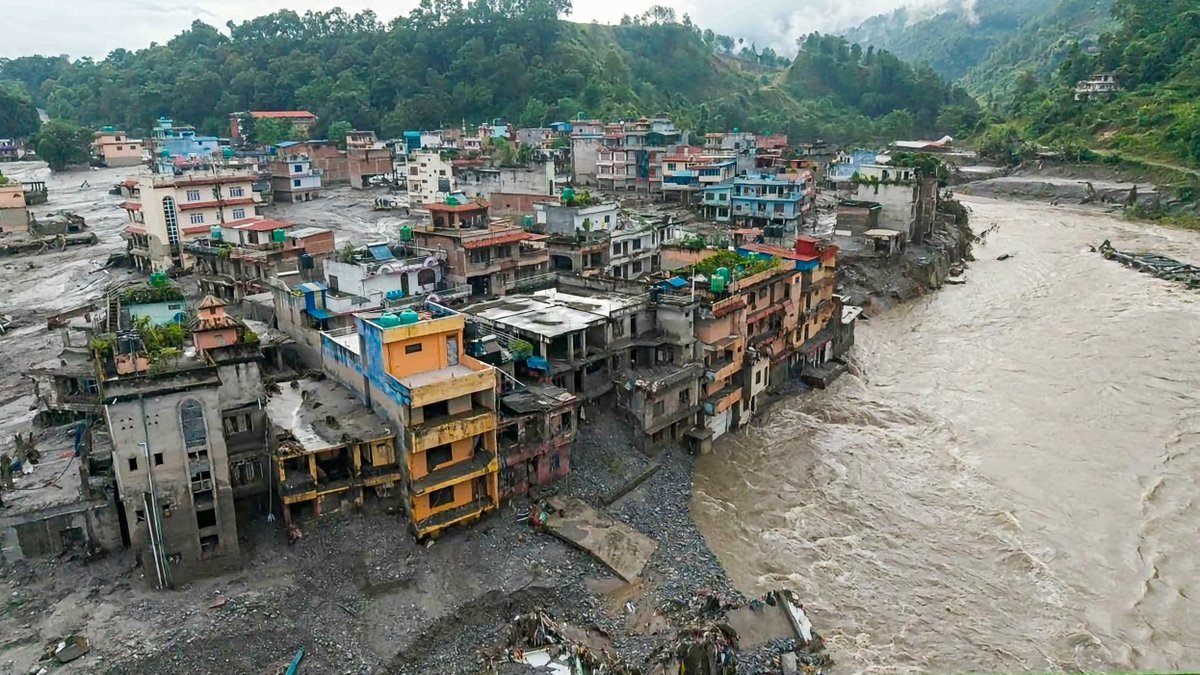
The floods struck in late August after the partial collapse of a melting glacier triggered a landslide and a massive surge of water and debris through areas of Tibet and Nepal. More than 1,300 people have been confirmed dead, while more than 5,500 remain missing after nearly two weeks of rescue operations.
Khanal described the disaster as unlike the flooding Nepal normally experiences during the monsoon season. The scale and force of the water, he said, had devastated communities, destroyed infrastructure and left some areas cut off from the rest of the country.

“This felt like a tsunami that was coming from the Himalayas,” Khanal said, describing waves that he estimated reached between 60 and 70 feet and carried mud, stones, rocks and other debris at extremely high speed.
The destruction has left Nepal facing an enormous reconstruction challenge. Government assessments and other estimates suggest the overall economic damage could exceed $5 billion, many times the amount of compensation being sought from the UN mechanism.
Khanal acknowledged that $20 million would not come close to covering the full cost of the destruction. However, he argued that the request should be understood as part of a wider campaign for climate justice rather than simply an appeal for emergency assistance.
Nepal contributes less than 0.1% of global greenhouse gas emissions, yet its communities are increasingly exposed to the consequences of a warming climate. The Himalayas are warming at a rate significantly faster than the global average, creating growing risks from melting glaciers, unstable mountain slopes and extreme weather.
The country’s vulnerability is particularly acute because large numbers of people live in valleys and settlements connected by roads and rivers that can be rapidly affected by landslides and floods.
The recent disaster has raised fresh concerns about the future of Himalayan communities as climate-related changes alter the region’s natural environment.
Khanal said Nepal believed major economies with much larger historical greenhouse gas emissions should recognise that countries with minimal contributions to global warming can still suffer some of its most devastating consequences.
He initially pointed towards major regional economies, including India and China, as countries that should play a role in supporting Nepal. However, he later stressed that the issue should not be reduced to assigning blame to individual nations.
Instead, he called for a collective international response that recognises the shared nature of the climate crisis.
Nepal’s finance and environment ministries have jointly submitted their request to the UN’s loss and damage financing mechanism. The fund was established following international negotiations aimed at helping vulnerable developing countries respond to climate-related destruction that cannot be prevented or fully adapted to.
However, the mechanism itself faces significant financial limitations.
Countries have already submitted requests amounting to billions of dollars, while only a fraction of the necessary funding has been made available. Nepal’s request therefore comes at a time when developing countries are increasingly pressing wealthier nations to provide predictable financial support for climate-related disasters.
The challenge for Nepal goes beyond immediate relief.
Thousands of families may need new homes, while damaged roads, bridges and other infrastructure require extensive reconstruction. Some estimates suggest that more than 20,000 homes could need to be rebuilt. The country’s main highway has also suffered serious damage.
In some communities, rebuilding in the same locations may not be possible. Villages situated close to rivers or in areas vulnerable to future landslides and flooding could have to be relocated to higher ground.
Such decisions would create another layer of difficulty for communities already dealing with loss and displacement. Moving a village is not simply a matter of constructing new houses. It can separate families from farmland, businesses, schools, religious sites and the social networks that have developed over generations.
For the Nepalese government, the disaster has therefore become both an emergency and a warning about the country’s future.
Khanal said the floods should not be treated as an isolated event. He argued that the disaster should be viewed in the wider context of rapid environmental changes taking place across the Himalayas.
The region’s glaciers are retreating as temperatures rise. In recent decades, the loss of mountain ice has increased concerns about glacial lake outburst floods, landslides and other hazards that could threaten communities downstream.
Nepal’s vulnerability is complicated by its geography. The country is dominated by mountains, while major settlements and transportation routes often depend on narrow valleys and river corridors. Extreme events can therefore damage multiple forms of infrastructure simultaneously.
Khanal said the international community should use the latest disaster as a “wake-up call” to establish stronger mechanisms for supporting small and vulnerable economies.
He also stressed that climate finance should not be limited to emergency assistance after disasters occur. Funding is needed for preparedness, early-warning systems, infrastructure protection and measures designed to reduce the impact of future climate-related events.
The foreign minister also addressed questions about whether Nepal had received sufficient information from China before the floods.
He rejected allegations that China had failed to provide an adequate warning or withheld crucial information about the glacier. According to Khanal, discussions are already taking place with Chinese authorities about improving regional coordination and the exchange of scientific and environmental data.
He said the danger posed by the particular glacier had not been clearly understood before its collapse.
With hindsight, he said, it was apparent that the glacier had become increasingly fragile and had been receding during the previous six months. But neither Nepalese authorities nor Chinese scientists had known that a collapse was imminent.
The episode has highlighted the importance of improving scientific monitoring across the Himalayas, where glaciers and high-altitude landscapes can be difficult to observe continuously.
Better data sharing could potentially help governments identify emerging risks and provide communities with more time to prepare. But the latest disaster also demonstrates the limits of existing systems when geological and climatic events develop with little warning.
For Nepal, the immediate priority remains finding missing people, supporting survivors and restoring basic services. Roads must be reopened, damaged communities supplied and displaced families supported.
At the same time, the government faces the difficult task of rebuilding in a way that reduces future vulnerability rather than simply restoring what existed before the floods.
The $20 million compensation request is therefore only one part of a much larger challenge.

Nepal’s argument is that responsibility for climate-related loss should not be measured solely by who suffers the greatest immediate damage. Countries that have contributed relatively little to global emissions can be among those facing the most severe consequences of a warming planet.
The recent floods have given that argument a human face. Families are searching for missing relatives, communities are assessing destroyed homes and entire stretches of infrastructure have been swept away.
For Nepal, the disaster is a national tragedy. But the government hopes it will also become a turning point in the international debate over climate responsibility, financial support and preparedness.
Khanal’s message to major economies is ultimately that the Himalayan crisis should not be treated as a distant regional problem. As the climate continues to change, the consequences of extreme weather and environmental instability are likely to reach more communities across the world.
For a country responsible for only a tiny share of global emissions, Nepal is now asking whether the international system can provide meaningful support when the consequences of climate change arrive with devastating force.
Related News:
 Wildfires rage across Europe as hundreds arrested in France
 Nepal-Tibet Flood Death Toll Rises as 2,478 Remain Missing
 Nepal Rescuers Race to Save Hundreds Trapped Underground
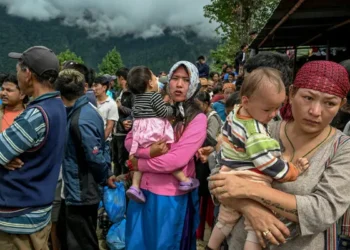 Nepal Flood Survivors Face Unimaginable Loss
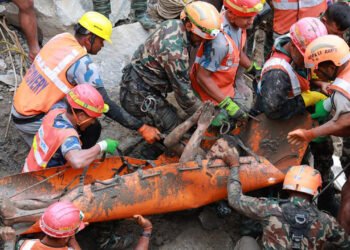 Nepal Tunnel Rescue Offers Hope Amid Flood Devastation
 Venezuela Quake Death Toll Surpasses 4,000
 Powerful 7.7-Magnitude Earthquake Hits Eastern Indonesia
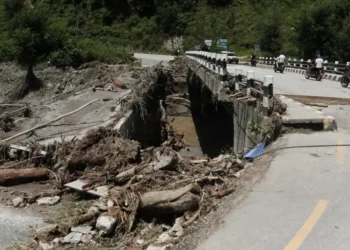 Nepal Flood Death Toll Tops 300 as Second Flood Feared
 UN Warns Record El Niño Could Supercharge Global Heat
 Evacuations Ordered as California Wildfires Spread Fast
 Queensland Braces for Potential Second Severe Cyclone Hit
 Cyclone Vaianu Forces Mass Evacuations in New Zealand
 Escobar’s Hippos May Be Moved to India Zoo
 Capitalism ‘Suicidal’, Warns Petro at Climate Summit
 Wildfires Force Mass Evacuations in France And Spain
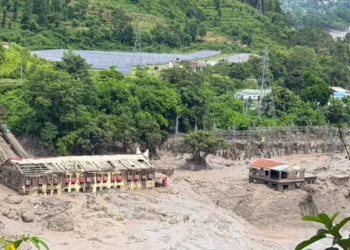 Heavy Casualties Feared as Flash Flood Sweeps Nepal-Tibet Border
 Nepal-Tibet Flood Leaves 270 Dead and 1,400 Missing
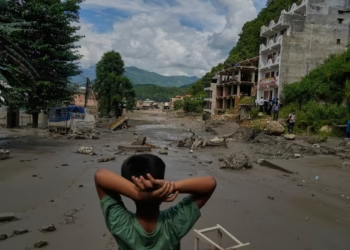 Australia Races to Find Tourists Missing in Nepal
 Typhoon Saudel Triggers Mass Evacuations in China
 ‘Extinct’ Antelope Returns to Sahara, Bringing Hope
 Japan Prepares for Kashiwazaki Restart After Fukushima Legacy
 Half the World’s Largest Cities Face Rising Water Stress
 The Sound of Mayhem’: Terror and Loss at Mount Maunganui
 Reindeer Deaths Rise as Finnish Herders Blame Border Wolves
 Storm Leonardo Triggers Election Delay Calls in Iberia
 Scotland’s Climate Plans Face Scrutiny Over ‘Science Fiction’ Targets
 Ocean Warming Drives Massive Marine Life Loss, Study Warns
 Tropical Flowers Shift Blooming Due to Climate Crisis
 Greenpeace $345m Ruling Sparks Appeal Battle
 Nine Killed in Karachi Consulate Protest
 Musk’s xAI Permit Sparks Fury Over Power Plant Expansion
 The Truth Behind Rising Energy Costs and Fossil Fuel Myths
 North Korea Fires Missiles Amid US-South Korea Drills
 Extreme Weather: Europe Shivers as Cyclone Narelle Hits
 Trump to Deploy “God Squad” Over Gulf Wildlife Protections
 UK Records Earliest Spring as Nature Awakens Fast
 Tragic End to Outback Search as Floods Claim a Life
 Chornobyl Still at Risk 40 Years After Disaster
 Southeast Asia Turns to Russia Amid Energy Crisis
 Coalition pushes fossil fuel phaseout plan
 Record May Heat to Cold Front in Eastern Australia
 Ukraine strikes Tuapse as oil disaster worsens
 China Fireworks Factory Blast Kills 21 in Hunan
 Australia pushes Pacific security pact amid China tension
 BJP Sweeps West Bengal in Historic Breakthrough
 Norway Doubles Down on Oil and Gas for Europe Energy Security
 Doomsday Clock Nears Midnight Amid Global Crises
 US Awaits Iran Reply on New Ceasefire Proposal
 One Nation Stuns Australia With Historic Farrer Win
 UN Faces Crucial Vote on Landmark ICJ Climate Ruling
 UK Faces Mass Water Shortages by 2055, Lords Warn
 Hormuz Talks Near Critical Stage
 China mine blast death toll rises to 90
 Maldives Cave Diving Tragedy Raises Safety Alarm
 Pope Meets Families in Italy Toxic Waste Zone
 Discontent grows around Putin amid war strain
 Man killed in shark attack on Great Barrier Reef
 Hope for mountain bongos returns to Kenya
 UN Issues Urgent Warning: Imminent Return of El Niño
 Germany Summons Chinese Envoy Over Russian Troop Training
 Sydney Records Hottest June Since 1859 as Expert Warns New High a ‘Signature’ of Global Warming
 Millions Gather for Khamenei’s Six-Day State Funeral
 UK Heatwaves Ignite Crisis of Sleep and Public Safety
 China Storms Claim Fifteen Lives in Tragic Surge
 UK Seas Face Extreme Heatwave as Global Temperatures Surge
 Europe Scorched as Record Heatwaves Grip the Continent
 Olympus Awaits Unesco Heritage Recognition
 Houthis Strike Saudi Arabia as Middle East Tensions Rise
 Three-Quarters of England’s Riverbanks Still Off Limits
 Taliban global ties grow as rights fears mount
 Seoul proposes historic peace talks to replace Korean War armistice
 Israeli Strike in Southern Lebanon Kills Seven
 Five Years of Taliban Rule Leave Afghanistan in Crisis
 Battery Fires Cost UK Recycling Industry £1bn
 Families Fly to Nepal in Search of 33 Missing Britons
 Turkmenistan Begins Fixing Major Methane Mega-Leaks
 Nepal Flood Death Toll Tops 1,000 as Tunnel Search Intensifies
 Daughter Finds Bones in Parents’ Burned-Out Car
 Swedish Mining Push Puts Sami Land Rights Under Pressure
 England and Norway Fans Turn Miami Into World Cup Carnival