Published: 03 September 2026.The English Chronicle Desk. The English Chronicle Online.
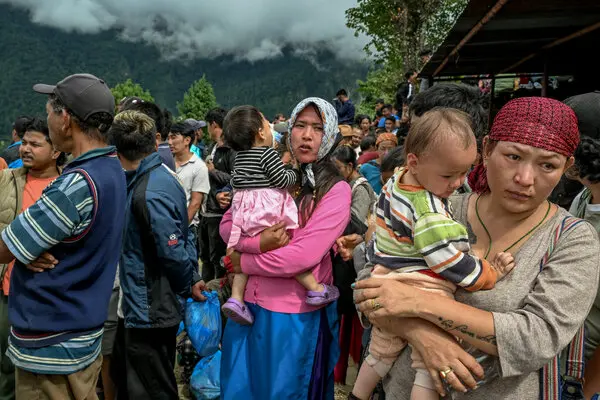
The full scale of Nepal’s devastating floods is becoming clearer as rescue teams reach some of the country’s worst-hit communities, revealing scenes of destruction, missing families and survivors struggling to recover loved ones from the mud and debris.
More than 1,200 people have been reported dead across Nepal and Tibet following catastrophic flooding in the Himalayan region, while thousands remain missing. In Nepal alone, more than 5,000 people are still unaccounted for, according to figures cited by local authorities and rescue officials. Another 546 people are reported missing in Tibet.
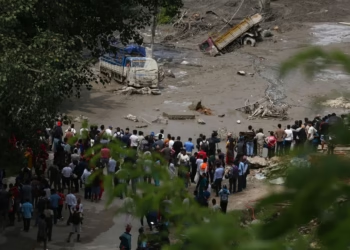
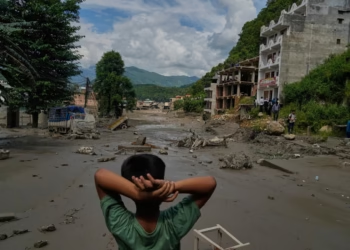
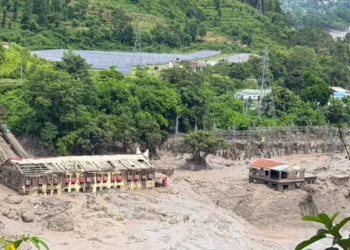
In the town of Betrawati, along the Trishuli River, the disaster has transformed a once-busy settlement into a landscape of mud, wreckage and broken homes. Roads have disappeared, buildings have been damaged or swept away, and the river has carved new channels through areas that were previously occupied by homes and transport routes.
For many survivors, the disaster has become a desperate search for family members whose bodies have not yet been recovered.

Among them is 70-year-old Dil Bahadur Shrestha, who has been searching through the remains of his home for his wife, Jamuna. The couple had been married for 50 years.
Jamuna was at their home in Betrawati when the flood struck. She had reportedly been caring for their chickens and goats before returning inside as the water began rushing through the valley. Shrestha was working in his rice fields and looking after cattle on the opposite side of the river when he saw what he described as a huge wave moving rapidly towards the settlement.
He managed to escape into nearby forest, but watched bridges disappear beneath the floodwaters. Within minutes, homes and other structures were overwhelmed.
The couple had already rebuilt their house following Nepal’s devastating 2015 earthquake, which killed around 9,000 people. Now, once again, their home has been destroyed, and Shrestha is left waiting for news of his wife.
Rescue workers had yet to reach his property when he returned himself to search through the wreckage. Without proper equipment, he used his hands to move mud in the hope of finding her.
The uncertainty has compounded his grief. Like thousands of other families affected by the disaster, he knows his wife may have died but has not been able to recover her body or hold a funeral.
The destruction in Betrawati illustrates the extraordinary force of the flooding. A glacier collapse high in the Himalayas near the Nepal-Tibet border triggered a sudden surge of water and debris through the mountain valleys. The flooding struck the Bhotekoshi and Trishuli river systems with devastating speed.
Residents had only a short period to respond. In Betrawati, the flood reportedly engulfed the settlement within minutes of the initial event.
The consequences were catastrophic. Thick layers of mud buried parts of the town, with only the upper floors of some larger buildings remaining visible. Houses were swept from their foundations or overturned. Vehicles, including school buses, were left buried or stranded in the debris.
A grocery shop was reportedly carried around 200 metres from its original location by the force of the water. The river itself changed course, cutting across areas where roads and other infrastructure once stood.
Scattered across the wreckage were reminders of ordinary lives interrupted without warning. Household utensils, children’s belongings, medicines, records and personal possessions were left exposed among the mud.
Rescue teams working in the area have recovered dozens of bodies from individual properties. In one operation, 24 bodies were reportedly recovered from a single house, underlining the scale of the tragedy confronting emergency workers.
Shrestha believes many more victims could remain buried beneath the debris. At least 250 people are reported missing from the Betrawati area, including members of his extended family.
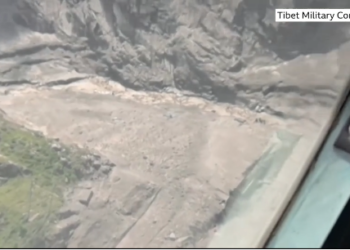
Further north, the situation in Rasuwa district is even more difficult. Villages near the Tibetan border have suffered extensive destruction, while landslides, damaged roads and unstable terrain have prevented rescuers from reaching some communities.
Several settlements can now only be reached by helicopter. Others remain isolated, leaving authorities uncertain about the fate of hundreds of residents.
In the border village of Timure, ground-based search operations were finally able to begin after days of severe access problems. Police and rescue teams reported recovering 90 bodies during the initial operations.
Syabru Besi, another mountain community, was among the areas hit particularly hard. Much of the settlement was destroyed, including the road connecting it to surrounding areas. Local officials estimate that at least 500 people from the village remain missing, representing roughly a quarter of its population.
For those who escaped, survival often depended on reaching higher ground before the floodwaters arrived.
Chhiring Dorje, a 50-year-old farmer from Syabru Besi, managed to flee with a group of villagers. Five members of his family remain missing.
Dorje and other survivors spent two days in a forest before army helicopters reached them. With supplies unavailable, they survived by drinking water from the surrounding forest.
His nine-year-old granddaughter, Ritu Tamang, was among those evacuated. She had been attending primary school before the disaster destroyed the community.
For children, the loss has been particularly profound. Homes, schools and familiar surroundings have disappeared, leaving many young survivors facing displacement and uncertainty.
At a relief centre established along the route between Betrawati and Dhunche, doctors and volunteers have been distributing food and medicine to displaced families. Medical workers reported treating children who had lost their parents in the floods.
More than 200 children from a local school are also reported missing. Many were believed to have been travelling to classes when the flood struck.
The tragedy has left teachers and communities struggling with the knowledge that some children were caught outside their homes when the waters surged.
A teacher at the school said staff received a warning shortly before the flood reached the area. A school bus carrying students was stopped after the warning, allowing those children to survive. But other pupils who were already walking to school were less fortunate.
The incident highlights the difficulty of protecting communities in mountainous areas where warnings may arrive only minutes before a rapidly developing flood.
Access to the affected districts has become another major challenge. Highways have been washed away, leaving rescue teams and aid organisations dependent on narrow, unstable mountain tracks. The journey from Kathmandu to Rasuwa can take more than 12 hours under normal circumstances, while the post-flood conditions have made travel considerably more dangerous.
Many relief trucks have been unable to travel beyond Dhunche, forcing emergency supplies to be transferred or transported by helicopter.
Despite the scale of destruction, there have also been moments of survival that offer families a small measure of hope.
In the village of Lachyang, 69-year-old Ram Krishna Neupane and his 66-year-old wife, Muiya, feared their only son had died after losing contact with him following the flooding in Syabru Besi.
Their son, who worked as a veterinarian, had been in the affected area when the disaster struck. For two days, the couple had no information about his whereabouts.
Then came a phone call from a hospital in Kathmandu.
Their son had survived and had been rescued by the army. The emotional call brought tears to both sides of the conversation, transforming days of fear into relief.
For many other families, however, there has been no such call.

The disaster has left Nepal confronting not only a huge death toll but also thousands of unanswered questions about missing people, destroyed communities and the difficult recovery ahead. Rescue workers continue searching through mud and debris while survivors face the loss of homes, livelihoods, schools and family members.
In places such as Betrawati and Rasuwa, the immediate priority remains finding those who are still missing and delivering basic assistance to people who have lost almost everything.
But once the emergency phase ends, Nepal will face the much longer task of rebuilding communities exposed to increasingly severe natural hazards. For survivors like Shrestha, however, reconstruction is still a distant concern. His immediate hope is simply to find his wife.
Across the devastated mountain valleys, thousands of families remain caught between grief and uncertainty, waiting for news of those who disappeared when the floodwaters arrived.
Related News:
 Nepal-Tibet Flood Death Toll Rises as 2,478 Remain Missing
 Chornobyl Still at Risk 40 Years After Disaster
 Venezuela Quake Death Toll Surpasses 4,000
 Powerful 7.7-Magnitude Earthquake Hits Eastern Indonesia
 Five Years of Taliban Rule Leave Afghanistan in Crisis
 Nepal Flood Death Toll Tops 300 as Second Flood Feared
 Nepal Rescuers Race to Save Hundreds Trapped Underground
 Escobar’s Hippos May Be Moved to India Zoo
 China Fireworks Factory Blast Kills 21 in Hunan
 Maldives Cave Diving Tragedy Raises Safety Alarm
 Pope Meets Families in Italy Toxic Waste Zone
 Olympus Awaits Unesco Heritage Recognition
 Wildfires Force Mass Evacuations in France And Spain
 Israeli Strike in Southern Lebanon Kills Seven
 Is America Ready for an AOC Presidential Run?
 Wildfires rage across Europe as hundreds arrested in France
 Nepal-Tibet Flood Leaves 270 Dead and 1,400 Missing
 Australia Races to Find Tourists Missing in Nepal
 Hindu Man’s Stand Sparks Hope in India
 North Korea Fires Missiles Amid US-South Korea Drills
 Peretz Targets FA Cup Upset Amid War Concerns
 Moldova River Crisis Exposes War’s Hidden Cost
 Iran Crisis Tests Trump’s Global Leadership
 Ben Roberts-Smith Denies War Crime Allegations in First Statement
 Canadian astronaut French words ease language row
 Black Forest Tragedy Remembered 90 Years On
 Walsall Rapist Jailed After Hate-Filled Online Trail
 Two Children Die in Wolverhampton House Fire Tragedy
 Exploring Italy’s Forgotten Dolomites Beyond Crowds
 Southeast Asia Turns to Russia Amid Energy Crisis
 Ukraine Urges UK to Seize Russian Oil Tankers
 Older Than Dinosaurs: Secrets of Mayfly Dance Revealed
 Capitalism ‘Suicidal’, Warns Petro at Climate Summit
 Two Dead in Adelaide Airport Plane Crash Fire
 Coalition pushes fossil fuel phaseout plan
 Cartel crackdown raises fears of fresh violence
 US states redraw maps after voting rights ruling
 Australia pushes Pacific security pact amid China tension
 US ‘Narco Boat’ Strikes Draw Global Outcry
 Florida Surgeon ‘Devastated’ Over Fatal Surgery Error
 France Faces Record Presidential Crowded Race Amid Far-Right Surge
 Norway Doubles Down on Oil and Gas for Europe Energy Security
 Barrister Criticises Trial After Suicide Case Verdict
 US Awaits Iran Reply on New Ceasefire Proposal
 Immigration Judges Fear Pressure in Trump Era
 Tractor Breakdown Tests Lincolnshire Farmers
 Britons Build Emergency Supplies Amid Rising Fears
 Hormuz Talks Near Critical Stage
 Sycamore Gap Artwork Chosen After Public Vote
 Discontent grows around Putin amid war strain
 Farage and Reform UK Reshape British Politics
 Starmer Leadership Under Pressure After Setbacks
 Thailand Tightens Visa Rules to Curb Tourist Misbehavior
 Germany Summons Chinese Envoy Over Russian Troop Training
 Millions Gather for Khamenei’s Six-Day State Funeral
 New Footage Revives Peter Falconio Mystery
 Le Pen’s Popularity Holds Despite Conviction
 Bryne Backs Haaland Before England World Cup Clash
 Dreyfus Statue Finally Gets Permanent Paris Home
 England and Norway Fans Turn Miami Into World Cup Carnival
 UK Schools Struggle as Classrooms Top 40C
 London Tube Heat Reaches Dangerous Levels
 Houthis Strike Saudi Arabia as Middle East Tensions Rise
 Three-Quarters of England’s Riverbanks Still Off Limits
 Westminster Council Threatens Charing Cross Soup Kitchen
 BBC Warned About Missing Clothes of Murder Victim
 Cambridge Professor Jason Arday Found Dead at Home
 London’s 2026 ‘Great Stink’ Raises Sewer Concerns
 Burnham unveils £65m drought aid for farmers
 Gen Z turns to BirdTok for a gentler digital escape
 Vietnam Youth Rally Behind Hanoi ‘Justice Tree’
 Heavy Casualties Feared as Flash Flood Sweeps Nepal-Tibet Border
 Ghent Professors Questioned Cofnas Appointment
 France Eases Cheese Rules as Drought Hits Farms
 RAF Barnham Protests Fuel Tensions in Norfolk Town
 British Museum Faces Questions Over Peter Thiel’s Private Bayeux Viewing
 Ukraine Villagers Demand Answers After Deadly Arms Depot Strike
 Nepal Flood Death Toll Tops 1,000 as Tunnel Search Intensifies
 UN Warns Record El Niño Could Supercharge Global Heat
 Internal Exclusions Surge in England’s Schools