Published: 29 August 2026 .The English Chronicle Desk. The English Chronicle Online.
A small Norfolk town with a long history of migration and cultural integration has become the centre of an increasingly bitter dispute over plans to accommodate asylum seekers at a nearby former military base, with repeated demonstrations and several nights of violent disorder deepening tensions in the community.
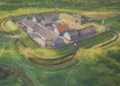
Thetford, a town closely associated with the popular British television comedy Dad’s Army, has witnessed protests throughout the summer over the government’s proposal to house as many as 1,250 asylum seekers at RAF Barnham, a former military site just across the Norfolk-Suffolk border. What began as opposition to the proposed accommodation has developed into a wider debate about immigration, public services, political frustration and the sense among some residents that their community has been neglected for years.
The first demonstration against the proposed use of RAF Barnham took place in June. Since then, protesters have gathered regularly, with Sunday demonstrations becoming a familiar feature of the area. The campaign has attracted residents from Thetford and surrounding communities, as well as people from elsewhere in Norfolk and Suffolk.

For many demonstrators, the central concern is the proposed scale of the accommodation. RAF Barnham is close to the village of Barnham, which has a population of roughly 600 people, while the proposed facility could eventually accommodate more than twice that number. Protesters have questioned whether local infrastructure, including roads, healthcare, sewage and other public services, would be able to cope with the additional population.
Other protesters have focused on the broader issue of asylum policy. Some argue that the UK is accepting too many people arriving through irregular routes, while others express concern about the identities and backgrounds of asylum seekers. At demonstrations, some participants have used inflammatory descriptions for people arriving in the country, reflecting the increasingly polarised nature of the debate.
The controversy intensified dramatically in early August when the addresses of houses in multiple occupation being used to accommodate asylum seekers in Thetford were circulated publicly. On 4, 5 and 6 August, crowds gathered outside several properties, with some incidents escalating into violence and criminal damage.
One of the most serious episodes occurred on Clover Way, where hundreds of people reportedly gathered around a house believed to have accommodated asylum seekers. Rocks and eggs were thrown, an upstairs window was damaged and some people attempted to enter the property. Police officers responding to the disorder were reportedly subjected to abuse and physical attacks.
Police later announced that more than 20 people had been arrested in connection with the disturbances. The allegations included racially aggravated public-order offences, inciting racial hatred and conspiracy to commit aggravated burglary, alongside unrelated suspected offences involving drugs and driving.
The disorder left residents frightened and brought national attention to a street that had previously been largely unknown outside the local area. A neighbour living near the targeted property said she had left her home during the unrest because she was afraid. Another elderly resident recalled watching the disturbance from his house as crowds gathered outside.
The incident also became a spectacle after images and videos circulated online. People reportedly travelled to the area simply to look at the damaged property, illustrating how quickly local disorder can become a nationalised political story through social media.
Although the violence eventually subsided, the demonstrations against RAF Barnham continued.
The dispute is particularly striking because of Thetford’s long history of immigration and integration. The town elected Allan Glaisyer Minns, who was born in the Bahamas, as mayor in the early twentieth century, making him one of the first Black mayors in Britain. The area also developed a substantial Portuguese community during the 2000s, when workers were recruited for jobs in East Anglia’s agricultural and food-processing industries.
Thetford’s history is therefore intertwined with migration, even as some residents now argue that the town has reached a point where additional pressure from migration cannot be absorbed easily.
Anwar Noor, a local ice-cream vendor who moved to Thetford from Kenya in the 1980s, offers a different perspective. Having worked for years in the town before establishing his own businesses, Noor says he understands the frustration felt by residents over declining services and economic opportunities.
He argues, however, that asylum seekers should not be blamed for those problems. The closure of major employers, declining numbers of shops and the disappearance of banks and other services have contributed to a sense of economic decline that predates the current asylum dispute.
That frustration is also recognised by Terry Jermy, the Labour MP representing South West Norfolk, which includes Thetford. Jermy has lived much of his life in the area and has deep family connections to the town.
Jermy has criticised the use of RAF Barnham for asylum accommodation, although his objections are based primarily on questions of practicality and cost rather than opposition to asylum seekers themselves. He argues that the military site is remote, underused and in need of substantial refurbishment, potentially making it an expensive location for a large accommodation facility.
He has also criticised government language surrounding the plan. According to Jermy, official references to people who are still waiting for their asylum claims to be processed as “illegal migrants” risk creating further confusion and hostility.
The distinction is significant because an asylum seeker is someone seeking international protection whose claim has not yet been finally determined. The political debate in Britain has increasingly blurred the differences between asylum seekers, refugees and economic migrants, contributing to public confusion about who is entitled to protection and how the asylum system operates.
The government’s decision to use military facilities is itself part of a wider effort to reduce reliance on hotels. The Labour government previously criticised the Conservative use of hotels for asylum accommodation but later moved towards military sites after facing continued political and public pressure over the cost and location of hotel accommodation.
The policy has generated opposition from different sides of the political spectrum. Human rights organisations have criticised large military facilities on the grounds that they can isolate asylum seekers and negatively affect their wellbeing. Anti-immigration campaigners, meanwhile, have objected to the presence of large numbers of asylum seekers in local communities and questioned the government’s ability to control the country’s borders.
Researcher Nuni Jorgensen of the Migration Observatory at the University of Oxford has pointed to the difficult choices facing policymakers. Hotels can be easier to secure for large numbers of people but may produce poor living conditions and isolation. Houses in multiple occupation can offer greater integration with local communities but are difficult to secure in areas where housing is expensive or scarce. Military sites offer another option but can require substantial investment and may isolate residents from surrounding communities.
RAF Barnham itself has a complicated military history. The site has been used for logistics and storage and was associated with munitions during the Second World War. It later played a role in Britain’s nuclear weapons infrastructure. Its current condition and remote location have become central to arguments about whether it is suitable for asylum accommodation.
Politics has also become increasingly intertwined with the protests. Reform UK has gained substantial electoral strength across East Anglia, taking control of county councils in Norfolk, Suffolk and Essex following the 2026 local elections. Candidates and supporters associated with Reform UK have appeared at demonstrations in and around RAF Barnham.
The protest movement’s organisers insist that their campaign is not controlled by a political party and say it is focused on community safety rather than ideology. Yet the presence of politicians and support from groups on the political right has made it difficult to separate the local campaign from the wider national argument over immigration.
The atmosphere reached another level during a march from Thetford’s market square to RAF Barnham. Around 130 people took part, carrying Union flags, St George’s flags and banners opposing the proposed asylum accommodation.
The procession passed landmarks that reflect different chapters of British political and social history, including the statue of Thomas Paine, the Thetford-born political thinker associated with the American and French revolutions. Music played from a mobile speaker as protesters made their way out of the town, while a horse-drawn hearse carrying a symbolic coffin marked “DEMOCRACY” became one of the most striking images of the demonstration.
The march itself remained relatively small, but some of the language used was considerably more confrontational. Chants calling for the deportation of migrants were heard as the protesters travelled towards the former military base.
Concerns about crime and sexual violence have also become prominent within the protest movement. Some speakers have made claims about the danger allegedly posed by asylum seekers, particularly young foreign-born men. Such claims have contributed to fear among some residents, although official crime statistics show that most sexual offences are committed by people known to their victims.
The use of such rhetoric has prompted concern among community representatives who fear that anger over government policy could spill into hostility towards minority ethnic residents more generally.
Jermy has said that the violence in August frightened people from minority communities who feared they could be mistaken for asylum seekers and become targets themselves. He has argued that the government’s failure to communicate clearly about asylum policy has contributed to the problem.
At the same time, the MP acknowledges that many residents are genuinely frustrated. Thetford has experienced economic decline, reduced employment opportunities and pressure on public services. For some residents, the asylum dispute has become a symbol of wider dissatisfaction with the state of their community.
That underlying frustration may prove more difficult to resolve than the immediate dispute over RAF Barnham. Even if the government ultimately decides not to use the site, concerns about immigration, public services and economic decline are unlikely to disappear.

The protests also demonstrate how quickly a local planning dispute can become part of Britain’s broader political struggle over immigration. Social media can amplify rumours, anger and allegations, while national political movements can transform local grievances into symbols of a much larger campaign.
For Thetford, the challenge is now to prevent political disagreement from developing into further disorder. The town’s history shows that migration and integration are not new phenomena, but the current debate has exposed deep frustrations about economic opportunity, public services and trust in government.
Whether RAF Barnham eventually becomes an asylum accommodation centre remains a matter for the government and the authorities responsible for the site. But the events of recent weeks have already left a mark on the community.
The central question for Thetford is no longer simply where asylum seekers should be housed. It is whether a town facing years of economic and social pressures can find a way to debate immigration and public policy without allowing fear, anger and political division to overwhelm community relations.
Related News:
 Undercover officer deceived women with ‘grotesque and cruel’ lies, spycops inquiry told
 Starmer would have blocked Mandelson role, says Lammy
 Kezia Dugdale Warns of Possible Reversal of Equal Rights Gains
 Richard Tice Faces £100k Tax Controversy
 NHS Safety Fears as Nurses Cover Doctor Gaps
 Walsall Rapist Jailed After Hate-Filled Online Trail
 Two Children Die in Wolverhampton House Fire Tragedy
 Reform UK funding: mystery billionaire revealed
 John Terry Faces Backlash Over Political Posts
 UK may ban protests amid rising antisemitism fears
 Barrister Criticises Trial After Suicide Case Verdict
 Immigration Judges Fear Pressure in Trump Era
 Labour Members Turn Against Starmer Leadership
 Farage and Reform UK Reshape British Politics
 Starmer Leadership Under Pressure After Setbacks
 UK Nations Brace for Potential Breakup Amid Reform Surge
 Murder Probe Continues After Arrest Release
 Three-Quarters of England’s Riverbanks Still Off Limits
 Westminster Council Threatens Charing Cross Soup Kitchen
 BBC Warned About Missing Clothes of Murder Victim
 Is America Ready for an AOC Presidential Run?
 Cambridge Professor Jason Arday Found Dead at Home
 Five Years of Taliban Rule Leave Afghanistan in Crisis
 Burnham unveils £65m drought aid for farmers
 Ghent Professors Questioned Cofnas Appointment
 Trump’s UK Ambassador Urges North Sea Drilling to Strengthen US Ties
 French Taxi Driver Cleared in David Lammy Theft Case After Fare Dispute
 Millionaires group urge Reeves to introduce wealth tax to ‘lift kids out of poverty’
 Reeves rejects £1bn plea for NHS redundancy payouts
 PM Condemns Leaks, Vows Loyalty to Ministers and Stability
 Major Rent Reform Ends No-Fault Evictions in England
 Starmer Says Labour’s Economic Plan Needs Years to Deliver
 Labour Blocks Burnham as Party Rift Deepens Ahead of Polls
 Huge mistake: Labour blocks Burnham from byelection bid
 Artificial intelligence will cost jobs, admits Liz Kendall
 Labour targets Greens on drugs in Gorton Denton byelection
 Greens nominate Hannah Spencer for Gorton and Denton byelection
 Mandelson Faces Police Inquiry Over Epstein Leak
 Labour Thinktank Row Deepens Over Journalist Probe Claims
 Morgan McSweeney downfall shocks Labour leadership
 Cabinet Secretary Shake-Up Triggers Due Diligence Warning
 Starmer Faces Inquiry Calls Over Thinktank Probe
 UK shelves £110m border project amid trade strain
 Farage Unveils Reform UK Frontbench Team
 California Democrats Vow Trump Reckoning
 Wales Approves Assisted Dying Bill Consent
 UK EU Trade Reset Gains Public Backing
 Green Party Stuns Labour in Gorton and Denton Byelection
 Corbyn Leads Your Party in Coordinated Left-Flank Strategy
 Asylum Seekers to Work After Year-Long Wait
 Starmer Row as Greens Demand Apology
 Proposed Law Leaves Gap for Children of Convicted Paedophiles
 Gordon Brown urges court for crimes against children
 Inquiry into HMRC child benefit errors launched by NAO
 Farage Faces Backlash Over Crypto Cameo Endorsements
 Rising Costs Force Families to Rethink Days Out
 Relationship with Trump may be beyond repair, Starmer warned
 Unions Raise Concerns Over Doctors’ Pay Dispute
 UK Government Poised to Revive Stalled Hillsborough Law
 UK Stands Firm on Falklands Amid US Rift
 Welsh Labour Faces Potential Historic Election Defeat
 Silent Tracks: Rail Line Without Passengers
 Major test for Labour as polls open in Great Britain
 Keir Starmer Struggles to Secure His Grip on Downing Street
 Farage Faces Standards Probe Over Cash Property Purchase
 Secret Role of UK Security Services in Troubles Amnesty Law
 Minister Criticises Police Guidance Amid Southampton Protests
 Makerfield Voters Demand Real Change as Election Looms
 The Hidden Crisis Eroding Trust in British Communities
 Labour MP Revives Blocked Assisted Dying Bill in Commons
 Starmer Set to Announce Exit Plan as Burnham Eyes No 10
 Trump’s Mount Rushmore Speech: A Divisive Anniversary
 British Teens in EU Face Soaring UK University Fees
 Burnham Pledges New Era of Open Debate for Labour MPs
 Ann Widdecombe, Formidable Political Figure, Dies at 78
 UK Schools Struggle as Classrooms Top 40C
 Security Row Erupts Following Tragic Death
 Unions Warn Labour Over Zero-Hours Contract Reforms
 Former Diplomats Urge UK and France to Act on Palestine
 Queue row erupts on Wales’ highest mountain