Published: 08 June 2026. The English Chronicle Desk. The English Chronicle Online.
A profound democratic crisis is quietly unfolding across the modern British landscape today. Digital platforms are rapidly transforming into the primary source of news for millions. This shift creates significant challenges for social cohesion and local political stability nationwide. Vulnerable communities are now experiencing an unprecedented surge of highly coordinated digital deception. Local digital forums are systematically replacing traditional regional newspapers at an alarming rate. This troubling trend leaves ordinary citizens exposed to highly corrosive and unverified claims.
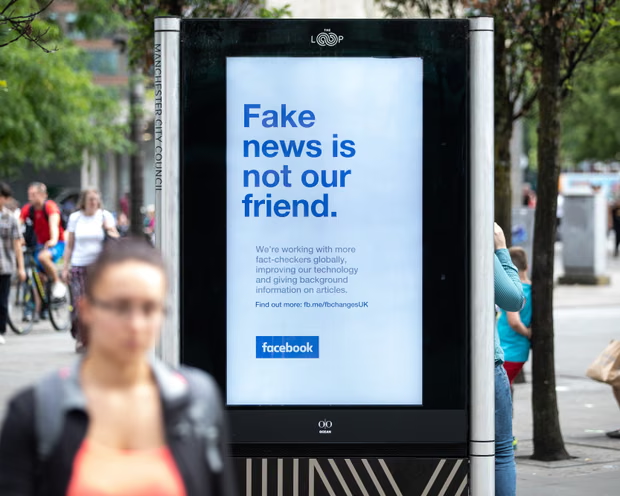
A comprehensive investigation has exposed the true scale of this modern phenomenon. The rigorous study analysed over one hundred and twenty-five thousand social media interactions. Researchers examined regional Facebook groups alongside community networks and various public digital feeds. The final data paints a deeply worrying picture of our contemporary information ecosystem. Unverified claims now circulate freely without any editorial oversight or traditional fact-checking. This lack of scrutiny allows false narratives to spread rapidly through neighbourhoods.
The independent research was conducted by the respected Social Market Foundation thinktank. Their extensive report explicitly describes these unregulated digital groups as silent killers of trust. This profound erosion of public faith strikes at the heart of British society. The problem accelerates rapidly in areas where traditional journalism has completely vanished. These media blackspots provide the perfect breeding ground for highly destructive alternative realities. Without professional reporters to challenge falsehoods, fabricated stories quickly become accepted local facts.
The financial decline of regional print journalism has created a dangerous democratic vacuum. More than four million people across Britain now live inside recognized news deserts. These are geographic areas entirely devoid of any dedicated professional local news provider. In these information vacuums, residents increasingly turn to informal digital noticeboards for updates. These online spaces lack the ethical standards maintained by trained media professionals. Consequently, the public receives a steady diet of rumor and deliberate manipulation.
The data reveals that falsehoods are three times more common in news deserts. This statistical reality highlights the vital protective role that local newspapers traditionally played. Professional reporters previously acted as essential gatekeepers against malicious gossip and deception. Their absence allows highly motivated individuals to manipulate public opinion with total impunity. Many online group administrators possess no legal training or commitment to political neutrality. Instead, they often use their digital platforms to promote specific personal agendas.
The content of these viral falsehoods frequently targets sensitive social friction points. Immigration and sectarian anxieties represent the most common themes across all digital platforms. Fabricated stories regarding local council decisions are also remarkably prevalent among online groups. Researchers discovered numerous sophisticated hoaxes designed to provoke immediate public anger and resentment. These included entirely faked communications mimicking official local government letters and announcements. Such deceptive tactics severely undermine public confidence in essential civic institutions.
The introduction of advanced artificial intelligence has further complicated this difficult situation. Malicious actors now easily generate highly convincing fake images and deceptive text documents. These sophisticated digital fabrications are nearly impossible for ordinary citizens to detect easily. One notable hoax falsely claimed a major city council stopped speaking English. Another viral deception detailed a completely fictional expansion of urban clean air zones. These stories are specifically engineered to exploit existing economic anxieties among residents.
The political consequences of this unchecked digital manipulation are becoming painfully obvious. Researchers identified massive spikes in deceptive content during recent crucial local elections. The volume of misinformation grew by over fifty percent before polling day. This targeted surge suggests a deliberate effort to influence crucial democratic outcomes nationwide. Electoral integrity faces a severe challenge when voters base decisions on falsehoods. The democratic process relies entirely on an informed and objective voting public.
A recent parliamentary byelection in Greater Manchester provided a clear case study. Misinformation was actively detected in three out of four local community groups. Fabricated quotes were falsely attributed to candidates to damage their electoral prospects. Other highly inflammatory posts sought to stoke deep racial tensions within the constituency. These digital campaigns directly influenced the final results of the hard-fought contest. Observers worry these tactics will be repeated in upcoming high-profile political battles.
The impending Makerfield byelection is already causing immense anxiety among political strategists. High-profile national figures are currently preparing to contest this critical parliamentary seat. The shadow of digital manipulation hangs heavily over the entire upcoming campaign process. Experts warn that unregulated online forums could severely distort the democratic debate there. The potential for foreign or domestic interference remains a constant pressing concern. Safeguarding the integrity of this election has become a top priority.
Senior parliamentarians are now demanding immediate and decisive action from the government. Prominent committee chairs argue that previous official warnings were completely ignored by ministers. They believe the current regulatory framework is entirely inadequate for protecting British citizens. Calls are growing louder for robust transparency laws governing all social platforms. Politicians insist that group administrators must be held legally responsible for hosted content. Without strict accountability, the digital environment will remain highly volatile and dangerous.
The government maintains it recognizes the severe dangers posed by online deception. However, officials prefer focusing resources on the most immediate and physical harms. This cautious approach draws sharp criticism from media experts and political researchers alike. Critics argue that ignoring democratic subversion will cause long-term institutional damage across Britain. They believe that societal trust cannot be easily rebuilt once completely destroyed. A more proactive legislative stance is deemed essential by many industry leaders.
The tech industry itself offers varied responses to these serious structural challenges. Major platforms point to existing community guidelines and automated moderation tools today. They emphasize their policies regarding the removal of content causing imminent physical harm. However, critics argue these automated systems consistently fail to catch nuanced local deceptions. Volunteer moderators often lack the resources to police complex political discussions effectively. This dynamic leaves local groups highly vulnerable to prolonged and targeted manipulation.
Some platforms utilize dedicated internal teams to handle sensitive political election reports. These specialists evaluate reported content to ensure consistent enforcement of corporate rules. While helpful, these corporate measures are often seen as reactive rather than preventative. The sheer volume of daily digital posts easily overwhelms traditional human moderation. Consequently, harmful falsehoods often circulate for days before being successfully removed. By then, the psychological damage to the community is already done.
The ultimate solution may lie in revitalizing the independent local news sector. Media executives urge the government to provide meaningful financial support for journalism. Investing in professional public-interest reporting remains our best defense against digital deception. A healthy democracy requires reliable sources of shared truth to function properly. Without intervention, the silent killer of trust will continue to divide communities. Protecting the integrity of local information is now a matter of national urgency.
Related News:
 Green Party Surges Past Labour in Latest UK Poll
 Trump’s UK Ambassador Urges North Sea Drilling to Strengthen US Ties
 French Taxi Driver Cleared in David Lammy Theft Case After Fare Dispute
 Millionaires group urge Reeves to introduce wealth tax to ‘lift kids out of poverty’
 Starmer Faces Growing Dissent as Labour MPs Weigh Leadership Challenge
 Reeves rejects £1bn plea for NHS redundancy payouts
 PM Condemns Leaks, Vows Loyalty to Ministers and Stability
 Major Rent Reform Ends No-Fault Evictions in England
 Peers Flood Assisted Dying Bill with 942 Amendments
 Most Tories Expect to Support a Farage-Led Government
 Starmer Says Labour’s Economic Plan Needs Years to Deliver
 Culture secretary to review Telegraph takeover by Daily Mail owner
 UK Government Borrowing Drops to £11.6bn in December
 Labour Blocks Burnham as Party Rift Deepens Ahead of Polls
 Andy Burnham and the Labour Rift Over Power and Leadership
 Huge mistake: Labour blocks Burnham from byelection bid
 Artificial intelligence will cost jobs, admits Liz Kendall
 Labour targets Greens on drugs in Gorton Denton byelection
 Greens nominate Hannah Spencer for Gorton and Denton byelection
 Mandelson Faces Police Inquiry Over Epstein Leak
 Starmer Condemns ‘Depraved’ Russian Strikes on Ukraine
 Labour Thinktank Row Deepens Over Journalist Probe Claims
 Morgan McSweeney downfall shocks Labour leadership
 Labour Lord Doyle Apologises Over Paedophile Ties in Political Storm
 Cabinet Secretary Shake-Up Triggers Due Diligence Warning
 Starmer Faces Inquiry Calls Over Thinktank Probe
 Royal Mail Delivery Crisis Deepens Amid Weather Chaos
 UK shelves £110m border project amid trade strain
 Farage Unveils Reform UK Frontbench Team
 California Democrats Vow Trump Reckoning
 Trump Tariffs Threat Spark UK and EU Alarm
 Wales Approves Assisted Dying Bill Consent
 UK EU Trade Reset Gains Public Backing
 Your Party leadership fight nears dramatic end
 NHS Maternity Units Cover Up Harmful Childbirth Errors
 Green Party Stuns Labour in Gorton and Denton Byelection
 Corbyn Leads Your Party in Coordinated Left-Flank Strategy
 Labour Together scandal sparks clean break vow
 Asylum Seekers to Work After Year-Long Wait
 Starmer Row as Greens Demand Apology
 Proposed Law Leaves Gap for Children of Convicted Paedophiles
 Gordon Brown urges court for crimes against children
 Starmer Praised for Stance on Trump and Iran Conflict
 Inquiry into HMRC child benefit errors launched by NAO
 NHS Plans to Cut Overseas Workers Labeled Overambitious
 Farage Faces Backlash Over Crypto Cameo Endorsements
 Family Court Reform Promises New Era for UK Families
 Army Probes Apache Flyover at Kid Rock’s Nashville Estate
 Relationship with Trump may be beyond repair, Starmer warned
 Unions Raise Concerns Over Doctors’ Pay Dispute
 UK Government Poised to Revive Stalled Hillsborough Law
 Starmer Faces Commons Test Over Mandelson Scandal
 UK Stands Firm on Falklands Amid US Rift
 Welsh Labour Faces Potential Historic Election Defeat
 Starmer Survives Mandelson Rebellion
 Silent Tracks: Rail Line Without Passengers
 Major test for Labour as polls open in Great Britain
 Labour Members Doubt Starmer Future as Burnham Leads Poll
 Reform UK Faces Crisis as Newly Elected Councillors Resign
 Keir Starmer Struggles to Secure His Grip on Downing Street
 Farage Faces Standards Probe Over Cash Property Purchase
 Secret Role of UK Security Services in Troubles Amnesty Law
 Farage and Reform UK Reshape British Politics
 Starmer Leadership Under Pressure After Setbacks
 Minister Criticises Police Guidance Amid Southampton Protests
 Makerfield Voters Demand Real Change as Election Looms
 Deepfake Abuse on X Sparks Safety Concerns for Dissidents
 Modernising the Military: Carns Demands Urgent Procurement Reform
 UK Ministers Lobby Trump Over Under-16s Social Media Ban
 Starmer Resolves to Fight Burnham in Leadership Battle
 Starmer Resigns as Prime Minister Amid Internal Pressure
 MP Warning: Northern Rail Risks Repeating HS2 Failures
 Hollie Ridley to Step Down as Labour General Secretary
 New South Wales Premier Chris Minns Signals Tough Road Ahead for Labor
 Jarvis Urges Burnham to Secure 3.5% Defence Spending
 Farage Warns Sky News Following Financial Inquiry
 Reform UK Finances Face Deep NCA Probe
 Ann Widdecombe, Formidable Political Figure, Dies at 78
 Treasury Reform Urged After Tragic Loss
 Sadiq Khan Backs Call for Maximum UK Work Heat Limit