Published: 06 July 2026. The English Chronicle Desk. The English Chronicle Online.
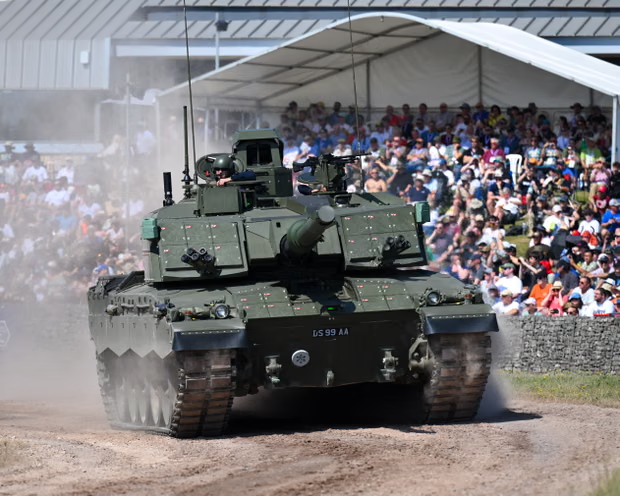
The new defence secretary, Dan Jarvis, has recently called upon the incoming prime minister, Andy Burnham, to increase the nation’s defence spending dramatically starting from the year 2030. This ambitious request requires Burnham to provide a clear trajectory towards a significant NATO spending target. Achieving this specific goal would mean an extra twenty-five billion pounds every single year for the military by the middle of the next decade. The former paratrooper expressed his deep confidence that the prime minister-in-waiting truly values the vital importance of our national security. However, he is openly lobbying for these substantial funds, which would likely necessitate difficult spending cuts elsewhere in the government budget. Jarvis stated that he expects the upcoming spending review to commit sufficient resources to evidence this trajectory towards three point five percent of GDP. He spoke to reporters before the annual NATO summit scheduled to commence this coming Tuesday in the city of Ankara, Turkey. Jarvis has maintained his position in the cabinet and has already been in contact with Burnham and his team to discuss critical defence priorities. They have focused on the massive two hundred ninety-eight billion pound, four-year defence investment plan which was finally published last week after months of intense ministerial wrangling.
The defence secretary noted that he has known Andy for a very long time and harbors absolutely no doubt that, as the future prime minister, he will ensure the nation has all necessary resources at this point of challenge. Jarvis emphasized that the world is currently more dangerous and complicated than at any point during his entire lifetime, particularly as Russian warships and shadow fleet vessels are reportedly launching drones over RAF Lakenheath while sailing around the UK. Britain is currently gearing up for its most significant sustained deployment in many years, safeguarding the vital strait of Hormuz in a joint operation with France. This remains contingent on the United States and Iran agreeing on a sustainable peace, amid ongoing reports that Downing Street has kept Burnham out of the detailed planning process thus far. Jarvis will travel to Ankara alongside Starmer and the foreign secretary, Yvette Cooper. He intends to personally reassure his American counterpart, Pete Hegseth, that the United Kingdom remains fully committed to the three point five percent spending pledge which was agreed upon last year following significant pressure from Donald Trump.
The minister plans to provide the commitment that the government will honor the pledges and promises that have been made to the United States and to our various NATO allies throughout this transition. This move represents the biggest increase in military spending since the end of the second world war. Jarvis’s predecessor, John Healey, resigned just last month after it became clear that Starmer would only commit to increasing defence spending to two point six eight percent of GDP by 2030, leaving a very steep curve to hit the three point five percent target in 2035. The incoming defence secretary successfully won a modest one point five billion pounds more over the next four years as part of the massive investment plan, partly to increase spending on drones, though the overall uplift had a negligible impact. This decision prompted a significant backlash after reports emerged that spending on vital roads and other capital programmes was being cut and that a four point seven billion pound hole would have to be filled by the Treasury as part of Burnham’s very first budget.
Burnham, a former Greater Manchester mayor and health secretary, has little professional background in the fields of defence or foreign affairs. However, he stated in an interview this past Thursday that he would fully fund the entire defence investment plan and that if he becomes prime minister, there would be no compromise on the security of the nation. Meeting this strict NATO commitment will require a twenty-five billion pound shift in resources towards defence, which must be paid for either by cutting spending elsewhere, introducing extra taxes, or through higher borrowing, though at present there is limited headroom to raise debt significantly. Jarvis acknowledged that he needs to make the case for defence to both the public and his cabinet colleagues. Leaving a funding gap for the next budget is, in his view, entirely routine in terms of standard Whitehall accounting, and he insisted it had been necessary to publish the delayed plan ahead of the vital NATO meeting.
He does not believe the public should be distracted from the fact that in a short space of time, the government skewed more money and sharpened its military capabilities. Jarvis argued that he had secured about six hundred million pounds extra for drones after he had spent much of his first few days studying how they were being effectively employed in Ukraine and the Middle East. Jarvis noted that he was able to successfully get the plan out where Healey had previously failed because he ensured that negotiations with the Treasury were conducted in the most constructive and productive fashion in a series of meetings with the chancellor, Rachel Reeves. The Treasury ultimately approved an extra fifteen billion pounds for defence until 2030, which is one point five billion more than Healey had managed to obtain, though not quite as much as the eighteen billion originally sought in negotiations that had begun months earlier.
Jarvis first learned that Healey had resigned while he was on an official visit to the Sandhurst training academy for military officers, marking thirty years since he had first arrived there as a cadet. He mentioned that his phone was ringing away, though in fact he was told the news as a big shock when somebody came over to tell him the development. Starmer offered him the cabinet job in person at Downing Street that evening, which he said felt like a very big moment, because for thirty years or more he has been thinking about these things, dating back to his time in the military. The minister was commissioned into the Parachute regiment, where he served in Kosovo, Northern Ireland, Iraq, and Afghanistan, before he resigned in 2011 to become the MP for Barnsley Central, and now Barnsley North. He has also served as mayor of South Yorkshire, then was security minister before being promoted. Jarvis said he accepted Starmer’s job offer promptly and he did not consider it appropriate to demand more money for defence as a precondition for accepting. It was not a transactional conversation, he said. He added that he was keen to stay on under Burnham, and he very much hopes he has the opportunity to continue serving in this vital role.
Related News:
 Green Party Surges Past Labour in Latest UK Poll
 Trump’s UK Ambassador Urges North Sea Drilling to Strengthen US Ties
 French Taxi Driver Cleared in David Lammy Theft Case After Fare Dispute
 Millionaires group urge Reeves to introduce wealth tax to ‘lift kids out of poverty’
 Starmer Faces Growing Dissent as Labour MPs Weigh Leadership Challenge
 Reeves rejects £1bn plea for NHS redundancy payouts
 PM Condemns Leaks, Vows Loyalty to Ministers and Stability
 Major Rent Reform Ends No-Fault Evictions in England
 Peers Flood Assisted Dying Bill with 942 Amendments
 Most Tories Expect to Support a Farage-Led Government
 Labour MP claims devolution bill is ‘blatant discrimination’ against Cornwall
 Millions Face Higher Taxes Under Reeves New Budget
 Starmer Says Labour’s Economic Plan Needs Years to Deliver
 Culture secretary to review Telegraph takeover by Daily Mail owner
 UK Government Borrowing Drops to £11.6bn in December
 Labour Blocks Burnham as Party Rift Deepens Ahead of Polls
 Andy Burnham and the Labour Rift Over Power and Leadership
 Huge mistake: Labour blocks Burnham from byelection bid
 Artificial intelligence will cost jobs, admits Liz Kendall
 Labour targets Greens on drugs in Gorton Denton byelection
 Greens nominate Hannah Spencer for Gorton and Denton byelection
 Mandelson Faces Police Inquiry Over Epstein Leak
 Starmer Condemns ‘Depraved’ Russian Strikes on Ukraine
 Labour Thinktank Row Deepens Over Journalist Probe Claims
 Morgan McSweeney downfall shocks Labour leadership
 Labour Lord Doyle Apologises Over Paedophile Ties in Political Storm
 Cabinet Secretary Shake-Up Triggers Due Diligence Warning
 Starmer Faces Inquiry Calls Over Thinktank Probe
 Royal Mail Delivery Crisis Deepens Amid Weather Chaos
 UK shelves £110m border project amid trade strain
 Farage Unveils Reform UK Frontbench Team
 California Democrats Vow Trump Reckoning
 Trump Tariffs Threat Spark UK and EU Alarm
 Wales Approves Assisted Dying Bill Consent
 UK EU Trade Reset Gains Public Backing
 Green Party Stuns Labour in Gorton and Denton Byelection
 Corbyn Leads Your Party in Coordinated Left-Flank Strategy
 Labour Together scandal sparks clean break vow
 Asylum Seekers to Work After Year-Long Wait
 Starmer Row as Greens Demand Apology
 Proposed Law Leaves Gap for Children of Convicted Paedophiles
 Gordon Brown urges court for crimes against children
 Starmer Praised for Stance on Trump and Iran Conflict
 Inquiry into HMRC child benefit errors launched by NAO
 NHS Plans to Cut Overseas Workers Labeled Overambitious
 Farage Faces Backlash Over Crypto Cameo Endorsements
 Army Probes Apache Flyover at Kid Rock’s Nashville Estate
 Relationship with Trump may be beyond repair, Starmer warned
 Unions Raise Concerns Over Doctors’ Pay Dispute
 UK Government Poised to Revive Stalled Hillsborough Law
 Starmer Faces Commons Test Over Mandelson Scandal
 UK Stands Firm on Falklands Amid US Rift
 Crackdown Backfires on UK Climate Protesters
 Welsh Labour Faces Potential Historic Election Defeat
 Starmer Survives Mandelson Rebellion
 Silent Tracks: Rail Line Without Passengers
 Major test for Labour as polls open in Great Britain
 Labour Members Doubt Starmer Future as Burnham Leads Poll
 Reform UK Faces Crisis as Newly Elected Councillors Resign
 Farage Faces New Questions Over Private Helicopter Use
 Keir Starmer Struggles to Secure His Grip on Downing Street
 Farage Faces Standards Probe Over Cash Property Purchase
 Green Party Makerfield Candidate Resigns Over Posts
 Secret Role of UK Security Services in Troubles Amnesty Law
 Farage and Reform UK Reshape British Politics
 Starmer Leadership Under Pressure After Setbacks
 Minister Criticises Police Guidance Amid Southampton Protests
 Makerfield Voters Demand Real Change as Election Looms
 The Hidden Crisis Eroding Trust in British Communities
 Deepfake Abuse on X Sparks Safety Concerns for Dissidents
 UK Ministers Lobby Trump Over Under-16s Social Media Ban
 Labour MP Revives Blocked Assisted Dying Bill in Commons
 Starmer Resolves to Fight Burnham in Leadership Battle
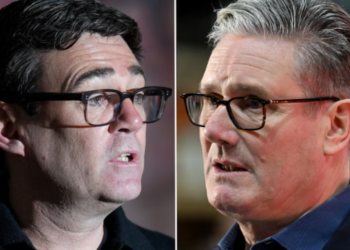 Starmer Set to Announce Exit Plan as Burnham Eyes No 10
 Hollie Ridley to Step Down as Labour General Secretary
 Farage Warns Sky News Following Financial Inquiry
 Reform UK Finances Face Deep NCA Probe
 Ann Widdecombe, Formidable Political Figure, Dies at 78
 Treasury Reform Urged After Tragic Loss
 Sadiq Khan Backs Call for Maximum UK Work Heat Limit