Published: 19 October 2026. The English Chronicle Desk. The English Chronicle Online
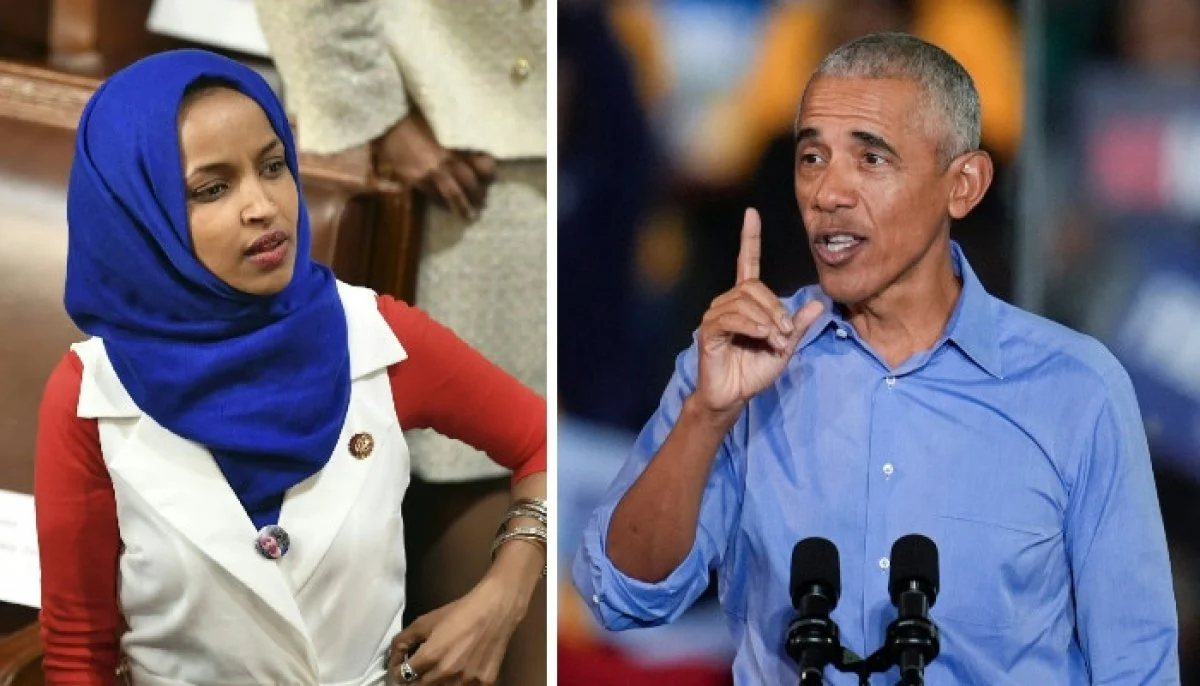
Former US president Barack Obama has condemned remarks by Donald Trump’s border enforcement chief suggesting that Democratic congresswoman Ilhan Omar could be stripped of her American citizenship and deported, warning that the government’s actions could establish a dangerous precedent for political retaliation. Obama has urged Americans across the political spectrum to defend the Minnesota lawmaker, arguing that the targeting of an elected official could eventually threaten others who challenge the president.
The controversy intensified after Tom Homan, the Trump administration’s “border czar”, was asked during a television interview whether an investigation involving Omar could lead to her denaturalisation and deportation. Homan replied, “Of course,” adding that citizenship could be revoked if someone had lied during the naturalisation process. He said the procedure had been used previously and could be pursued if the evidence supported such action.
Homan’s comments marked a significant escalation in public discussion surrounding the investigation into Omar, one of the most prominent Somali American politicians in the United States. Federal agents searched her home in Minnesota on 12 October, prompting strong criticism from Democrats and raising questions about the timing and purpose of the investigation, which began only weeks before November’s midterm elections.

Obama addressed the issue in a statement published on social media on Sunday. He argued that the federal government was bringing its full authority to bear against a law-abiding elected representative because she had criticised the president. He warned that Americans should not regard the matter as an isolated dispute involving one politician.
“If this becomes the new normal, there’s no reason to believe it will stop with her,” Obama said, cautioning that future presidents from either party could use similar methods against political opponents. His intervention has placed the controversy at the centre of a broader debate about executive power, citizenship rights, political accountability and the independence of federal law enforcement.
The former president also drew attention to the personal and political significance of citizenship investigations. During his own presidency and afterwards, Trump promoted false claims questioning whether Obama had been born in the United States and was therefore eligible to serve as president. Those claims were repeatedly discredited, but they became a defining feature of the political movement that helped Trump rise to national prominence.
The dispute involving Omar has renewed concerns among Democrats that allegations about immigration status are being used to undermine political opponents. Omar, who represents Minnesota in the US House of Representatives, has faced years of attacks from Trump and his supporters. The latest investigation concerns whether she or members of her family violated any laws when obtaining citizenship, although her lawyers have strongly rejected suggestions that there is a legitimate basis for challenging her status.
Omar was born in Somalia and arrived in the United States as a child after her family fled the country’s civil war. According to her lawyers, she and her family spent years in a refugee camp in Kenya before coming to the US during the 1990s. She became a naturalised American citizen in 2000.
The precise circumstances of her citizenship have become the focus of allegations circulated by political opponents. Obama said Omar arrived in the United States with her father when she was 12 and became a citizen at 17, when her father completed the naturalisation process. He argued that the administration appeared to be pursuing an unsubstantiated theory that she had actually been 18 at the time and therefore should have applied for citizenship separately.
Obama also criticised the search of Omar’s home, saying federal agents had taken personal records and seized her phone while attempting to find evidence related to events that occurred around two decades ago. The congresswoman’s legal team has challenged the search, arguing that it was neither justified nor lawful and demanding the return of her property.
The investigation has reportedly extended beyond the search itself. Federal authorities have issued more than a dozen subpoenas, including requests involving Omar’s relatives, according to reporting cited in the original coverage. Her lawyers have also called for the preservation of any audio or video recorded during the operation. The full scope of the inquiry has not been publicly explained, and Homan declined to discuss specific allegations when asked about other matters potentially under investigation.
The Justice Department’s actions have prompted concern about the potential impact on the electoral process. In a letter following the search, Omar’s attorneys argued that the investigation could conflict with longstanding departmental policies intended to prevent law enforcement decisions from influencing elections. The proximity of the operation to the November midterm elections has heightened scrutiny, particularly because Omar is seeking another term in Congress.
Former Justice Department officials have also expressed unease about the timing of the search. Peter Carr, a former career spokesperson for the department, said he was astonished to see a search involving a sitting member of Congress so close to an election. He pointed to the department’s longstanding position that political considerations should not influence investigative decisions and that officials must avoid actions that could reasonably be perceived as affecting an election.
These concerns do not, by themselves, establish that the investigation is politically motivated or unlawful. Federal authorities can investigate suspected violations of citizenship law, and denaturalisation is an established legal process in the United States. However, the circumstances surrounding any such case, the evidence supporting it and the procedures followed are central to determining whether government powers are being exercised appropriately.
Denaturalisation generally involves a lengthy legal process rather than an immediate administrative decision. Authorities must investigate the relevant circumstances and pursue proceedings through the courts. The government has been seeking to expand its scrutiny of some foreign-born Americans whose citizenship it believes may have been obtained fraudulently. By April, reports indicated that the Justice Department had identified nearly 400 people for possible investigation.
The administration’s broader immigration agenda has added to the controversy. Alongside its efforts to arrest, detain and deport undocumented immigrants, the government has intensified scrutiny of legal immigration and naturalised citizens. Critics argue that this approach risks creating uncertainty for people who have completed the legal process to become American citizens, while supporters of tougher enforcement say fraud allegations must be investigated regardless of a person’s political position.
Omar’s case has attracted particular attention because of her national profile and longstanding clashes with Trump. Rightwing figures have circulated accusations about her marriage and immigration history, including an allegation that she married a former husband to help him obtain legal status. Omar has denied the accusations, and they remain distinct from any evidence that investigators may ultimately present in the current inquiry.
Her lawyers have maintained that there is no legitimate basis to suggest she violated citizenship laws. They have demanded the return of seized property and challenged the government’s handling of the search. The investigation’s outcome will depend on the evidence and the legal process, rather than the public statements made by politicians or administration officials.
After the search, Omar said she was safe but described the operation as an attempt to target political enemies and weaponise federal law enforcement. She accused Trump of pursuing a years-long campaign of false claims and intimidation against her, describing the latest developments as an escalation. She also vowed that she would not be silenced.
The case has become a test of how the United States balances immigration enforcement with constitutional protections and the independence of its political institutions. A naturalised citizen serving in Congress is entitled to due process, and any attempt to revoke citizenship must be assessed according to the law and the evidence. At the same time, the government has a responsibility to ensure that legitimate investigations are not influenced by political hostility or electoral calculations.
Obama’s intervention has widened the debate beyond Omar herself. His warning was that the use of federal power against a prominent critic could have consequences for the entire political system if it becomes an accepted practice. For supporters of the congresswoman, the issue concerns not only her personal circumstances but also the security of citizenship and the ability of elected representatives to criticise the government without fear of retaliatory action.

As the midterm elections approach, the investigation is likely to remain a source of political tension. The administration has not publicly established that Omar obtained citizenship unlawfully, and allegations should not be treated as proven facts. The coming legal proceedings and any evidence disclosed by investigators will be crucial to understanding the case.
For now, the dispute has placed questions of citizenship, executive authority and political accountability under intense scrutiny. Obama’s message is that defending due process should not depend on whether Americans agree with Omar’s politics. The principle at stake, he argues, is whether the power to investigate and potentially strip someone of citizenship can be used fairly, consistently and without becoming a tool for punishing political dissent.
Related News:
 Trump’s Revenge Drive Deepens GOP Divide
 Latin America women fear rollback of rights
 Trump Attacks Norway After Nobel Peace Prize Snub
 Ten US Midterm Races That Could Defy Expectations
 Ohio Airports Become Key Hubs for ICE Deportation Flights
 Brazil Cuts Working Week to 40 Hours in Lula Election Boost
 Talarico Faces Tough Voter Test in Texas Senate Race
 Thousands Protest ICE Operations in Nationwide US Day of Action
 Judge Blocks Trump Bid for Arizona Voter Data
 US Court Weighs Fate of TPS for Migrants
 US Court Ruling Reshapes Voting Rights Landscape
 US states redraw maps after voting rights ruling
 Judge halts deportation of Yemeni refugees in US
 Trump warns Iran as Middle East tensions surge again
 US Court Restores Abortion Pill Access Temporarily
 Immigration Judges Fear Pressure in Trump Era
 Former ICC prosecutor condemns US sanctions
 Gunman Killed After White House Security Shootout
 Le Pen’s Popularity Holds Despite Conviction
 Mystery Grows Over Mitch McConnell’s Health
 Trump Orders Signs Criticising Smithsonian Museum
 Is America Ready for an AOC Presidential Run?
 Armed Suspect Attacks Ohio Governor Candidate
 Texas Transfers Raise Fears for Migrant Children
 Memphis Questions National Guard Crime Surge
 Trump Media Ban Triggers First Amendment Clash
 US Networks Suspend Trump White House Pool Coverage
 Trump and Mamdani Hold Cordial Gracie Mansion Meeting
 Democrat Says ICE Restricted Detention Camp Oversight
 King Refers Jamaica Slavery Petition to Privy Council
 Republican Senator Questions Trump Ad Spending
 French Student Protests Escalate Into Violent Clashes
 Trump Ads Trigger Fight Over Taxpayer Money
 Burnham Opens Door to Possible UK Return to EU
 Drumcree Talks Falter as Legal Challenge Deepens
 UK-France Returns Deal Faces Expiry as Talks Stall
 Trump Immigration Policy Faces New Legal Tests
 French School Protests Escalate as 400 Schools Close
 Families Await USS Abraham Lincoln Homecoming
 Lithuania Offers to Fund Permanent US Military Base
 Trump Rally Faces Protests as Texas Race Tightens
 Tanker Attacked Near Qatar as Hormuz Tensions Escalate
 Botstein Quits Bard Amid Epstein Investigation Calls
 Trump Says He Deserves Nobel Peace Prize
 USS Lincoln Ends Record 265-Day Deployment
 ICE Agent Shoots Man in New York as Child Escapes Harm
 US Senate Debates Turn Bitter as Midterms Near
 Bolsonaro Gains Key Endorsement Ahead of Brazil Runoff
 Navi Pillay Wins Nobel Peace Prize for Justice
 US Execution Livestream Plan Sparks Global Outrage
 Controversial Vaccine Trial Approved in Guinea-Bissau
 Delhi Braces for Youth Protests Over Voter Roll Dispute
 Trump Names Katie Zacharia as Next White House Spokesperson
 Delhi Detains Protest Leaders as Youth Rally Escalates
 Trump Names Katie Zachariah as Next White House Press Secretary
 Brazil Court Scandal Threatens Lula as Bolsonaros Rise
 Millions Face Tougher Medicaid Rules From January
 Farage Rejects Claims Reform Would Let Troops Shoot Migrants
 Judge Blocks Trump White House Media Ban
 Trump Warns Alaska Voters Over Rival Dan Sullivans
 Trump Targets Arizona and Montana Amid GOP Election Worries
 Gadi Eisenkot: Israel’s Anti-Netanyahu Challenger
 Trump Rallies GOP as Senate Democrats Boost Key Races
 Trump’s Ambassador Picks Face Growing Controversy
 Serbia Leader Linked to Controversial Trump Tower Plan
 Trump Slams Ukraine Strikes as Russia Ceasefire Collapses
 One Nation Pledges $2,000 Baby Subsidy in Victoria
 Trump Falsely Questions Ossoff’s Election Legitimacy
 Trump Administration Threatens California Election Officials
 Macron Condemns Violence as France Faces 2,400 Arrests
 Alberta Referendum Exposes Deep Divisions Over Independence
 Marseille Activist Defies France’s Powerful Drug Gangs
 Partial US Government Shutdown Hits Homeland Security Funding
 Trump gives $45,000 holiday gifts to White House aides
 Badenoch Raises Prospect of 2027 UK Election
 Lula Warns of Bolsonaro Family Return as Brazil Votes
 South Africa Withdraws Directive on Asylum Applications
 Trump’s Russian Diesel Deal Sparks Ukraine Fury
 India’s Voter Roll Crisis Sparks Nationwide Protests
 UK Visa Refusal Threatens Baby’s Family Christmas