Published: 17 October 2026. The English Chronicle Desk. The English Chronicle Online
The administration of US President Donald Trump has intensified its confrontation with California over election procedures, warning local officials that they could face criminal investigation and prosecution if they knowingly count ballots cast by noncitizens in the upcoming midterm elections. The warning, issued by senior officials at the US Department of Justice, has heightened tensions between Washington and the heavily Democratic state just weeks before voters head to the polls on 3 November.
The dispute centres on the federal government’s efforts to investigate people it suspects may be ineligible to vote, alongside California’s insistence that election officials must follow established legal procedures before excluding registered voters or rejecting their ballots. The administration argues that knowingly facilitating noncitizen voting in federal elections is a criminal offence. California officials, however, say the federal government has not provided sufficient evidence to substantiate its latest allegations about thousands of voters.
The Justice Department’s warning arrived on Friday in a letter addressed to the Los Angeles County Counsel’s Office. The correspondence was also sent to California Secretary of State Shirley Weber and Los Angeles County Registrar Dean Logan, extending the warning to officials responsible for administering elections across one of the country’s most populous states.

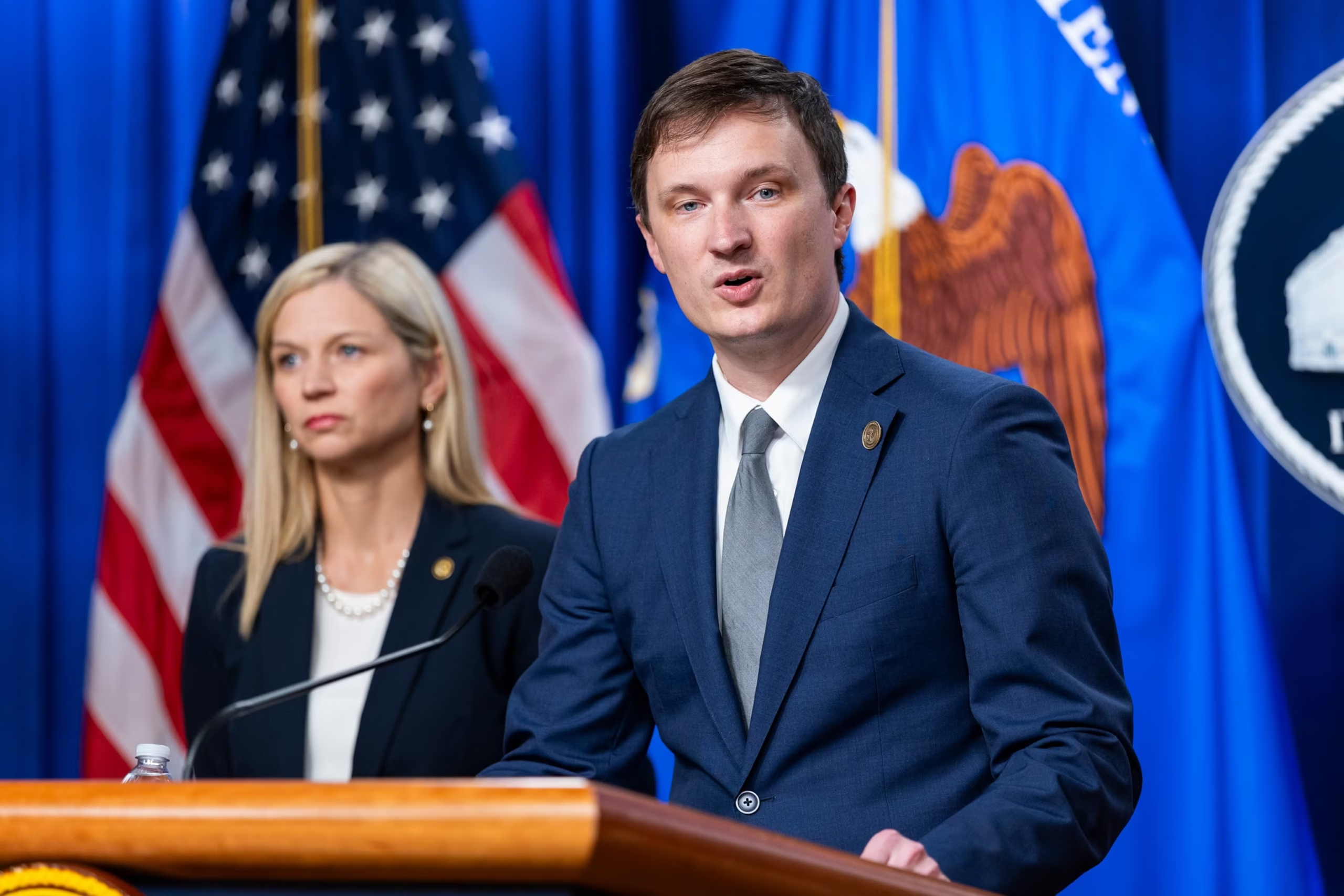
The letter, obtained by the Associated Press, was signed by Trent McCotter, the department’s acting deputy attorney general. It stated that officials who knowingly facilitate or ignore federal election crimes could face serious legal consequences. The document specifically warned that knowingly tabulating ballots cast by individuals identified by federal agencies as noncitizens could expose election workers to accusations of aiding and abetting a federal crime.
The administration’s intervention marks another escalation in an increasingly contentious dispute over election oversight, voter eligibility and the respective authority of federal and state governments. With the midterm elections approaching, the confrontation raises questions about how election officials should respond when federal authorities identify individuals as potentially ineligible voters without, according to California officials, providing evidence sufficient to justify excluding them.
Trump personally reinforced the warning later on Friday through a post on his Truth Social platform. Sharing a report about the Justice Department’s letter, the president declared that those involved would face lengthy prison sentences. His comments added a direct presidential threat to a dispute already involving legal action and warnings of criminal prosecution.
The confrontation had intensified a day earlier when the Trump administration filed a lawsuit seeking to prevent California from counting mail-in ballots associated with individuals whom federal authorities had classified as likely noncitizens. The administration wants those ballots withheld until the individuals’ immigration status can be verified.
The lawsuit followed a disagreement over a password-protected thumb drive containing a list of approximately 20,000 names. Federal officials reportedly gave California authorities 48 hours to review the information but proceeded with legal action after the deadline passed without the requested review being completed.
According to the federal government’s position, the list identifies people who may be noncitizens but were sent ballots for the 3 November election. California Secretary of State Shirley Weber has challenged the administration’s approach, stating that federal officials have not supplied evidence supporting their claim that the individuals identified on the drive are ineligible voters.
The disagreement is particularly important because California sends mail ballots to all registered voters. Election administrators must therefore determine eligibility using applicable laws and reliable records rather than assuming that a person’s inclusion on a federal list automatically establishes that they are legally prohibited from voting.
The central legal question is not whether noncitizens are permitted to vote in federal elections. Federal law generally prohibits noncitizens from voting in federal elections, subject to limited statutory exceptions that do not create a general right for noncitizens to participate. The dispute concerns how authorities establish that a particular person is ineligible and what election officials must do when federal agencies supply allegations that have not yet been independently verified.
A person’s immigration status and voting eligibility are related but distinct questions that require careful examination of the relevant records and circumstances. Mistaken identification, outdated information or discrepancies between government databases can create difficulties when officials attempt to match individuals across different systems. Election authorities must also distinguish between allegations of potential ineligibility and evidence sufficient to justify withholding or rejecting a ballot under the law.
The administration’s letter places election workers in a difficult position by warning of criminal liability if they knowingly count ballots associated with people identified by federal agencies as noncitizens. Officials must comply with federal election law, but they also have responsibilities under state law to administer elections fairly, protect eligible voters and follow established procedures for resolving disputes.
Legal experts have criticised the administration’s approach, arguing that the threat of prosecution could place unnecessary pressure on election officials during a sensitive period. Rick Hasen, a law professor at the University of California, Los Angeles, described the letter as an escalation that increases the pressure on officials by raising the prospect of criminal charges.
Hasen argued that the federal government should cooperate with state authorities rather than issue threats and make demands that he believes exceed its lawful authority. His criticism reflects wider concerns that aggressive federal intervention could undermine confidence in election administration if local officials feel compelled to act on unverified allegations.
Justin Levitt, a former deputy assistant attorney general who teaches at Loyola Law School in Los Angeles, also questioned the legal basis for the administration’s approach. He expressed doubt that a prosecution of an election official based on the reasoning presented in the letter would withstand judicial scrutiny.
Levitt argued that courts have previously rejected aspects of the Justice Department’s legal positions and said the latest correspondence was unlikely to change that situation. He also maintained that election officials across the United States have the legal authority and institutional capacity to resist demands that do not comply with the law.
The administration’s actions have therefore prompted a broader debate about the balance between preventing election fraud and protecting the rights of eligible voters. While authorities have a legitimate responsibility to investigate credible evidence of illegal voting, critics argue that enforcement measures must be supported by reliable evidence and implemented through lawful procedures.
Available figures indicate that noncitizen voting in federal elections is rare. During the 2024 presidential election, the Justice Department charged approximately 50 people who were alleged to have voted as noncitizens, compared with more than 227 million registered voters nationwide. The number of charges does not necessarily represent the final number of proven offences, but it illustrates the relatively small scale of the cases identified in relation to the overall electorate.
Investigations into possible noncitizen voting ahead of the midterm elections have also reportedly produced only a limited number of cases so far. These findings have raised questions about whether broad measures targeting thousands of people based on preliminary classifications are proportionate to the evidence available.
The administration’s efforts have nevertheless become part of a wider national campaign focused on voter eligibility, election security and the role of federal agencies in overseeing state-run elections. Supporters of tougher enforcement argue that election systems must prevent unlawful participation and maintain public confidence in the integrity of the ballot. Opponents counter that sweeping demands and unsubstantiated allegations risk placing eligible voters under suspicion and disrupting established election procedures.
California has emerged as a particularly prominent battleground in this dispute because of its large electorate, Democratic political leadership and long-running disagreements with the Trump administration over immigration and federal authority. More than 23 million people are registered to vote in the state, making the administration of its elections a major undertaking involving numerous local jurisdictions and election workers.
The political implications extend beyond California. Several competitive congressional races in the state could help determine which party controls the US House of Representatives for the final two years of Trump’s presidential term. Even a small number of disputed ballots could attract considerable attention in closely contested districts, although the actual electoral impact would depend on the specific races and the number of votes involved.
Democratic lawmakers have also raised concerns about the possibility that federal authorities could seize ballots or other election materials before the results are officially certified. On Friday, California Senator Alex Padilla, Rhode Island Senator Sheldon Whitehouse and Illinois Senator Dick Durbin wrote to Attorney General Todd Blanche, demanding a commitment that the Justice Department would not seize election materials before the midterm results were certified.
Their intervention reflects concerns that federal enforcement actions could interfere with the administration of elections or create uncertainty during the period when ballots are being counted and results verified. The senators’ request adds another dimension to the confrontation, placing the handling of election records and the independence of state election administration at the centre of the debate.
The question of federal authority is especially significant because American elections operate through a system in which states and local jurisdictions perform most of the practical work of registering voters, distributing ballots, counting votes and certifying results. Federal law establishes important requirements and prohibitions, but disputes over the application of those rules can lead to litigation when state and federal officials disagree.
The immediate outcome will depend partly on the progress of the Justice Department’s lawsuit and any decisions issued by the courts. California officials must also determine how to respond to the federal government’s information requests while ensuring that eligible voters are not wrongly prevented from participating.
As election day approaches, the dispute is likely to intensify scrutiny of the procedures used to verify voter eligibility and resolve questions about mail-in ballots. Election administrators face the challenge of protecting the integrity of the process without creating unnecessary barriers for lawful voters.

For the Trump administration, the confrontation represents a renewed effort to strengthen federal scrutiny of voter eligibility. For California, it is another dispute over the limits of federal intervention and the responsibilities of state officials. The outcome could have consequences beyond the state, particularly if the courts are asked to clarify how federal authorities may use voter information and what constitutes sufficient grounds for restricting the counting of ballots.
Ultimately, the central test will be whether election security measures are implemented through evidence-based investigations and established legal procedures. With millions of voters preparing to participate in the midterms, the handling of this dispute could influence not only the immediate election process but also public confidence in the fairness, independence and reliability of American democracy.
Related News:
 Gunman Killed After White House Security Shootout
 Latin America women fear rollback of rights
 Thousands Protest ICE Operations in Nationwide US Day of Action
 Swalwell Faces Pressure to Quit Governor Race
 Harmeet Dhillon Faces Scrutiny in DOJ Role Debate
 US Court Ruling Reshapes Voting Rights Landscape
 Cartel crackdown raises fears of fresh violence
 US states redraw maps after voting rights ruling
 Judge halts deportation of Yemeni refugees in US
 Trump warns Iran as Middle East tensions surge again
 US ‘Narco Boat’ Strikes Draw Global Outcry
 US Court Restores Abortion Pill Access Temporarily
 US judge dismisses Kilmar Abrego Garcia indictment
 Trump’s Revenge Drive Deepens GOP Divide
 Former ICC prosecutor condemns US sanctions
 Irish Gangland Figure Fails in Dublin Election Bid
 Mystery Grows Over Mitch McConnell’s Health
 UN expert urges UK to rethink Israel policy
 Armed Suspect Attacks Ohio Governor Candidate
 Miliband Rejects Chief Rabbi’s West Bank Warning
 Israel Accused of Undermining Palestinian Life
 UK Urged to Probe US Diplomat Case
 Texas Transfers Raise Fears for Migrant Children
 Memphis Questions National Guard Crime Surge
 Trump Media Ban Triggers First Amendment Clash
 ICE Shooting in Austin Sparks Calls for Transparency
 US Networks Suspend Trump White House Pool Coverage
 Democrat Says ICE Restricted Detention Camp Oversight
 Japan PM Backs International Criminal Court
 King Refers Jamaica Slavery Petition to Privy Council
 Republican Senator Questions Trump Ad Spending
 French Student Protests Escalate Into Violent Clashes
 Trump Ads Trigger Fight Over Taxpayer Money
 Trump Immigration Policy Faces New Legal Tests
 French School Protests Escalate as 400 Schools Close
 Japan PM condemns alleged killing by US Marine
 Lithuania Offers to Fund Permanent US Military Base
 Okinawa US Troops Face Curfew After Murder Case
 Trump Rally Faces Protests as Texas Race Tightens
 Tanker Attacked Near Qatar as Hormuz Tensions Escalate
 Botstein Quits Bard Amid Epstein Investigation Calls
 Trump Says He Deserves Nobel Peace Prize
 Pentagon Says Fort Hood Shooter’s Execution Will Be Streamed
 ICE Agent Shoots Man in New York as Child Escapes Harm
 EU Divisions Deepen Over Israel Policy
 Navi Pillay Wins Nobel Peace Prize for Justice
 US Execution Livestream Plan Sparks Global Outrage
 Trump Attacks Norway After Nobel Peace Prize Snub
 Ten US Midterm Races That Could Defy Expectations
 Brazil Court Scandal Threatens Lula as Bolsonaros Rise
 Ohio Airports Become Key Hubs for ICE Deportation Flights
 Judge Blocks Trump White House Media Ban
 Trump Warns Alaska Voters Over Rival Dan Sullivans
 Trump Targets Arizona and Montana Amid GOP Election Worries
 Brazil Cuts Working Week to 40 Hours in Lula Election Boost
 Trump Rallies GOP as Senate Democrats Boost Key Races
 Talarico Faces Tough Voter Test in Texas Senate Race
 Trump’s Ambassador Picks Face Growing Controversy
 Serbia Leader Linked to Controversial Trump Tower Plan
 Trump Falsely Questions Ossoff’s Election Legitimacy
 French Taxi Driver Cleared in David Lammy Theft Case After Fare Dispute
 Greene Pushes Epstein Files Amid Trump Fallout
 US National Guard Member Killed in DC Shooting
 American Mother Extradited From UK to U.S. on Murder Charges
 Partial US Government Shutdown Hits Homeland Security Funding
 Ben Roberts-Smith Denies War Crime Allegations in First Statement
 UK Stands Firm on Falklands Amid US Rift
 Trump orders US troop pullout from Germany
 New Footage Revives Peter Falconio Mystery
 Houthis Strike Saudi Arabia as Middle East Tensions Rise
 Ukraine Villagers Demand Answers After Deadly Arms Depot Strike
 Trump gives $45,000 holiday gifts to White House aides
 British Columbia Sues OpenAI Over School Shooting
 Lula Warns of Bolsonaro Family Return as Brazil Votes
 Gosport Protesters Clash With Police Over Migrant Rescue
 Palace Rejects Funding Andrew’s Police Legal Challenge
 South Africa Withdraws Directive on Asylum Applications
 Trump’s Russian Diesel Deal Sparks Ukraine Fury
 Trump Names Katie Zachariah as Next White House Press Secretary
 India’s Voter Roll Crisis Sparks Nationwide Protests