Published: 21 September 2026. The English Chronicle Desk. The English Chronicle Online.
A shooting involving a US Immigration and Customs Enforcement officer in Austin, Texas, has triggered protests and renewed demands for transparency after a 28-year-old Venezuelan man was wounded during a federal immigration operation.
The man, identified by his lawyer and relatives as Wilber Rafael Garces Pérez, was shot once in the torso on Sunday afternoon in north Austin. Local officials said he was taken to hospital in serious but stable condition before being transferred into federal custody. The Department of Homeland Security later said he remained in federal custody pending removal.
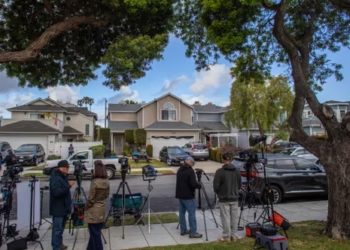
The incident has quickly become a focal point in the debate surrounding the Trump administration’s intensified immigration enforcement campaign. Demonstrators gathered near the location of the shooting, while Austin officials called for a broader investigation involving local authorities rather than relying solely on federal agencies.
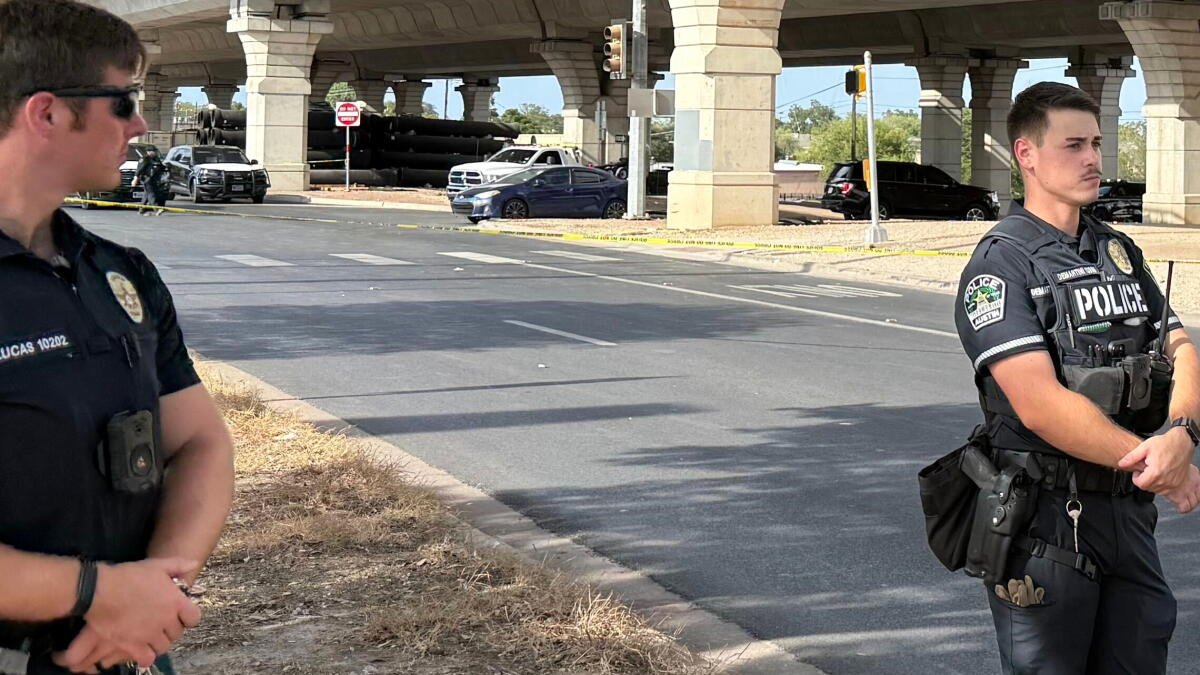
Austin Police Chief Lisa Davis said city police officers were not involved in the federal operation or the shooting. She said the incident occurred following a traffic stop and that local officers arrived after the shooting had already taken place.

Later accounts from federal authorities described a brief pursuit on foot before the shooting. Details about exactly what happened immediately before the ICE officer fired remain under investigation, and officials have not publicly provided a complete account of the encounter.
The Department of Homeland Security said its Homeland Security Investigations unit was leading the investigation with assistance from the FBI. The department said Pérez had entered the United States illegally during the Biden administration and was subject to a final order of removal.
His lawyer, Kate Lincoln-Goldfinch, has disputed aspects of the government’s account. She has said Pérez entered the United States legally, although she later acknowledged that she did not know his current immigration status. The conflicting descriptions of his immigration history have added another layer of uncertainty to an incident that remains under investigation.
Pérez was reportedly working as a DoorDash delivery driver when he encountered federal immigration officers. His lawyer said he was making a delivery when the shooting occurred.
After the shooting, Austin police officers provided medical assistance at the scene. Witness footage showed officers attending to Pérez and cutting away his clothing to treat the wound. He was subsequently transported to a hospital.
Witnesses described a tense scene in the moments after the gunfire. Nedavia Bolaños, who operates an ice-cream shop near the location, said she and her husband heard shots and went outside to see what had happened. She said they saw a blue Toyota and a black SUV near the site.
Her husband approached Pérez, who was reportedly holding his chest and appeared distressed. Bolaños recorded part of the encounter on her phone and questioned federal officers about why the man had been shot.
The incident drew particular attention because of the visible federal presence at the scene and the uncertainty surrounding the circumstances of the shooting. Austin police subsequently secured the area and assisted with medical treatment.
Mayor Kirk Watson said he wanted Austin police to participate in the investigation so that there would be an independent local perspective. He argued that allowing ICE to investigate the shooting on its own would not provide the level of confidence that residents deserved.
Watson said Austin residents had a right to feel safe in their city and that a broader investigation would strengthen the credibility of the process. He also said he hoped the federal officer involved would remain available for the investigation rather than leaving the city or state.
The shooting attracted a large law-enforcement presence as protesters gathered nearby. Demonstrators opposed to the federal immigration crackdown held signs and shouted slogans directed at ICE and the Trump administration. Some police officers were equipped with riot shields and non-lethal weapons as tensions rose.
US Representative Greg Casar, a Democrat whose district includes parts of Austin, also called for transparency. He said the arrival of intensified federal immigration enforcement in the city had created concerns about how operations would be conducted and whether local communities would be protected.
The shooting comes during a period of unusually intensive immigration enforcement across the United States. ICE has significantly increased arrests as the Trump administration pursues its campaign to identify and remove undocumented immigrants.
Federal immigration enforcement figures indicate that arrests reached more than 50,000 a month in both July and August, marking an unprecedented level for the agency.
The Austin incident is also part of a broader series of shootings involving immigration officers during the current enforcement campaign. Earlier this year, other encounters involving ICE officers resulted in people being wounded or killed, generating criticism from immigration advocates and local officials.
Those incidents have intensified questions about the use of force during immigration operations, particularly when federal officers conduct enforcement actions in populated communities.
The federal government has defended its immigration programme as a necessary part of enforcing national immigration laws and improving public security. Officials have maintained that federal agents have authority to carry out immigration operations and apprehend individuals subject to removal.
Critics, however, have raised concerns about transparency, accountability and the circumstances in which firearms are used during immigration enforcement. The Austin case is likely to add to those discussions as investigators attempt to establish precisely what happened before the officer fired.
Another immediate concern involves Pérez’s medical condition and access to his family and legal representatives.
His lawyer said Pérez was taken to hospital after being shot and that his wife initially struggled to obtain information about his condition. According to the lawyer, hospital staff later informed the family that ICE had taken Pérez from the facility.
By Sunday evening, his family and lawyer said they were uncertain about his exact whereabouts. They expressed concern about whether he was continuing to receive appropriate medical care following the gunshot wound.
Federal authorities subsequently said Pérez was stable and in federal custody pending removal. That statement provided some clarification about his status, although questions remained about the details of his medical treatment and the circumstances surrounding the transfer.
The dispute over Pérez’s immigration status is also likely to remain an important part of the case. His lawyer’s account that he entered the United States legally contrasts with the Department of Homeland Security’s statement that he entered illegally and had a final removal order.
Those competing claims have not yet been resolved publicly.
Austin officials have therefore emphasised the importance of establishing the facts through an investigation involving agencies beyond ICE itself. The Texas Department of Public Safety has also been connected to the wider response to the incident, while federal investigators continue examining the officer-involved shooting.
For residents and demonstrators in Austin, the shooting has become another point of confrontation over the expanding federal immigration presence in the city.
For immigration authorities, the investigation will have to establish whether the officer’s use of force complied with federal policies and the circumstances faced during the operation. For Pérez’s family, meanwhile, the immediate concerns remain his health, legal status and access to information.

The incident has also revived broader questions about how federal immigration enforcement should operate in major American cities. As arrests and deportation efforts expand, encounters between federal agents and residents are becoming more visible and politically contentious.
The investigation into the Austin shooting is still developing, and several important details remain unresolved. What led to the use of a firearm, what occurred during the reported pursuit, and whether the officer’s actions complied with established procedures are among the questions investigators will need to answer.
Until those findings are made public, competing accounts from federal authorities, local officials, witnesses and Pérez’s legal representatives will continue to shape the debate.
What is clear is that a federal immigration operation in Austin has left a Venezuelan man with a gunshot wound, placed him in federal custody and prompted public demands for a transparent investigation. The case is likely to receive continued scrutiny as authorities work to establish a complete account of the events.
Related News:
 Swalwell Faces Pressure to Quit Governor Race
 Harmeet Dhillon Faces Scrutiny in DOJ Role Debate
 US judge dismisses Kilmar Abrego Garcia indictment
 Gunman Killed After White House Security Shootout
 Armed Suspect Attacks Ohio Governor Candidate
 UK Urged to Probe US Diplomat Case
 Texas Transfers Raise Fears for Migrant Children
 Memphis Questions National Guard Crime Surge
 It’s time to come clean on the China spy case
 French Taxi Driver Cleared in David Lammy Theft Case After Fare Dispute
 Met Police Culture Makes Racial Harm ‘Inevitable’
 Remaining rebel Labour MPs have whip restored
 South African Detained After Neo-Nazi Rally in Australia
 Trump Signs Bill Releasing Justice Department Files on Epstein
 Trump Slams Democrats With ‘Seditious’ Death Claim
 US National Guard Member Killed in DC Shooting
 Trump to pause migration from ‘third-world countries’
 Franklin Turtle, Sabrina Carpenter Slam US Social Media Use
 Trump officials continue false claims after Alex Pretti shooting
 Files Link Andrew to Epstein Dinner After Prison Release
 Partial US Government Shutdown Hits Homeland Security Funding
 Thousands Protest ICE Operations in Nationwide US Day of Action
 Melania Trump Epstein remarks spark survivor backlash
 Mass Arrests at London Palestine Protest Spark Debate
 Trump at Press Dinner Sparks Tension
 US Labor Department in turmoil after secretary resigns
 Trump DOJ Targets James Comey Again
 Judge Blocks Trump Bid for Arizona Voter Data
 US Court Weighs Fate of TPS for Migrants
 Florida Redistricting Map Sparks Major US Political Battle
 US Voting Rights Ruling Sparks Celebration and Outcry
 FBI Links Brown University Shooting to Long-Term Grievances
 US Charges Sinaloa Governor in Major Cartel Case
 US Court Ruling Reshapes Voting Rights Landscape
 Cartel crackdown raises fears of fresh violence
 US states redraw maps after voting rights ruling
 Judge halts deportation of Yemeni refugees in US
 White House Security Case Sparks Political Firestorm
 Trump warns Iran as Middle East tensions surge again
 US Supreme Court fast-tracks Voting Rights ruling
 US ‘Narco Boat’ Strikes Draw Global Outcry
 US Court Restores Abortion Pill Access Temporarily
 Immigration Judges Fear Pressure in Trump Era
 FDA Chaos Deepens as Trump Eyes Makary Exit
 US green card applicants must apply from abroad, DHS says
 Tulsi Gabbard exits after turbulent intelligence tenure
 Trump’s Revenge Drive Deepens GOP Divide
 Former ICC prosecutor condemns US sanctions
 Irish Gangland Figure Fails in Dublin Election Bid
 DeSantis’s ‘Alligator Alcatraz’ Faces Final Shutdown
 Prosecutor Proposes Law to Combat Election Deceit
 Trump Weighs Retreat from Controversial $1.8bn Slush Fund
 Murder Probe Continues After Arrest Release
 Mystery Grows Over Mitch McConnell’s Health
 Trump Refuses to Sign Housing Bill, But Law Takes Effect
 Trump Orders Signs Criticising Smithsonian Museum
 Pradhan Resigns Amid Protests
 Judge Allows Pentagon Firings at Stars and Stripes
 UN expert urges UK to rethink Israel policy
 Ministers Condemn Far-Right Unrest in Portsmouth
 Trump gives $45,000 holiday gifts to White House aides
 Turning Point USA Faces Crisis After Kirk Killing
 Miliband Rejects Chief Rabbi’s West Bank Warning
 New Mexico Takes Facebook to Trial Over Data Scandal
 Patriot Platform Raises Concern Across Britain
 Israel Accused of Undermining Palestinian Life
 Texas Charges Seven Noncitizens in Voting Crackdown
 Mahmood Warns Far Right Over Asylum Protests
 Trump Media Ban Triggers First Amendment Clash
 Patrick Clancy speaks publicly about children’s deaths
 Greene Pushes Epstein Files Amid Trump Fallout
 Man Denies Stealing Bronze Age Gold from Museum
 Runaway Driver Caught by DNA Evidence
 ICC to Rule on Duterte’s Provisional Release
 Australia grants Asio powers to designate hate groups under new laws
 Trump press secretary attacks reporter over ICE question
 Ben Roberts-Smith Denies War Crime Allegations in First Statement
 Investigation Into Anti-Trump Motives After Gala Shooting
 AOC Backs El-Sayed in Tight Michigan Senate Primary
 Unions Warn Labour Over Zero-Hours Contract Reforms