Published: 09 September 2026.The English Chronicle Desk. The English Chronicle Online.
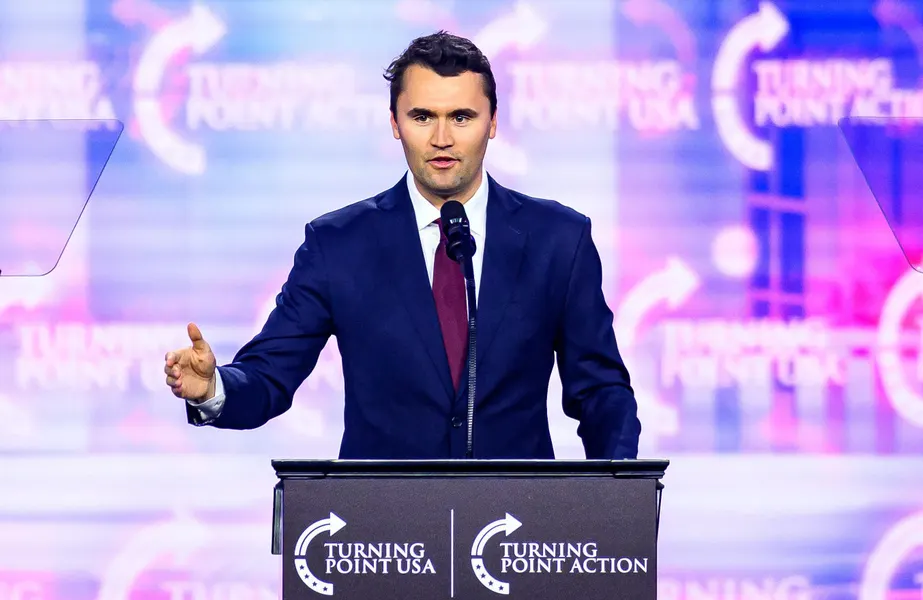
A year after the assassination of conservative activist Charlie Kirk, the organisation he founded is still grappling with grief, political pressure and deep questions over how to move forward without the man who built it from a small youth movement into a powerful force within American conservative politics.
Turning Point USA, the ultraconservative activist organisation founded by Kirk in 2012 when he was just 18, has spent the past year trying to manage the enormous consequences of his death. His killing transformed him from a prominent political organiser into a martyr for many supporters, while also intensifying divisions and tensions across the wider conservative movement.
Kirk was shot while speaking to a large crowd at Utah Valley University on 10 September 2025. He had been addressing an audience of about 3,000 people when a gunshot suddenly rang out. Witnesses described scenes of panic as people fled the area and Kirk’s colleagues and security personnel rushed him towards a vehicle in an attempt to save his life.
The shooting immediately triggered a massive emergency response. Kirk’s family, friends and senior colleagues travelled to Utah as uncertainty surrounded his condition and the circumstances of the attack. His wife, Erika Kirk, was in Arizona at the time and later recalled receiving a devastating phone call from Kirk’s chief of staff telling her that her husband had been shot.

By the time she reached Utah, Kirk had died. Despite being advised against viewing his body, Erika insisted on saying goodbye to her husband.
The alleged gunman, a 22-year-old man who reportedly objected to Kirk’s political views, was arrested following a 30-hour manhunt. The killing shocked supporters across the American right and prompted renewed concerns about political violence in an increasingly polarised country.
Kirk’s death came amid a wider period of political violence and threats in the United States. The years surrounding his assassination had already witnessed attacks on politicians, assassination attempts against political figures and violence connected to highly contentious political and social issues.
For Turning Point USA, the immediate challenge was not only mourning its founder but also maintaining the organisation he had spent more than a decade building.
When Kirk established Turning Point, it was a relatively small conservative youth organisation. Over the years, however, it expanded dramatically, developing hundreds of chapters at colleges and high schools and employing hundreds of people. Its operations grew into a large political network with an annual budget exceeding $100 million.
The organisation also established Turning Point Action, a political arm focused on supporting candidates and mobilising Republican voters. Through these structures, Kirk became increasingly influential in conservative politics and developed particularly strong connections with supporters of Donald Trump.
His influence extended far beyond the formal structure of Turning Point. Through his daily radio and online programme, public appearances and viral videos, Kirk became one of the most recognisable conservative voices among younger Americans.
His political debates on university campuses were particularly important to his public image. Kirk regularly appeared before audiences where conservative views were often challenged, inviting students with opposing opinions to debate subjects including socialism, abortion, religion and American politics.
To supporters, those confrontations represented courage and confidence. They saw Kirk as someone willing to defend conservative ideas in environments where he believed they were unpopular. His ability to communicate directly with young audiences helped him build a large following and turn Turning Point into a significant youth-oriented conservative organisation.
Critics, however, accused the organisation of intensifying political divisions by presenting disagreements as battles over the future of American civilisation. Turning Point faced particular criticism over its support for claims surrounding the 2020 presidential election and positions on issues including immigration, race, LGBTQ+ rights, feminism and the relationship between religion and government.
Kirk’s death nevertheless changed the political significance of the organisation. His supporters began viewing him not simply as a political activist but as a martyr whose death demonstrated the dangers faced by conservatives in an increasingly hostile political environment.
Martyrdom brought enormous emotional energy to the movement, but it also created a leadership vacuum.
There were fears within Turning Point that Kirk’s absence could lead to an internal power struggle as different figures competed to influence the organisation and the broader movement he had helped create.
Instead, senior staff have described the organisation itself as becoming more united in the immediate aftermath of the assassination. Employees who had worked closely with Kirk were forced to take on additional responsibilities while simultaneously dealing with their own grief.
The more complicated struggle, they argued, emerged outside the organisation, within the wider conservative movement.
Turning Point’s headquarters in Phoenix became an important symbol of the organisation’s transition into a post-Kirk era. The campus consists of several buildings surrounded by roads and desert, with a large American flag visible above the site.
Security arrangements were strengthened after the assassination. Memorial images of Kirk were placed around the entrance, serving as a permanent reminder of the event that transformed the organisation.
Inside the offices, Kirk’s influence remains visible. Conservative slogans, photographs and memorabilia occupy parts of the workplace, reflecting the political culture that he created.
Many of the organisation’s employees are young, reflecting the demographic Kirk deliberately targeted throughout his career. The presence of young staff members and families also illustrates the extent to which Turning Point has become both a political organisation and a community built around a particular conservative worldview.
Yet the organisation now faces the difficult task of preserving Kirk’s legacy while adapting to a future in which he will no longer personally lead its campaigns, public appearances or political strategy.
One of the most important questions concerns Erika Kirk, who has emerged as a central figure in the organisation following her husband’s death. Her position places her at the intersection of personal grief, political leadership and the expectations of thousands of supporters who regard Kirk’s legacy as an important part of the movement’s future.
Turning Point’s senior figures have repeatedly emphasised unity since the assassination. They have sought to demonstrate that Kirk’s work can continue despite his absence and that the organisation remains capable of operating on a national scale.
But maintaining that unity may become increasingly difficult as political ambitions within the wider conservative movement continue to develop.
Kirk himself had reportedly told people close to him that he was not interested in seeking political office. Nevertheless, his influence had become so significant that some political observers believed he could eventually have emerged as a Republican presidential candidate.
His death therefore removed not only an organisational leader but a potential future political figure.
The vacuum has also affected the broader conservative movement. Kirk had developed relationships with political leaders, activists, media personalities and young voters, giving him a unique ability to connect different parts of the movement.
His political style combined social-media visibility, campus activism, direct confrontation and a strong personal connection with supporters. Recreating that combination will be difficult for any successor.
At the same time, his assassination has intensified debates over political violence in America. The incident demonstrated how ideological conflict can move beyond heated rhetoric into deadly violence, particularly in an environment where political opponents are increasingly portrayed as existential enemies.
The response to Kirk’s death also exposed the depth of America’s political divide. While conservatives widely described the killing as an assassination and mourned Kirk as a political martyr, some on the left focused on his controversial political positions and public statements.
That reaction created another layer of conflict around his legacy. Supporters argued that political disagreements should never obscure the significance of a political killing, while critics maintained that acknowledging the violence did not require celebrating Kirk’s worldview.
A year later, Turning Point remains one of the most important organisations within America’s conservative youth movement, but it is operating in a dramatically different environment.
The organisation must now determine how to transform grief into a sustainable political strategy without allowing Kirk’s martyrdom to deepen the divisions that already exist within American politics.

The challenge is particularly significant because Kirk built Turning Point around personal energy, constant public engagement and an ability to attract attention. His absence leaves an organisational structure that is larger than the individual who created it, but the question remains whether that structure can retain the same influence without his presence.
For those who worked with Kirk, the past year has been defined by loss, pressure and adaptation. For his supporters, his death has strengthened his symbolic importance. For his critics, it has raised difficult questions about the political culture surrounding him.
The future of Turning Point USA will ultimately depend on whether its leadership can balance those competing forces. Kirk’s legacy has already become larger than his life, but the organisation he founded must now demonstrate that it can survive without him.
As America continues to struggle with political polarisation and violence, Turning Point’s experience offers a revealing picture of how movements respond when a central figure is suddenly removed. The organisation has survived its founder’s death, but its next chapter will determine whether Kirk’s movement becomes a lasting political institution or remains defined primarily by the extraordinary circumstances of his assassination.
Related News:
 US judge dismisses Kilmar Abrego Garcia indictment
 Files Link Andrew to Epstein Dinner After Prison Release
 Thousands Protest ICE in New York Against Trump Deportation Campaign
 Melania Trump Epstein remarks spark survivor backlash
 Swalwell Faces Pressure to Quit Governor Race
 Harmeet Dhillon Faces Scrutiny in DOJ Role Debate
 US Labor Department in turmoil after secretary resigns
 Trump DOJ Targets James Comey Again
 Judge halts deportation of Yemeni refugees in US
 US ‘Narco Boat’ Strikes Draw Global Outcry
 Afghan Families Left in Limbo Face Risk of Deportation
 Immigration Judges Fear Pressure in Trump Era
 US green card applicants must apply from abroad, DHS says
 Former ICC prosecutor condemns US sanctions
 Gunman Killed After White House Security Shootout
 DeSantis’s ‘Alligator Alcatraz’ Faces Final Shutdown
 US Supreme Court Blocks Trump Bid to End Birthright Rights
 Ukraine Creates Long-Range Strike Command
 Dreyfus Statue Finally Gets Permanent Paris Home
 Israeli Strike in Southern Lebanon Kills Seven
 Ukraine Villagers Demand Answers After Deadly Arms Depot Strike
 Judge Allows Pentagon Firings at Stars and Stripes
 UN expert urges UK to rethink Israel policy
 Armed Suspect Attacks Ohio Governor Candidate
 FBI Director Kash Patel Defends Girlfriend Amid Government Jet Claims
 French Taxi Driver Cleared in David Lammy Theft Case After Fare Dispute
 ‘Reckless’ cuts to victims’ services will cost more than they save
 Ukraine-Russia war latest: Putin’s troops exploit bad weather to force Kyiv withdrawal from multiple towns
 Greene Pushes Epstein Files Amid Trump Fallout
 Venezuela Threatens Nobel Winner Machado with Fugitive Status
 Most Tories Expect to Support a Farage-Led Government
 Two National Guard Soldiers Critically Injured Near White House
 US National Guard Member Killed in DC Shooting
 Jordan Bardella: France’s Young Presidential Contender
 American Mother Extradited From UK to U.S. on Murder Charges
 Government Unveils Northern Powerhouse Rail Plans
 Trump press secretary attacks reporter over ICE question
 Kyrsten Sinema Faces High-Profile Lawsuit Over Marriage Interference
 Trump Fed bid heads to Supreme Court
 ‘It’s a Complete Scandal’: Aristocrat’s Fight for Prison Children
 Trump officials continue false claims after Alex Pretti shooting
 Partial US Government Shutdown Hits Homeland Security Funding
 Thousands Protest ICE Operations in Nationwide US Day of Action
 Epstein Files Reveal Trump Officials’ Emails with Financier
 Sinema payment row deepens after $9,000 transfer claim
 Nurses’ families fear breakup under UK immigration crackdown
 California Democrats Vow Trump Reckoning
 Trump’s Surgeon General Pick Evades Vaccine Questions
 Adelaide University Faces Backlash Over Event Cancellation
 Utah Woman Found Guilty of Poisoning Husband for Inheritance
 A Global Voice For Justice: Stephen Lewis Dies At Age 88
 Can King Charles Calm Trump on Key US Visit?
 Trump Signals Hope for New Iran Talks as Ceasefire Fades
 US Catholics Caught Between President and the Pope
 Louisiana Tragedy: Eight Children Die in Mass Shooting
 GOP Senator Criticizes Trump’s Feud With Pope Leo XIV
 UK Stands Firm on Falklands Amid US Rift
 Investigation Into Anti-Trump Motives After Gala Shooting
 Trump Defiant After Washington Hotel Shooting
 Identity Revealed: Suspected Washington Gunman Named
 Trump orders US troop pullout from Germany
 White House Security Case Sparks Political Firestorm
 Trump approval plunges amid Iran war fears
 Ohio’s Battle for Trust: Democrats Vying to Flip the Buckeye State
 Trump Announces 3-Day Russia–Ukraine Ceasefire Deal
 US Awaits Iran Reply on New Ceasefire Proposal
 Kevin Warsh sworn in as Fed chair amid economic backlash
 Tulsi Gabbard exits after turbulent intelligence tenure
 House Curbs Trump’s War Powers in Rare Rebellion
 AOC Backs El-Sayed in Tight Michigan Senate Primary
 US Courts Back Trump on Park Signage Removals
 Trump’s Mount Rushmore Speech: A Divisive Anniversary
 New Footage Revives Peter Falconio Mystery
 Trump Refuses to Sign Housing Bill, But Law Takes Effect
 Florida Executes One of Its Oldest Death Row Prisoners
 Houthis Strike Saudi Arabia as Middle East Tensions Rise
 Trump Hardens Canada Trade Stance as Talks Stall
 Trump Calls Iran War ‘Small Potatoes’ Despite US Deaths
 Trump gives $45,000 holiday gifts to White House aides
 Abusive ex used Tesla to control and harass former partner