Published: 07 September 2026. The English Chronicle Desk. The English Chronicle Online.
British ministers have condemned what they described as intimidating and aggressive behaviour by far-right activists during unrest in Portsmouth, after hundreds of protesters gathered following the arrival of a boat carrying asylum seekers in the city.
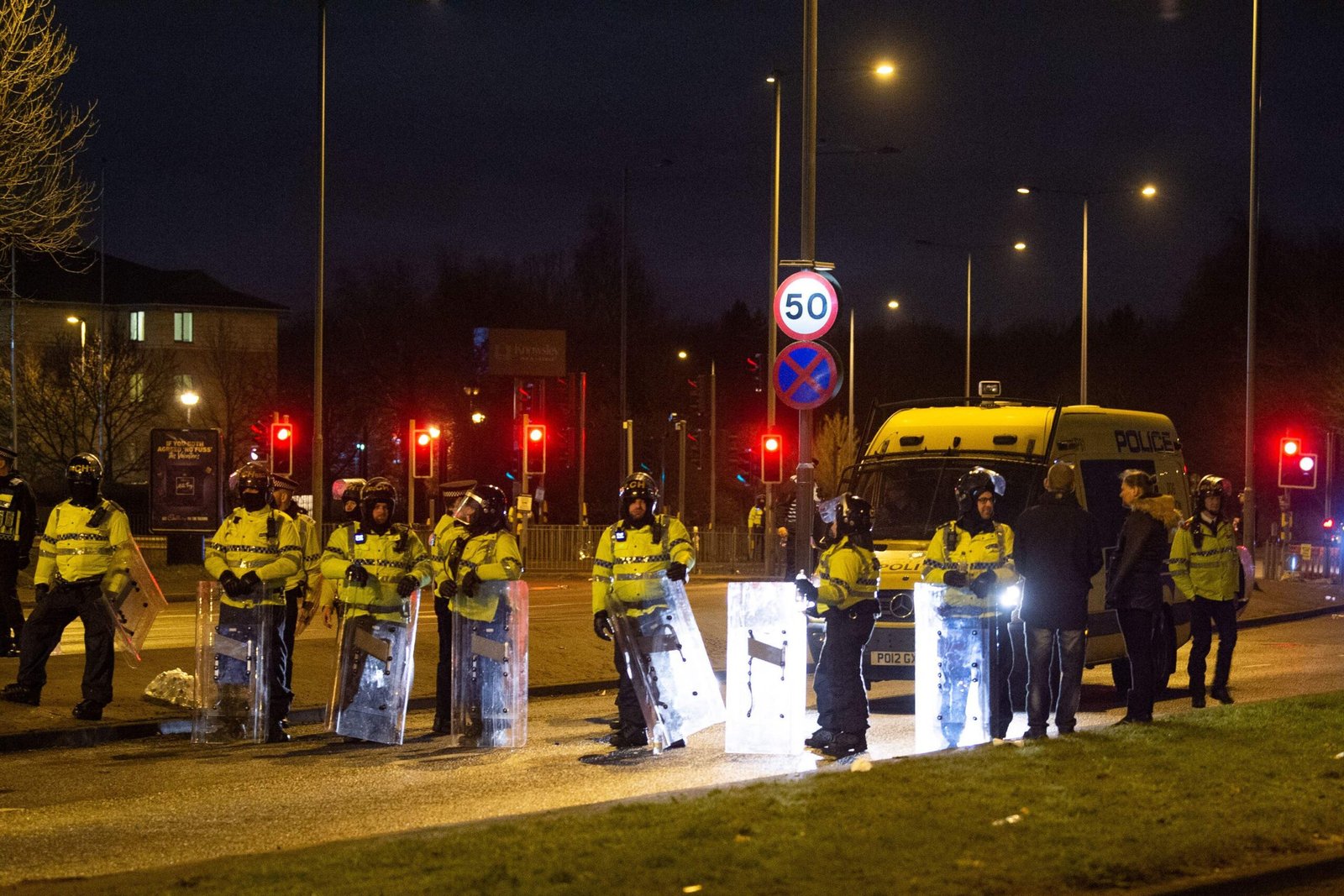
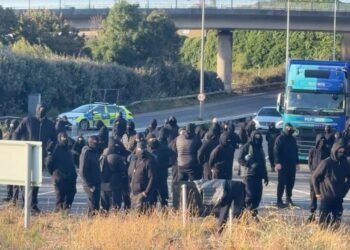
The confrontation continued into the early hours of Monday as demonstrators attempted to prevent asylum seekers from being transported away for processing. Some of those involved were reportedly dressed in black and wearing balaclavas, while police eventually moved to clear the roads and warned protesters that they could face arrest.
Several people were caught up in the disorder, and police vehicles were reportedly damaged during the confrontation. Witness accounts indicated that two police car windscreens were smashed as tensions escalated around the area where the asylum seekers were being transferred.
The incident has intensified political debate over illegal immigration, asylum policy and the growing presence of organised far-right activism in Britain. It also came only two days after a separate demonstration in Dover, where similarly dressed protesters blocked roads around the port following the arrival of migrants by small boats.

The government has sought to distinguish between lawful protest and behaviour that threatens public safety or obstructs emergency and official operations. Emma Reynolds, the chief secretary to the Treasury, said people had a legitimate right to protest but argued that the events in Portsmouth had crossed the line into unacceptable conduct.
Reynolds described the behaviour as “thuggish and intimidating” and said the scenes would concern the government and the wider public. She rejected suggestions that police had been caught completely unprepared, saying officers had dealt with the situation effectively.
The Home Office also condemned the events, describing the behaviour witnessed in Portsmouth as intimidating and thuggish. Officials said the people who had arrived by boat had left the immediate area and were being transported for processing through the normal procedures.
The arrival of the asylum seekers occurred against the backdrop of continuing political pressure on the government to reduce small-boat crossings and disrupt people-smuggling networks. Although the number of people arriving in small boats this year has reportedly fallen substantially compared with the same period last year, the emergence of alternative landing locations has created a fresh challenge for authorities.
A boat carrying around 140 people reportedly departed from an area near Cherbourg in northern France during the early hours of Sunday. It later entered the Solent, the stretch of water separating the Isle of Wight from the southern English mainland, before reaching the Portsmouth area.
The use of Portsmouth rather than the more familiar Dover route has raised concerns among local officials about whether people-smuggling organisations could begin targeting different parts of Britain’s coastline.
Donna Jones, the Conservative police and crime commissioner for Hampshire, warned that Portsmouth could potentially become a new destination for people traffickers. She argued that the city did not have the same infrastructure associated with processing small-boat arrivals in Dover and said the government would need to consider the implications of changing migration routes.
Jones did not directly condemn the protesters, saying many had appeared to be peaceful and were attempting to express their opposition to Portsmouth becoming a destination for migrant arrivals. Her comments nevertheless came as ministers faced increasing pressure to address the disorder surrounding the demonstrations.
The presence of large numbers of masked men has particularly alarmed observers of far-right activity. Critics argue that wearing balaclavas during street demonstrations can make individuals more difficult to identify and can contribute to an atmosphere of intimidation.
The demonstrations have been associated with Daniel Thomas, a far-right activist who uses the name Danny Tommo on social media and has links to activist Tommy Robinson. Thomas has reportedly urged supporters to travel to Portsmouth and portrayed the city as a new focal point in opposition to asylum-seeker arrivals.
During a livestream from the scene, Thomas encouraged others to join the demonstration and described Portsmouth as a new centre of the migration dispute. He also referred to the earlier Dover protest as a trial run, suggesting that similar mobilisation could occur elsewhere.
The apparent coordination of protests across different coastal locations has prompted questions about the ability of authorities to monitor and respond to rapidly organised far-right gatherings.
Nick Lowles, chief executive of the anti-extremism organisation Hope Not Hate, said there appeared to have been intelligence failures surrounding the demonstrations in both Dover and Portsmouth. He argued that authorities should pay closer attention to the activities of individuals organising such events, particularly when large groups are mobilised at short notice.
Lowles also warned about the wider social impact of highly confrontational protests. Images of hundreds of masked protesters occupying roads can create fear among migrants, ethnic minority communities and others who may feel targeted by the rhetoric surrounding the demonstrations.
His comments reflected a broader concern that disputes over immigration could increasingly become a source of street-level confrontation. While opposition to government immigration policy is lawful, critics say violence, threats, intimidation and obstruction cross a fundamentally different line.
The government is therefore facing a difficult balancing act. Ministers must uphold the right to peaceful protest while ensuring that demonstrations do not interfere with public safety, police operations or the lawful processing of asylum seekers.
The Portsmouth unrest also illustrates the changing geography of the small-boat issue. Dover and the surrounding Kent coastline have historically been at the centre of Britain’s response to crossings from France, but people-smuggling networks can adapt quickly when enforcement measures or geographic conditions change.
The Solent’s proximity to mainland Europe and its busy maritime environment make the wider Portsmouth area an important location for authorities monitoring potential crossings. If smugglers increasingly use alternative routes, local police forces and councils may face demands for additional resources and facilities.
For residents, the arrival of asylum seekers and the subsequent protests have brought an international political issue directly into the streets of a city that has not traditionally been one of the main focal points of the small-boat crisis.
The disruption has also affected police and emergency services. Officers were required to manage crowds, protect those being transported for processing and prevent further escalation, while also dealing with reported damage to police vehicles.
The events have raised concerns about whether political disagreements over immigration are becoming increasingly confrontational. Britain has a long tradition of public demonstrations and political protest, but authorities and civil society groups have repeatedly stressed that peaceful expression must be separated from intimidation or violence.
For the government, the immediate challenge extends beyond the protests themselves. Ministers must also respond to concerns that smugglers are changing their routes and that local communities may be unprepared for sudden arrivals.
The number of small-boat crossings remains politically sensitive because immigration has become one of the most prominent issues in British public debate. Successive governments have promised tougher action against people-smuggling networks while facing the practical and legal obligations involved in processing asylum claims.
The Portsmouth events demonstrate how those pressures can converge. A single boat arrival can trigger a complex chain of events involving border authorities, police, local government, campaign groups, residents and political activists.
The government’s condemnation of the protesters signals an attempt to draw a clear boundary between political disagreement and street disorder. Ministers are likely to face continued pressure to demonstrate that they can manage both the migration system and the public reaction surrounding it.
At the same time, the events underline the importance of maintaining public confidence without allowing immigration debates to become a catalyst for intimidation or communal fear.

As investigations continue into the reported damage and the conduct of those involved, attention is likely to turn toward whether any individuals will face criminal charges. Police will also need to assess whether the Portsmouth protest was an isolated reaction or part of a broader effort to organise demonstrations at alternative coastal arrival points.
The confrontation has left Portsmouth facing a new dimension of Britain’s migration debate. What began as the arrival of a boat carrying asylum seekers developed into a prolonged confrontation involving police, protesters and campaigners, prompting renewed warnings from ministers about the consequences of political anger spilling into disorder.
The episode is likely to add further pressure on the government to address both the underlying issue of small-boat crossings and the growing mobilisation of far-right groups around immigration. For communities along Britain’s coastline, the events offer a reminder that the consequences of the migration crisis are no longer confined to a single port or region, but can quickly spread to new locations as routes and political responses evolve.
Related News:
 It’s time to come clean on the China spy case
 French Taxi Driver Cleared in David Lammy Theft Case After Fare Dispute
 Met Police Culture Makes Racial Harm ‘Inevitable’
 Remaining rebel Labour MPs have whip restored
 Undercover officer deceived women with ‘grotesque and cruel’ lies, spycops inquiry told
 Mass Arrests at London Palestine Protest Spark Debate
 NHS Safety Fears as Nurses Cover Doctor Gaps
 UK may ban protests amid rising antisemitism fears
 Barrister Criticises Trial After Suicide Case Verdict
 Victim says non-custodial rape sentence ‘rock in my face’
 Murder Probe Continues After Arrest Release
 Westminster Council Threatens Charing Cross Soup Kitchen
 BBC Warned About Missing Clothes of Murder Victim
 Cambridge Professor Jason Arday Found Dead at Home
 Masked Protesters Bring Dover Port Traffic to Standstill
 UN expert urges UK to rethink Israel policy
 Armed Suspect Attacks Ohio Governor Candidate
 Tasers Introduced in UK Prisons to Combat Rising Violence and Protect Staff
 Police Advised to Disclose Ethnicity of Suspects in High-Profile Cases
 Jailed Georgian Opposition Leaders Warn UK of Iranian Links to Ruling Party
 Boris Johnson Breached Rules on Post-Office Business Contacts
 Five More Prisoners Freed by Mistake in Essex Week
 Nearly 48,000 Zombie Knives Removed from UK Streets in a Year
 Afghan man charged with murder after west London knife attack
 FBI Director Kash Patel Defends Girlfriend Amid Government Jet Claims
 Just Stop Oil Protesters Convicted Amid Climate Defence Row
 British Grandmother to Return Home After Death Sentence in Bali
Boris Johnson accused of undermining BBC leadership
British Grandmother to Return Home After Death Sentence in Bali
Boris Johnson accused of undermining BBC leadership
 ‘Reckless’ cuts to victims’ services will cost more than they save
 BBC Faces Backlash as Reform UK Withdraws from Film
 Palace to reinstate hyphen in Andrew’s surname
 Victims’ commissioner Baroness Newlove dies aged 63
 Major Rent Reform Ends No-Fault Evictions in England
 Peers Flood Assisted Dying Bill with 942 Amendments
 UK Unveils Fast-Track Deportation and Asylum Overhaul
 UK Asylum Overhaul Sparks Debate Over Human Rights and Deportations
 UK Asylum Reforms: Temporary Refugee Status and Faster Deportations
 UK Candidate Moved to Safe House After Election Threats
 Mahmood Defends Tough Overhaul of UK Asylum System
 Paralegal Fired After Exposé on Illegal Worker Scam
 South African Detained After Neo-Nazi Rally in Australia
 Westminster Advances Legacy Bill Amid Criticism
 Serial Rapist and Former Cop Found Guilty Again
 Trump Signs Bill Releasing Justice Department Files on Epstein
 Most Tories Expect to Support a Farage-Led Government
 Peers Get Extra Time to Debate Assisted Dying Bill
 Woman Jailed for Life After Killing E-Bike Rider in Tragic Mistaken Identity Case
 ‘It’s a Complete Scandal’: Aristocrat’s Fight for Prison Children
 Police response times face strict new national limits
 Tim Walz urges Trump to withdraw federal agents immediately
 UK and EU Signal Fresh Push for Defence Cooperation Talks
 Civil Service Pay: Union Urges Ministers to End ‘Barking Mad’ Limits
 Proposed Law Leaves Gap for Children of Convicted Paedophiles
 Starmer Defends Workers’ Rights Amid Rising Green Threat
 Melania Trump Epstein remarks spark survivor backlash
 Prevent Failings Exposed After Southport Attack
 Kezia Dugdale Warns of Possible Reversal of Equal Rights Gains
 Synagogue Arson Attempt Sparks Security Fears
 MoD Has Lost Track of Veteran Recall List, Says Adviser
 Crackdown Backfires on UK Climate Protesters
 Two Children Die in Wolverhampton House Fire Tragedy
 Reform UK funding: mystery billionaire revealed
 US Court Weighs Fate of TPS for Migrants
 John Terry Faces Backlash Over Political Posts
 Cartel crackdown raises fears of fresh violence
 Greens Face Internal Row Over Antisemitism Claims
 Immigration Judges Fear Pressure in Trump Era
 Labour Members Turn Against Starmer Leadership
 Gunman Killed After White House Security Shootout
 Farage and Reform UK Reshape British Politics
 Starmer Leadership Under Pressure After Setbacks
 UK Nations Brace for Potential Breakup Amid Reform Surge
 Le Pen’s Popularity Holds Despite Conviction
 Three-Quarters of England’s Riverbanks Still Off Limits
 Trump Orders Signs Criticising Smithsonian Museum
 Burnham unveils £65m drought aid for farmers
 Unions Warn Labour Over Zero-Hours Contract Reforms
 RAF Barnham Protests Fuel Tensions in Norfolk Town
 Internal Exclusions Surge in England’s Schools
 Green Leader Targets Starmer’s Former Seat