Published: 08 October 2026. The English Chronicle Desk. The English Chronicle Online
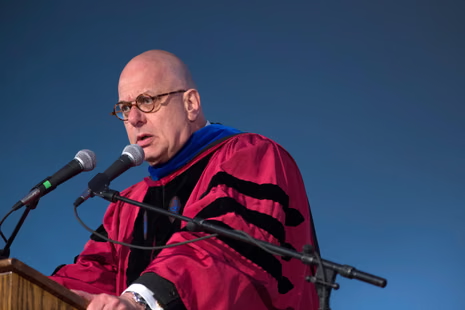
Leon Botstein has resigned from all positions at Bard College after Democratic lawmakers called for a criminal investigation into his relationship with Jeffrey Epstein and raised questions about an email allegedly sent by the longtime academic to the convicted sex offender concerning a young woman.
The resignation marks a dramatic development for Botstein, who led Bard College as president for five decades before stepping down from the presidency earlier this year. His departure from his remaining roles came after congressional investigators brought renewed attention to communications contained in the Epstein files and urged federal authorities to examine allegations involving the former college president.
Jamie Raskin, the senior Democrat on the House Judiciary Committee, and fellow Democratic lawmaker Madeleine Dean have written to Attorney General Todd Blanche and FBI Director Kash Patel calling for an investigation. They said material reviewed by congressional investigators appears to meet the threshold for opening a criminal inquiry into Botstein and potentially others connected to Epstein.

The lawmakers’ concerns centre on a 2014 email involving a young foreign model and aspiring singer whom they identify as Jane Doe. According to the congressional letter, Epstein had been cultivating a relationship with the woman while presenting himself as someone who could assist with her education and ambitions in the United States.
Investigators, however, allege that the relationship was instead part of Epstein’s broader pattern of sexual exploitation. They say records indicate that the woman was pressured into activities including sex education and massage courses and was allegedly exploited while being moved between different locations.
The Democratic lawmakers further allege that Epstein used his connection to Botstein to give the woman the impression that she could develop a successful musical career.
In May 2014, Epstein arranged for the woman to meet Botstein, ostensibly so that the academic could assess her musical abilities. Congressional investigators say they reviewed an email that was originally redacted in Department of Justice records and was sent from an account associated with Bard’s presidency.
The email, according to the lawmakers, asked whether the woman was intended for Botstein or whether Epstein was keeping her for himself.
Raskin and Dean described the message as startling and argued that the material available to federal authorities warranted a criminal investigation. They questioned why the Justice Department and FBI had apparently possessed relevant information for an extended period without investigating Botstein.
Botstein has strongly rejected the allegations. He has denied knowing about or participating in Epstein’s criminal conduct and disputed the claim that he authored or sent the email highlighted by the lawmakers.
He said the allegations were untrue and argued that he did not want accusations, even those he considered false, to place Bard College at risk or distract the institution from its work.
Bard’s board of trustees has responded by saying it is conducting a full review of the allegations raised in the congressional correspondence. Board chairman Brandon Weber said the college was cooperating with the congressional investigation and that the board’s executive committee unanimously accepted Botstein’s resignation.
The resignation also ends Botstein’s remaining formal associations with Bard, including his professorship and positions connected with the college’s music programmes.
The controversy follows months of scrutiny over Botstein’s longstanding relationship with Epstein. Documents released as part of the wider investigation into Epstein’s activities revealed that the two men maintained a close relationship over several years.
Botstein had previously acknowledged interactions with Epstein but faced questions over the extent of their relationship and what he knew about Epstein’s conduct. Epstein had already been convicted of a sex offence before many of the interactions under scrutiny took place.
An independent review commissioned by Bard’s board earlier this year examined Botstein’s contacts with Epstein and concluded that the frequency and nature of their interactions could have alerted Botstein to the possibility that he and the college were facilitating Epstein’s abuse of women.
The review found that Botstein had visited Epstein’s New York townhouse approximately 25 times. It also documented a two-day visit to Epstein’s private island and visits by Epstein to Bard.
The investigation reported that some of those encounters involved multiple women who were later identified as victims of Epstein.
The findings contributed to Botstein’s decision to leave the Bard presidency in May. At the time, however, Botstein maintained that he had not knowingly participated in Epstein’s criminal behaviour and had previously rejected suggestions that he should have understood the full extent of Epstein’s activities.
The latest congressional allegations have brought renewed attention to the 2014 email. Bard had previously been asked about the message and denied that it had any connection to Botstein or the college. At the time, the email appeared in redacted Epstein records and seemed to have been forwarded by Epstein to himself.
The circumstances surrounding the message have now become a central part of the lawmakers’ demand for a federal investigation.
The congressional inquiry is also examining allegations extending beyond Botstein’s relationship with Epstein. Raskin and other Democratic investigators say they have received information from more than a dozen whistleblowers alleging decades of sexual misconduct at Bard.
Those allegations have not been established as fact, and Bard has emphasised the procedures governing sexual harassment and assault complaints at the institution.
The college’s board said that when a formal complaint involving sexual harassment or assault is submitted, an independent external investigator conducts the review before a report is provided to an impartial hearing chair. Bard also said that the college president has not possessed unilateral authority over Title IX investigations or adjudications since the 2015-16 academic year.
The institutional response comes as Bard faces the challenge of separating its current governance structures from questions about decisions and relationships during Botstein’s exceptionally long presidency.
Botstein became one of the most influential figures in American higher education during his five decades at Bard. His departure therefore represents more than the end of a professional association. It closes an extraordinary chapter in the history of an institution now confronting difficult questions about leadership, accountability and its relationship with one of the most notorious figures in the Epstein scandal.
Botstein has not been charged with wrongdoing in connection with his relationship with Epstein. The two men remained in contact from 2012 until Epstein’s death in 2019 while Epstein was facing federal sex-trafficking charges.
The latest allegations are therefore part of an ongoing investigation rather than a finding of criminal responsibility. Whether federal authorities will open a formal criminal case remains to be seen.
For Raskin and other congressional investigators, however, the issue is whether the available evidence deserves scrutiny by prosecutors and federal investigators. Their letter argues that the material they have reviewed raises questions that should not be left unanswered.
For Bard, Botstein’s resignation may provide a degree of institutional distance from the controversy, but it does not end the questions surrounding his relationship with Epstein or the wider allegations being examined by Congress.

The investigation now moves into a potentially consequential phase, with federal authorities facing calls to determine whether the communications and other records provide sufficient evidence for further action.
As the scrutiny continues, the central distinction remains important: allegations contained in congressional correspondence and investigative records are not equivalent to criminal findings. Botstein has denied the accusations, has not been charged in relation to his association with Epstein, and disputes the authenticity and authorship of the email at the centre of the latest controversy.
Related News:
 Armed Suspect Attacks Ohio Governor Candidate
 Texas Transfers Raise Fears for Migrant Children
 Memphis Questions National Guard Crime Surge
 Democrat Says ICE Restricted Detention Camp Oversight
 Latin America women fear rollback of rights
 Melania Trump Epstein remarks spark survivor backlash
 Swalwell Faces Pressure to Quit Governor Race
 Harmeet Dhillon Faces Scrutiny in DOJ Role Debate
 US Labor Department in turmoil after secretary resigns
 Trump DOJ Targets James Comey Again
 Judge Blocks Trump Bid for Arizona Voter Data
 US Court Weighs Fate of TPS for Migrants
 Immigration Judges Fear Pressure in Trump Era
 US judge dismisses Kilmar Abrego Garcia indictment
 Trump’s Revenge Drive Deepens GOP Divide
 Gunman Killed After White House Security Shootout
 Trump Orders Signs Criticising Smithsonian Museum
 Ministers Condemn Far-Right Unrest in Portsmouth
 Patriot Platform Raises Concern Across Britain
 UK Urged to Probe US Diplomat Case
 Texas Charges Seven Noncitizens in Voting Crackdown
 Mahmood Warns Far Right Over Asylum Protests
 Patrick Clancy speaks publicly about children’s deaths
 ICE Shooting in Austin Sparks Calls for Transparency
 Clancy Defense Seeks Inquiry Into Lone Juror
 Trump and Mamdani Hold Cordial Gracie Mansion Meeting
 UK Reviews Hague Child Abduction Cases Involving Abuse
 King Refers Jamaica Slavery Petition to Privy Council
 Far-Right Activist Arrested After Channel Dinghy Incident
 Portadown protest ends after tense Orange Order standoff
 Tennessee Set to Execute Woman After Clemency Denied
 Cornell Fraternity Assault Investigation Reopened
 French Student Protests Escalate Into Violent Clashes
 Hundreds of UK prisoners released early amid overcrowding
 Drumcree Talks End Without Agreement Ahead of Appeal
 Calls Grow to Halt US Executions After Pike Failure
 French School Protests Escalate as 400 Schools Close
 New Prosecutor Takes Over Cornell Assault Case
 Gosport Protesters Clash With Police Over Migrant Rescue
 Christa Pike Wakes After Failed Tennessee Execution
 French Taxi Driver Cleared in David Lammy Theft Case After Fare Dispute
 US National Guard Member Killed in DC Shooting
 Trump officials continue false claims after Alex Pretti shooting
 Partial US Government Shutdown Hits Homeland Security Funding
 Thousands Protest ICE Operations in Nationwide US Day of Action
 Judge halts deportation of Yemeni refugees in US
 White House Security Case Sparks Political Firestorm
 US ‘Narco Boat’ Strikes Draw Global Outcry
 Florida Surgeon ‘Devastated’ Over Fatal Surgery Error
 Barrister Criticises Trial After Suicide Case Verdict
 US green card applicants must apply from abroad, DHS says
 Tulsi Gabbard exits after turbulent intelligence tenure
 DeSantis’s ‘Alligator Alcatraz’ Faces Final Shutdown
 Trump’s Mount Rushmore Speech: A Divisive Anniversary
 Le Pen’s Popularity Holds Despite Conviction
 Trump Refuses to Sign Housing Bill, But Law Takes Effect
 Westminster Council Threatens Charing Cross Soup Kitchen
 BBC Warned About Missing Clothes of Murder Victim
 Councils spend £125m on illegal children’s care
 Trump gives $45,000 holiday gifts to White House aides
 New Mexico Takes Facebook to Trial Over Data Scandal
 Man Arrested in Mississippi Woman’s Death
 Israel Accused of Undermining Palestinian Life
 Omar Proposes Bill to Redirect ICE Funding
 Disabled Travellers Seek Fairer UK Care Rules
 US Networks Suspend Trump White House Pool Coverage
 Japan PM Backs International Criminal Court
 Republican Senator Questions Trump Ad Spending
 Free Speech Emerges as Key UK Election Issue
 London Facial Recognition Trial Ends With False Alert
 Burnham Opens Door to Possible UK Return to EU
 Drumcree Talks Falter as Legal Challenge Deepens
 Badenoch Raises Prospect of 2027 UK Election
 DOJ Declines to Reopen Powell Renovation Probe
 Musk’s DOGE Sparks Turmoil Inside US Government
 Families Await USS Abraham Lincoln Homecoming
 Palace Rejects Funding Andrew’s Police Legal Challenge
Christa Pike Awake After Failed Tennessee Execution
Palace Rejects Funding Andrew’s Police Legal Challenge
Christa Pike Awake After Failed Tennessee Execution
 Okinawa US Troops Face Curfew After Murder Case
 Police accused of failing abuse victims