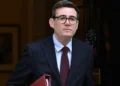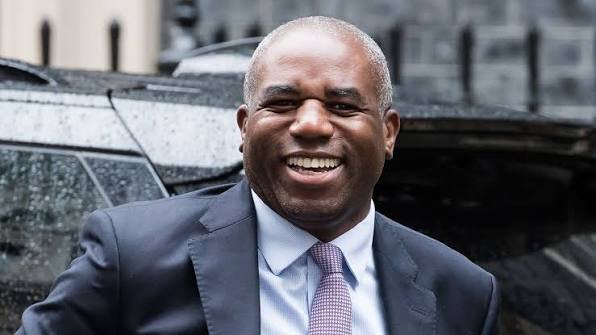
Former British foreign secretary David Lammy has urged Prime Minister Andy Burnham to make Britain’s return to the European Union a central promise of Labour’s next general election campaign, arguing that the country should be given a clear opportunity to reconsider its relationship with the bloc. His intervention has intensified the debate over Brexit at a politically sensitive moment, as Burnham prepares for a major UK-EU summit in Brussels aimed at improving relations between Britain and its European neighbours.
Lammy, who also served as deputy prime minister under former Prime Minister Keir Starmer, believes Labour should use the next election to establish a clear political mandate for reopening negotiations on EU membership. Writing in The Times, he argued that Burnham’s speech at the Labour Party conference in September had created an opportunity for a more ambitious discussion about Britain’s future in Europe.

Lammy said the prime minister’s remarks had effectively opened the door to reconsidering the country’s long-term direction after Brexit. He argued that Labour should enter the next general election with an explicit intention to rejoin the EU, rather than limiting its ambitions to improving the existing arrangements.
Under the proposal, a Labour victory would provide the government with a mandate to begin formal negotiations with Brussels. Once an agreement had been reached, the public would be given the opportunity to decide whether Britain should return to the European Union.
Lammy also argued that any future referendum should offer voters two clearly defined choices. He suggested that this would avoid some of the uncertainty and confusion surrounding the 2016 Brexit referendum, when the practical implications of leaving the EU were not fully established before the public vote.
His intervention comes as Burnham prepares to travel to Brussels for a major summit on Friday, where the British government is expected to pursue a closer relationship with the European Union. The meeting is taking place amid growing scrutiny of the economic and political consequences of Brexit, with the government facing pressure to demonstrate that its approach can deliver tangible improvements.
The debate has become particularly important because Burnham previously promised at the Labour conference in September that he would present the country with different options for Britain’s future relationship with the EU around the time of the November summit. However, as the meeting approaches, his language has suggested that the process may take longer than initially expected.
In a speech on Monday, the prime minister said he intended to begin discussions with the European Union about possible options after the Brussels summit. He indicated that the government would present its preferred choices to the public at a later stage.
The revised timetable has raised questions about whether Burnham is becoming more cautious about reopening the Brexit debate. Critics and political observers have questioned whether the government is reluctant to discuss the possibility of closer European integration because of the political divisions that dominated British politics following the 2016 referendum.
However, Burnham rejected suggestions that the issue had become politically toxic. Speaking to Sky News on Tuesday, he said his immediate priority was negotiating improvements to the existing Brexit arrangements.
He explained that the government was currently engaged in discussions with the European Union and would consider further opportunities to strengthen the relationship once those negotiations had progressed. He also reiterated that he intended to set out the next stage of the government’s approach later in the year alongside its wider 10-year plan.
Burnham insisted that he had not abandoned the timetable announced at the Labour conference. He said he would explain the next phase of the process the following month, maintaining that this was consistent with what he had previously promised.
The prime minister also reaffirmed Labour’s commitment to the red lines established in the party’s 2024 general election manifesto. Those commitments rule out returning to the EU customs union, the single market and the system of free movement.
These restrictions remain significant because they limit the extent to which Britain can immediately restore the economic and institutional arrangements it enjoyed as an EU member. Any future move towards membership would require a substantial political shift, while negotiations over trade, immigration and regulatory alignment could prove complicated.
Burnham has argued that the British public will ultimately have a say in determining the country’s future relationship with Europe. His position suggests that the government wants to keep the possibility of closer cooperation open without committing itself to rejoining the bloc in the immediate future.
The debate has also attracted criticism from prominent Conservative figures. Former prime ministers Boris Johnson and David Cameron have cautioned against Britain returning to the European Union. Burnham responded by criticising Johnson, who played a central role in the campaign for Brexit and later led the government during the UK’s departure from the bloc.
The disagreement reflects continuing divisions within British politics over whether Brexit should be treated as a settled constitutional decision or whether its consequences justify a fresh public debate.
While Lammy is calling for a clear commitment to rejoin the EU, Burnham appears more focused on securing practical improvements through negotiations. The distinction is important because the government must balance the demands of those who favour closer integration with voters who supported Brexit or remain opposed to returning to the bloc.
One of the issues expected to feature in the Brussels discussions is a proposed youth employment arrangement. The scheme could allow tens of thousands of young Europeans to work temporarily in the United Kingdom each year, with British young people potentially receiving similar opportunities in European countries.
The proposal has generated concerns that additional access for European workers could reduce opportunities for young British people at a time when youth unemployment remains a significant domestic challenge.
Alan Milburn, a former Labour health secretary, recently published recommendations aimed at reducing the number of young people who are not in education, employment or training. His report highlighted the scale of the problem and called for stronger measures to help young people enter the workforce.
Milburn has argued that British young people should receive priority when employers are being encouraged to recruit, regardless of the outcome of negotiations with the European Union. His position has added another sensitive dimension to the discussions, linking immigration and labour mobility with the government’s domestic employment agenda.
Burnham has sought to address these concerns by distinguishing between temporary employment opportunities created through a possible EU arrangement and the government’s own youth employment support programme.
The prime minister said the youth guarantee scheme would be designed specifically to support British citizens who are outside employment, education or training. Under the existing arrangements, employers can receive financial support when they recruit someone who has been unemployed for an extended period.
Speaking to ITV’s Good Morning Britain, Burnham confirmed that European citizens would not be eligible for the British government’s youth guarantee payments. He said the programme could be structured to provide priority opportunities for young British people who need help entering the labour market.
The scheme aims to help 90,000 young people into employment by March 2029. The government’s position is that it can pursue closer cooperation with Europe while ensuring that domestic employment support is directed towards young British citizens.
This distinction may help Burnham manage some of the political concerns surrounding the proposed youth arrangement, although questions remain about how the wider agreement would operate and what opportunities would be available on both sides.
For businesses, a carefully designed mobility arrangement could provide access to additional workers and create opportunities for young people to gain international experience. However, its impact on domestic recruitment and wages will depend on the final terms, eligibility requirements and the sectors covered.
The broader political challenge for Burnham is to demonstrate that closer relations with Europe can deliver economic benefits without reopening the divisions that followed the Brexit referendum. Labour must also decide how far it is prepared to move beyond the manifesto commitments that helped it secure power in 2024.
Lammy’s intervention places additional pressure on the prime minister by encouraging Labour to adopt a more ambitious position. A formal commitment to rejoin the EU would represent a major change in the party’s political direction and could reshape the debate ahead of the next general election.
For now, Burnham has not accepted Lammy’s proposal. His immediate focus remains on the Brussels summit, negotiations over the existing Brexit agreement and the government’s longer-term plan for relations with the European Union.

The outcome of Friday’s meeting could provide an indication of how far both sides are prepared to go in rebuilding cooperation. It may also determine whether the government’s approach remains focused on limited reforms or develops into a wider discussion about Britain’s place in Europe.
As the political debate intensifies, the central question is no longer simply whether Brexit should be reversed. It is whether the government can persuade the public that a closer relationship with the European Union would improve Britain’s economic prospects, protect domestic employment opportunities and provide a more stable direction for the country’s future.
Related News:
 Ceasefire Standoff Deepens in Ukraine War
 Deadly Russian Air Raids Strike Across Ukraine
 Bayeux Tapestry Revives Franco-British Ties
 Europe’s democracies face a growing far-right threat
 Elif Eralp Emerges as Berlin’s Next Political Force
 France Urges UK to Consider Returning to EU
 France to Deploy 70,000 Police Amid Unrest Fears
 Denmark Seeks EU-Wide Ban on Fast-Growing Turbo Chickens
 Zelenskyy Sees Peace Opportunity as US Envoys Meet Putin
 Ilse Aigner Set to Make German History as First Female President
 British Woman in Iran ‘Losing Hope’ Amid Ongoing Detention
 BBC Journalist Held and Interrogated in Vietnam
 Rama Rebukes Mahmood for Targeting Albanian Families
 UK and EU Signal Fresh Push for Defence Cooperation Talks
 Starmer Condemns ‘Depraved’ Russian Strikes on Ukraine
 Trump Tariffs Threat Spark UK and EU Alarm
 Gordon Brown urges court for crimes against children
 Yvette Cooper: UK Must Follow Principles, Not US Pressure
 UK Minister Denies Iran Missile Threat to Britain
 Army Probes Apache Flyover at Kid Rock’s Nashville Estate
 Relationship with Trump may be beyond repair, Starmer warned
 Italian Town Buys Mussolini Villa to Keep Away Fascist Fans
 Hungary election: Orbán faces biggest test amid scandal
 UK Stands Firm on Falklands Amid US Rift
 Former ICC prosecutor condemns US sanctions
 Farage and Reform UK Reshape British Politics
 Starmer Leadership Under Pressure After Setbacks
 UK Nations Brace for Potential Breakup Amid Reform Surge
 New South Wales Premier Chris Minns Signals Tough Road Ahead for Labor
 Le Pen to Run for President Despite Embezzlement Conviction
 Russian Missiles Intensify Pressure on Kyiv
 Former Diplomats Urge UK and France to Act on Palestine
 Ukraine Villagers Demand Answers After Deadly Arms Depot Strike
 Reform Faces Fresh Financial Controversy
 UK plans tougher Israel stance with settlement trade ban
 Sweden Election Hangs on Far-Right Breakthrough
 Lib Dems Prepare for Election Amid Reform Challenge
 King Refers Jamaica Slavery Petition to Privy Council
 UK Plans New Centre to Counter Information Warfare
 Greece Pushes for Parthenon Marbles Reunification
 Madrid Tent Camp Grows as Spain Housing Crisis Deepens
 French Student Protests Escalate Into Violent Clashes
 Burnham Opens Door to Possible UK Return to EU
 Drumcree Talks Falter as Legal Challenge Deepens
 UK-France Returns Deal Faces Expiry as Talks Stall
 Green Party faces dispute over Zionism motion
 French School Protests Escalate as 400 Schools Close
 Half of UK Voters Back Possible EU Return
 Bosnia’s Young People Look Beyond Election Hope
 Germany Pledges €1bn Military Aid to Ukraine
 Former German Intelligence Chief Arrested Over Espionage
 France Schools Protests Draw 250,000 as Police Clash
 UK Mission in East Jerusalem to Remain Open
 Labour Wins Key London By-election as Greens Fall Short
 EU Divisions Deepen Over Israel Policy
 French Students Protest Poor Conditions in Paris Suburbs
 UK Greens Face Crisis Over Zionism and Extremism Row
 Glucksmann Urges French Left to Fight Far Right
 Greta Thunberg Backs French Students in School Protests
 Ukrainian Soldier Faces Trial Over Nord Stream Blast
 UK Could Rejoin EU Through a Switzerland Plus Deal
 Brexit Debate Returns as UK Voters Reconsider EU Exit
 Macron Condemns Violence as France Faces 2,400 Arrests
 Milan Luxury Stores Shut as Italy Plans Troop Deployment
 UK-EU Youth Mobility Scheme Delayed Over Fee Row
 Spain Deepfake Ad Sparks Election Outrage
 Ukraine Peace Talks Set to Resume in November
 Spain Mourns 68 Dead After High-Speed Train Crash
 Novaya Gazeta to Close After Russian Government Pressure
 Riot Police Deployed as Poland Court Row Escalates
 King Charles Faces Reparations Protests at Antigua Summit
 Australia Reviews UK Visa Rules Amid Worker Influx
 Exiled Journalists Defy Putin’s Growing Media Crackdown
 German Politician Hubert Aiwanger Found Dead in Berlin
 EU Citizens Sue Home Office Over UK Residency Rights
 Burnham’s Christmas Homelessness Pledge Faces Uncertainty
 US Moves Aircraft From UK Base Amid Iran Threat
 CEU Eyes Budapest Return as Hungary Enters New Era
 Spain Election Could Bring Far Right Back to Government
 Ukraine Missile Strike Cripples Key Crimea Bridge