Published: 05 October 2026. The English Chronicle Desk. The English Chronicle Online.
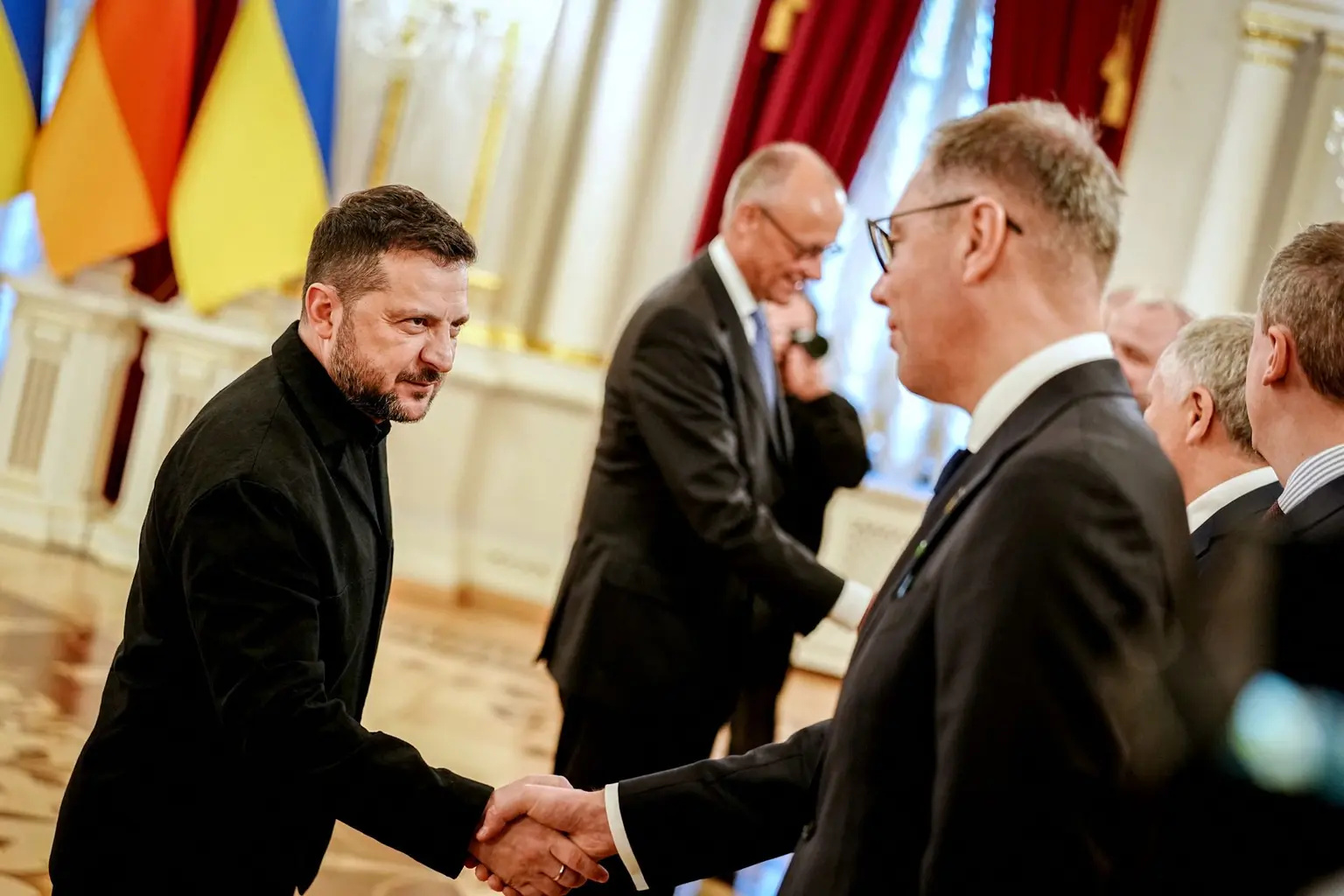
Germany has pledged €1bn in new military assistance to Ukraine as Russia intensifies attacks on Ukrainian cities and critical infrastructure ahead of winter, with German Chancellor Friedrich Merz declaring that Berlin will not be pressured into reducing its support for Kyiv.
Merz made the announcement during a visit to Kyiv on Sunday, where repeated air raid warnings and explosions underscored the continuing danger faced by the Ukrainian capital. Alongside the military package, Germany announced an additional €350m to help repair and restore Ukraine’s energy infrastructure, which has increasingly become a major target of Russian attacks as colder weather approaches.
The German chancellor said the support was about more than defending Ukraine’s territorial integrity, arguing that the war had become a direct security concern for Europe. He said Germany had a strong interest in ensuring that Russia could not undermine European security through military aggression, cyber-attacks and disinformation campaigns.

“We will not allow ourselves to be intimidated,” Merz said, reinforcing Germany’s commitment to Ukraine at a time when Kyiv is seeking greater international support and additional air-defence capabilities.
A significant part of the new German assistance will focus on drone warfare. Berlin plans to support the joint production of drones capable of intercepting Russia’s increasingly sophisticated jet-powered attack drones. Merz said technical advances made in recent weeks were helping to accelerate production and improve the ability of Ukrainian forces to counter aerial threats.
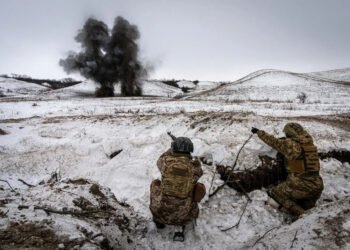
The decision reflects the changing nature of the war, where drones have become central to Russian and Ukrainian military operations. Russia has increasingly relied on long-range drones to strike military positions, energy facilities, transport infrastructure and populated areas, while Ukraine has expanded its own drone production and deployment capabilities.
German companies accompanying Merz on his Kyiv visit also reached 14 agreements with Ukrainian partners, with the combined value estimated at about €6.6bn. The agreements are expected to deepen cooperation in defence manufacturing and other strategic areas while strengthening Ukraine’s ability to protect itself against Russian attacks.
Among the deals was an agreement with Diehl Defence concerning the supply of IRIS-T air-defence missiles. Another agreement involving Hensoldt covers radar equipment, while Quantum Systems is involved in cooperation over jet-drone interceptors. The agreements highlight Germany’s growing role in strengthening Ukraine’s domestic defence capacity and its ability to respond to increasingly complex aerial attacks.
The timing of Merz’s visit was particularly significant because Kyiv itself came under repeated Russian attack while the German delegation was in the city. Air raid sirens sounded several times, forcing residents and officials to remain alert as Russia continued its campaign against Ukrainian infrastructure.
One Russian drone struck Kyiv’s Northern Bridge over the Dnipro River, a key crossing used by thousands of residents travelling between the eastern and western sides of the capital. The strike was the fourth consecutive day in which Russian forces had targeted bridges in and around Kyiv, according to Ukrainian authorities.
Footage from the scene showed vehicles continuing to move along the bridge before a drone struck the roadway and erupted in flames. The attack demonstrated the vulnerability of major transport links that are essential to the daily lives of Kyiv residents as well as to the wider functioning of the capital.
The Russian attacks were not limited to Kyiv. Later on Sunday, an airstrike hit Kharkiv, Ukraine’s second-largest city, killing one person and injuring six others, according to the city’s mayor, Ihor Terekhov.
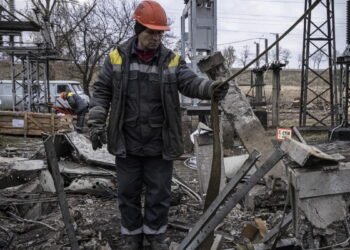
The latest attacks have intensified concerns about what Ukraine could face during the coming winter. Russia has previously targeted power plants, electricity distribution networks and other energy infrastructure in an effort to disrupt essential services and increase pressure on civilians. With temperatures expected to fall in the coming months, restoring damaged infrastructure has become an urgent priority for the Ukrainian government.
Germany’s €350m energy-sector package is therefore expected to play an important role in helping Ukraine prepare for further attacks. The assistance could support repairs and restoration efforts at a time when the country is attempting to maintain electricity and heating supplies despite continued military pressure.
Merz also framed Russia’s broader confrontation with Europe as extending beyond conventional military operations. He accused Moscow of conducting cyber-attacks and disinformation campaigns aimed at European democracies. Russia has rejected such accusations, describing claims of hybrid warfare as unfounded and part of what it considers an anti-Russian campaign.
Meanwhile, Ukrainian President Volodymyr Zelenskyy raised concerns about Russia’s military cooperation with North Korea. He said he believed Moscow may have shared technology connected with its latest generation of jet-powered drones with Pyongyang.
North Korea has become an increasingly important military partner for Russia during the war. Pyongyang has supplied Moscow with large quantities of artillery ammunition and ballistic missiles, some of which have been used in attacks against Ukrainian targets.
Zelenskyy suggested that Russia could be transferring military technology in return for North Korean assistance. He said he believed Moscow was sharing technological capabilities with Pyongyang, although he acknowledged that he did not have definitive information about the extent of any transfer involving ballistic or drone technology.
The possibility of greater military-technology cooperation between Russia and North Korea has raised concerns among Ukraine and its international partners. Any transfer of advanced drone technology could potentially strengthen North Korea’s own military capabilities while further integrating the two countries’ defence industries.
Away from the battlefield, Ukraine has also attempted to provide humanitarian assistance to civilians living under Russian occupation. Ukrainian Foreign Minister Andrii Sybiha said Ukrainian forces had once again used drones to deliver food and medicine to Oleshky, a town in southern Ukraine located near the Dnipro River.
The frontline settlement has remained under Russian occupation since 2022 and has been described by residents as an extremely difficult place to survive. According to Sybiha, the latest delivery contained almost four tonnes of food and medicine.
The humanitarian situation in Oleshky has become a major concern for Ukrainian officials, particularly because civilians have faced difficulties accessing food, medical care and safe routes out of the area. Ukrainian officials have previously accused Russian authorities of restricting humanitarian assistance and preventing residents from leaving.
Ukraine’s human rights ombudsman, Dmytro Lubinets, said last month that Russia had not accepted Ukrainian proposals aimed at allowing civilians to evacuate. The continued restrictions have added another layer of humanitarian pressure to a conflict already marked by widespread displacement and destruction.
At the diplomatic level, efforts to find a path towards negotiations are continuing. Zelenskyy said on Sunday that the United States wanted a new round of peace talks involving Ukraine and Russia to take place by the end of October. The possibility of renewed negotiations comes as international pressure grows for a diplomatic solution to the conflict, although major disagreements remain between Moscow and Kyiv.
India has also indicated that it wants to play a greater role in efforts to end the war. Foreign Minister Subrahmanyam Jaishankar said India had been advocating for a peace agreement for years and had recently become more directly involved by maintaining conversations with both Russia and Ukraine.
Jaishankar said India’s initial focus included the safety of shipping in the Black Sea, while discussions also covered grain and energy exports and possible arrangements aimed at preventing further attacks. India has maintained relationships with both Moscow and Kyiv and has increasingly presented itself as a potential intermediary capable of communicating with both sides.
The diplomatic efforts come against the backdrop of an increasingly dangerous military environment. Russia continues to launch attacks against Ukrainian cities and infrastructure, while Ukraine is expanding its ability to strike and defend against Russian forces. Germany’s latest commitment indicates that major European countries remain prepared to provide Kyiv with substantial assistance despite the prolonged nature of the conflict.

For Ukraine, the immediate challenge is twofold: maintaining its military defences while ensuring that civilians have access to electricity, heating, food and medical services as winter approaches. Germany’s combined military and energy support is intended to address both needs.
As the war enters another difficult phase, Kyiv is simultaneously preparing for further Russian attacks, strengthening its air defences, expanding drone capabilities and pursuing diplomatic channels. The coming weeks are likely to test Ukraine’s resilience as well as the willingness of its international partners to maintain financial, military and humanitarian support.
Russia’s continuing attacks on infrastructure suggest that the winter months could once again become a critical part of the conflict. Germany’s €1bn military commitment, alongside the additional €350m for energy repairs, signals that Berlin expects the confrontation to remain prolonged and believes supporting Ukraine is closely connected to Europe’s own security.
Related News:
 Putin Declares Russia Victory at Scaled Victory Day Parade
 Israeli Strike in Southern Lebanon Kills Seven
 Russian Missiles Intensify Pressure on Kyiv
 Trump Asked Xi About Buying US Weapons
 Ukraine’s New FP-7 Missile Makes Combat Debut
 Russian Strikes Disrupt Kyiv Bridge Traffic
 UK Prepares Aircraft Carrier for Middle East Crisis
 Ceasefire Standoff Deepens in Ukraine War
 Zelenskyy warns over Oreshnik threat as Kyiv hit
 Discontent grows around Putin amid war strain
 Millions Gather for Khamenei’s Six-Day State Funeral
 Houthis Strike Saudi Arabia as Middle East Tensions Rise
 Taliban global ties grow as rights fears mount
 Five Years of Taliban Rule Leave Afghanistan in Crisis
 Trump dismisses concerns over 250-day carrier deployment
 Ukraine Villagers Demand Answers After Deadly Arms Depot Strike
 Europe’s democracies face a growing far-right threat
 North Korea Expands Uranium Facility at Yongbyon
 Saudi Pact Raises Risk of Pakistan Entering War
 Elif Eralp Emerges as Berlin’s Next Political Force
 Russia Targets Ukraine’s Digital Economy With Strikes
 Putin Orders Russian Army Expansion as War Intensifies
 South Korea-Ukraine Row Erupts Over North Korean POWs
 South Korea demands apology over DMZ mine blast
 Russia Escalates Ukraine Energy Attacks as Winter Nears
 New Maps Reveal Gaza’s Vast Destruction
 US Sends Third Carrier to Middle East
 Yemen government launches offensive against Houthis
 North Korea Fires Missiles Amid US-South Korea Drills
 Italian Town Buys Mussolini Villa to Keep Away Fascist Fans
 Hungary election: Orbán faces biggest test amid scandal
 Iran Crisis Tests Trump’s Global Leadership
 Southeast Asia Turns to Russia Amid Energy Crisis
 Cartel crackdown raises fears of fresh violence
 Trump orders US troop pullout from Germany
 Activists allege abuse after Gaza flotilla seizure
 Ukraine strikes Tuapse as oil disaster worsens
 US ‘Narco Boat’ Strikes Draw Global Outcry
 Trump Announces 3-Day Russia–Ukraine Ceasefire Deal
 France Faces Record Presidential Crowded Race Amid Far-Right Surge
 US Awaits Iran Reply on New Ceasefire Proposal
 Hormuz Talks Near Critical Stage
 Maldives Cave Diving Tragedy Raises Safety Alarm
 Former ICC prosecutor condemns US sanctions
 Deadly Russian Air Raids Strike Across Ukraine
 Le Pen to Run for President Despite Embezzlement Conviction
 Trump Calls Strait of Hormuz ‘American Territory’
 Nepal-Tibet Flood Death Toll Rises as 2,478 Remain Missing
 Nepal Flood Survivors Face Unimaginable Loss
 Bayeux Tapestry Revives Franco-British Ties
 Trump Calls Iran War ‘Small Potatoes’ Despite US Deaths
 Reform Faces Fresh Financial Controversy
 Nepal Tunnel Rescue Offers Hope Amid Flood Devastation
 Sweden Election Hangs on Far-Right Breakthrough
 Saudi Arabia Shuts Oil Pipeline After Drone Attack
 Israel Accused of Undermining Palestinian Life
 Saudi Arabia Warns Houthis After Drone Near Mecca
 Yemen War Displaces 125,000 as Fighting Intensifies
 Lib Dems Prepare for Election Amid Reform Challenge
 US Networks Suspend Trump White House Pool Coverage
 Japan PM Backs International Criminal Court
 UK Plans New Centre to Counter Information Warfare
 Iran Rejects Claims of Shift in US Talks
 Greece Pushes for Parthenon Marbles Reunification
 Ukraine and Russia Escalate Long-Range Drone War
 Xi urges Trump to avoid US-China military conflict
 Lula accuses Trump of seeking control over Brazil
 Nepal PM calls deadly flood a global climate warning
 Saudi intercepts Houthi missiles as oil fears grow
 Republican Senator Questions Trump Ad Spending
 Madrid Tent Camp Grows as Spain Housing Crisis Deepens
 Economic growth and political strain reshape Benin
 French Student Protests Escalate Into Violent Clashes
 Drumcree Talks Falter as Legal Challenge Deepens
 UK-France Returns Deal Faces Expiry as Talks Stall
 Green Party faces dispute over Zionism motion
 French School Protests Escalate as 400 Schools Close
 North Korea Fires Missile Amid DMZ Tensions
 Bosnia’s Young People Look Beyond Election Hope
 US bombers leave RAF Fairford after terror threat