Published: 30 September 2026. The English Chronicle Desk. The English Chronicle Online
South Korea has demanded an apology and what it described as responsible action from North Korea after a landmine explosion near the heavily fortified inter-Korean border injured three South Korean soldiers. The incident has added new strain to relations between the two Koreas at a time when Seoul has been attempting to reduce military tensions and reopen diplomatic channels with Pyongyang.
The explosion occurred on 21 September during a South Korean military operation in the western section of the Demilitarized Zone, south of the Military Demarcation Line separating the two countries. The soldiers were involved in a search and route-clearance operation in an area where South Korean authorities suspected that North Korean forces had planted mines. Two explosions occurred roughly a minute apart, leaving three personnel injured. One soldier, a battalion commander, suffered particularly serious injuries, including the loss of part of his foot, while another soldier was also seriously hurt. A third officer sustained comparatively minor injuries.
A joint investigation by South Korea’s military and the United Nations Command has since produced evidence linking the incident to a North Korean anti-personnel mine. Investigators found an operable North Korean resin-bodied mine south of the Military Demarcation Line during their examination of the area. South Korean authorities had already concluded that North Korean mines were highly likely to have caused the explosions, while the discovery of an additional mine strengthened that assessment.

The United Nations Command, which has responsibility for administering and enforcing the 1953 Korean Armistice Agreement, said the presence of an active North Korean mine on the southern side of the Military Demarcation Line constituted an armistice violation. The command said it was addressing the matter through established mechanisms under the armistice framework, while stressing the importance of maintaining stability and preventing further escalation on the Korean Peninsula.
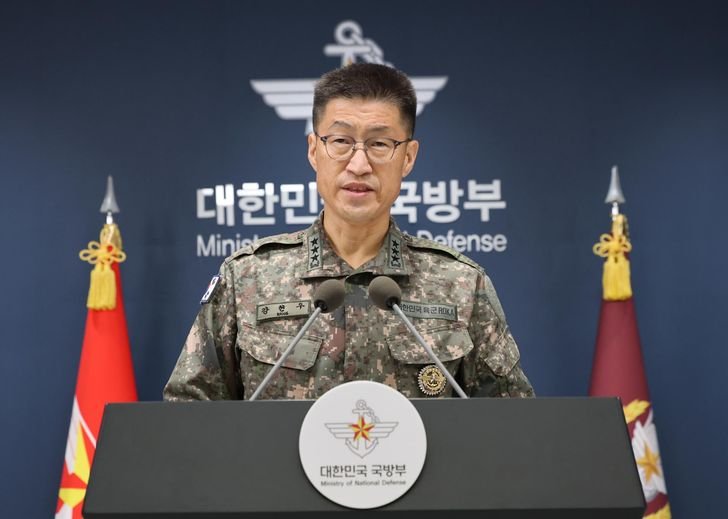
South Korea’s Joint Chiefs of Staff responded by calling on Pyongyang to acknowledge the incident and take responsibility. Lieutenant General Kang Hyun-woo, the JCS director of operations, said North Korea should immediately stop activities intended to strengthen its border defences, including the laying of mines and construction of fortifications. Seoul has argued that such activities violate the armistice and run contrary to the broader spirit of inter-Korean agreements.
The demand comes against a background of increasingly limited communication between Seoul and Pyongyang. Formal channels between the two sides have remained largely inactive, while North Korea has expanded military infrastructure near the border. The absence of reliable communication creates an additional difficulty when incidents occur in or around the Demilitarized Zone, where even relatively small military encounters can generate uncertainty and rapid escalation.
North Korea has rejected South Korea’s accusations. Kim Yo-jong, the sister of North Korean leader Kim Jong-un and a senior political figure in Pyongyang, dismissed the South Korean findings as fabricated and described the incident as a staged affair. She said North Korean soldiers had not crossed the border and warned that any direct firing by South Korean forces at North Korean personnel would trigger what she described as immediate and severe retaliation.
The conflicting accounts leave the political dispute unresolved even though investigators have identified a North Korean mine on the southern side of the Military Demarcation Line. South Korea and the United Nations Command have treated the physical evidence as significant, while Pyongyang has rejected responsibility for the explosion itself. The disagreement illustrates the difficulty of establishing political accountability in an area where mines, military barriers and other defensive installations have accumulated over decades.
The latest confrontation also recalls the dangerous episode of 2015, when two South Korean soldiers were seriously wounded by landmines in the Demilitarized Zone. Seoul at the time responded by restarting loudspeaker propaganda broadcasts directed towards North Korea. Pyongyang reacted with threats and an exchange of artillery fire, before the two sides eventually reached an agreement through high-level talks. The earlier episode remains an important reference point whenever a new mine-related incident occurs along the border.
For President Lee Jae Myung’s administration, the latest development presents a complicated diplomatic challenge. Lee has advocated a reduction in military confrontation and has spoken publicly about creating conditions for renewed dialogue with Pyongyang. During his recent address to the United Nations General Assembly, he presented South Korea as a potential facilitator of peace on the peninsula and called for diplomatic approaches that could link sanctions relief with measures limiting North Korea’s weapons programmes.
The mine blast has nevertheless intensified domestic political debate. Opposition politicians have questioned the timing of the investigation’s findings and raised concerns about whether the government was too cautious in releasing information while President Lee was attending the UN General Assembly. The presidential office has rejected suggestions that the investigation was delayed for political reasons.
Conservative opposition politicians have also renewed calls for the restoration of loudspeaker broadcasts along the border. The equipment was switched off and subsequently dismantled under the current administration as part of efforts to reduce tensions with North Korea. Any decision to restore the broadcasts would carry wider diplomatic implications because Pyongyang has historically regarded such broadcasts as hostile actions.
The incident comes at an already sensitive moment for Seoul’s relations with both Pyongyang and Kyiv. Earlier this week, South Korea demanded an explanation from Ukraine after President Volodymyr Zelenskyy publicly disclosed that two North Korean prisoners of war had been transferred to South Korea. Seoul said the disclosure violated an understanding concerning the secrecy of the transfer, while Ukraine has disputed that such an agreement existed. The episode has created another diplomatic complication for the South Korean government as it attempts to manage its relations with countries involved in the wider conflict surrounding North Korea and Russia.

The latest mine incident therefore extends beyond the injuries suffered by the three soldiers. It has raised questions about the continuing militarisation of the inter-Korean border, the durability of the armistice arrangements and the risks created by the absence of functioning communication channels between Seoul and Pyongyang.
The Demilitarized Zone remains one of the world’s most heavily fortified areas despite its name. The presence of landmines and military installations means that routine patrols and engineering operations can carry substantial risks. The September explosion demonstrates how dangerous activities close to the Military Demarcation Line can remain, even when neither side publicly declares an intention to initiate a confrontation.
For now, Seoul is seeking an apology and an end to further mine-laying and border fortification, while Pyongyang continues to deny responsibility and has warned against military action by the South. The United Nations Command has formally identified an armistice violation, but the wider political dispute remains unresolved. With diplomatic communication between the two Koreas still severely restricted, the immediate challenge for all sides is to prevent the latest confrontation from developing into a broader military crisis.
Related News:
 Trump Asked Xi About Buying US Weapons
 South Korea-Ukraine Row Erupts Over North Korean POWs
 Putin Declares Russia Victory at Scaled Victory Day Parade
 Discontent grows around Putin amid war strain
 Houthis Strike Saudi Arabia as Middle East Tensions Rise
 Taliban global ties grow as rights fears mount
 Russian Missiles Intensify Pressure on Kyiv
 UK Prepares Aircraft Carrier for Middle East Crisis
 North Korea Fires Missiles Amid US-South Korea Drills
 ‘The frontline is like Terminator’: Ukraine’s fighting robots
 Ukraine Urges UK to Seize Russian Oil Tankers
 Trump orders US troop pullout from Germany
 Activists allege abuse after Gaza flotilla seizure
 Ukraine strikes Tuapse as oil disaster worsens
 Australia pushes Pacific security pact amid China tension
 Middle East Crisis Escalates as Oil Routes Shake Markets
 Zelenskyy warns over Oreshnik threat as Kyiv hit
 Hunger increasingly weaponised in global conflicts
 Millions Gather for Khamenei’s Six-Day State Funeral
 Seoul proposes historic peace talks to replace Korean War armistice
 Israeli Strike in Southern Lebanon Kills Seven
 Trump dismisses concerns over 250-day carrier deployment
 Trump Calls Strait of Hormuz ‘American Territory’
 Trump Faces Iran War Crisis Before Midterm Vote
 Nepal-Tibet Flood Death Toll Rises as 2,478 Remain Missing
 Nepal Rescuers Race to Save Hundreds Trapped Underground
 Nepal Flood Survivors Face Unimaginable Loss
 Nepal Tunnel Rescue Offers Hope Amid Flood Devastation
 UN expert urges UK to rethink Israel policy
 Nepal seeks $20m climate compensation after deadly floods
 North Korea Expands Uranium Facility at Yongbyon
 Nearly 50,000 Flee as Houthis Advance in Yemen
 Saudi Pact Raises Risk of Pakistan Entering War
 Sri Lanka Easter Bombings: 15 Get Long Prison Terms
 Netanyahu faces protests and pressure at UN
 Nepal PM calls deadly flood a global climate warning
 Iran Awaits Trump Response on Seven-Day Hormuz Plan
 Putin Orders Russian Army Expansion as War Intensifies
 US Citizens Warned to Venezuela Flee Amid Paramilitary Threats
 Gulf states warn Trump Iran strikes risk wider Middle East war
 Iran unrest slows under brutal crackdown and global tensions
 Thousands Protest ICE Operations in Nationwide US Day of Action
 Epstein Files Reveal Trump Officials’ Emails with Financier
 Thousands Protest ICE in New York Against Trump Deportation Campaign
 Sydney Protest Pepper Spray Clash During Herzog Visit
 Ukraine war briefing: Zelenskyy offers help to Saudi Crown prince on combatting Iranian drones
 Russia Drone Attack Intensifies Ukraine War Pressure
 Trump and Tehran Find Common Ground in Landmark Ceasefire
 Reeves Slams Trump Over Iran War Lack Of Exit Plan
 Oil Prices Surge Above $120 Amid Iran Blockade Fears
 Japan Protests Erupt Over Plans to Revise Constitution
 China Fireworks Factory Blast Kills 21 in Hunan
 FIFA Confirms Global Ban for Benfica Star Prestianni
 New South Wales Wetland Rescue Legislation Passes
 Trump Announces 3-Day Russia–Ukraine Ceasefire Deal
 US Awaits Iran Reply on New Ceasefire Proposal
 US and Mexico Face Heatwave as Floods Batter South Africa
 The Long Way Home: Australia’s High-Stakes Virus Mission
 Putin Signals War End as Russian Momentum Stalls
 Fear and Betrayal: The Chilling Case of Kouri Richins
 Scepticism and tight security as Beijing braces for Trump
 Philippine Senator Flees After Days Under Senate Siege
 Fragile Truce Shattered as Violence Escapes Diplomatic Control
 Maldives Cave Diving Tragedy Raises Safety Alarm
 Aukus Deal Facing Fierce Backing and Historic Criticism
 Thai Princess Bajrakitiyabha Passes Away at 47
 Grief and Devotion Amidst the Rubble of Nabatieh
 Canada Secure Historic Last 16 Spot with Late Goal
 Keiko Fujimori Claims Dramatic Victory in Peru Runoff
 Powerful 7.7-Magnitude Earthquake Hits Eastern Indonesia
 Former Diplomats Urge UK and France to Act on Palestine
 Nepal-Tibet Flood Leaves 270 Dead and 1,400 Missing
 Trump Hardens Canada Trade Stance as Talks Stall
 Saudi Arabia Shuts Oil Pipeline After Drone Attack
 Saudi Arabia Warns Houthis After Drone Near Mecca
 Japan PM Backs International Criminal Court
 Trump gives Xi red-carpet welcome as trade truce extends
 Greece Pushes for Parthenon Marbles Reunification
 Xi urges Trump to avoid US-China military conflict
 The Art and Meaning Behind Diplomatic Gifts