Published: 25 September 2026. The English Chronicle Desk. The English Chronicle Online
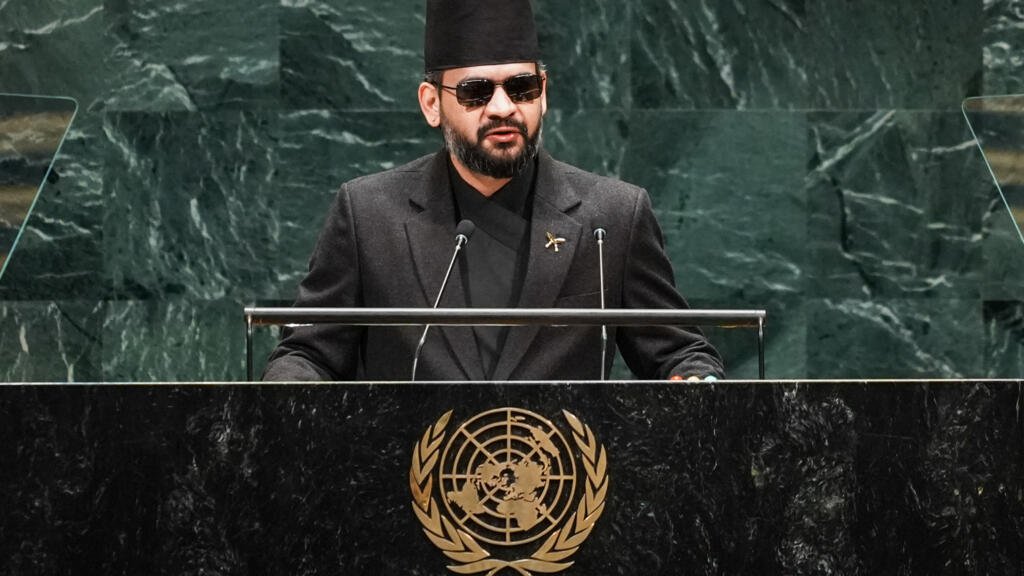
Nepal’s Prime Minister Balendra Shah has used his address to the United Nations General Assembly to deliver a forceful warning about the consequences of climate change, arguing that last month’s devastating flash flood in the Himalayas should serve as a wake-up call for governments around the world.
Speaking before world leaders on Thursday, Shah described the disaster as a “warning to the world” and questioned whether the international community had truly understood the message delivered by the catastrophe. He urged wealthier countries to provide greater financial support to vulnerable nations that face severe climate-related disasters despite contributing relatively little to global greenhouse gas emissions.
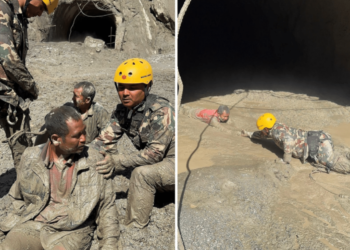
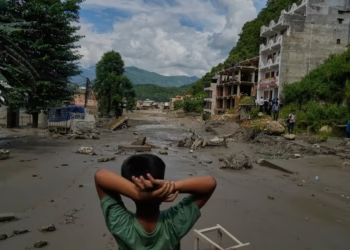
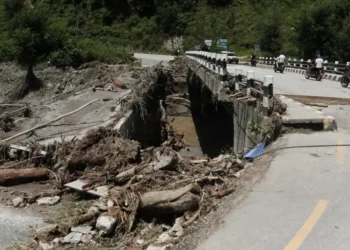
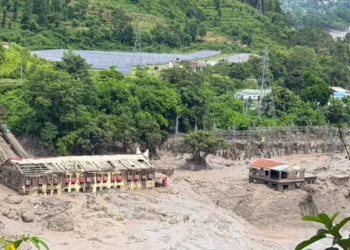
The flood, which struck parts of Nepal around four weeks earlier, caused widespread destruction and claimed at least 1,400 lives. Roads, bridges, homes, schools and livelihoods were damaged or swept away, while recovery and search operations have continued weeks after the disaster.
Shah said the scale of the destruction had placed Nepal’s recovery requirements at an extraordinary level, with the government estimating that reconstruction and recovery needs could amount to around 10% of the country’s gross domestic product. He warned that requiring vulnerable countries to borrow heavily after climate disasters could leave them trapped in additional debt at the very moment they are attempting to rebuild their economies.

“When a climate-driven disaster destroys infrastructure of a poor country, the answer cannot simply be another mega loan or a patchwork of small grants,” Shah said during his UN address. He called instead for adequate grant-based international support to help countries recover without creating additional financial burdens.
The prime minister’s argument was rooted in the disparity between Nepal’s contribution to global emissions and the scale of the damage it is experiencing. Shah said Nepal produces less than one-tenth of 1% of the greenhouse gases responsible for global warming, yet the country is increasingly exposed to severe climate-related risks.
He argued that the international climate finance system needs to respond more effectively to countries facing such circumstances. According to Shah, existing financial mechanisms are insufficient and often too bureaucratic to provide vulnerable nations with assistance at the speed and scale required after major disasters.
The disaster has also intensified attention on the Himalayan region, where rising temperatures and changes in glaciers, snow and permafrost are creating additional risks for communities living downstream.
International scientists have linked climate-related changes, including the effects of warming on permafrost and glacial stability, to conditions surrounding the flood. A glacier collapse contributed to the massive flooding that devastated areas near the Nepal-Tibet border, turning a natural hazard into a catastrophe with consequences extending across communities and infrastructure.
For Nepal, the disaster has highlighted the vulnerability of a country situated in one of the world’s most climate-sensitive mountain regions. The Himalayas contain extensive glaciers and glacial lakes, while millions of people across the wider region depend on mountain water systems for agriculture, drinking water and energy.
Shah therefore called for greater cooperation between Nepal, India and China to strengthen climate resilience throughout the Himalayan region. He proposed the creation of an urgent regional mechanism that could facilitate the sharing of satellite information, improve monitoring of glacial lakes, strengthen early-warning systems and allow countries to coordinate their responses when disasters cross national boundaries.
Such cooperation, he suggested, would be particularly important because environmental threats in the Himalayas do not respect political borders. A flood, landslide, glacial lake outburst or other mountain disaster can affect communities and infrastructure across several countries, making timely information and coordinated emergency responses crucial.
The humanitarian consequences of Nepal’s recent disaster remain severe. Search and recovery operations have continued in affected areas, with more than 6,000 people still reported missing. Shah said many of those missing might never be recovered, adding another dimension of grief to the country’s already substantial death toll.
For families in affected communities, the disaster has not ended simply because the floodwaters have receded. Homes and livelihoods have been destroyed, transport networks disrupted and essential infrastructure damaged. Communities must now face the difficult process of rebuilding while coping with the loss of relatives and uncertainty surrounding missing people.
The economic implications are equally significant. Nepal is a developing country with limited fiscal capacity, meaning that large-scale reconstruction can place substantial pressure on public finances. Damage to roads and bridges can also disrupt trade and access to markets, while destruction of schools and public facilities can interfere with essential services.
The international community has begun providing assistance. The World Bank has made up to $170 million in emergency financing available to support Nepal’s immediate response and recovery efforts. The United States has also announced $31 million in assistance for flood recovery, taking its total financial support to Nepal to $36 million.
While these contributions provide important support, Nepal’s leadership has continued to argue that the international financing system needs to be redesigned to address the scale of climate-related losses experienced by vulnerable countries.
The debate is closely connected to the broader international discussion over loss and damage caused by climate change. Developing nations have long argued that countries with limited historical responsibility for greenhouse gas emissions should not be left to bear the full economic consequences of climate-driven disasters.
Nepal’s Foreign Minister Shisir Khanal reinforced that message during climate discussions at the United Nations. He described the flood as more than an isolated national tragedy, warning that it could represent a preview of the conditions other vulnerable countries may face as the global climate continues to change.
Nepal has also sought assistance through international mechanisms designed to respond to climate-related loss and damage. The government has reportedly submitted a request for financial compensation connected to the flood disaster, with officials seeking support for the costs associated with climate-related destruction.
The issue of historical emissions has become central to Nepal’s argument. Data from the Global Carbon Project indicate that the United States has emitted vastly more carbon dioxide over the past several decades than Nepal. The comparison reflects a broader concern among developing countries that responsibility for the climate crisis and exposure to its consequences are distributed unevenly.
Shah’s intervention at the UN therefore went beyond an appeal for emergency assistance. It was also a demand for a different approach to international climate policy, in which vulnerable countries would receive resources that allow them to recover and adapt without accumulating unsustainable debt.
The prime minister’s remarks come as governments face increasing pressure to strengthen climate adaptation measures. The challenge is particularly acute for countries such as Nepal, where geography, mountainous terrain and dependence on climate-sensitive natural systems can amplify the effects of extreme weather.
Early-warning systems are one area where relatively targeted investment could potentially reduce future losses. Better monitoring of glaciers and glacial lakes, improved weather forecasting and stronger communication networks can provide communities with additional time to evacuate before potentially catastrophic events.
Regional data-sharing could also help governments identify emerging threats more quickly. Nepal’s proposal for greater cooperation with India and China reflects the reality that Himalayan environmental risks are shared across borders.
The disaster has consequently placed Nepal at the centre of renewed international debate over climate justice, disaster financing and the responsibilities of wealthier nations.

For Nepal, however, the issue is immediate rather than theoretical. Thousands of people remain missing, communities are rebuilding damaged homes and infrastructure, and the government faces the enormous financial challenge of restoring development gains that were lost in a matter of hours.
Shah’s message to the UN was therefore both a warning and an appeal. He urged world leaders to recognise that countries making only a small contribution to global warming can still face devastating consequences from a changing climate.
As international governments continue negotiations over climate finance, Nepal is pressing for assistance that reflects the scale of its losses and does not leave vulnerable countries deeper in debt. The country’s experience has also strengthened calls for greater regional preparedness and cooperation across the Himalayas.
The central question now is whether the international community will treat Nepal’s disaster as an isolated tragedy or as evidence of the wider risks facing vulnerable societies. For Shah, the answer should be clear: the flood was a warning, and the time to strengthen climate resilience and international support is before another disaster delivers an even greater cost.
Related News:
 Nepal Flood Survivors Face Unimaginable Loss
 Nepal Tunnel Rescue Offers Hope Amid Flood Devastation
 Nepal seeks $20m climate compensation after deadly floods
 Nepal-Tibet Flood Death Toll Rises as 2,478 Remain Missing
 Nepal Rescuers Race to Save Hundreds Trapped Underground
 Chornobyl Still at Risk 40 Years After Disaster
 Escobar’s Hippos May Be Moved to India Zoo
 Five Years of Taliban Rule Leave Afghanistan in Crisis
 Wildfires rage across Europe as hundreds arrested in France
 Australia Races to Find Tourists Missing in Nepal
 Nepal Flood Death Toll Tops 300 as Second Flood Feared
 UN Warns Record El Niño Could Supercharge Global Heat
 Typhoon Saudel Triggers Mass Evacuations in China

 Japan Braces for Dujuan as Storm Threat Grows
 Typhoon Dujuan Leaves Four Dead in Japan
 Super El Niño Threatens Hundreds of Thousands of Lives
 Evacuations Ordered as California Wildfires Spread Fast
 Queensland Braces for Potential Second Severe Cyclone Hit
 Cyclone Vaianu Forces Mass Evacuations in New Zealand
 Capitalism ‘Suicidal’, Warns Petro at Climate Summit
 China Fireworks Factory Blast Kills 21 in Hunan
 Maldives Cave Diving Tragedy Raises Safety Alarm
 Pope Meets Families in Italy Toxic Waste Zone
 Venezuela Quake Death Toll Surpasses 4,000
 Olympus Awaits Unesco Heritage Recognition
 Three-Quarters of England’s Riverbanks Still Off Limits
 Powerful 7.7-Magnitude Earthquake Hits Eastern Indonesia
 Israeli Strike in Southern Lebanon Kills Seven
 Is America Ready for an AOC Presidential Run?
 Heavy Casualties Feared as Flash Flood Sweeps Nepal-Tibet Border
 Nepal Flood Death Toll Tops 1,000 as Tunnel Search Intensifies
 Daughter Finds Bones in Parents’ Burned-Out Car
 Australia’s Indigenous Population Was Far Larger Before Colonisation
 2025 Among World’s Driest Years for Rivers
 Yemen War Displaces 125,000 as Fighting Intensifies
 Gaza Strike Kills Child and Paramedic
 Europe Faces Climate Reckoning After Extreme Summer
 Lib Dems Prepare for Election Amid Reform Challenge
 China’s MeToo Movement Finds New Ways to Survive
 Tropics May Wait Longest for Net-Zero Climate Benefits
 Sri Lanka Easter Bombings: 15 Get Long Prison Terms
 Greece Pushes for Parthenon Marbles Reunification
 Ukraine and Russia Escalate Long-Range Drone War
 Elif Eralp Emerges as Berlin’s Next Political Force
 ‘Extinct’ Antelope Returns to Sahara, Bringing Hope
 Half the World’s Largest Cities Face Rising Water Stress
 Ocean Warming Drives Massive Marine Life Loss, Study Warns
 Greenpeace $345m Ruling Sparks Appeal Battle
 Extreme Weather: Europe Shivers as Cyclone Narelle Hits
 Ben Roberts-Smith Denies War Crime Allegations in First Statement
 Coalition pushes fossil fuel phaseout plan
 US ‘Narco Boat’ Strikes Draw Global Outcry
 Barrister Criticises Trial After Suicide Case Verdict
 UK Faces Mass Water Shortages by 2055, Lords Warn
 Discontent grows around Putin amid war strain
 Farage and Reform UK Reshape British Politics
 Sydney Records Hottest June Since 1859 as Expert Warns New High a ‘Signature’ of Global Warming
 New Footage Revives Peter Falconio Mystery
 England and Norway Fans Turn Miami Into World Cup Carnival
 UK Schools Struggle as Classrooms Top 40C
 Houthis Strike Saudi Arabia as Middle East Tensions Rise
 Westminster Council Threatens Charing Cross Soup Kitchen
 Burnham unveils £65m drought aid for farmers
 Gen Z turns to BirdTok for a gentler digital escape
 Nepal-Tibet Flood Leaves 270 Dead and 1,400 Missing
 Ghent Professors Questioned Cofnas Appointment
 Families Fly to Nepal in Search of 33 Missing Britons
 British Museum Faces Questions Over Peter Thiel’s Private Bayeux Viewing
 Ukraine Villagers Demand Answers After Deadly Arms Depot Strike
 Trump Calls Iran War ‘Small Potatoes’ Despite US Deaths
 Swedish Mining Push Puts Sami Land Rights Under Pressure
 Man Arrested in Mississippi Woman’s Death
 Royal Crown Branded Enslaved Africans in Britain’s Slave Trade
 Turkey LGBTQ Crackdown Expands With New Arrests
 US Networks Suspend Trump White House Pool Coverage
 Democrat Says ICE Restricted Detention Camp Oversight
 Trump gives Xi red-carpet welcome as trade truce extends
 Chinese Hybrid Car Surge Raises EU Auto Industry Concerns
 Xi urges Trump to avoid US-China military conflict