Published: 17 September 2026. The English Chronicle Desk. The English Chronicle Online
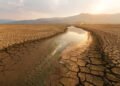
The world’s rivers experienced another year of severe disruption in 2025, with large areas recording below-normal flows and global freshwater reserves continuing to come under pressure, according to the World Meteorological Organization’s latest assessment of the planet’s water resources.
The report points to an increasingly unstable global water cycle in which drought and flooding are occurring with greater intensity and, in some places, in rapid succession. The findings show that the challenge is no longer simply a question of too little water. Instead, water is increasingly distributed unevenly across time and geography, creating simultaneous risks from drought, floods, shrinking glaciers and depleted freshwater storage.
The WMO’s State of Global Water Resources assessment examines the entire water cycle, including river discharge, groundwater, soil moisture, evaporation, land-based water storage, snow and ice. Its global analysis combines observations, hydrological modelling and other sources of environmental data to assess how freshwater availability is changing.
The latest findings build on a pattern identified in earlier WMO assessments. The organisation reported that 2023 was the driest year for global rivers in more than three decades, while its 2024 assessment found that only around one-third of global river basins had normal conditions. The remaining basins experienced either above- or below-normal flows, highlighting a continuing departure from established hydrological patterns.

The 2025 assessment indicates that this disruption has continued. The number of river basins experiencing normal conditions has remained unusually low, while significant areas have faced either insufficient or excessive water. The result is a global water system that is becoming increasingly difficult to predict using historical patterns alone.
WMO Secretary-General Celeste Saulo has described the decline in terrestrial water storage as a persistent trend. Freshwater stored on and beneath land includes groundwater, lakes, rivers, soil moisture, snow, ice and water held within vegetation. A sustained reduction in this natural reserve can affect communities, agriculture, ecosystems and energy systems.
The changes are closely connected to a warming climate. Higher temperatures influence evaporation, precipitation patterns and the amount of water held in snow and ice. A warmer atmosphere can hold more moisture, contributing to heavier rainfall in some circumstances, while increased evaporation and drying soils can intensify drought in others. The WMO has described the resulting pattern as an increasingly erratic water cycle, marked by swings between extreme wet and dry conditions.
The consequences can extend far beyond riverbanks. Rivers supply drinking water, support agriculture and industry, sustain wetlands and ecosystems, and play an important role in electricity generation. When river levels fall significantly, the effects can spread into food production, transport, energy security and local economies.
Europe has already provided examples of how low river flows can affect critical infrastructure. The European State of the Climate 2025 report, produced by the Copernicus Climate Change Service and WMO, found that 70% of European rivers had below-average annual flows in 2025. The report linked the continent’s increasingly severe water pressures with rapid warming, drought and declining snow and ice cover.
Glaciers are another important part of the global water system. The loss of glacier mass reduces a major long-term freshwater reserve and can alter seasonal water availability for communities downstream. WMO assessments have repeatedly recorded widespread glacier losses across monitored regions.
The 2024 assessment, for example, found that glaciers lost about 450 gigatonnes of ice during the hydrological year 2023–24, equivalent to approximately 1.2 millimetres of global mean sea-level rise. It was the third consecutive year in which all monitored glaciated regions experienced net mass loss.
The continuing loss of ice creates a complicated long-term water challenge. In the short term, accelerated melting can increase runoff in some mountain regions. But as glaciers shrink, their capacity to provide meltwater during dry periods can eventually decline. This makes glacier monitoring increasingly important for countries whose agriculture, communities and ecosystems depend on mountain water.
The global picture is not uniform. Some river basins have experienced excessive rainfall and flooding while others have suffered prolonged drought. That contrast is one of the central findings of the WMO’s broader water assessments. The organisation has repeatedly warned that the world is experiencing both too much and too little water, sometimes within the same broad region or during the same year.
The Amazon and other major South American basins have experienced repeated periods of unusually low flows in recent years. Parts of North America, Africa, the Middle East and Central Asia have also faced persistent water stress. Such regional variations demonstrate why global averages can sometimes conceal severe local shortages.
The pressure is compounded by human demand. Growing populations, agriculture, industrial activity and urban development all place demands on freshwater systems. In areas where rivers are already affected by drought, excessive abstraction can further reduce available water. Pollution can also make existing supplies less usable even when water remains physically present.
The condition of rivers therefore cannot be measured solely by how much water is flowing through them. Water quality, groundwater levels, soil moisture, ecosystem health and the condition of snow and glaciers all contribute to the broader state of freshwater resources.
Pollution and overuse are particularly important because they can intensify the effects of climate-driven water stress. A river experiencing reduced flows has less capacity to dilute pollutants, while contaminated water can impose additional costs on communities and ecosystems.
The WMO has consequently called for better monitoring and greater sharing of hydrological data. The organisation argues that governments and researchers need more reliable information about river flows, groundwater, reservoirs, soil moisture and other components of the water cycle in order to anticipate risks and improve water management.
Better information is especially important for transboundary rivers, which cross national borders and require cooperation between countries. Changes in rainfall, snowmelt or river discharge in one country can affect water availability downstream. Shared monitoring and data can help governments prepare for shortages, floods and other changes.
The continuing disruption also has implications for climate adaptation. Water management systems designed around historical averages may become less reliable as the climate changes. Reservoir operations, agricultural planning, urban water supplies and flood-management strategies increasingly need to account for greater variability.
The WMO’s work provides a global framework for identifying these changes, but the organisation has also acknowledged that substantial gaps remain in water monitoring and data availability. Earlier assessments have stressed the need for more observations, improved data-sharing systems and stronger international cooperation.
For communities dependent on rivers, the issue is ultimately about resilience. A river with unusually low flows can threaten drinking-water supplies and agriculture, while an abrupt return to intense rainfall can produce flooding. Where drought and flood conditions alternate rapidly, infrastructure and emergency systems can struggle to keep pace.

The latest assessment therefore adds to a growing body of scientific evidence showing that the global water cycle is becoming more variable. The challenge is not simply that the planet is running out of water, since the total amount of water on Earth remains broadly constant. Rather, climate change and human pressures are altering where freshwater is stored, when it becomes available and how reliably ecosystems and societies can access it.
The findings from 2025 underline the importance of treating rivers as part of a much larger interconnected system. River flows depend on rainfall, groundwater, snow, glaciers, soil moisture and evaporation, while human activities can influence the quantity and quality of water moving through that system.
As governments confront increasingly frequent droughts, floods and other water-related extremes, scientists say the ability to monitor these changes will be essential. The WMO has positioned improved observation, data sharing and water-resource assessment as central elements of global preparedness.
The evidence from recent years suggests that the old expectation of stable and predictable water patterns is becoming harder to sustain. The world’s rivers are responding to a changing climate in different ways, but the common thread is increasing variability. Understanding that change, protecting freshwater reserves and preparing communities for both scarcity and excess will be central to managing one of the world’s most important natural resources.
Related News:
 Chornobyl Still at Risk 40 Years After Disaster
 Nepal Flood Survivors Face Unimaginable Loss
 Nepal Tunnel Rescue Offers Hope Amid Flood Devastation
 Australia’s Indigenous Population Was Far Larger Before Colonisation
 Moldova River Crisis Exposes War’s Hidden Cost
 Black Forest Tragedy Remembered 90 Years On
 Pope Meets Families in Italy Toxic Waste Zone
 Olympus Awaits Unesco Heritage Recognition
 Is America Ready for an AOC Presidential Run?
 Five Years of Taliban Rule Leave Afghanistan in Crisis
 France Faces Calls to Ban Alpine Marmot Hunting
 Ghent Professors Questioned Cofnas Appointment
 Australia Races to Find Tourists Missing in Nepal
 France Eases Cheese Rules as Drought Hits Farms
 Nepal Flood Death Toll Tops 300 as Second Flood Feared
 Nepal-Tibet Flood Death Toll Rises as 2,478 Remain Missing
 Daughter Finds Bones in Parents’ Burned-Out Car
 Pavlohrad Strike Kills Five, Injures 67
 Slave-Trade Wealth Embedded in Britain’s Financial System
 New Evidence Deepens Church of England Slavery Reckoning
 Amnesty Finds Coordinated Abuses in Iran Protest Crackdown
 Turkey LGBTQ Crackdown Expands With New Arrests
 South Africa’s Garden Route Gem Faces Looming Water Crisis
 Hindu Man’s Stand Sparks Hope in India
 Teen Admits Filming Westfield Chair Prank
 Iran Crisis Tests Trump’s Global Leadership
 Ben Roberts-Smith Denies War Crime Allegations in First Statement
 Two Children Die in Wolverhampton House Fire Tragedy
 Ukraine Urges UK to Seize Russian Oil Tankers
 Older Than Dinosaurs: Secrets of Mayfly Dance Revealed
 Capitalism ‘Suicidal’, Warns Petro at Climate Summit
 Coalition pushes fossil fuel phaseout plan
 Cartel crackdown raises fears of fresh violence
 China Fireworks Factory Blast Kills 21 in Hunan
 US ‘Narco Boat’ Strikes Draw Global Outcry
 Florida Surgeon ‘Devastated’ Over Fatal Surgery Error
 France Faces Record Presidential Crowded Race Amid Far-Right Surge
 Barrister Criticises Trial After Suicide Case Verdict
 Immigration Judges Fear Pressure in Trump Era
 Tractor Breakdown Tests Lincolnshire Farmers
 Maldives Cave Diving Tragedy Raises Safety Alarm
 Farage and Reform UK Reshape British Politics
 Starmer Leadership Under Pressure After Setbacks
 Germany Summons Chinese Envoy Over Russian Troop Training
 New Footage Revives Peter Falconio Mystery
 Le Pen’s Popularity Holds Despite Conviction
 Bryne Backs Haaland Before England World Cup Clash
 England and Norway Fans Turn Miami Into World Cup Carnival
 UK Schools Struggle as Classrooms Top 40C
 London Tube Heat Reaches Dangerous Levels
 Wildfires Force Mass Evacuations in France And Spain
 Three-Quarters of England’s Riverbanks Still Off Limits
 Powerful 7.7-Magnitude Earthquake Hits Eastern Indonesia
 Westminster Council Threatens Charing Cross Soup Kitchen
 BBC Warned About Missing Clothes of Murder Victim
 Israeli Strike in Southern Lebanon Kills Seven
 Burnham unveils £65m drought aid for farmers
 Gen Z turns to BirdTok for a gentler digital escape
 Vietnam Youth Rally Behind Hanoi ‘Justice Tree’
 Drought Raises Flood Risk as UK Autumn Approaches
 RAF Barnham Protests Fuel Tensions in Norfolk Town
 British Museum Faces Questions Over Peter Thiel’s Private Bayeux Viewing
 Ukraine Villagers Demand Answers After Deadly Arms Depot Strike
 # Djokovic’s Tearful Loss Raises Fresh Retirement Questions
 Internal Exclusions Surge in England’s Schools
 Trump Calls Iran War ‘Small Potatoes’ Despite US Deaths
 UK Subsidence Claims Surge After Record-Breaking Summer
 Typhoon Saudel Triggers Mass Evacuations in China
 Councils spend £125m on illegal children’s care
 Europe’s democracies face a growing far-right threat
 Anthropic Blocks AI Misuse Linked to Weapons Threats
 Man Arrested in Mississippi Woman’s Death
 Royal Crown Branded Enslaved Africans in Britain’s Slave Trade
 Israel Accused of Undermining Palestinian Life
 Fugitive Developer Rants at NSW Corruption Inquiry
 UK Heatwaves Set to Worsen Pothole Damage, RAC Warns
 Mayors Could Gain Greater Powers Over Water Firms
 Texas Charges Seven Noncitizens in Voting Crackdown
 Fiji Declares National HIV Emergency as Cases Surge