Published: 07 August 2026. The English Chronicle Desk. The English Chronicle Online
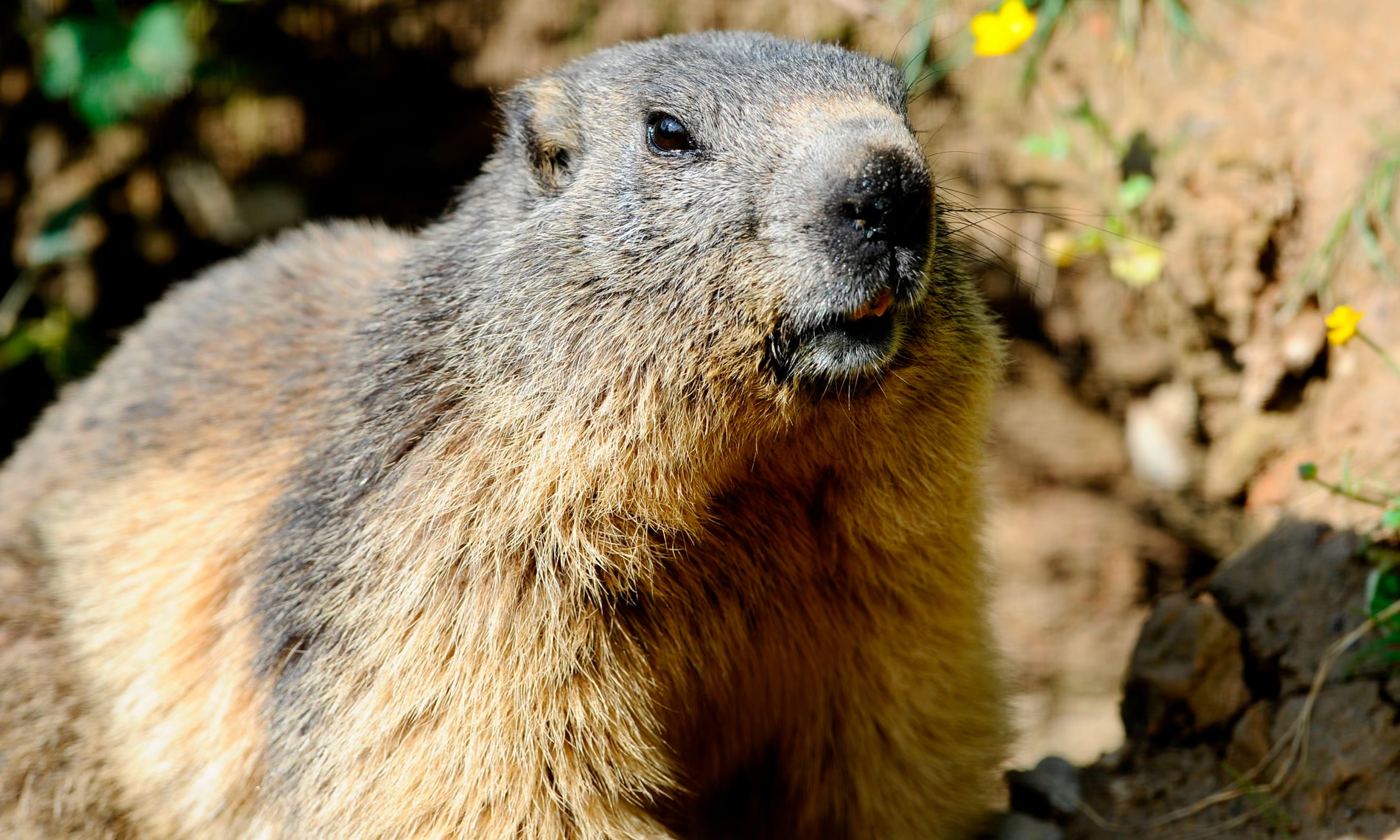
Animal rights campaigners in France are stepping up efforts to end the hunting of Alpine marmots, arguing that shooting the animals for recreation is increasingly difficult to justify as their populations face growing pressure from climate change.
The campaign comes ahead of the annual hunting season, which begins in September, only weeks before marmots retreat into their burrows for a winter hibernation lasting up to six months. Although Alpine marmots are not currently classified as an endangered species in France, campaigners and some scientists say changes in their social groups and reproduction patterns are raising concerns about their long-term future.
Pauline di Nicolantonio, president of the Association for Justice for Savoie Animals, or AJAS, has led protests against marmot hunting for the past two years. The organisation is preparing further demonstrations and petitions in an effort to persuade the French government to introduce a nationwide ban.

For di Nicolantonio, the debate is fundamentally about ethics rather than simply conservation.
“When you tell people that hunting marmots is allowed in France, they are shocked,” she said, pointing to the animal’s symbolic importance in Savoie and across the French Alps.
Marmots are among the best-known animals of the Alpine landscape. Their image appears on tourist material, souvenirs and resort branding, while generations of French children have encountered them through traditional stories, poems and popular culture. Their distinctive warning calls and habit of standing upright have helped give them a particularly familiar and appealing image.
That popularity, however, contrasts with their status as legally huntable wildlife.
There are 15 species of marmot worldwide, with populations spread across mountainous regions of Europe and North America. Alpine marmots are herbivores that generally live in family groups dominated by an adult pair. During late summer and early autumn, they build up large reserves of body fat before entering hibernation.
An adult can weigh as much as 8kg after its seasonal feeding period. The animals historically provided meat, fat and fur, but campaigners argue that the original reasons for hunting them have largely disappeared.
Around 1,000 marmots are shot in France each year, according to figures cited by campaigners. Hunting is also permitted in Switzerland and Austria and in some parts of the United States and Canada, while Italy and Germany have banned the practice.
In France, hunting is subject to local regulations governing both the number of animals that can be killed and the length of the hunting season. The restrictions vary between local authorities, with the open season lasting no more than about a month in some areas.
The National Hunters Federation rejects calls for a nationwide prohibition. It argues that marmot hunting is already strictly regulated and maintains that the species is not threatened.
Hunters also point to concerns among farmers, who say marmots can create holes in agricultural land and potentially damage machinery.
The federation says there is no conservation-based justification for banning the hunt, arguing that marmot numbers are increasing in some areas and that there are no current plans to give the species protected status.
But researchers studying marmots in the French Alps say the picture is more complicated.
Christophe Bonenfant, a scientist at France’s National Centre for Scientific Research at the University of Lyon, has studied marmots in the Grande Sassière alpine nature reserve. His research has focused not only on population numbers but also on the structure and stability of marmot social groups.
The Alps are among the European regions where the effects of climate change are particularly visible. Glaciers are shrinking, temperatures are changing and mountain environments are undergoing significant ecological disruption.
Bonenfant and colleague Rébecca Garcia have observed what they describe as increasing disruption within marmot communities. Their research suggests that climate-related pressures may be affecting the animals’ social stability, with family groups breaking apart more quickly and dominant animals being replaced more frequently.
The researchers have also observed fewer pups being produced by female marmots.
That combination could become significant over time. Marmots depend heavily on stable family groups, and changes in reproduction and social structure may make populations more vulnerable even if the species as a whole remains far from endangered.
Bonenfant said the animals were also ecologically important because they form part of the food chain for predators including eagles and foxes. Their extensive underground burrow systems also contribute to soil aeration.
For the scientist, however, the hunting debate cannot be reduced to whether marmots currently meet the definition of a threatened species.
He said the deeper question concerned the morality of recreational hunting and why people should be permitted to kill wild animals when there is no longer a compelling need to do so.
That argument has become central to AJAS’s campaign.
Di Nicolantonio argues that traditional hunting practices should not automatically receive protection simply because they have existed for generations. She maintains that marmots were once hunted for practical reasons, including food and materials, but that recreational shooting represents something fundamentally different.
She describes the practice as cruel and unnecessary, particularly at a time when climate change is already affecting Alpine ecosystems.
The debate also highlights a wider question facing France and other European countries over the relationship between cultural traditions and changing attitudes towards animal welfare.
Hunting remains an important part of rural life in France, and efforts to restrict established hunting practices can quickly become politically sensitive. Supporters often argue that regulated hunting is part of the country’s cultural heritage and can play a role in managing wildlife populations.
Opponents counter that traditions should evolve when social values and environmental conditions change.
The marmot has become an especially powerful symbol in that debate because of its unusually strong place in French popular culture. To many visitors, the animal represents the peaceful and picturesque character of the Alps. Campaigners argue that this makes the decision to shoot it for recreation even harder for the public to understand.
Scientists are also watching how climate change alters the species’ environment.
Marmots depend on seasonal cycles that determine when they feed, reproduce and enter hibernation. Changes in temperature, vegetation and snow conditions can therefore affect several stages of their lives.
Researchers caution that population assessments need to consider more than simply counting animals. A species can remain relatively numerous while experiencing changes in reproduction, social organisation and habitat conditions that may create longer-term risks.
For now, French authorities have not announced a nationwide ban. Local hunting rules remain in place, meaning marmots will continue to be legally hunted in permitted areas when the season opens.

AJAS hopes its campaign will change that position.
The organisation is planning protests and petitions designed to increase public pressure on policymakers. It wants France to follow Italy’s example, where marmot hunting was banned in 1992.
The campaign is likely to face opposition from hunters and others who view the existing regulatory system as sufficient. The disagreement is therefore unlikely to be resolved simply through population statistics.
At its heart, the controversy reflects competing ideas about wildlife: whether animals should be hunted when their numbers allow it, or whether recreational killing should be reconsidered regardless of conservation status.
As the September hunting season approaches, the Alpine marmot has consequently become the focus of a much broader French argument about tradition, animal welfare and the changing pressures facing wildlife in a warming climate.
For campaigners, the message is straightforward: an animal does not have to be endangered before society asks whether killing it for recreation remains acceptable.
Related News:
 Moldova River Crisis Exposes War’s Hidden Cost
 Chornobyl Still at Risk 40 Years After Disaster
 Pope Meets Families in Italy Toxic Waste Zone
 Olympus Awaits Unesco Heritage Recognition
 South Africa’s Garden Route Gem Faces Looming Water Crisis
 Hindu Man’s Stand Sparks Hope in India
 Teen Admits Filming Westfield Chair Prank
 Peretz Targets FA Cup Upset Amid War Concerns
 Canadian astronaut French words ease language row
 Black Forest Tragedy Remembered 90 Years On
 Athens Mayor Moves to Tackle Overtourism Crisis
 Exploring Italy’s Forgotten Dolomites Beyond Crowds
 RAF Typhoons scrambled amid Russian drone threat near Nato
 Ukraine Urges UK to Seize Russian Oil Tankers
 Escobar’s Hippos May Be Moved to India Zoo
 Older Than Dinosaurs: Secrets of Mayfly Dance Revealed
 Capitalism ‘Suicidal’, Warns Petro at Climate Summit
 Two Dead in Adelaide Airport Plane Crash Fire
 Coalition pushes fossil fuel phaseout plan
 China Fireworks Factory Blast Kills 21 in Hunan
 France Faces Record Presidential Crowded Race Amid Far-Right Surge
 Norway Doubles Down on Oil and Gas for Europe Energy Security
 Doomsday Clock Nears Midnight Amid Global Crises
 Tractor Breakdown Tests Lincolnshire Farmers
 Britons Build Emergency Supplies Amid Rising Fears
 Sycamore Gap Artwork Chosen After Public Vote
 Trump’s Revenge Drive Deepens GOP Divide
 Farage and Reform UK Reshape British Politics
 Starmer Leadership Under Pressure After Setbacks
 UN Issues Urgent Warning: Imminent Return of El Niño
 Germany Summons Chinese Envoy Over Russian Troop Training
 Le Pen’s Popularity Holds Despite Conviction
 Bryne Backs Haaland Before England World Cup Clash
 Dreyfus Statue Finally Gets Permanent Paris Home
 Teen Charged After Layla Jeffery Found Dead
 England and Norway Fans Turn Miami Into World Cup Carnival
 UK Schools Struggle as Classrooms Top 40C
 London Tube Heat Reaches Dangerous Levels
 Venezuela Quake Death Toll Surpasses 4,000
 Wildfires Force Mass Evacuations in France And Spain
 Three-Quarters of England’s Riverbanks Still Off Limits
 Powerful 7.7-Magnitude Earthquake Hits Eastern Indonesia
 Is America Ready for an AOC Presidential Run?
 London’s 2026 ‘Great Stink’ Raises Sewer Concerns
 Five Years of Taliban Rule Leave Afghanistan in Crisis
 Wildfires rage across Europe as hundreds arrested in France
 Burnham unveils £65m drought aid for farmers
 Gen Z turns to BirdTok for a gentler digital escape
 Heavy Casualties Feared as Flash Flood Sweeps Nepal-Tibet Border
 UK Must Act with Courage and Clarity on Israel-Palestine Conflict, Says Foreign Affairs Committee Report
 Yvette Cooper Signals Global Momentum Towards Gaza Peace Deal Amid Humanitarian Crisis
 Chaos at Ibrox as Martin’s Rangers Era Comes to an End
 Russia’s Latest Push to Win US Favors Shows Deep Desperation
 BBC to Apologise Over Edited Trump Speech Amid Backlash
 Greene Pushes Epstein Files Amid Trump Fallout
 Zelenskyy Signs Fighter Jet Deal Amid Russian Drone Attacks
 Shadow Fleet at Sea: Europe’s Battle Against Illicit Oil Shipping
 US Suspends Afghan Immigration After White House Shooting
 ‘Extinct’ Antelope Returns to Sahara, Bringing Hope
 Greenland Crisis Forces Europe to Draw a Line With Trump
 UK and US Drop in Global Corruption Index Rankings
 Canberra Poster Seizure Sparks Free Speech Row
 Jacinda Ardern Move Sparks Kiwi Reflection
 Middle East Airspace Crisis Strands Thousands
 Kelly Wilkinson Inquest Reveals Bail Failure
 Injured Mojtaba Khamenei Elevated as Iran Leader
 The Kill Line: A Shifting Vision of the American Dream
 Rising Costs Force Families to Rethink Days Out
 Air Canada CEO Faces Outcry Over Recent Language Misstep
 Extreme Weather: Europe Shivers as Cyclone Narelle Hits
 Asia Turns Back to Coal Amid Middle East Energy Crisis
 Relationship with Trump may be beyond repair, Starmer warned
 Trump’s Six-Week Iranian War: The High Cost of Ignorance
 Ben Roberts-Smith Denies War Crime Allegations in First Statement
 RFU Backs Borthwick Despite England’s Poor Six Nations
 Trump Rejects Tehran Peace Plan as Regional Truce Crumbles
 Trump Sends 5,000 More US Troops to Poland
 Maldives Cave Diving Tragedy Raises Safety Alarm
 Britain’s Crowning Butterfly Takes the Nation by Storm
 Grief and Devotion Amidst the Rubble of Nabatieh