Published: 17 September 2026. The English Chronicle Desk. The English Chronicle Online
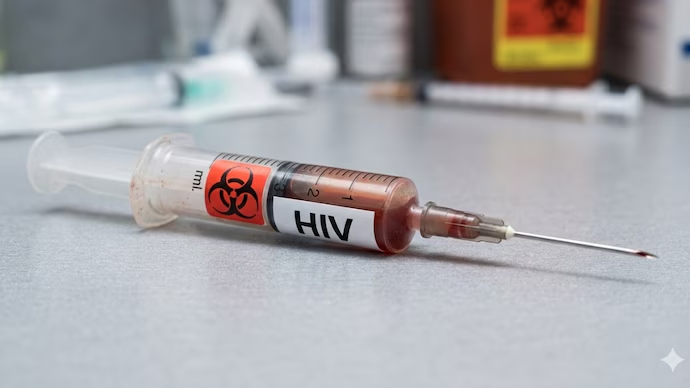
Fiji has declared a national HIV emergency after a sharp increase in infections raised concerns about the country’s ability to contain a rapidly changing epidemic. The Pacific island nation, home to fewer than one million people, is facing one of the fastest increases in new HIV infections recorded globally, according to UNAIDS.
The emergency declaration was announced by Fiji’s Minister for Health and Medical Services, Dr Ratu Atonio Lalabalavu, following a Cabinet decision earlier in September. The government says the scale of the increase now requires a coordinated national response involving health services, communities and other parts of government.
Fijian health authorities estimate that one in every 60 adults in the country is now living with HIV. The estimate represents a significant change from five years earlier, when the government estimated that roughly one in 167 adults was living with the virus. The health minister also said Fiji recorded 2,060 new HIV diagnoses in 2025 and that approximately one in 50 pregnant women is living with HIV.
UNAIDS has confirmed that Fiji is experiencing an unusually rapid increase in new HIV infections. According to the UN agency, new infections increased 12-fold between 2010 and 2025. An estimated 9,100 people were living with HIV in Fiji in 2025, but only 39% were aware of their status and just 22% were accessing antiretroviral treatment.

Those figures highlight one of the central challenges facing the country’s health system. The emergency is not simply about the number of new infections but also about identifying people who may not know they have HIV and connecting them with treatment and care.
UNAIDS says that among cases for which the mode of transmission is known, more than half were linked to sexual transmission, while more than 42% were associated with injecting drug use. The agency has therefore welcomed Fiji’s plans to strengthen prevention measures alongside testing and treatment services.
The increase has unfolded alongside growing concern about methamphetamine use and injecting drug use in Fiji. Health and public-health organisations have linked the country’s expanding drug problem with increased risks of HIV transmission, particularly where people who inject drugs lack access to sterile injecting equipment.
Fiji’s HIV response has already been under pressure for several years. UNAIDS reported in 2025 that the number of new HIV infections had risen sharply since 2014 and that the government had declared an HIV outbreak in January 2025. At that time, the country was also considering harm-reduction measures intended to reduce transmission among people who inject drugs.
The latest emergency declaration marks a further escalation in the government’s response. UNAIDS said Fiji has established a Cabinet subcommittee to address policy and implementation barriers and accelerate action. The government has also announced plans to expand HIV prevention, testing and treatment and improve access to medicines that can prevent HIV infection.
Among the measures receiving international attention is a planned needle and syringe programme. UNAIDS said legislative amendments are expected to be presented to Parliament to enable the programme. Such programmes are used internationally as a public-health measure to reduce transmission of blood-borne infections among people who inject drugs.
The government is also planning broader access to pre-exposure prophylaxis, commonly known as PrEP, including longer-acting prevention options. The strategy is intended to strengthen prevention alongside conventional testing, diagnosis and treatment.
UNAIDS Executive Director Winnie Byanyima welcomed the emergency declaration, saying the development demonstrated the need for health and community systems capable of responding quickly when HIV epidemics change. The agency has pledged continued support for Fiji as it expands its national response.
The UN agency has also stressed that the emergency declaration should be understood as a call for action rather than fear. HIV is not transmitted through ordinary everyday contact, and people receiving effective treatment who have an undetectable viral load do not sexually transmit the virus, according to UNAIDS.
That message is significant in Fiji, where health officials and community organisations have identified stigma and limited awareness as additional barriers to controlling the epidemic. People who do not know their HIV status cannot access treatment, while fear of discrimination can discourage individuals from seeking testing and medical support.
The treatment gap remains particularly important. UNAIDS estimates that fewer than one in four people living with HIV in Fiji were receiving antiretroviral treatment in 2025. Expanding treatment access is central not only to improving the health of people living with HIV but also to reducing onward transmission.
The country’s geographical position and connections across the Pacific add another dimension to the public-health challenge. Fiji is a regional hub for travel, education, employment and family links, meaning health authorities need to coordinate their response beyond individual communities.
UNAIDS has said that Pacific countries are at different stages of their HIV epidemics but that the region’s close connections make cooperation important. Shared expertise, surveillance, prevention programmes and community-led services can help governments identify emerging changes and respond earlier.
Community organisations are already playing an important role in Fiji’s response. UNAIDS has highlighted the work of community groups and peer outreach workers who help connect people with prevention, testing, treatment and care. These organisations can also help address misinformation and reduce stigma surrounding HIV.
The scale of the recent increase represents a major departure from Fiji’s earlier experience with the virus. For many years, HIV remained relatively limited in the country compared with some other regions. UNAIDS reported in 2025 that fewer than 500 people were estimated to be living with HIV in Fiji in 2014, compared with an estimated 5,900 people a decade later.
The latest estimate of 9,100 people living with HIV in 2025 indicates how quickly the situation has developed. At the same time, the difference between estimated infections and diagnosed cases underscores the importance of testing and surveillance.
The emergency declaration therefore comes with a broad set of challenges. Fiji must increase testing, improve access to treatment, strengthen prevention, address stigma and develop effective responses to the factors contributing to new infections. Health authorities must also ensure that pregnant women and children affected by the epidemic receive appropriate medical support.

For the government, the declaration creates an opportunity to bring together health services, community organisations and international partners under a more coordinated strategy. UNAIDS has said it will continue supporting Fiji with policy advice and connections to technical and development partners.
The international response is also likely to remain focused on whether the new measures translate into wider access to testing and treatment. Fiji’s experience demonstrates how quickly an HIV epidemic can change when prevention and health-system gaps overlap with other social and public-health pressures.
For now, officials are treating the situation as a national health priority rather than an isolated outbreak. The emergency declaration is intended to accelerate action, while the government’s planned expansion of prevention, testing and treatment seeks to slow new infections and reach people who remain unaware of their HIV status.
UNAIDS has said Fiji still has an opportunity to change the course of the epidemic. The immediate challenge will be turning that opportunity into sustained action across the country’s health system and communities, while ensuring that people living with HIV can obtain testing, treatment and support without discrimination.
Related News:
 Chornobyl Still at Risk 40 Years After Disaster
 New Bacteria Discovery Offers Hope Against Noma
 Florida Surgeon ‘Devastated’ Over Fatal Surgery Error
 Barrister Criticises Trial After Suicide Case Verdict
 Maldives Cave Diving Tragedy Raises Safety Alarm
 Weight-Loss Drugs Offer Food Savings Mainly to High Earners
 Five Years of Taliban Rule Leave Afghanistan in Crisis
 Ghent Professors Questioned Cofnas Appointment
 Nepal Flood Survivors Face Unimaginable Loss
 Nepal Tunnel Rescue Offers Hope Amid Flood Devastation
 Election Candidate Abuse Raises Alarm in England
 DRC Ebola Outbreak Peaks as New Infections Slow
 NBC Helicopter Crash in Los Angeles Kills Three
 UK Launches World-First Gonorrhoea Vaccine Amid Record Infection Surge
 AI Tools Used by English Councils Found to Downplay Women’s Health Issues, Raising Concerns Over Gender Bias in Care
 Shocking Rise in Children’s Exposure to Violent Online Pornography Raises Alarm
 British Pilot Joins Crew Training for Year-Long Mars Simulation Mission
 Omeprazole Alert: NHS Issues Guidance on Safe Use for Heartburn and Indigestion
 Eligibility Confusion Over COVID Vaccination Leaves Pharmacies Struggling Across the UK
 Majority of UK Men Would Opt for Prostate Cancer Screening, Survey Finds
 Scientists Announce First Potentially Accurate Blood Test for Chronic Fatigue Syndrome
 Survey Shows Most GPs Rushing Appointments
 Genetic Tests May Predict Return of Blood Cancer
 UK Woman Becomes Longest Survivor of Heart-Lung Transplant
 Thousands in the UK sue Johnson & Johnson over alleged talcum powder, linked to cancer
 ‘Game-Changing’ HIV Prevention Jab Set for NHS Approval
 Patients to Test Health at Home to Ease NHS Winter Pressure
 Working-Class Men with Prostate Cancer Left Behind by NHS
 New AI tool could cut wasted efforts in organ transplants
 From Baby Teeth to Bioengineering: The Future of Self-Healing Teeth
 UK launches major AI drive to fight deadly superbugs
 Healthy Habits in Your 30s That Boost Life in Your 70s
 Coffins Now Too Large to Cremate Amid Rising Obesity Crisis
 NHS paediatric leave parents waiting months for answers
 Google Removes Some AI Health Summaries Over Safety Concerns
 AI Transforms Lung Cancer Detection in NHS Trial
 Autistic Girls Often Missed in Childhood Diagnoses, Study Finds
 Most Statin Side-Effects Are Not Caused by Drugs, Study Confirms
 Ayahuasca Psychedelic DMT Shows Potential as Depression Therapy
 Zorevunersen Breakthrough for Dravet Syndrome
 Cancer Death Rate in Britain Falls by Nearly a Third
 Taking Multivitamins Daily Could Slightly Slow Ageing, Study Finds
 Social Media Giant Trial Reaches Final Jury Decision
 ‘Drinking from a Fetid Pond’: Superbug Genes in Lough Neagh
 Sperm Struggles in the Final Frontier of Space
 Robots Outpace Humans in Beijing Half-Marathon
 Gene Therapy Wins Major Prize for Restoring Vision
 Older Than Dinosaurs: Secrets of Mayfly Dance Revealed
 WHO approves first malaria drug for babies
 China Fireworks Factory Blast Kills 21 in Hunan
 Immigration Judges Fear Pressure in Trump Era
 Father’s diaries reveal doubts over Hawking
 Pope Meets Families in Italy Toxic Waste Zone
 Thailand Tightens Visa Rules to Curb Tourist Misbehavior
 Deadly H5 Bird Flu Reaches Australia’s East Coast
 UK Schools Struggle as Classrooms Top 40C
 London Tube Heat Reaches Dangerous Levels
 Westminster Council Threatens Charing Cross Soup Kitchen
 BBC Warned About Missing Clothes of Murder Victim
 Israeli Strike in Southern Lebanon Kills Seven
 Gen Z turns to BirdTok for a gentler digital escape
 Vietnam Youth Rally Behind Hanoi ‘Justice Tree’
 Australia Races to Find Tourists Missing in Nepal
 RAF Barnham Protests Fuel Tensions in Norfolk Town
 British Museum Faces Questions Over Peter Thiel’s Private Bayeux Viewing
 # How to Beat the Back-to-Work Blues After Summer
 Internal Exclusions Surge in England’s Schools
 Survivor Sues Musk’s xAI Over AI Abuse Images
 Typhoon Saudel Triggers Mass Evacuations in China
 Councils spend £125m on illegal children’s care
 New Mexico Takes Facebook to Trial Over Data Scandal
 Anthropic Blocks AI Misuse Linked to Weapons Threats
 Man Arrested in Mississippi Woman’s Death
 Australia’s Indigenous Population Was Far Larger Before Colonisation
 UK Heatwaves Set to Worsen Pothole Damage, RAC Warns
 Horse Hill Oil Site Sold as New Drilling Bid Emerges
 Texas Charges Seven Noncitizens in Voting Crackdown
 Amnesty Finds Coordinated Abuses in Iran Protest Crackdown
 Turkey LGBTQ Crackdown Expands With New Arrests