Published: 07 September 2026. The English Chronicle Desk. The English Chronicle Online.
Typhoon Saudel has caused widespread flooding, landslides and infrastructure damage across parts of south-east China, forcing hundreds of thousands of residents to evacuate as torrential rainfall overwhelmed rivers, roads and vulnerable communities. The storm has also been accompanied by severe weather elsewhere, with powerful thunderstorms affecting north-western South Africa and a prolonged spell of oppressive heat gripping parts of the central and southern United States.
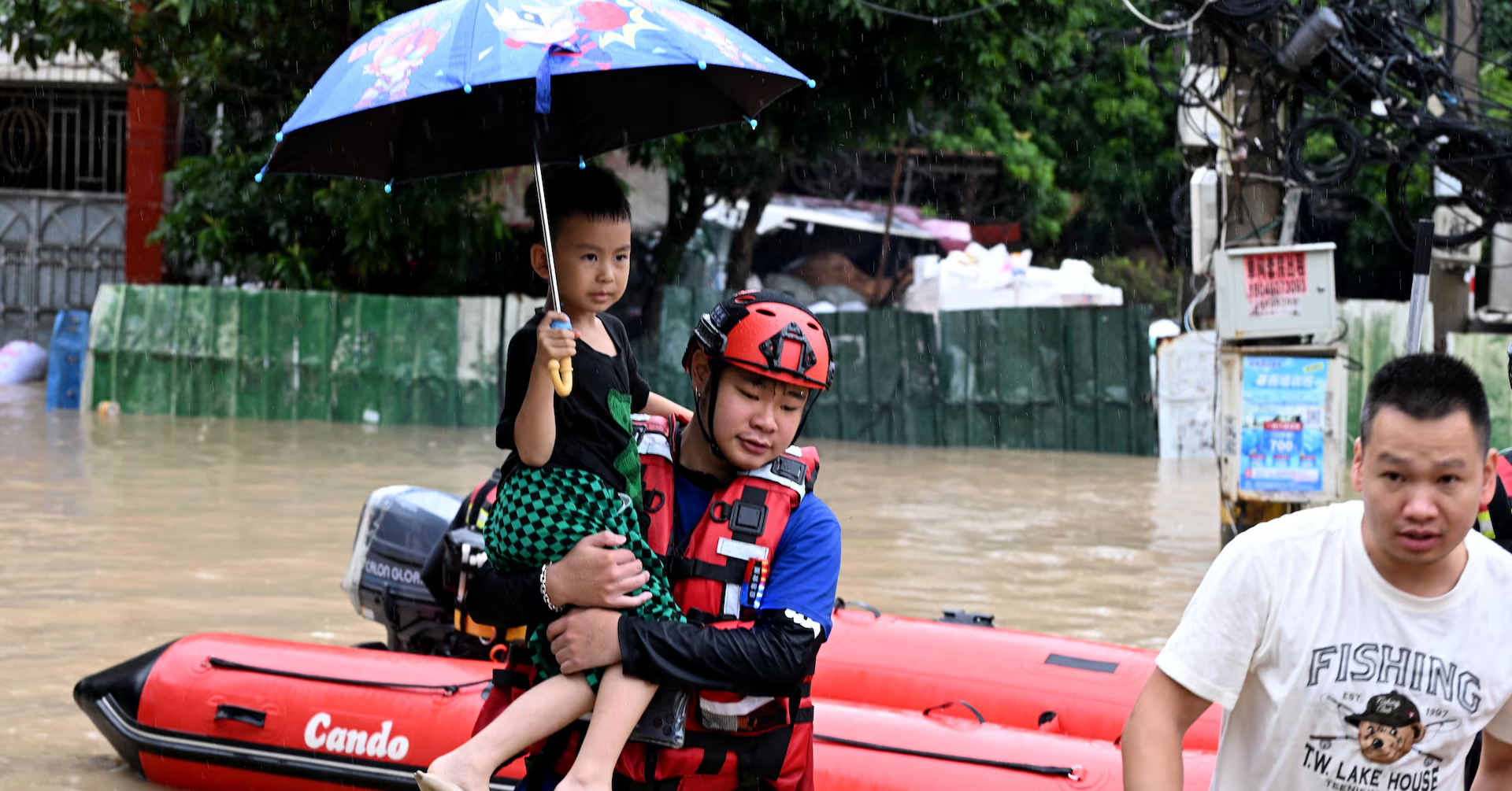
Saudel brought several days of exceptionally heavy rain to Zhejiang, Jiangxi, Fujian and Guangdong provinces last week, creating dangerous conditions across a broad area. Fujian was among the worst-hit regions, where authorities moved large numbers of people from flood-prone areas as rivers rose and the risk of further flooding increased.
The scale of the rainfall was particularly striking in Putian, a city in Fujian province. Weather monitoring recorded 416.5mm of rain within a 24-hour period between Thursday and Friday. Some surrounding villages received more than 500mm during the same period, placing enormous pressure on drainage systems, rivers and flood-control infrastructure.
Authorities in Fujian estimated that almost 600,000 people were evacuated from areas considered vulnerable to flooding and other storm-related hazards. The mass movement of residents reflected the seriousness of the situation, with emergency agencies working to reduce the risk of casualties in communities located near rivers, low-lying areas and unstable slopes.

Jiangxi province was also significantly affected. Around 128,000 people across 53 counties were reported to have been affected by the storm, while emergency evacuations were carried out for approximately 9,000 residents. Heavy rain increased the threat of flash flooding and landslides, particularly in rural and mountainous areas where access can become difficult during extreme weather.
The storm caused major disruption to daily life, with flooding and landslips damaging roads and other infrastructure. In Zhejiang, more than 2,500 teachers and students became trapped inside a school compound in the city of Wenzhou after intense rainfall caused flash flooding in low-lying areas. The incident demonstrated how quickly extreme rainfall can overwhelm urban drainage systems and leave large groups of people isolated.
Putian experienced another major emergency when a river embankment collapsed on Thursday. The failure of the embankment triggered destructive flooding and reportedly resulted in at least 1,260 people needing rescue. Around 100 homes were flattened as floodwaters spread through the affected area, leaving residents dependent on emergency responders for assistance.
The danger continued even after the heaviest rainfall had passed. On Saturday, a landslide struck a village in Suichuan county in Jiangxi province, killing three people. Nine others were reported missing following the landslip, underlining the continuing threat posed by saturated ground in mountainous areas.
When soil becomes heavily waterlogged after prolonged rainfall, slopes can become unstable and collapse with little warning. Such hazards can remain active after a storm has moved away, particularly in areas where hillsides have been weakened by intense precipitation.
Saudel is the seventh typhoon to affect China this year, adding to a season of repeated extreme weather events. The storm arrived only a short time after Typhoon Narra brought heavy rain to Guangdong, Hainan and Guangxi late last month. The successive systems have placed additional pressure on emergency services and communities that have already faced severe rainfall and flooding.
The latest disaster has also renewed attention on the vulnerability of densely populated areas in south-east China to intense tropical weather. The region contains major cities, extensive agricultural areas and large transport networks, meaning that extreme rainfall can quickly generate consequences extending far beyond the immediate storm zone.
While China dealt with torrential rain and flooding, South Africa faced a different form of severe weather. The South African Weather Service issued several thunderstorm warnings late last week covering a large part of the country’s northern and western provinces.
The warnings included risks associated with disruptive rainfall, damaging winds, excessive lightning and hail. Some parts of the Northern Cape and North West provinces were expected to receive rainfall totals of between 75mm and 100mm over the weekend, creating the possibility of localised flooding and damage.
Johannesburg also experienced the effects of strong winds. Eight families were evacuated from an apartment building after powerful gusts tore away a substantial section of its roof. The incident highlighted the risks posed by severe thunderstorms in urban environments, where damaged buildings can quickly become unsafe for residents.
Thunderstorms can produce multiple hazards simultaneously. Heavy rainfall can overwhelm drainage systems, strong winds can damage roofs and structures, lightning can create serious safety risks, while hail can cause damage to vehicles, homes and agricultural crops. The combination can make severe-weather events particularly difficult for emergency authorities and residents to manage.
Meanwhile, large parts of the central and southern United States have been dealing with a markedly different weather threat: prolonged and oppressive heat.
States across the central-southern Plains and the Mississippi Valley experienced very high temperatures over the weekend, with maximum temperatures reaching the high 30s Celsius, equivalent to the upper 90s Fahrenheit. High humidity made conditions considerably more dangerous because the human body becomes less effective at cooling itself when the atmosphere contains large amounts of moisture.
As a result, heat indices in parts of the region approached approximately 40C to 43C, or around 105F to 110F. These readings indicate how hot conditions can feel to the human body when both temperature and humidity are taken into account.
The extreme heat is expected to persist across parts of the Midwest and southern United States during the week ahead. Maximum temperatures are forecast to remain in the high 30s Celsius in affected areas, meaning residents may face several consecutive days of dangerous heat rather than a short-lived temperature spike.
Persistent heat can place significant stress on the human body, particularly among older people, young children and those working or exercising outdoors. It can also increase pressure on electricity systems as demand for air conditioning rises, while dry conditions in some areas can contribute to wildfire risks.
The contrasting weather emergencies across China, South Africa and the United States demonstrate the wide range of hazards that can develop simultaneously in different parts of the world. In China, the primary threats have come from torrential rainfall, flooding and landslides. South Africa has been dealing with thunderstorms, destructive winds, lightning and hail, while the United States is confronting prolonged extreme heat and dangerous humidity.

For communities affected by Saudel, however, the immediate priority remains recovery. Emergency teams have been carrying out rescues and evacuations while authorities assess damage to homes, roads, river embankments and other infrastructure. The loss of lives and continuing reports of missing people have added urgency to search and rescue efforts.
The experience also highlights the importance of early warning systems and rapid evacuation planning in regions exposed to tropical storms. With rainfall reaching extraordinary levels within only a day, even well-prepared communities can find themselves overwhelmed when rivers rise rapidly and protective infrastructure fails.
As the typhoon season continues, authorities across vulnerable parts of China are likely to remain focused on monitoring rainfall, river levels and slope stability. The repeated arrival of tropical systems has made preparedness increasingly important, particularly for communities living in floodplains and mountainous terrain.
At the same time, severe thunderstorms in South Africa and continuing heat across the United States underline the broader challenge faced by communities around the world as extreme weather produces different threats across different regions. From flooding and landslides to damaging storms and dangerous heat, the latest events show how rapidly weather conditions can shift from a routine forecast into a major public safety emergency.
Related News:
 Evacuations Ordered as California Wildfires Spread Fast
 Cyclone Vaianu Forces Mass Evacuations in New Zealand
 Australia Races to Find Tourists Missing in Nepal
 Nepal Flood Death Toll Tops 300 as Second Flood Feared
 Nepal Rescuers Race to Save Hundreds Trapped Underground
 Nepal Flood Survivors Face Unimaginable Loss
 Nepal Tunnel Rescue Offers Hope Amid Flood Devastation
 South Africa’s Garden Route Gem Faces Looming Water Crisis
 Storm Dave Disrupts Travel but Conditions Set to Ease
 Queensland Braces for Potential Second Severe Cyclone Hit
 Melania Trump Epstein remarks spark survivor backlash
 Chornobyl Still at Risk 40 Years After Disaster
 US Labor Department in turmoil after secretary resigns
 Trump DOJ Targets James Comey Again
 Judge Blocks Trump Bid for Arizona Voter Data
 Escobar’s Hippos May Be Moved to India Zoo
 Older Than Dinosaurs: Secrets of Mayfly Dance Revealed
 US Court Weighs Fate of TPS for Migrants
 China Fireworks Factory Blast Kills 21 in Hunan
 Florida Surgeon ‘Devastated’ Over Fatal Surgery Error
 US Awaits Iran Reply on New Ceasefire Proposal
 Immigration Judges Fear Pressure in Trump Era
 Tractor Breakdown Tests Lincolnshire Farmers
 Britons Build Emergency Supplies Amid Rising Fears
 Hormuz Talks Near Critical Stage
 Sycamore Gap Artwork Chosen After Public Vote
 Trump’s Revenge Drive Deepens GOP Divide
 Pope Meets Families in Italy Toxic Waste Zone
 Hope for mountain bongos returns to Kenya
 Thailand Tightens Visa Rules to Curb Tourist Misbehavior
 Trump’s Mount Rushmore Speech: A Divisive Anniversary
 Sydney Records Hottest June Since 1859 as Expert Warns New High a ‘Signature’ of Global Warming
 UK Schools Struggle as Classrooms Top 40C
 London Tube Heat Reaches Dangerous Levels
 Venezuela Quake Death Toll Surpasses 4,000
 Olympus Awaits Unesco Heritage Recognition
 Houthis Strike Saudi Arabia as Middle East Tensions Rise
 Three-Quarters of England’s Riverbanks Still Off Limits
 Trump Orders Signs Criticising Smithsonian Museum
 Powerful 7.7-Magnitude Earthquake Hits Eastern Indonesia
 Is America Ready for an AOC Presidential Run?
 London’s 2026 ‘Great Stink’ Raises Sewer Concerns
 Five Years of Taliban Rule Leave Afghanistan in Crisis
 Wildfires rage across Europe as hundreds arrested in France
 Burnham unveils £65m drought aid for farmers
 Gen Z turns to BirdTok for a gentler digital escape
 Nearly 90,000 ordered to flee Reno wildfire
 Heavy Casualties Feared as Flash Flood Sweeps Nepal-Tibet Border
 Drought Raises Flood Risk as UK Autumn Approaches
 Nepal-Tibet Flood Death Toll Rises as 2,478 Remain Missing
 Nepal Flood Death Toll Tops 1,000 as Tunnel Search Intensifies
 Pacific Heatwave and El Niño Threaten US Weather
 UN Warns Record El Niño Could Supercharge Global Heat
 UK Subsidence Claims Surge After Record-Breaking Summer
 Armed Suspect Attacks Ohio Governor Candidate
 Federal Immigration Shift: Officers Leave Louisiana for Minneapolis
 Trump press secretary attacks reporter over ICE question
 Trump Fed bid heads to Supreme Court
 Partial US Government Shutdown Hits Homeland Security Funding
 Sinema payment row deepens after $9,000 transfer claim
 Nurses’ families fear breakup under UK immigration crackdown
 Ocean Warming Drives Massive Marine Life Loss, Study Warns
 New Poll Reveals Reform UK Stance on British Citizenship
 Adelaide University Faces Backlash Over Event Cancellation
 Rising Costs Force Families to Rethink Days Out
 M&S Demands Urgent Action on Rising Violent Retail Crime
 Trump Signals Hope for New Iran Talks as Ceasefire Fades
 Louisiana Tragedy: Eight Children Die in Mass Shooting
 UK Stands Firm on Falklands Amid US Rift
 Investigation Into Anti-Trump Motives After Gala Shooting
 Trump orders US troop pullout from Germany
 Fear and Betrayal: The Chilling Case of Kouri Richins
 Maldives Cave Diving Tragedy Raises Safety Alarm
 Trump’s Grip on the GOP Tested in Texas Senate Battle
 AOC Backs El-Sayed in Tight Michigan Senate Primary
 British Teens in EU Face Soaring UK University Fees
 England and Norway Fans Turn Miami Into World Cup Carnival
 Queue row erupts on Wales’ highest mountain
 Families Fly to Nepal in Search of 33 Missing Britons
 British Museum Faces Questions Over Peter Thiel’s Private Bayeux Viewing