Published: 05 September 2026. The English Chronicle Desk. The English Chronicle Online.
The rescue of two hydropower workers who survived for nine days inside a flooded tunnel in Nepal has been described by an international tunnelling expert as a remarkable victory for human resilience, offering renewed hope to families still waiting for news of hundreds of people missing after catastrophic floods along the Nepal-Tibet border.
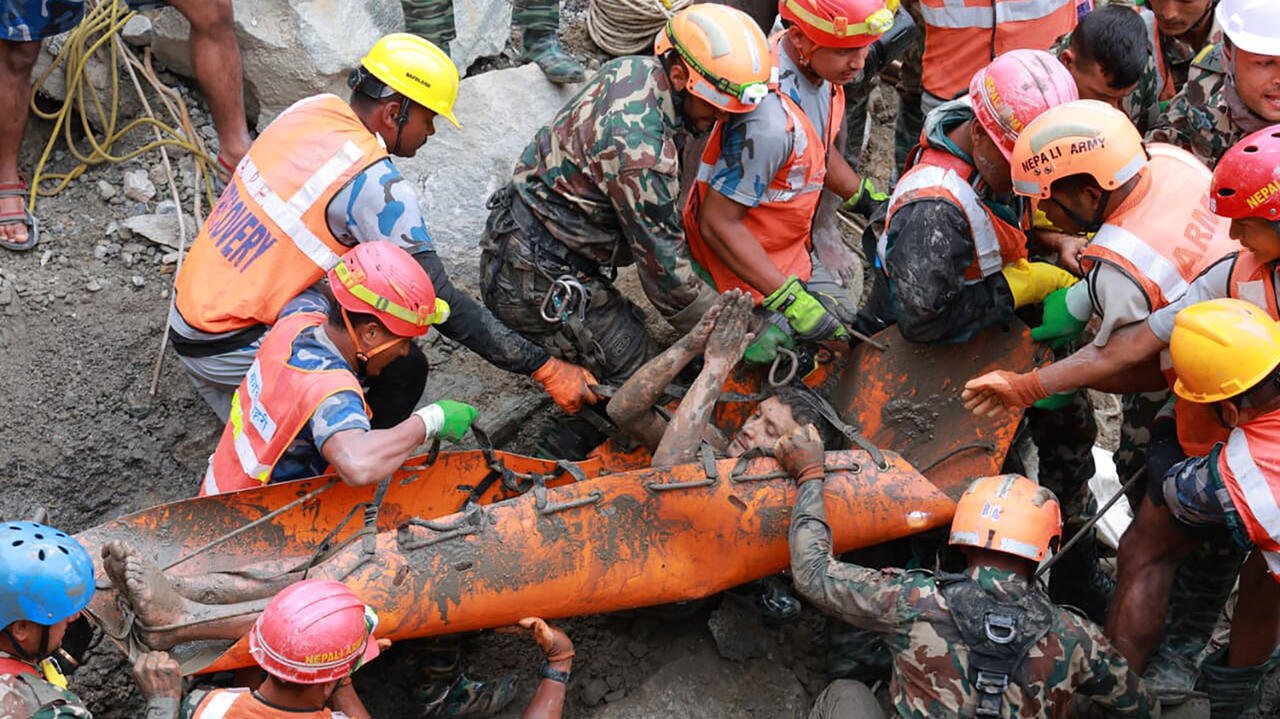
Sanjay Shah and Kabir Maharajan were pulled alive from the Trishuli 3A hydropower project on Friday, more than a week after a devastating disaster sent torrents of water, mud and debris through communities and infrastructure along the border between Nepal and China. Their survival has provided a powerful boost to exhausted rescue teams working in extremely dangerous conditions.
Australian engineer and geologist Arnold Dix, who was invited by Nepali authorities to advise on the rescue operation, said the discovery of the two men alive had demonstrated that people could survive for unexpectedly long periods in the aftermath of a disaster.
“We’ve found two people alive, so that gives us hope,” Dix said, describing the successful operation as a profound reminder of what people can achieve when they work together to save lives.

After more than a week of exhausting searches, the rescue has also given teams a clearer understanding of what may be possible at other damaged hydropower facilities. Dix said the discovery provided proof that people trapped underground could remain alive for much longer than rescuers might initially expect.
The breakthrough came after rescuers faced enormous difficulties simply locating the Trishuli 3A facility and determining which tunnel could provide the safest route to the power station. The disaster had damaged or destroyed infrastructure across a wide area, leaving rescue teams dealing with unstable ground, blocked routes and flooded underground passages.
The catastrophe followed a glacial collapse that unleashed a massive torrent of water, mud and debris. Buildings, roads and bridges were swept away, while numerous hydropower projects along the region’s rivers suffered severe damage.
Dix said the scale of the disaster made it fundamentally different from other emergencies he had previously encountered. In most disasters, he explained, specialists concentrate on a single major incident. In Nepal, however, dozens of hydropower facilities were affected at the same time, effectively creating multiple emergencies across a vast and difficult landscape.
At Trishuli 3A, rescuers encountered huge rocks blocking their progress, with some reportedly comparable in size to vehicles. The team was forced to use explosives to clear sections of the route, despite the risks involved.
Explosives are generally considered a last resort in an underground rescue because vibrations and falling debris can endanger people trapped on the other side of a blockage. In this case, however, rescuers had to balance those dangers against the possibility that time was running out for anyone still alive inside.
When the rescue team eventually reached the tunnel, they discovered that it was heavily flooded. Rather than being able to move directly into the passage, rescuers had to create an emergency trench in an effort to drain water and make access possible.
There were serious fears that the trapped workers might already have drowned. But on Friday morning, approximately 50 metres into the tunnel, rescuers reported hearing a faint voice.
The team called out to those inside and urged them not to panic, telling them that rescuers were coming. A voice from within the tunnel reportedly responded with a simple “OK”.
That brief exchange transformed the operation. After days of uncertainty and increasingly dangerous conditions, rescuers suddenly knew that at least some people had survived.
For Dix, the moment carried a significance that went beyond the technical challenges of tunnelling. Having previously worked at major disaster sites, including Ground Zero following the September 11 attacks in the United States, he said the rescue demonstrated a fundamental human instinct to help others in danger.
He also played a role in the successful rescue of 41 workers trapped during the 2023 Silkyara tunnel collapse in Uttarakhand, India. All of those workers were eventually brought out alive after a complex and closely watched rescue operation.
The Nepal disaster, however, has presented an unprecedented challenge because of its geographical scale and the number of locations affected simultaneously.
Despite the successful rescue of Shah and Maharajan, the operation at Trishuli 3A remains far from over. Around 40 other workers are believed to remain trapped inside the facility, while rescuers continue to face potentially fatal risks.
Water remains one of the biggest threats. If rescuers break through rock while water is trapped on the other side, the resulting surge could overwhelm the team. Because sections of the rescue operation are now taking place below the level of the surrounding flood plain, there is also concern that water could enter from behind and trap the rescuers themselves.
Dix stressed that the successful rescue should not lead teams to underestimate the dangers still facing them. The two men being brought out alive was an extraordinary achievement, but the remaining operation requires extreme caution.
Rescuers have been working towards what engineers describe as a “Goldilocks zone” near the upper section of the 11-storey Trishuli 3A power station. The area is considered a potentially promising location from which teams could reach additional survivors.
The wider humanitarian situation remains devastating. More than 270 people have already been rescued from various hydropower projects, but hundreds of workers remain unaccounted for.
Nepal’s disaster management authorities reported 1,294 confirmed deaths as of 4 September, while 5,053 people remained missing. The missing included 583 foreign nationals, underlining the international dimension of the catastrophe.
The disaster has also affected neighbouring China. Chinese authorities reported 31 confirmed deaths and 531 people missing as of 5 September, including 261 foreign citizens.
The enormous death toll and continuing uncertainty have created an immense humanitarian challenge. Families remain desperate for information about relatives who disappeared when floodwaters swept through workplaces, settlements and transport routes.
International assistance has been expanding as Nepal continues its search-and-rescue and relief operations. Australia has deployed dozens of government officials, disaster-response specialists and humanitarian personnel to support the emergency response.
By the latest update, 38 Australian personnel were on the ground in Nepal. A 15-member Australian Disaster Assistance Response Team specialising in drone operations arrived in Kathmandu late on Friday, while seven disaster victim identification specialists from the Australian federal police were scheduled to travel to Nepal on Saturday.
The deployment reflects the growing need for specialised technology and expertise as rescue teams search damaged infrastructure and difficult terrain. Drones can provide aerial information in areas that are dangerous or inaccessible to ground teams, while disaster victim identification specialists can assist authorities as the recovery phase develops.
Yet amid the scale of the destruction, the survival of two workers has become a rare moment of hope.

For the families of those still missing, the rescue is more than a technical success. It offers the possibility that others may also have survived in isolated pockets, tunnels or damaged structures where search teams have not yet reached them.
For rescuers, the discovery has also changed the emotional atmosphere of the operation. Days of exhaustion and uncertainty have been replaced, at least temporarily, by renewed determination.
Dix said the rescue represented the kind of collective effort that demonstrates the best qualities of humanity. The men were not simply recovered from a dangerous tunnel; they were brought back to their families after surviving conditions that could easily have proved fatal.
The search ahead remains extraordinarily dangerous, and rescuers know that every additional attempt carries serious risks. But the voices heard from inside the Trishuli 3A tunnel have provided something the teams urgently needed: evidence that hope can survive even in the darkest conditions.
As Nepal continues to confront one of its most devastating disasters, the successful rescue of the two workers stands as a powerful reminder that persistence, expertise and cooperation can overcome seemingly impossible circumstances. Their survival has not ended the tragedy, but it has given rescuers and families a reason to keep searching.
Related News:
 Nepal Flood Survivors Face Unimaginable Loss
 Nepal-Tibet Flood Death Toll Rises as 2,478 Remain Missing
 Chornobyl Still at Risk 40 Years After Disaster
 Venezuela Quake Death Toll Surpasses 4,000
 Powerful 7.7-Magnitude Earthquake Hits Eastern Indonesia
 Five Years of Taliban Rule Leave Afghanistan in Crisis
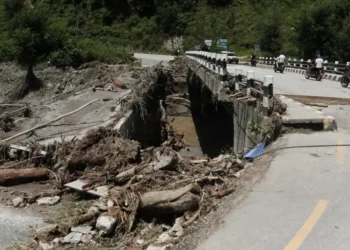 Nepal Flood Death Toll Tops 300 as Second Flood Feared
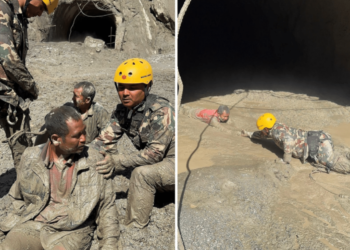 Nepal Rescuers Race to Save Hundreds Trapped Underground
 Escobar’s Hippos May Be Moved to India Zoo
 China Fireworks Factory Blast Kills 21 in Hunan
 Maldives Cave Diving Tragedy Raises Safety Alarm
 Pope Meets Families in Italy Toxic Waste Zone
 Olympus Awaits Unesco Heritage Recognition
 Wildfires Force Mass Evacuations in France And Spain
 Israeli Strike in Southern Lebanon Kills Seven
 Is America Ready for an AOC Presidential Run?
 Wildfires rage across Europe as hundreds arrested in France
 Nepal-Tibet Flood Leaves 270 Dead and 1,400 Missing
 Australia Races to Find Tourists Missing in Nepal
 Daughter Finds Bones in Parents’ Burned-Out Car
 Hindu Man’s Stand Sparks Hope in India
 North Korea Fires Missiles Amid US-South Korea Drills
 Peretz Targets FA Cup Upset Amid War Concerns
 Moldova River Crisis Exposes War’s Hidden Cost
 Iran Crisis Tests Trump’s Global Leadership
 Ben Roberts-Smith Denies War Crime Allegations in First Statement
 Black Forest Tragedy Remembered 90 Years On
 Two Children Die in Wolverhampton House Fire Tragedy
 Exploring Italy’s Forgotten Dolomites Beyond Crowds
 Southeast Asia Turns to Russia Amid Energy Crisis
 Ukraine Urges UK to Seize Russian Oil Tankers
 Older Than Dinosaurs: Secrets of Mayfly Dance Revealed
 Capitalism ‘Suicidal’, Warns Petro at Climate Summit
 Two Dead in Adelaide Airport Plane Crash Fire
 Coalition pushes fossil fuel phaseout plan
 Cartel crackdown raises fears of fresh violence
 US states redraw maps after voting rights ruling
 Australia pushes Pacific security pact amid China tension
 US ‘Narco Boat’ Strikes Draw Global Outcry
 Florida Surgeon ‘Devastated’ Over Fatal Surgery Error
 France Faces Record Presidential Crowded Race Amid Far-Right Surge
 Norway Doubles Down on Oil and Gas for Europe Energy Security
 Barrister Criticises Trial After Suicide Case Verdict
 US Awaits Iran Reply on New Ceasefire Proposal
 Immigration Judges Fear Pressure in Trump Era
 Tractor Breakdown Tests Lincolnshire Farmers
 Britons Build Emergency Supplies Amid Rising Fears
 Hormuz Talks Near Critical Stage
 Sycamore Gap Artwork Chosen After Public Vote
 Discontent grows around Putin amid war strain
 Farage and Reform UK Reshape British Politics
 Starmer Leadership Under Pressure After Setbacks
 Thailand Tightens Visa Rules to Curb Tourist Misbehavior
 Germany Summons Chinese Envoy Over Russian Troop Training
 Millions Gather for Khamenei’s Six-Day State Funeral
 New Footage Revives Peter Falconio Mystery
 Le Pen’s Popularity Holds Despite Conviction
 Bryne Backs Haaland Before England World Cup Clash
 England and Norway Fans Turn Miami Into World Cup Carnival
 UK Schools Struggle as Classrooms Top 40C
 London Tube Heat Reaches Dangerous Levels
 Houthis Strike Saudi Arabia as Middle East Tensions Rise
 Three-Quarters of England’s Riverbanks Still Off Limits
 Westminster Council Threatens Charing Cross Soup Kitchen
 BBC Warned About Missing Clothes of Murder Victim
 Cambridge Professor Jason Arday Found Dead at Home
 Burnham unveils £65m drought aid for farmers
 Gen Z turns to BirdTok for a gentler digital escape
 Vietnam Youth Rally Behind Hanoi ‘Justice Tree’
 Heavy Casualties Feared as Flash Flood Sweeps Nepal-Tibet Border
 Ghent Professors Questioned Cofnas Appointment
 France Eases Cheese Rules as Drought Hits Farms
 RAF Barnham Protests Fuel Tensions in Norfolk Town
 British Museum Faces Questions Over Peter Thiel’s Private Bayeux Viewing
 Ukraine Villagers Demand Answers After Deadly Arms Depot Strike
 Nepal Flood Death Toll Tops 1,000 as Tunnel Search Intensifies
 Internal Exclusions Surge in England’s Schools
 Green Leader Targets Starmer’s Former Seat
 Trump Calls Iran War ‘Small Potatoes’ Despite US Deaths
 UK Subsidence Claims Surge After Record-Breaking Summer