**Published: 01 September 2026. The English Chronicle Desk. The English Chronicle Online**
Nepal’s death toll from devastating floods and landslides along the border with Tibet has crossed 1,000, as rescuers race against time to locate hundreds of workers believed to be trapped inside mud-filled tunnels at hydropower projects along the Trishuli River.
The disaster has left more than 3,900 people missing, according to Nepal’s disaster authorities. More than 600 of those missing are believed to have been working at hydropower sites when the floods struck, raising fears that the final death toll could rise substantially.
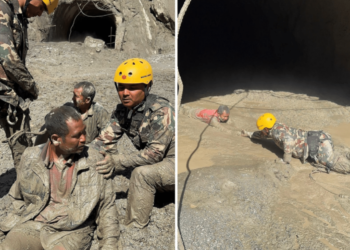
Rescue teams have been pumping air into underground tunnels in the hope that workers may still be alive. One team managed to enter a tunnel connected to a hydropower facility on Monday but withdrew after finding nobody inside.
For families waiting outside the damaged sites, every passing hour has become increasingly painful.
“I wish we could find him. I wish he would come home,” Anushila Bhandari, whose 33-year-old husband Aurus Bhandari was working as an engineer at one of the project sites, told BBC Nepali.
The Nepalese government says the rescue operation has been intensified, with Prime Minister Balendra Shah describing the disaster as an event far beyond an ordinary flood.
At least 279 people have been rescued from the affected hydropower sites, Shah said, while an international operation involving Nepalese and Chinese military personnel continues underground and across the devastated river valleys.
Experts from India, South Korea and Australia are also assisting the rescue effort.
## Race Against Time Underground
The hydropower tunnels have become the centre of the rescue operation because of the number of workers believed to have been underground when the floodwaters arrived.
Nepal depends heavily on hydropower and has invested substantially in projects along its mountainous rivers. At least 11 hydropower projects, either operational or under construction, were damaged by the floods, according to authorities.
The scale of destruction has made the search exceptionally difficult.
Rescuers are dealing with enormous quantities of mud, rocks and debris that have blocked access routes and transformed familiar construction sites into landscapes that experts say are almost unrecognisable.
Air has been pumped into some tunnels in an attempt to maintain breathable conditions for anyone who may remain trapped underground.
Families, however, have questioned why the operation did not begin sooner.
Sita Pandey, whose husband was working at one of the affected facilities, told the newspaper Kantipur that she still believed there was a chance he could be alive because an oxygen system was installed inside the plant.
“I still have a 50% hope that he is alive because there is an oxygen system inside,” she said.
That hope is shared by other relatives, although the lack of information has made the waiting increasingly difficult.
Jiban Khadka, whose relative is believed to be trapped, said families were becoming desperate for faster action.
“The longer it takes, the more our hope dies,” he told Kantipur.
He described the rescue operation as frustratingly slow and said every second was important.
## An Almost Impossible Rescue Operation
The physical conditions facing rescuers are among the biggest obstacles.
Australian engineer Arnold Dix, who has been advising Nepalese authorities remotely, said the original locations of some underground structures had become difficult to identify after the floods destroyed surrounding infrastructure.
“The actual signature of them has gone,” he told BBC Radio 4’s World at One, describing the landscape as resembling a lunar surface.
Once rescuers determine where the underground facilities are located, they must identify safe ways to reach them.
That can involve excavating earth, removing debris and, in some circumstances, breaking through large rocks.
Dix said some of the boulders at the sites were larger than houses, illustrating the extraordinary scale of the forces unleashed by the floods and landslides.
Despite the difficulties, he said there remained grounds for hope because underground environments can sometimes provide protection from the worst of a flood.
That possibility is keeping families waiting outside the tunnels from giving up.
Priya Kharel, whose brother Milan was working as an engineer at the Upper Trishuli-1 hydropower plant, said people who escaped from the site had reported that workers remained inside.
“Those who returned from the hydropower site said there were people inside the tunnel,” she told BBC News Nepali.
Her family is therefore hoping that rescuers can reach the workers before conditions underground deteriorate further.
## A Disaster That Has Overwhelmed Nepal
The hydropower rescue effort is taking place alongside a much wider humanitarian emergency.
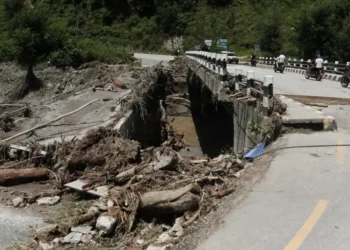
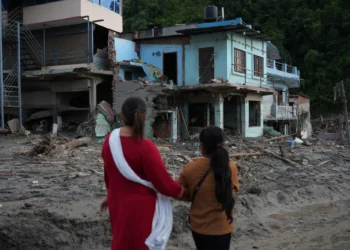
The floods and landslides have affected communities along several river systems, destroying homes, roads, bridges and businesses.
The number of missing people remains extremely high, with more than 3,900 still unaccounted for according to Nepalese authorities.
The death toll has now exceeded 1,000.
But even that figure is unlikely to represent the final scale of the disaster because hundreds of bodies remain unidentified.
Only about 4% of the roughly 900 bodies recovered so far had been identified, according to a spokesperson for Nepal’s Ministry of Health.
The problem is particularly acute in Chitwan, far downstream from the areas where the floods first struck.
River systems carried almost 300 bodies towards the district, forcing authorities to establish temporary burial sites because there were not enough facilities to store the remains.
Medical workers and volunteers have been collecting DNA samples from unidentified bodies in an effort to establish their identities.
Ganesh Aryaal, Chitwan’s chief district officer, said families would be able to recover the remains of relatives once DNA testing confirmed their identities.
“We don’t have enough freezers here,” he said, explaining that temporary burial had become necessary because authorities were overwhelmed by the number of bodies arriving.
The situation has added another painful dimension to the disaster, as families face not only uncertainty over missing relatives but also the possibility of having to search for them among unidentified remains.
## Climate Change Adds to the Concern
Prime Minister Shah has linked the disaster to the increasing risks facing the Himalayan region as climate change alters environmental conditions.
He said the event demonstrated that Nepal was confronting increasingly severe hazards and argued that the international community needed to pay greater attention to the impact of climate-related disasters in the Himalayas.
Scientists have long warned that rising temperatures are contributing to glacier retreat and changes in mountain environments.
The relationship between a specific disaster and climate change can be complicated, however, and researchers generally require detailed analysis before assigning a single cause.
In this case, the immediate disaster involved floods, landslides and enormous volumes of debris moving through steep Himalayan river valleys.
The combination of unstable terrain, intense water flow and vulnerable infrastructure created exceptionally dangerous conditions.
For Nepal, the disaster has highlighted the risks faced by communities and infrastructure located along its mountainous river systems.
## Disaster Spreads Across the Border
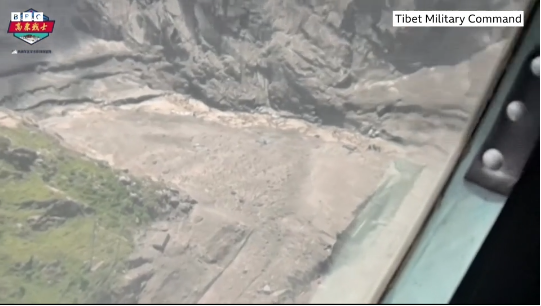
The devastation has also extended into Tibet, where Chinese authorities continue their own search and recovery operation.
Chinese state media has reported 16 deaths and 546 people missing on the Tibetan side.
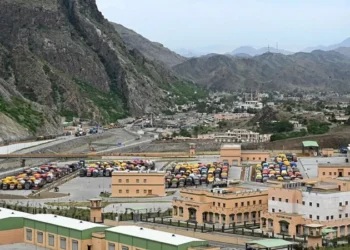
The Gyirong border area, an important crossing between Nepal and China, suffered extensive destruction.
Chinese state media has shown images of the devastated area, including reports that a water tower was among the few structures still standing at what had previously been a busy border crossing.
The Chinese government has maintained tight control over information about the disaster, with state media providing the principal official casualty figures.
Authorities have also imposed administrative penalties on some people accused of spreading speculation online about the scale of the disaster.
In Nepal, authorities have similarly moved against online material they regard as misinformation.
The contrasting flow of information has created additional uncertainty for families trying to determine whether relatives have survived.
## International Support
The scale of the disaster has prompted international involvement.
Chinese and Nepalese military personnel are leading parts of the rescue operation, while specialists from India, South Korea and Australia are contributing expertise.
The involvement of international specialists is particularly important in the hydropower sites, where conventional flood rescue methods are insufficient.
Underground searches require specialised knowledge of tunnels, structural stability, debris movement and emergency access.
The operation is also complicated by the continuing possibility of landslides and additional flooding.
For rescuers, reaching a tunnel is only one part of the problem. They must also ensure that the route is stable enough to enter without creating additional casualties.
## Families Wait for Answers
Behind the statistics are hundreds of families still waiting for news.
For relatives such as Anushila Bhandari, the uncertainty is almost as painful as the disaster itself.
Her husband went to work at a hydropower project and disappeared when the flood struck.
For Priya Kharel, the knowledge that people may still be inside the tunnels offers a fragile source of hope.
For families waiting at the riverbanks and outside damaged power stations, official casualty figures do not answer the most important question: whether their loved ones are still alive.
The rescue teams therefore face a race against time, but also against the physical destruction left behind by the floods.
## Nepal Faces a Long Recovery
Even after the search operations end, Nepal will face a long and difficult recovery.
The damage to hydropower infrastructure threatens an important part of the country’s economy and electricity system.
Roads and bridges will need to be rebuilt, communities relocated or repaired, and damaged river infrastructure assessed for future risks.
The recovery will also require substantial support for families who have lost homes, relatives and livelihoods.
The psychological impact is likely to be profound.
For those who lost family members, particularly workers who disappeared underground, uncertainty may continue until bodies are recovered or survivors are located.
The authorities will also face difficult questions about disaster preparedness, early-warning systems and the resilience of major infrastructure projects in vulnerable mountain valleys.
The tragedy has demonstrated how quickly a natural hazard can overwhelm even strategically important infrastructure.
For now, however, the immediate priority remains the search.
More than 600 hydropower workers are believed to be trapped or missing, while thousands of other people remain unaccounted for across the country.
Engineers continue to pump air into the tunnels. Soldiers and specialist teams clear debris. Families wait beside rescue centres and damaged project sites, hoping for news.
In a disaster that has already claimed more than 1,000 lives, the rescue effort has become a final race to save those who may still be alive beneath the mud and rock.
For the families waiting outside, every minute carries the possibility of either devastating confirmation or an extraordinary rescue.
Related News:
 Cyclone Vaianu Forces Mass Evacuations in New Zealand
 Heavy Casualties Feared as Flash Flood Sweeps Nepal-Tibet Border
 Australia Races to Find Tourists Missing in Nepal
 Nepal Flood Death Toll Tops 300 as Second Flood Feared
 Nepal-Tibet Flood Death Toll Rises as 2,478 Remain Missing
 Nepal Rescuers Race to Save Hundreds Trapped Underground
 Evacuations Ordered as California Wildfires Spread Fast
 Queensland Braces for Potential Second Severe Cyclone Hit
 Chornobyl Still at Risk 40 Years After Disaster
 Maldives Cave Diving Tragedy Raises Safety Alarm
 Sydney Records Hottest June Since 1859 as Expert Warns New High a ‘Signature’ of Global Warming
 Venezuela Quake Death Toll Surpasses 4,000
 Powerful 7.7-Magnitude Earthquake Hits Eastern Indonesia
 Israeli Strike in Southern Lebanon Kills Seven
 Five Years of Taliban Rule Leave Afghanistan in Crisis
 Wildfires rage across Europe as hundreds arrested in France
 Vietnam Youth Rally Behind Hanoi ‘Justice Tree’
 Nearly 90,000 ordered to flee Reno wildfire
 Families Fly to Nepal in Search of 33 Missing Britons
 Drought Raises Flood Risk as UK Autumn Approaches
 South Africa’s Garden Route Gem Faces Looming Water Crisis
 Storm Leonardo Triggers Election Delay Calls in Iberia
 Aberdeen Chosen for GB Energy HQ at Marischal Square
 Ocean Warming Drives Massive Marine Life Loss, Study Warns
 Princess Eugenie steps down as patron of anti-slavery charity
 North Korea Fires Missiles Amid US-South Korea Drills
 UK Energy Reform Could Cut Bills by £200
 Fugitive Dezi Freeman Killed in Rural Victoria Shootout
 Iran Crisis Tests Trump’s Global Leadership
 Ben Roberts-Smith Denies War Crime Allegations in First Statement
 Robots Outpace Humans in Beijing Half-Marathon
 City & Guilds Sale Sparks Fees and Pay Uproar
 Crackdown Backfires on UK Climate Protesters
 Two Children Die in Wolverhampton House Fire Tragedy
 Southeast Asia Turns to Russia Amid Energy Crisis
 Escobar’s Hippos May Be Moved to India Zoo
 Older Than Dinosaurs: Secrets of Mayfly Dance Revealed
 Capitalism ‘Suicidal’, Warns Petro at Climate Summit
 Coalition pushes fossil fuel phaseout plan
 Cartel crackdown raises fears of fresh violence
 North Korean Women’s Football Club to Visit Seoul in Rare Cross-Border Trip
 China Fireworks Factory Blast Kills 21 in Hunan
 Australia pushes Pacific security pact amid China tension
 US ‘Narco Boat’ Strikes Draw Global Outcry
 Florida Surgeon ‘Devastated’ Over Fatal Surgery Error
 Barrister Criticises Trial After Suicide Case Verdict
 US Awaits Iran Reply on New Ceasefire Proposal
 Immigration Judges Fear Pressure in Trump Era
 Tractor Breakdown Tests Lincolnshire Farmers
 UK Faces Mass Water Shortages by 2055, Lords Warn
 Hormuz Talks Near Critical Stage
 Pope Meets Families in Italy Toxic Waste Zone
 Discontent grows around Putin amid war strain
 Hope for mountain bongos returns to Kenya
 Thailand Tightens Visa Rules to Curb Tourist Misbehavior
 Europe Swelters as UK and France Smash Heat Records
 Germany Summons Chinese Envoy Over Russian Troop Training
 Millions Gather for Khamenei’s Six-Day State Funeral
 UK Heatwaves Ignite Crisis of Sleep and Public Safety
 New Footage Revives Peter Falconio Mystery
 UK Schools Struggle as Classrooms Top 40C
 London Tube Heat Reaches Dangerous Levels
 Olympus Awaits Unesco Heritage Recognition
 Houthis Strike Saudi Arabia as Middle East Tensions Rise
 Wildfires Force Mass Evacuations in France And Spain
 Three-Quarters of England’s Riverbanks Still Off Limits
 Westminster Council Threatens Charing Cross Soup Kitchen
 BBC Warned About Missing Clothes of Murder Victim
 Burnham unveils £65m drought aid for farmers
 Gen Z turns to BirdTok for a gentler digital escape
 China Probes Alleged Formaldehyde Use on Cabbages
 Rain to return with thunderstorms and flood risk
 Four Bodies Found as Jeju Missing Persons Scandal Deepens
 Nepal-Tibet Flood Leaves 270 Dead and 1,400 Missing
 Ghent Professors Questioned Cofnas Appointment
 France Eases Cheese Rules as Drought Hits Farms
 RAF Barnham Protests Fuel Tensions in Norfolk Town
 British Museum Faces Questions Over Peter Thiel’s Private Bayeux Viewing
 Ukraine Villagers Demand Answers After Deadly Arms Depot Strike
 Six Million Afghans Forced to Start Over Under Taliban