Published: 16 October 2026. The English Chronicle Desk. The English Chronicle Online
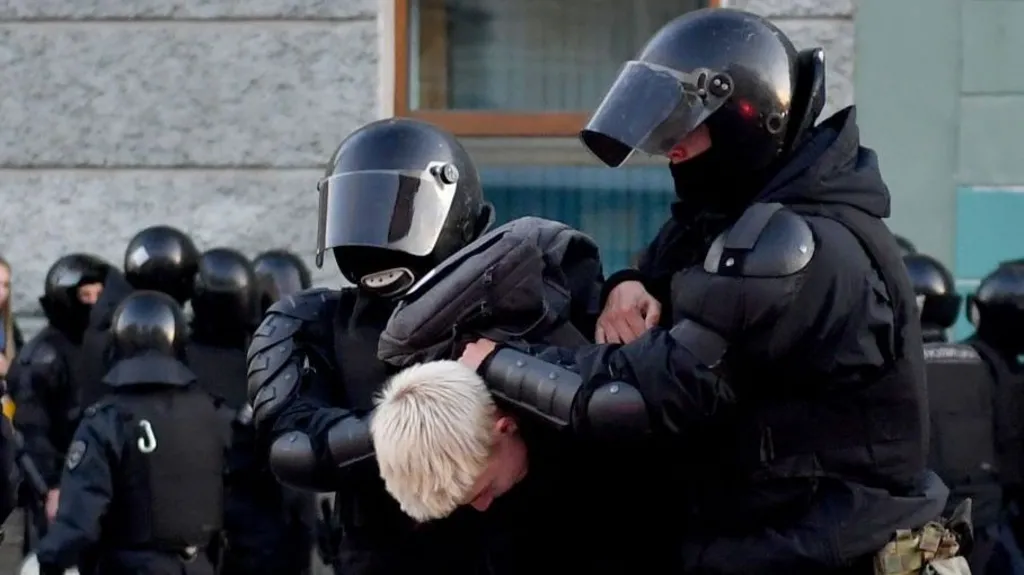
Russian anti-war activists who fled their homeland to escape political persecution are facing a new threat in the West, as increasingly restrictive asylum policies leave some at risk of being forcibly returned to a country where they fear imprisonment, interrogation or conscription into the war against Ukraine.
For some, the journey to safety has ended in a terrifying return. Russian security officers were waiting when a flight carrying deportees from the United States landed in Moscow last December. Among those on board were people who said they had opposed the Kremlin’s invasion of Ukraine, participated in protests or supported opposition movements.
One deportee, identified as Katya to protect her identity, described the experience as deeply frightening. She had left Russia and sought asylum in the United States after the full-scale invasion of Ukraine began in February 2022. Her application was rejected, despite her claim that she had provided evidence of her political activities.
According to Katya, officers from Russia’s Federal Security Service, known as the FSB, questioned passengers for several hours after their arrival. She said male deportees were handed military registration documents instructing them to report to local enlistment offices, raising fears that some could be drawn into the military system while Russia continues its war against Ukraine.
Another passenger and an activist reportedly corroborated her account. Katya also said officers examined her phone and discovered information they considered incriminating. She feared she could be detained, but was eventually released and allowed to stay with relatives.

Her difficulties did not end there. Katya said police continued to call her and visit her home, leaving her constantly afraid that she could be taken away. She described feeling trapped and said the sight of a police vehicle could trigger fears that officers had come for her.
Her account illustrates the risks that some Russian opponents of the war say they face when asylum applications fail. It also raises questions about whether immigration authorities in Western countries adequately assess the danger of returning people who have publicly challenged the Russian government.
Rising deportations from the United States
The number of Russian nationals removed from the United States has increased sharply, according to figures cited in the original reporting. Removals reportedly rose from 222 in 2023 to more than 1,200 in 2025, during a wider expansion of deportation enforcement under President Donald Trump’s second administration.
The figures cover Russian nationals deported from the United States, not exclusively political activists. Nevertheless, rights campaigners say the wider enforcement drive has affected people who claim that returning to Russia could expose them to persecution.
One case highlighted in the reporting is that of Leonid Melekhin, an anti-war activist who sought asylum in the United States after being arrested at protests in Russia. He had posted photographs of President Vladimir Putin online alongside the words “Putin: murderer, fascist, usurper”.
After being deported to Russia in 2025, Melekhin was charged with justifying terrorism and sentenced to six years in prison, according to the account. His case has become an example cited by activists concerned that political expression overseas may be used against returnees.
Russian opposition figures say the consequences of deportation can extend beyond detention. Some fear that returning activists could face criminal investigations, prison sentences or pressure to serve in the armed forces.
Andrei Pivovarov, a member of the exiled opposition Anti-War Committee, said there were several cases of people receiving lengthy prison sentences after crossing back into Russia. Pivovarov himself was imprisoned for four years in a penal colony over activities connected to an organisation designated undesirable by Russian authorities.
The Russian government has repeatedly used national-security and extremism laws against opponents, while officials maintain that such measures are necessary to protect the state. Critics argue that broadly framed offences can be used to punish peaceful dissent, particularly since the invasion of Ukraine.
European countries tighten asylum decisions
The pressure on Russian dissidents is not limited to the United States. European countries have also increased deportations and tightened their approach to asylum applications from Russian nationals.
German government figures cited in the reporting show that the number of Russian citizens deported from Germany rose from seven in 2023 to more than 110 in 2025. More than 21,000 Russians sought asylum in Germany between 2022 and 2025, but the proportion receiving positive decisions reportedly fell from 29% in 2023 to 6.8% during the first 11 months of 2025.
Germany’s Federal Office for Migration and Refugees has said protection is granted when applicants demonstrate an actual, well-founded fear of persecution. The figures do not establish that every rejected applicant faced political danger, but they highlight the difficult distinction between general opposition to a government and an individually substantiated claim for protection.
Berlin also suspended its humanitarian visa programme for Russians last year, according to the reporting. Across the European Union, the proportion of Russian applicants granted some form of international protection reportedly fell from 23% in 2024 to approximately 17% in the first nine months of 2025.
For activists, the concern is that immigration systems may not fully account for the risks created by political speech, military desertion or religious affiliation in Russia. Immigration authorities must assess individual cases under applicable legal standards, but rights groups argue that country conditions and evidence of past persecution require careful consideration.
Anastasia Burakova, founder of the rights organisation Kovcheg, which helps anti-war Russians leave the country, said governments had become increasingly focused on restricting humanitarian programmes and asylum applications. She linked the shift to public pressure over irregular migration and the growing influence of right-wing populist parties.
The broader political debate over immigration has therefore created a difficult situation for Russian dissidents. People fleeing a government accused of suppressing opposition may find themselves caught between national policies aimed at reducing migration and their need for international protection.
A deserter’s fear of being sent back
Among those who say they have been affected is Artyom, a former Russian soldier whose name has been changed for his protection. He deserted the military in 2022 after officers threatened to send him to fight in Ukraine.
Artyom said he sought asylum in the United States and provided evidence that Russian authorities had opened a criminal investigation against him for desertion. Despite his concerns, he was deported through Egypt and returned to Moscow.
He said he had prepared himself for the possibility of dying, fearing that he would be imprisoned or sent back to the front. After arriving in Russia, he was held in a military detention facility but managed to escape. He is now reportedly hiding abroad.
His case highlights the particular vulnerability of military deserters. In addition to the general risks associated with political dissent, they may face prosecution under laws governing military service and desertion. The potential consequences depend on the circumstances of each case, but those who oppose the war say they fear being forced to participate in fighting they consider unlawful or morally unacceptable.
The US Department of Homeland Security defended the country’s removal procedures, telling the BBC that people subject to deportation receive due process and that authorities remove those found by a judge to have no legal right to remain.
That position reflects the central legal dispute: immigration authorities must apply domestic law, while asylum claims require an assessment of whether return could expose an individual to persecution or other serious harm. A rejected application does not, by itself, establish that a person faces no danger; equally, political opposition alone does not automatically guarantee asylum.
Repression inside Russia raises the stakes
The concerns raised by deportees come amid continuing reports of repression inside Russia. The human rights organisation Memorial, which received the Nobel Peace Prize jointly with other laureates in 2022, has documented political imprisonment and prosecutions linked to dissent.
According to figures cited in the reporting, Memorial’s list of political prisoners grew from 803 to 1,265 during 2025. Rights organisations say the use of criminal laws against anti-war speech and opposition activity has intensified since the invasion of Ukraine.
Russian authorities have prosecuted people for statements about the military, online posts and involvement with organisations labelled extremist or undesirable. Religious minorities can also face restrictions. Jehovah’s Witnesses, for example, are banned in Russia under a designation that the organisation and international rights advocates have strongly challenged.

These circumstances are central to the case of Mikhail and his wife, Dasha, who are awaiting a possible deportation from Finland. Their names have been changed because Mikhail fears consequences for relatives who remain in Russia.
Mikhail said Russian authorities blocked his social-media accounts over anti-war posts and that police visited his mother, accusing him of spreading false information. Dasha is a Jehovah’s Witness, a factor the couple say could expose her to further scrutiny if they were returned.
The couple provided Finnish authorities with evidence that included a video of police speaking to Mikhail’s mother about hundreds of online posts allegedly violating Russian law. Their asylum requests were rejected five times, with the Finnish Immigration Service finding no reasonable basis to conclude that they would face serious rights violations upon return.
Amnesty International, which is supporting the couple, warned that they could face a real risk of detention, prosecution, imprisonment and torture if deported. Finland’s immigration service said asylum decisions were made according to international refugee-law standards and that the rate of protection granted to Russian citizens was in line with EU averages.
The dispute illustrates how the same evidence can be assessed differently by asylum authorities and human rights organisations. Immigration officials must determine whether the legal threshold for protection has been met, while campaigners argue that the consequences of an incorrect decision could be severe and irreversible.
A narrowing route to safety
The possibility of further military mobilisation adds to the anxiety among Russians considering leaving the country. Russia’s last major mobilisation announcement in September 2022 prompted large numbers of people to depart, including men seeking to avoid military service. Although rumours of another mobilisation have circulated, the Kremlin has denied plans for a new wave.
Kovcheg has reported a sharp increase in requests for help from Russians seeking to leave, with enquiries in August said to be ten times higher than in May. Such figures reflect demand for assistance rather than a verified measure of how many people are preparing to flee, but they indicate the continuing uncertainty facing anti-war Russians.
For those already abroad, the risk of deportation can create a different form of insecurity. They may be physically distant from Russia but remain unable to establish a stable life because their legal status is unresolved.
The challenge for Western governments is to balance immigration enforcement with their obligations to people who may face persecution if returned. Decisions must be based on individual evidence and applicable law, but the cases described by activists show why political history, military records, online activity and religious affiliation can be relevant to assessing risk.
For Katya, Artyom, Mikhail and others who say they opposed the war, leaving Russia was meant to provide a chance to live without fear. Their experiences suggest that the journey to safety can remain uncertain long after they have crossed the border.
As governments tighten asylum procedures, the question facing Russian dissidents is whether their evidence will be recognised before a deportation order is carried out. For people who fear prison, military detention or renewed persecution, the consequences of that decision may be life-changing.
Related News:
 UK Must Act with Courage and Clarity on Israel-Palestine Conflict, Says Foreign Affairs Committee Report
 MPs Call on UK Government to Delay Biometric Visa Checks for Gaza Students Amid Humanitarian Crisis
 Radioactive Leak at UK’s Nuclear Warhead Base Sparks Outcry Over Safety and Secrecy
 Mutual Inconvenience: Why Alaska Was Chosen for the Trump-Putin Summit on Ukraine
 “I Don’t Expect to Live a Normal Life”: How a Leeds Teenager Became the Target of a Chinese Bounty
 Is the UK Ready to Put Boots on the Ground in Ukraine? Assessing Military Capacity and Challenges
 Protests Expected as Israeli Arms Firms Join Global Defence Trade Fair in London
 UK Immigration Figures: Separating Facts from Perceptions
 Thousands Gather in London to Protest Donald Trump’s Second UK State Visit
 Trump Urges UK to “Call Out the Military” to Secure Borders Amid State Visit
Trump’s UN Speech Criticises London and UK Policies, Draws Far-Right Attention
Trump Urges UK to “Call Out the Military” to Secure Borders Amid State Visit
Trump’s UN Speech Criticises London and UK Policies, Draws Far-Right Attention
 UK Fighter Jet Purchase Could Breach Nuclear Treaty, Warns CND
 A Third of EU Citizens in UK Report Discrimination by Public Bodies Post-Brexit
 Jailed Georgian Opposition Leaders Warn UK of Iranian Links to Ruling Party
 Russia repeatedly targets UK military satellites, warns Space Command chief
 Pro-Palestine March to Proceed in London Despite Calls to Cancel After Manchester Attack
 UK Universities Warn Students Ahead of 7 October Pro-Palestine Protests
 Public Trust in SNP Hits Historic Low Amid NHS Concerns
 Johnson Suggests Mandelson Linked to China Spy Controversy
 Witness statements reveal the CPS China spy row collapse in the UK
 Nigel Farage Calls Vladimir Putin ‘A Very Bad Dude’
 Rachel Reeves signals welfare reform ahead of key budget
 Kosovo agrees to host Britain’s refused asylum seekers
 Rachel Reeves to lead UK trade push in Saudi Arabia amid rights debate
 British Woman in Iran ‘Losing Hope’ Amid Ongoing Detention
 Johnson Approved China’s London ‘Super-Embassy’ in 2018
 BBC Journalist Held and Interrogated in Vietnam
 New review urges UK to repatriate Shamima Begum, others from Syria
 Rama Rebukes Mahmood for Targeting Albanian Families
 Russian Vessel Used Lasers on RAF Pilots, UK Claims
 Barron Trump police call heard in London assault trial
 Trump Pulls Canada from His Controversial ‘Board of Peace’ Plan
 UK and EU Signal Fresh Push for Defence Cooperation Talks
 Starmer Condemns ‘Depraved’ Russian Strikes on Ukraine
 Trump and Chagos Deal Rift Over Iran Strikes
 Andrew Mountbatten-Windsor Arrest After FBI Radar
 Farage Chagos Islands Row Sparks Fury
 Trump Tariffs Threat Spark UK and EU Alarm
 Gordon Brown urges court for crimes against children
 Yvette Cooper: UK Must Follow Principles, Not US Pressure
 UK Minister Denies Iran Missile Threat to Britain
 Army Probes Apache Flyover at Kid Rock’s Nashville Estate
 Relationship with Trump may be beyond repair, Starmer warned
 Charles Faces Trump Test in High-Stakes US Visit
 UK Stands Firm on Falklands Amid US Rift
 UK Pushes for New EU Goods Trade Deal
 Farage and Reform UK Reshape British Politics
 Starmer Leadership Under Pressure After Setbacks
 Deadly Russian Air Raids Strike Across Ukraine
 New South Wales Premier Chris Minns Signals Tough Road Ahead for Labor
 Labour MPs Urge Burnham to Revive UK Aid Target
 Former Diplomats Urge UK and France to Act on Palestine
 Ghent Professors Questioned Cofnas Appointment
 Green Leader Targets Starmer’s Former Seat
 Bayeux Tapestry Revives Franco-British Ties
 Masked Protesters Bring Dover Port Traffic to Standstill
 UN expert urges UK to rethink Israel policy
 UK plans tougher Israel stance with settlement trade ban
 Europe’s democracies face a growing far-right threat
 Pavlohrad Strike Kills Five, Injures 67
 JLR Eyes NATO Market With New Defender Military Vehicle
 Trump Threatens EU With Tariffs Over Canada Proposal
 Trump Threatens EU Over Canada Partnership Proposal
 Lib Dems Prepare for Election Amid Reform Challenge
 Middle powers seek new alliances amid Trump era
 King Refers Jamaica Slavery Petition to Privy Council
 UK Plans New Centre to Counter Information Warfare
 UK Pauses Chagos Deal Amid US Opposition
 Elif Eralp Emerges as Berlin’s Next Political Force
 Five Arrested Near RAF Fairford in Terror Probe
 Burnham Opens Door to Possible UK Return to EU
 Drumcree Talks Falter as Legal Challenge Deepens
 UK-France Returns Deal Faces Expiry as Talks Stall
 Green Party faces dispute over Zionism motion
 UK Mission in East Jerusalem to Remain Open
 France Urges UK to Consider Returning to EU
 Labour Wins Key London By-election as Greens Fall Short
 Burnham Rises as Farage and Polanski Face Setbacks
 UK Greens Face Crisis Over Zionism and Extremism Row
 UK Could Rejoin EU Through a Switzerland Plus Deal