Published: 09 October 2026. The English Chronicle Desk. The English Chronicle Online
Britain’s latest party conference season has exposed a shifting political landscape, with Labour leader Andy Burnham emerging as one of its biggest winners, Conservative leader Kemi Badenoch strengthening her position, and several opposition figures facing renewed questions about their leadership, political judgement and public appeal. The conferences offered parties an opportunity to define their priorities, present themselves as credible alternatives to their rivals and persuade voters that they understand the country’s problems. Yet the results were far from evenly distributed, with some leaders benefiting from strong performances and others finding their carefully planned messages overshadowed by controversy.
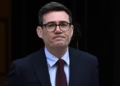
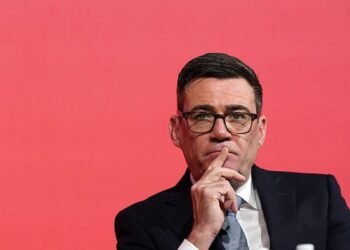
Burnham’s first conference as Labour leader proved particularly successful. His personal speech, delivered without a lectern and without a tie, combined political ambition with an emotional account of his family background. At moments, he appeared close to tears while speaking about his father, creating a connection with party members that went beyond the usual exchanges of policy pledges and partisan criticism. The address received an enthusiastic response from Labour supporters and praise from some commentators outside the party, including figures who are often critical of Labour.

The emotional force of Burnham’s speech was matched by a broader attempt to establish a distinctive political direction. He outlined ambitious proposals on social care, electoral reform and Britain’s relationship with Europe, while signalling that changes to the pensions triple lock could form part of a wider reassessment of public policy. His promise to confront longstanding problems in social care suggested a willingness to tackle issues that successive governments have struggled to resolve.
Burnham also placed his programme within a wider critique of Britain’s economic direction. He argued that deindustrialisation, deregulation, privatisation, austerity and Brexit had contributed to the country’s difficulties. The language drew a clear dividing line between Labour’s proposed approach and the economic philosophy traditionally associated with Conservative governments. It also gave supporters a simple account of what they believed had gone wrong and why a change of direction was necessary.
The conference appeared to produce a measurable political benefit. A YouGov survey conducted after the gathering placed Labour at 27%, five points ahead of Reform UK on 22%. The Conservatives stood at 20%, while the Liberal Democrats and Greens were both on 11%. Although a single poll cannot establish a lasting change in public opinion, the figures offered Labour encouragement that Burnham’s performance had helped improve the party’s position.
His political momentum received another boost when Labour won the Holborn and St Pancras by-election, defeating a challenge from Green Party leader Zack Polanski. The result reinforced the impression that Labour had regained some ground after a difficult period. However, a successful conference and a by-election victory will not, by themselves, guarantee a sustained recovery. Burnham faces the more demanding task of translating public enthusiasm into policies that can be funded and delivered. The forthcoming budget and next year’s spending review will test whether his promises can withstand the pressures of government.
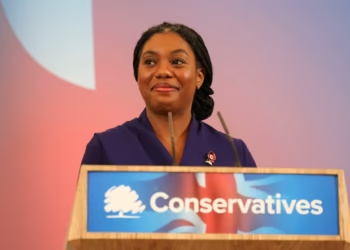
Conservative leader Kemi Badenoch also emerged from conference season in a stronger position than she occupied a year earlier. Having previously faced questions about her future as opposition leader, she used the party gathering to present herself as firmly in control. Her message emphasised a new phase for the Conservatives, with Badenoch portraying herself as the central figure responsible for rebuilding the party and determining its priorities.
Unlike Burnham’s emotional address, Badenoch’s speech was disciplined and focused heavily on the economy. She avoided placing small-boat crossings and other familiar culture-war subjects at the centre of her message, instead seeking to reconnect the Conservatives with voters concerned about taxation, household finances and economic opportunity. Her proposals included free childcare for families earning more than £100,000 and abolishing inheritance tax on family homes for the relatively small proportion of households that pay it. These policies were designed to appeal to the party’s traditional supporters and help it regain ground in areas where Conservative backing has weakened.
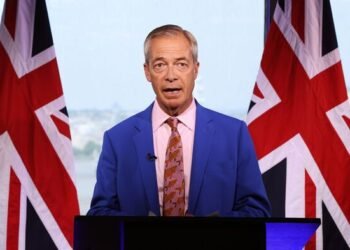
Her most consequential intervention concerned Reform UK. Badenoch rejected the idea of uniting the right behind Nigel Farage, arguing that the Conservatives should not compromise their identity simply to create an electoral arrangement with a rival party. She criticised Reform’s political conduct and invoked concerns about attacks on journalists, the treatment of military veterans and questions about national identity. Her comments were intended to establish a moral and political distinction between the two parties.
Whether that position will survive the practical demands of future electoral contests remains uncertain. The Conservatives face pressure from Reform in several areas, and rejecting cooperation may become more difficult if the party believes that splitting the right-wing vote could cost it seats. Nevertheless, Badenoch’s conference performance suggested that she was more comfortable asserting her authority and presenting a clear argument for her party’s future.
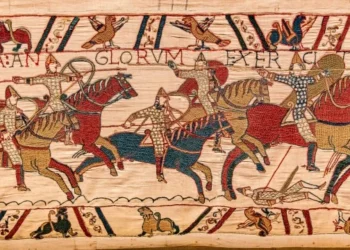
The communications teams supporting Labour and the Conservatives also enjoyed a productive conference season. One of the most widely discussed Conservative initiatives was a 27-metre-long satirical tapestry depicting British political events over the previous two years from the party’s perspective. Presented in the style of the historic Bayeux Tapestry, the display took pointed aim at political opponents, including Robert Jenrick, who had defected from the Conservatives.
The installation attracted attention not only because of its political mockery but also because journalists and other prominent figures shared images of it with their social media audiences. That helped the Conservatives extend the display’s reach well beyond the conference hall. In an era when political communications are increasingly shaped by online attention, the episode demonstrated how a striking visual can become a campaign asset even when its original purpose is satire.
Labour’s communications operation adopted a different approach. Its conference was filled with posters and placards promising that there was “hope again”, creating an atmosphere intended to suggest renewed energy and a change in political mood. The party’s social media team also took opportunities to ridicule Conservative performances, including the uncertain conclusion to a speech by shadow chancellor Andrew Griffith. The contrast between Labour’s optimism and Conservative satire illustrated how both parties were attempting to dominate the political conversation through carefully managed imagery and rapid online responses.
The conferences also revealed a sharper ideological contest between left and right. Burnham’s criticism of the economic settlement associated with previous decades was met with Conservative accusations that Labour was indulging in an outdated socialist vision. Badenoch, meanwhile, presented the contest as a struggle over the country’s future, arguing that people should retain the rewards of their work rather than surrender more of them to government. The exchange reflected a broader disagreement about the balance between public services, taxation, economic freedom and the state’s responsibilities.
Some politicians gained attention without occupying the central stage. Foreign Secretary Ed Miliband appeared relaxed and confident at Labour’s conference, using his speech to acknowledge the concerns of party members about the suffering of Palestinians. His intervention allowed him to connect with activists on an emotionally charged international issue while demonstrating political sensitivity. At the Conservative gathering, James Cleverly, the party’s candidate for London mayor, used a discussion event to argue that his success in City Hall would help Badenoch’s wider ambitions. Both figures benefited from opportunities to reinforce their political standing alongside their respective leaders.
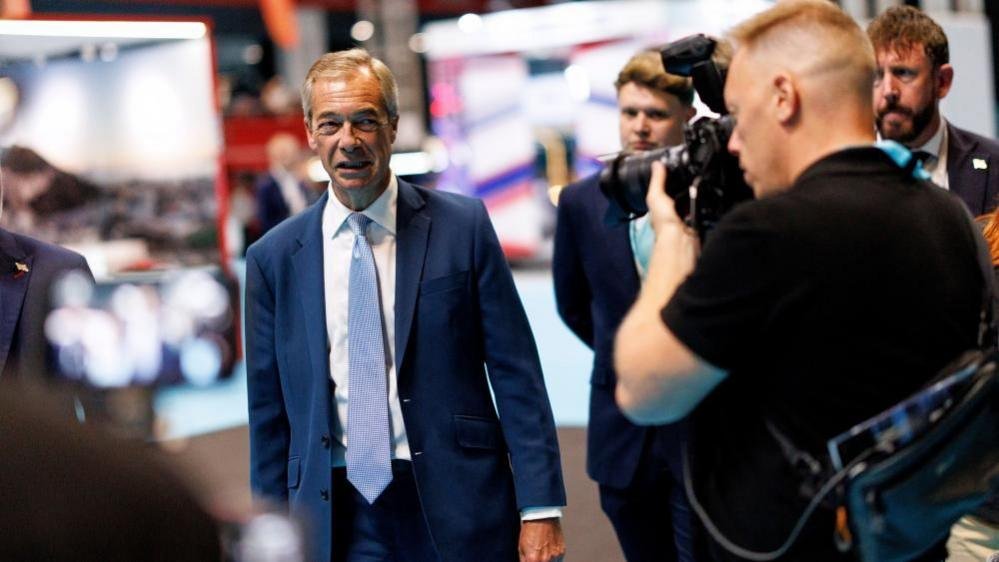
For Nigel Farage, however, the Reform UK conference in Birmingham failed to deliver the uninterrupted showcase he had wanted. The party promoted its largest gathering to date as a major political event and Farage intended to use it to outline policy commitments for the first 100 days of a potential Reform government. Instead, the suspension of two close aides, Dan Jukes and policy chief James Orr, overshadowed the opening.
The suspensions followed an undercover investigation by the group Verbatim into alleged breaches of political donation rules. Reform subsequently said the officials had not broken laws prohibiting foreign donations, but the issue remained under police investigation. The continuing scrutiny left Farage facing questions about the party’s internal oversight and its ability to manage a growing political organisation.
His speech was also interrupted by protesters who were removed from the venue. Footage later appeared to show a woman being struck and having her hair pulled during the incident, while a man received a police caution. The confrontation added another difficult episode to a conference that Farage had hoped would focus on his policy agenda. Although the events do not determine Reform’s electoral prospects, they diverted attention from the party’s plans and created fresh questions about conduct at its public events.
Polanski also had reason to be disappointed. The Green Party leader had sought to postpone his party’s conference so that he could concentrate on the Holborn and St Pancras by-election, but the request was rejected. The gathering in Brighton was subsequently dominated by internal controversy after members voted to adopt an official policy describing Zionism, the movement for a Jewish state, as a form of racism.
The decision generated a divisive debate within the party. Polanski was absent from the most contentious stage of the internal dispute as he concentrated on campaigning in the by-election. The controversy nevertheless left the Greens facing difficult questions about their political message and how they handle disagreements involving Jewish identity, Israel and Palestinian rights.
The party had enjoyed considerable momentum after winning the Gorton and Denton by-election in February, when its polling support rose above 20%. The latest survey placed it at 11%, level with the Liberal Democrats. That decline cannot be attributed to one conference or a single controversy alone, but the timing has intensified scrutiny of the party’s strategy. Labour’s victory in Holborn and St Pancras also deprived Polanski of a result that might have strengthened his position.
Liberal Democrat leader Ed Davey faced a different kind of difficulty. His energetic conference appearance initially seemed to pass without major damage, although his enthusiastic attempt to lead a chant of “We care! We fight!” attracted considerable online attention. The more serious problem emerged over his opposition to Labour proposals to change the pensions triple lock. Some senior and backbench Liberal Democrats challenged his defence of the existing arrangement, arguing that it did not adequately reflect the interests of younger generations. The dispute exposed tensions within a party that must balance the protection of pensioners with concerns about fairness between age groups.
Chancellor John Healey, meanwhile, received a warm response from Labour members but raised questions about the substance of his conference speech. He repeatedly invoked hope without providing much detail about the policies that would shape his first budget. Senior Labour figures reportedly expressed private concern about the limited discussion of investment, economic growth and possible tax increases. With the budget approaching, the government will need to demonstrate that its political optimism is supported by credible financial decisions.
The most conspicuous speaking failure belonged to Conservative shadow chancellor Andrew Griffith. Badenoch had praised his business experience, but his conference address was widely criticised for its delivery and lack of momentum. The speech appeared to end awkwardly, leaving the audience uncertain whether to applaud as Griffith walked away from the stage. In a conference season shaped by memorable performances and carefully controlled messaging, the episode became an unfortunate distraction.

Taken together, the conferences offered a snapshot of a political system in motion. Burnham and Badenoch emerged with stronger arguments for their leadership, while Labour and Conservative communications teams demonstrated their ability to shape the news cycle. Farage’s event was disrupted by controversies, Polanski’s party was consumed by internal divisions, Davey encountered disagreement over pensions, and Healey and Griffith faced questions about the substance and delivery of their messages.
The ultimate test will not be which leader received the loudest applause or generated the most viral moment. It will be whether parties can convert conference performances into public trust, workable policies and sustained electoral support. For Burnham, that means delivering on ambitious promises. For Badenoch, it means turning renewed confidence into a convincing Conservative recovery. For their rivals, it means addressing the problems exposed during a conference season that offered little room to hide.
Related News:
 Holborn and St Pancras Vote Tests Labour and Greens
 Labour Wins Key London By-election as Greens Fall Short
 Farage and Reform UK Reshape British Politics
 Starmer Leadership Under Pressure After Setbacks
 Green Leader Targets Starmer’s Former Seat
 Marina Hyde Finds Hope Amid Political Chaos
 Masked Protesters Bring Dover Port Traffic to Standstill
 Lib Dems Prepare for Election Amid Reform Challenge
 King Refers Jamaica Slavery Petition to Privy Council
 Elif Eralp Emerges as Berlin’s Next Political Force
 Three Die in Channel Crossing Attempt Near France
 Burnham Opens Door to Possible UK Return to EU
 Drumcree Talks Falter as Legal Challenge Deepens
 UK-France Returns Deal Faces Expiry as Talks Stall
 Green Party faces dispute over Zionism motion
 British Woman in Iran ‘Losing Hope’ Amid Ongoing Detention
 BBC Journalist Held and Interrogated in Vietnam
 Rama Rebukes Mahmood for Targeting Albanian Families
 Russian Vessel Used Lasers on RAF Pilots, UK Claims
 UK and EU Signal Fresh Push for Defence Cooperation Talks
 Starmer Condemns ‘Depraved’ Russian Strikes on Ukraine
 Trump and Chagos Deal Rift Over Iran Strikes
 Farage Chagos Islands Row Sparks Fury
 Trump Tariffs Threat Spark UK and EU Alarm
 Gordon Brown urges court for crimes against children
 Yvette Cooper: UK Must Follow Principles, Not US Pressure
 UK Minister Denies Iran Missile Threat to Britain
 Army Probes Apache Flyover at Kid Rock’s Nashville Estate
 Relationship with Trump may be beyond repair, Starmer warned
 Kezia Dugdale Warns of Possible Reversal of Equal Rights Gains
 NHS Safety Fears as Nurses Cover Doctor Gaps
 Charles Faces Trump Test in High-Stakes US Visit
 UK Stands Firm on Falklands Amid US Rift
 Reform UK funding: mystery billionaire revealed
 John Terry Faces Backlash Over Political Posts
 France Faces Record Presidential Crowded Race Amid Far-Right Surge
 Labour Members Turn Against Starmer Leadership
 UK Pushes for New EU Goods Trade Deal
 Deadly Russian Air Raids Strike Across Ukraine
 UK Nations Brace for Potential Breakup Amid Reform Surge
 New South Wales Premier Chris Minns Signals Tough Road Ahead for Labor
 Le Pen’s Popularity Holds Despite Conviction
 Labour MPs Urge Burnham to Revive UK Aid Target
 Three-Quarters of England’s Riverbanks Still Off Limits
 Is America Ready for an AOC Presidential Run?
 Burnham unveils £65m drought aid for farmers
 Former Diplomats Urge UK and France to Act on Palestine
 Ghent Professors Questioned Cofnas Appointment
 RAF Barnham Protests Fuel Tensions in Norfolk Town
 Bayeux Tapestry Revives Franco-British Ties
 UN expert urges UK to rethink Israel policy
 UK plans tougher Israel stance with settlement trade ban
 Europe’s democracies face a growing far-right threat
 Pavlohrad Strike Kills Five, Injures 67
 Mahmood Warns Far Right Over Asylum Protests
 Disabled Travellers Seek Fairer UK Care Rules
 Middle powers seek new alliances amid Trump era
 UK Plans New Centre to Counter Information Warfare
 UK Pauses Chagos Deal Amid US Opposition
 Greece Pushes for Parthenon Marbles Reunification
 Free Speech Emerges as Key UK Election Issue
 Madrid Tent Camp Grows as Spain Housing Crisis Deepens
 Burnham Opens Debate on Pension Triple Lock for Care
 French Student Protests Escalate Into Violent Clashes
 Badenoch Raises Prospect of 2027 UK Election
 French School Protests Escalate as 400 Schools Close
 Polanski Says Leadership Not Tied to By-election Result
 Families Await USS Abraham Lincoln Homecoming
 Bosnia’s Young People Look Beyond Election Hope
 Latin America women fear rollback of rights
 Gosport Protesters Clash With Police Over Migrant Rescue
 UK Mission in East Jerusalem to Remain Open
 Luton Residents Reject Claims of ‘No-Go Zones’
 France Urges UK to Consider Returning to EU
 USS Lincoln Ends Record 265-Day Deployment
 French Student Protests Grow Despite Government Pledge
 India’s Youth Movement Alleges Mass Detentions Before Protest
 Gaza War Deepens India’s Strategic Ties With Israel
 Turkey Rules Out Troops in Saudi Arabia’s Houthi Conflict
 Bolsonaro Gains Key Endorsement Ahead of Brazil Runoff