Published: 29 September 2026. The English Chronicle Desk. The English Chronicle Online
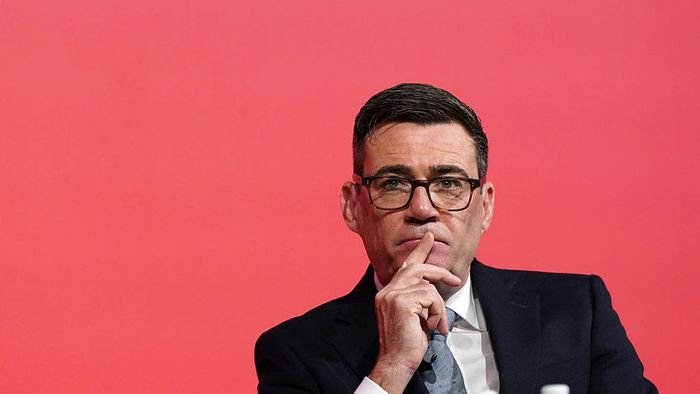
Prime Minister Andy Burnham is expected to signal that the government is prepared to reconsider the pension triple lock as part of a wider effort to establish a national care service, opening one of the most sensitive funding debates facing the Labour government.
Burnham is due to use his first Labour conference speech as prime minister to argue that difficult problems such as social care cannot be resolved without an open discussion about how they should be funded. Government sources have indicated that he may express a willingness to review the pension guarantee, although there is no indication that he is announcing an immediate decision to abolish it.
The debate has already exposed differences within Labour and among its allies. Unite general secretary Sharon Graham has strongly criticised the prospect of changing the triple lock, while Labour deputy leader Lucy Powell has reaffirmed the party’s existing commitment to the policy. Housing Secretary Angela Rayner, by contrast, has described Burnham’s willingness to begin a difficult conversation about social care funding as a significant and courageous step.

The pension triple lock currently guarantees that the state pension rises each year by whichever is highest among inflation, average earnings growth or 2.5%. It has become an important part of the financial security of millions of pensioners and has been retained as a Labour manifesto commitment.
The possibility of changing the policy has therefore generated immediate concern among trade union figures and politicians who argue that pensioners should not be asked to bear the cost of reforming social care.
Graham said Burnham had not committed himself to scrapping the triple lock but warned that such a move could be deeply unpopular. She argued that the principle of a national care service should be based on universal provision rather than placing a disproportionate burden on pensioners.
She also questioned whether reducing pension protection would be appropriate for people living on relatively modest incomes. Her comments reflect a broader concern within the trade union movement that changes to pension policy could weaken financial security for older people.
The government’s position, however, is that the existing social care system presents a problem that cannot be postponed indefinitely. Burnham has made reform of social care one of the central ambitions of his government and has indicated that he wants to create an NHS-style system that would provide care as a universal public service.
The precise funding arrangements remain under discussion. Recent reporting has indicated that options could include changes to pension policy and other measures, while the government is expected to develop a detailed proposal before the next general election.
Burnham has said he intends to have a more direct conversation with the public about the costs involved in solving long-standing problems. In his conference speech, he is expected to argue that political leaders should not avoid difficult questions simply because they may be unpopular.
The prime minister is expected to tell Labour delegates that Britain cannot continue with what he describes as politics as usual. He is also expected to argue that the country needs greater direction and a more serious long-term programme for dealing with issues that have remained unresolved for years.
Social care is likely to be at the centre of that argument.
For Burnham, the issue has a personal dimension as well as a political one. He has previously spoken about his experience of seeing his late father receive care and has argued that the quality of the system varies too widely depending on a person’s circumstances.
He has criticised the structure of the existing system, particularly the reliance on short care visits that may be inadequate when people’s needs become more complex. He has also acknowledged the crucial contribution made by workers from overseas, whose labour remains an important part of the social care workforce.
Burnham has indicated that 2030 is the target date for the start of his proposed social care reforms. He has also said that he intends to provide greater detail about how the programme would be funded.
The scale of the proposal means the financial debate is likely to continue well beyond the Labour conference. Creating a universal care service would require substantial long-term public spending, while the government is also facing demands in areas including defence, infrastructure, energy costs and public services.
That creates a difficult policy question for ministers: how can a major expansion of social care be financed without placing unsustainable pressure on public finances or reducing support for other groups?
The triple lock has emerged as one possible part of that discussion because of the scale of state pension expenditure. Any change, however, would have implications for the incomes of older people and would therefore be closely watched by pensioners, charities, trade unions and opposition parties.
Powell sought to reassure pensioners by emphasising Labour’s existing manifesto commitment. She said the triple lock had delivered significant increases in state pension income during the current parliament and suggested that pension security remained an important consideration for the government.
At the same time, Powell acknowledged the broader challenge facing ministers. She argued that the social care crisis could not be solved without having serious discussions about the cost of reform.
That position illustrates the tension at the heart of Burnham’s proposal. Labour has promised to maintain the pension guarantee, but the prime minister is now preparing the ground for a broader discussion about whether existing commitments should be reconsidered in order to finance a major new public service.
Rayner has backed the decision to begin that conversation. She said Burnham was right to confront an issue that previous governments have struggled to resolve and suggested that he was prepared to use significant political capital in pursuit of long-term reform.
The debate is likely to become more intense because any proposal to alter the triple lock could attract criticism from political opponents. Conservative and Reform politicians are expected to scrutinise any change closely, particularly because pension policy affects a large and politically important section of the electorate.
The issue also presents a challenge for Labour itself. Supporters of the reform argue that the current social care system is fragmented and places significant financial and emotional pressure on families. Critics of changing pension protection argue that the costs should not be shifted towards older people who depend on the state pension for their everyday living expenses.
The disagreement is therefore not simply about the technical operation of the triple lock. It reflects competing views about how Britain should distribute the costs of caring for an ageing population and how much responsibility should be carried collectively through taxation and public services.
Burnham is expected to present his approach as an attempt to move beyond short-term political calculations. Rather than promising a simple solution, he is preparing the public for a discussion about difficult choices and competing priorities.
His wider conference message is also expected to address energy costs, youth inactivity, public services and the economy. He is expected to reject the traditional style of conference speeches dominated by political rhetoric and instead present what he describes as a more substantial programme for governing the country.
The social care proposal is likely to become the most closely examined part of that programme because of its potential scale and the uncertainty surrounding its financing.
Burnham has already acknowledged that people may not agree with every element of his plans. He is expected to argue, however, that Britain needs political leaders willing to explain the difficult choices involved in addressing problems that have persisted for decades.
That approach has placed the pension triple lock at the centre of an unusually sensitive debate. For pensioners, it represents a guarantee of protection against rising living costs. For policymakers considering a universal care system, it is one of several areas where difficult decisions about public spending may have to be examined.
No final decision to abolish the triple lock has been announced. The immediate issue is whether the government will move from a manifesto commitment to a broader review of how pension increases should operate and whether changes could contribute towards the cost of social care.

The debate is therefore likely to continue as Labour develops its plans for the years ahead. Burnham’s approach suggests that the government intends to put the funding question openly before the public rather than presenting social care reform as a cost-free promise.
For families dealing with the realities of ageing, disability and long-term care, the eventual outcome could have consequences extending well beyond Westminster. The structure of social care affects whether people can remain independent, how much families are required to contribute and whether older people can access support without facing severe financial pressure.
At the same time, decisions affecting the state pension directly influence the financial security of millions of older people.
The government now faces the task of reconciling those two priorities. Burnham’s conference intervention is expected to begin that conversation, but the final shape of any pension changes and the funding model for a national care service remain unresolved.
Related News:
 Thinktank Calls for Abolition of UK State Pension
 UK Doubles Steel Tariffs to 50% to Protect Domestic Plants
 Unions Raise Concerns Over Doctors’ Pay Dispute
 Kezia Dugdale Warns of Possible Reversal of Equal Rights Gains
 NHS Safety Fears as Nurses Cover Doctor Gaps
 Reform UK funding: mystery billionaire revealed
 John Terry Faces Backlash Over Political Posts
 BBC News Faces Deep Cuts in 2,000 Job Plan
 UK may ban protests amid rising antisemitism fears
 Labour Members Turn Against Starmer Leadership
 UK Pushes for New EU Goods Trade Deal
 Reeves Fights to Keep Treasury Role Amid Labour Turmoil
 Farage and Reform UK Reshape British Politics
 Starmer Leadership Under Pressure After Setbacks
 UK Nations Brace for Potential Breakup Amid Reform Surge
 Labour MPs Urge Burnham to Revive UK Aid Target
 Three-Quarters of England’s Riverbanks Still Off Limits
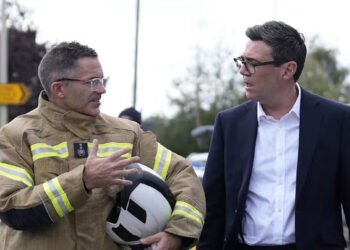 Burnham unveils £65m drought aid for farmers
 RAF Barnham Protests Fuel Tensions in Norfolk Town
 UK Households Could Save £173 on Fixed Energy Deals
 Burnham Faces Mounting Budget Challenges
 Green Leader Targets Starmer’s Former Seat
 Marina Hyde Finds Hope Amid Political Chaos
 Masked Protesters Bring Dover Port Traffic to Standstill
 Ministers Condemn Far-Right Unrest in Portsmouth
 UK House Prices Fall as Mortgage Rates Rise
 Patriot Platform Raises Concern Across Britain
 Reform UK Receives Record £36m Donation From Crypto Billionaire
 Thames Water Revises Oxfordshire Mega-Reservoir Plan
 Election Candidate Abuse Raises Alarm in England
 Fashion Firms Urge UK-Made NHS and Army Uniforms
 UK Pay Growth Slows to 3.9% as Rate Decision Nears
 Bank Urged to Slow Bond Sales as UK Costs Rise
 UK Inflation Hits 3.1% as Household Pressure Grows
 UK Youth Jobs Gap Reveals Deep Regional Divide
 Mayors Could Gain Greater Powers Over Water Firms
 Mahmood Warns Far Right Over Asylum Protests
 Disabled Travellers Seek Fairer UK Care Rules
 UK Rent Gap Puts Low-Income Families Under Pressure
 Lib Dems Prepare for Election Amid Reform Challenge
 Labour Apprenticeship Scheme Faces Slow Start
 UK Reviews Hague Child Abduction Cases Involving Abuse
 Burnham Leaves Door Open to Future Brexit Reversal
 King Refers Jamaica Slavery Petition to Privy Council
 Far-Right Activist Slashes Dinghy in Channel
 MPs Defend UK Economic Watchdog Against Critics
 GP List Policy Risks Cutting Off Vulnerable Patients
 Elif Eralp Emerges as Berlin’s Next Political Force
 Tony Blair Calls for Britain to Rejoin EU Within a Decade
 Far-Right Activist Arrested After Channel Dinghy Incident
 Portadown protest ends after tense Orange Order standoff
 Free Speech Emerges as Key UK Election Issue
 Three Die in Channel Crossing Attempt Near France
 Madrid Tent Camp Grows as Spain Housing Crisis Deepens
 Trump’s UK Ambassador Urges North Sea Drilling to Strengthen US Ties
 Millionaires group urge Reeves to introduce wealth tax to ‘lift kids out of poverty’
 Reeves rejects £1bn plea for NHS redundancy payouts
 PM Condemns Leaks, Vows Loyalty to Ministers and Stability
 Starmer Says Labour’s Economic Plan Needs Years to Deliver
 Artificial intelligence will cost jobs, admits Liz Kendall
 Wales Approves Assisted Dying Bill Consent
 Asylum Seekers to Work After Year-Long Wait
 Inquiry into HMRC child benefit errors launched by NAO
 Rising Costs Force Families to Rethink Days Out
 Relationship with Trump may be beyond repair, Starmer warned
 UK Government Poised to Revive Stalled Hillsborough Law
 Silent Tracks: Rail Line Without Passengers
 Major test for Labour as polls open in Great Britain
 Keir Starmer Struggles to Secure His Grip on Downing Street
 Farage Faces Standards Probe Over Cash Property Purchase
 Makerfield Voters Demand Real Change as Election Looms
 Labour MP Revives Blocked Assisted Dying Bill in Commons
 Burnham Pledges New Era of Open Debate for Labour MPs
 Unions Warn Labour Over Zero-Hours Contract Reforms
 British Museum Faces Questions Over Peter Thiel’s Private Bayeux Viewing
 Bayeux Tapestry Revives Franco-British Ties
 North Sea Firms Urge Early End to Windfall Tax
 Entain Plans 400 Job Cuts After Profit Update
 Tom Watson Takes Senior Role at Palantir
 The Tests Awaiting Andy Burnham After Labour Conference