Published: 15 September 2026. The English Chronicle Desk. The English Chronicle Online.
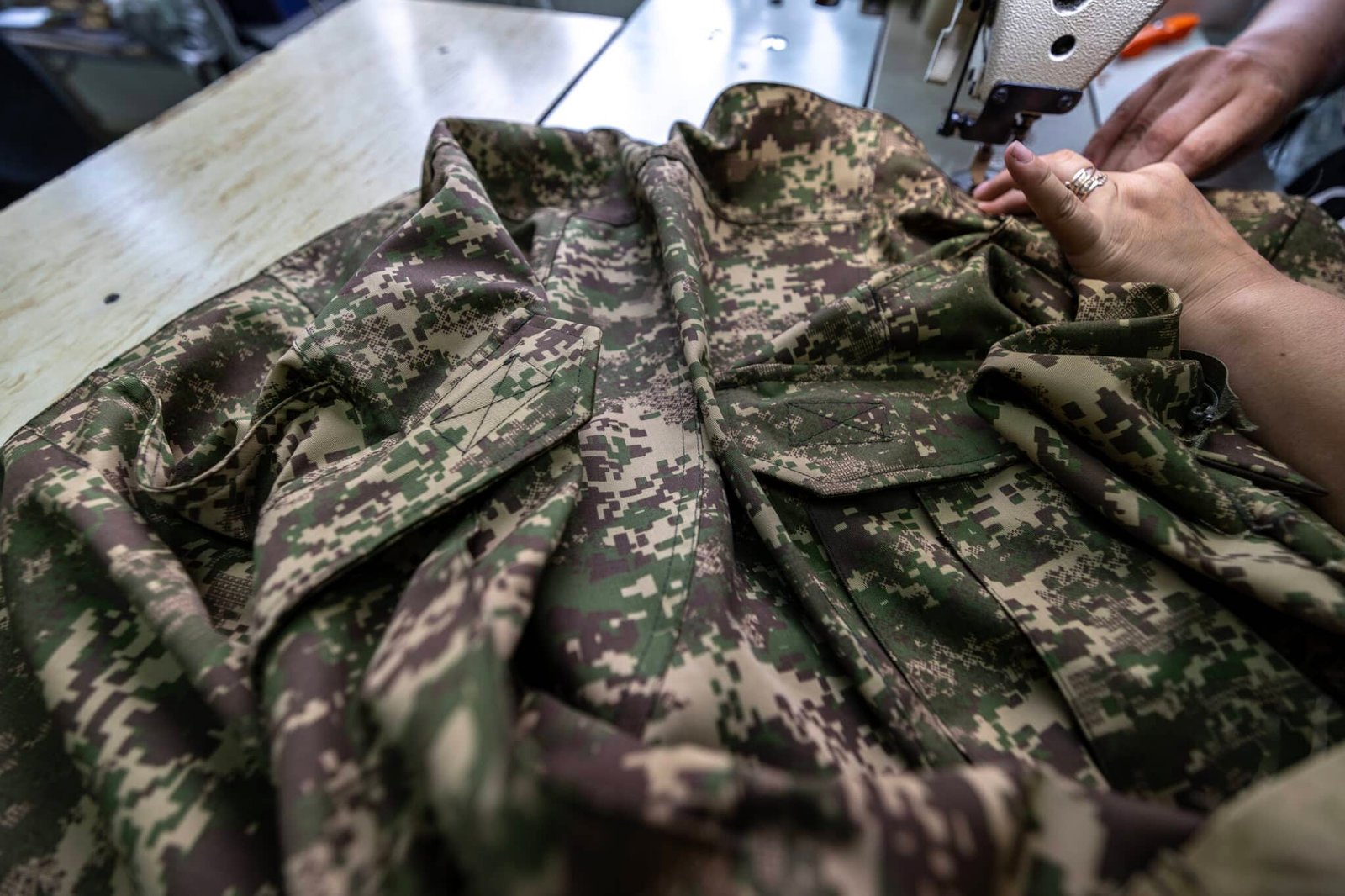
Fashion industry leaders, manufacturers and public figures are urging the UK government to ensure that uniforms for NHS workers and the armed forces are made domestically, arguing that public procurement could play a major role in protecting British manufacturing, supporting jobs and strengthening supply chains.
The campaign, led by the thinktank Fashion Roundtable, comes as the UK fashion industry prepares for London Fashion Week. More than 1,200 people have signed a letter calling for a greater commitment to British-made uniforms, with adventurer Ben Fogle and Great British Sewing Bee presenter Patrick Grant among those backing the appeal.
The letter is due to be delivered to Downing Street and calls on Andy Burnham to support a policy that would encourage the NHS and Ministry of Defence to source more of their clothing requirements from manufacturers operating within the UK.
Campaigners argue that government purchasing decisions could provide manufacturers with the stable demand needed to retain skilled workers, invest in production capacity and support economic activity in regions where textile and clothing industries have historically played an important role.

The issue has gained greater significance as concerns grow over the resilience of Britain’s manufacturing supply chains. According to an estimate by an economist working with Fashion Roundtable, the NHS and Ministry of Defence spend about £120m each year on uniforms, while around 55% of those garments are currently manufactured overseas.
For supporters of domestic production, redirecting a greater share of this spending towards UK factories would represent a relatively direct way for the government to support British industry through its own procurement decisions.
Fashion Roundtable described public procurement as one of the most significant tools available to support skills retention, inclusive economic growth and regional resilience. The organisation argues that awarding textile contracts to companies manufacturing in Britain could provide businesses with the confidence required to plan for the long term.
The experience of the Covid-19 pandemic has also strengthened arguments for more resilient domestic supply chains. The UK’s procurement of personal protective equipment became a major focus of criticism during the pandemic, while subsequent findings highlighted the enormous sums involved in purchasing PPE and the weaknesses exposed by dependence on international supply chains.
Scotland provides an example cited by campaigners of how domestic production can generate wider economic benefits. Scotland invested £102.7m in PPE and produced 88% of it domestically in 2021. The investment was estimated to have generated £66.7m in additional economic value and supported around 1,400 jobs.
Supporters of UK-made uniforms say the same principle could be applied to contracts for NHS and military clothing. Long-term government orders could give manufacturers greater certainty about future demand, allowing them to employ more people and invest in machinery, training and production facilities.
Kate Hills, founder of the manufacturing organisation Make It British, said contracts of this kind could give companies the breathing space needed to move beyond short-term survival. Greater certainty would allow manufacturers to consider expanding their workforce and making longer-term investment decisions.
The campaign also points to the United States, where military uniform procurement is subject to domestic manufacturing requirements under the Berry Amendment, legislation dating back to 1941. The policy has helped establish a system in which military clothing contracts are required to meet specific domestic sourcing rules.
The US military clothing market has continued to represent a significant commercial sector, with the industry valued at $1.62bn in 2025 according to figures cited by campaigners. The comparison is being used to demonstrate how government purchasing rules can influence the survival and development of domestic manufacturing industries.
Hills has expressed hope that Burnham could support a similar approach in Britain. She has pointed to his personal preference for UK-made clothing, including suits from Manchester-based brand Private White VC, as an indication that he understands the importance of domestic manufacturing.
Burnham has previously argued that government procurement should do more to support British manufacturers instead of simply selecting overseas suppliers on the basis of the lowest available price. Campaigners now want that principle to be applied more directly to uniforms used by public-sector workers and Britain’s armed forces.
Patrick Grant, who invested in Blackburn-based military outfitter Cookson & Clegg in 2015, is also backing the campaign. The company previously held a contract to manufacture uniforms for the British Army, although that contract ended in 2009. It now produces designs for Grant’s Community Clothing label, which has almost 2,000 employees.
Grant believes government procurement could provide precisely the type of predictable demand that manufacturers need to operate sustainably. He said businesses require steady work, visibility and long-term demand in order to invest confidently and maintain employment.
He has indicated that he would be keen for his businesses to compete for such contracts. However, he also raised concerns about the complexity of the public procurement process, saying that smaller and medium-sized manufacturers can struggle to participate because of the administrative demands involved.
According to Grant, the system can be difficult to navigate unless a company has a very large workforce and substantial administrative resources. He argued that reforming procurement procedures would therefore be necessary alongside any decision to reserve more contracts for British manufacturers.
The campaign also has a national security dimension. Questions have previously been raised about the production of some British military uniforms in China, with critics arguing that reliance on overseas suppliers could leave the UK vulnerable if geopolitical tensions disrupt supply chains.
Grant said that producing essential goods in countries with which Britain does not always have stable relationships could create serious resilience problems. If international circumstances suddenly changed, he warned, the UK could find itself without sufficient domestic capacity to replace overseas production quickly.
The argument extends beyond uniforms themselves. Supporters say maintaining domestic textile manufacturing would preserve skills and employment that could otherwise disappear. Once factories close and skilled workers leave the industry, rebuilding that capacity can be difficult and expensive.
The campaign is also being framed as part of a wider debate about the future of employment. Rapid advances in artificial intelligence are expected to transform many industries, creating uncertainty over the types of jobs that will remain available in the coming decade.
Grant argues that manufacturing offers an opportunity to think ahead by supporting jobs that will continue to be needed regardless of technological change. Public contracts for essential clothing, in his view, could help provide employment in communities while ensuring that important production capabilities remain available within Britain.
For the fashion industry, the campaign represents a shift in focus from consumer clothing to the wider industrial ecosystem that supports manufacturing. Britain’s fashion sector remains internationally recognised, but campaigners say its long-term strength depends on maintaining domestic production capabilities and skilled workers.
The proposal does not necessarily mean every uniform currently manufactured overseas would immediately move to British factories. Instead, supporters are calling for government procurement rules to give greater consideration to domestic production, supply-chain resilience, employment and the wider economic value created by public spending.
The debate also raises questions about the balance between cost and resilience. Overseas manufacturing can often offer lower prices, an important consideration for public bodies operating under financial constraints. But campaigners argue that the cheapest contract is not necessarily the most economical option when wider economic, employment and security considerations are included.
For UK manufacturers, a predictable stream of public contracts could provide an important foundation for investment. It could allow companies to train new workers, maintain equipment, increase capacity and develop expertise that could also benefit commercial customers.
The appeal comes at a significant moment for British manufacturing. While the UK remains a major centre for fashion design and creative industries, the production of garments has increasingly shifted overseas. Campaigners believe public procurement can help reverse some of that decline by creating dependable demand for domestic factories.

Ultimately, the campaign is asking the government to view uniforms not simply as another procurement expense but as an opportunity to support British industry. NHS staff and military personnel require uniforms regardless of economic conditions, making their procurement a potentially reliable source of demand for manufacturers.
Whether the government adopts such an approach remains uncertain. Any significant change would require consideration of procurement rules, costs, production capacity and the ability of British manufacturers to meet the required volume and specifications.
For the campaigners, however, the central argument is that government spending should deliver more than an immediate product at the lowest price. They believe it can also support employment, preserve skills, strengthen supply chains and maintain domestic manufacturing capacity.
As Britain considers how to protect its industrial base while preparing for a rapidly changing economy, the debate over NHS and military uniforms has become part of a much wider question: whether public money can be used strategically to ensure that essential manufacturing skills and jobs remain in the UK.
Related News:
 Thames Water Revises Oxfordshire Mega-Reservoir Plan
 UK Doubles Steel Tariffs to 50% to Protect Domestic Plants
 Reform UK funding: mystery billionaire revealed
 BBC News Faces Deep Cuts in 2,000 Job Plan
 UK Pushes for New EU Goods Trade Deal
 Reeves Fights to Keep Treasury Role Amid Labour Turmoil
 Burnham unveils £65m drought aid for farmers
 Pubs and Hotels Face Business Rates Reform Review
 UK Households Could Save £173 on Fixed Energy Deals
 Burnham Faces Mounting Budget Challenges
 Green Leader Targets Starmer’s Former Seat
 Swedish Mining Push Puts Sami Land Rights Under Pressure
 Spire Healthcare Agrees £1bn Takeover by Toscafund
 UK House Prices Fall as Mortgage Rates Rise
 UK retailers plan 100,000 placements for young people
 Oil nears $100 as Saudi attacks shake markets
 John Lewis Losses Widen to £124m as Confidence Falls
 UK Retailers Accused of Breaking Refund Laws
 Farage Threatens Union Funding Ban Over Reform Donations
 UK State Pension Set to Rise 3.9% as Triple Lock Holds
 UK Parents Cut School Uniform Costs as Prices Rise
 David Lammy Faces Possible Legal Challenge Over Foreign Office Secondment Scheme
 Chancellor Rachel Reeves Pushes for Sweeping Changes to Environmental Protections to Accelerate Development
 Starmer Urged to Champion Workers’ Rights Amid Low Public Awareness
 Rachel Reeves Hosts Top UK and US Financial Executives as Trump’s State Visit Begins
 King Charles Earns Over £1 Million from Duchy Land Linked to Scrapped HS2 Project
 Senior Tories Condemn Badenoch’s Vow to Repeal Climate Change Act as Catastrophic
 Kemi Badenoch Unveils ‘Golden Rule’ to Halve Spending Cuts for Deficit Reduction at Tory Conference
 Lucy Powell urged ministers to reconsider costly legal case for Labour donor’s firm
 Rachel Reeves to lead UK trade push in Saudi Arabia amid rights debate
 Trump’s UK Ambassador Urges North Sea Drilling to Strengthen US Ties
 Rachel Reeves Set to Break Labour Pledge and Raise Income Tax
 MPs Press Rachel Reeves to Hike Gambling Taxes
 Millionaires group urge Reeves to introduce wealth tax to ‘lift kids out of poverty’
 PM Highlights UK Business at G20 in South Africa
 Starmer Says Labour’s Economic Plan Needs Years to Deliver
 UK Government Borrowing Drops to £11.6bn in December
 UK shelves £110m border project amid trade strain
 UK Sees Record £30.4bn Budget Surplus, Boosting Reeves’ Position
 Reeves Must Back Defence Plan or Face Dismissal, Says Unite Chief
 OBR Reform Row Deepens Before Spring Forecast
 Starmer Adviser Urges New Profit Cap on Energy Firms
 Rising Costs Force Families to Rethink Days Out
 Glasgow Central Set for Full Reopening After Fire
 Unions Raise Concerns Over Doctors’ Pay Dispute
 Kezia Dugdale Warns of Possible Reversal of Equal Rights Gains
 NHS Safety Fears as Nurses Cover Doctor Gaps
 John Terry Faces Backlash Over Political Posts
 Silent Tracks: Rail Line Without Passengers
 Labour Members Turn Against Starmer Leadership
 Labour Faces Internal Pressure for Bold Economic Shift
 UK Inflation and Global Conflict Drive Up April Borrowing
 Hybrid village stores fight rural decline
 Kevin Warsh sworn in as Fed chair amid economic backlash
 Albanese Defends Tax Reforms Amid Emotional Speech
 UK Urged to Build EU Rejoin Consensus, Says Miliband
 UK rejects EV charging VAT cut amid Treasury clash
 Farage and Reform UK Reshape British Politics
 Starmer Leadership Under Pressure After Setbacks
 Andy Burnham Enlists Economic Heavyweights for Leadership Bid
 UK Nations Brace for Potential Breakup Amid Reform Surge
 Three-Quarters of England’s Riverbanks Still Off Limits
 Unions Warn Labour Over Zero-Hours Contract Reforms
 Ghent Professors Questioned Cofnas Appointment
 Trump orders US to rename Lake Ontario ‘Lake America’
 RAF Barnham Protests Fuel Tensions in Norfolk Town
 UK Risks Falling Behind in AI Race
 Europe Faces Winter Gas Supply Anxiety
 Trump Hardens Canada Trade Stance as Talks Stall
 UK Subsidence Claims Surge After Record-Breaking Summer
 Reform Faces Fresh Financial Controversy
 Masked Protesters Bring Dover Port Traffic to Standstill
 UK Cost Squeeze Deepens as Mortgages and Gas Rise
 Billionaire Chris Rokos poised to leave UK
 UK plans tougher Israel stance with settlement trade ban
 Councils spend £125m on illegal children’s care
 McLaren to Create 1,000 UK Jobs in £450m Investment
 Nats Boss Summoned as UK Flight Chaos Continues
 JPMorgan Boss Warns Against UK Bank Tax Rise
 Iceland to Open First UK High Street Store in Falklands