Published: 19 June 2026. The English Chronicle Desk. The English Chronicle Online.
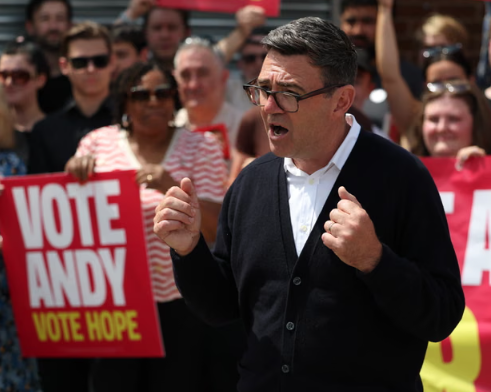
The political landscape of the United Kingdom experienced a massive shift this week as Andy Burnham secured a comprehensive victory in the crucial Makerfield byelection. This long-awaited return to the benches of parliament marks the beginning of a highly anticipated challenge to the leadership of Keir Starmer. Seeking to fortify his credentials well before launching a formal campaign, the newly elected Member of Parliament has assembled an impressively formidable team of economic advisers. This strategic grouping includes some of the most respected and established figures from across the British financial establishment. By bringing these heavyweights into his inner circle, Burnham signals a clear determination to project absolute fiscal responsibility to the City.
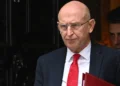
The decision to bolster his advisory team was first brought to light by prominent international financial publications. According to these early reports, the prominent figures offering their counsel include the highly respected economist Andy Haldane. Haldane previously served with distinction as the influential chief economist for the Bank of England during turbulent periods. Joining him is Richard Hughes, who possesses deep institutional knowledge from his time leading the Office for Budget Responsibility. The third member of this elite advisory trio is Lord Jim O’Neill, a renowned crossbench peer. O’Neill famously engineered the original concept of the Northern Powerhouse during the tenure of George Osborne. The immediate arrival of these prominent figures suggests that Burnham is keenly aware of his primary political vulnerabilities. In past public statements, the former Greater Manchester mayor sometimes questioned the overwhelming power held by international bond traders. Those previous remarks caused significant unease among more conservative financial commentators who value predictable economic management. Critics frequently accused him of harboring tax-and-spend tendencies that could potentially disrupt fragile national finances. By aligning himself with such mainstream economic pillars, Burnham aims to completely neutralize these long-standing criticisms. He wants to prove that his potential government would prioritize stability above all other policy goals.
The precise depth of involvement of these three economists in drafting official policy remains somewhat unclear. However, their mere presence on his team provides an invaluable shield against accusations of fiscal radicalism. Downing Street and the Treasury are reportedly monitoring the situation with an immense degree of anxiety. Government officials are watching the bond markets very closely for any signs of investor panic or volatility. The prospect of an impending leadership challenge naturally introduces an element of risk into national financial calculations. Investors typically dislike political instability, which can quickly lead to rising borrowing costs for the government.
Burnham is widely expected to initiate his challenge to the Prime Minister within the coming weeks. His initial strategy will likely involve private discussions aimed at persuading Starmer to step down gracefully. Should the Prime Minister refuse to set a firm departure date, a formal contest will begin. Insiders close to Burnham express supreme confidence that they already possess the necessary parliamentary support. They claim to have secured the backing of more than eighty-one Members of Parliament required. This substantial number suggests deep undercurrents of dissatisfaction with the current direction of the government bench.
In stark contrast, loyal allies of Starmer have issued stern public warnings about this sudden challenge. They argue that a bitter internal battle could severely destabilize both the country and the economy. The nation is currently navigating a delicate period of recovery that requires steady and uninterrupted governance. Splitting the ruling party at this crucial juncture could undermine public trust and slow economic growth. Critics of the mayor insist that a divisive leadership campaign represents an unnecessary and dangerous distraction. They believe the party should remain entirely focused on delivering its existing legislative program smoothly.
Beyond the immediate political drama, Burnham must still convince international markets of his long-term reliability. He has recently worked very hard to clarify his previous controversial comments about bond market dynamics. In a recent interview, he explained that his words had been widely misinterpreted by critics. He argued that successive governments had simply surrendered too much control over fundamental economic drivers. His current objective is to restore a healthier balance between public investment and market forces. He insists this approach does not represent a reckless departure from established economic norms.
To further reassure anxious investors, Burnham has pledged full support for existing fiscal structures. He stated clearly that he has absolutely no intention of altering current budgetary rules. These are the same strict guidelines that Chancellor Rachel Reeves committed to before the election. This explicit commitment is designed to signal continuity and prevent any sudden shocks to public finances. By adopting these parameters, Burnham hopes to demonstrate that his social goals are entirely affordable. He wants voters to see him as a safe pair of hands for management.
Speculation is also mounting rapidly over who Burnham might choose as his future Chancellor of the Exchequer. Several high-profile names are already circulating within political circles as potential candidates for the post. Some commentators suggest that Energy Secretary Ed Miliband could bring valuable cabinet experience to the role. Others point toward John Healey, who recently resigned as Defence Secretary under highly public circumstances. There is even talk of a surprise alliance with his potential leadership rival Wes Streeting. Whichever individual he eventually selects will play a crucial role in defining his economic platform.
Each advisor brought into the fold offers a uniquely distinct set of skills and perspectives. Andy Haldane currently serves as the Chief Executive of the prestigious Royal Society of Arts. Earlier this year, he publicly urged the Bank of England to halt its interest rate rises. He has also developed innovative proposals for using specialized war bonds to fund national defense. His creative yet rigorous approach to public finance adds significant intellectual weight to Burnham’s team. Haldane enjoys a strong reputation for thinking outside standard institutional boxes without sacrificing academic rigor.
Richard Hughes also brings a wealth of practical expertise despite a controversial exit from public service. He resigned his post last year after an administrative error leaked the budget details prematurely. Since that time, he has worked successfully as a senior adviser for Taula Capital. His deep familiarity with official forecasting models will be invaluable for vetting new policy proposals. Hughes understands exactly how the machinery of the Treasury operates under intense pressure from the public. His technical guidance will ensure that any future economic plans are thoroughly costed out.
Finally, Lord Jim O’Neill provides an essential bridge to both the business community and northern voters. He recently authored a comprehensive blueprint designed to stimulate long-term productivity and growth across the country. His proposals famously endorsed strategies to trigger strong rallies in both bond and equity markets. O’Neill strongly believes that a sustained construction boom can drive widespread prosperity for ordinary citizens. He argues that tangible improvements in living standards will ultimately yield massive dividends for political leaders. His presence reinforces Burnham’s central message of leveling up the regions through smart investment.
The coming weeks will undoubtedly test the resilience of this newly assembled political and economic alliance. As Burnham prepares his parliamentary comeback, the pressure from both colleagues and opponents will intensify dramatically. The success of his leadership bid depends heavily on maintaining the confidence of the City. With Haldane, Hughes, and O’Neill by his side, he has built a powerful defensive wall. Whether this sophisticated strategy will suffice to unseat a sitting Prime Minister remains to be seen. The British public now watches closely as this high-stakes political drama unfolds in Westminster.
Related News:
 Tories Push to Dilute Labour’s Workers’ Rights Bill
 Trump’s UK Ambassador Urges North Sea Drilling to Strengthen US Ties
 Rachel Reeves Set to Break Labour Pledge and Raise Income Tax
 Thinktanks Urge Rachel Reeves to Reform UK Tax System
 Company linked to Michelle Mone owes £39m in tax
MPs Press Rachel Reeves to Hike Gambling Taxes
Company linked to Michelle Mone owes £39m in tax
MPs Press Rachel Reeves to Hike Gambling Taxes
 Cuts to home insulation funding threaten UK climate goals
 Millionaires group urge Reeves to introduce wealth tax to ‘lift kids out of poverty’
 PM Highlights UK Business at G20 in South Africa
 English Mayors Set to Introduce Tourist Taxes
 Starmer Says Labour’s Economic Plan Needs Years to Deliver
BBC bosses ‘right to stick by their guns’ against Trump, says minister
Starmer Says Labour’s Economic Plan Needs Years to Deliver
BBC bosses ‘right to stick by their guns’ against Trump, says minister
 China Dependence Threatens UK Energy Supply Chains and Jobs
 MPs warn AI financial risks threaten UK stability
 MPs warn AI financial risks threaten UK stability
 UK Government Borrowing Drops to £11.6bn in December
 Labour Must Revive High Streets to Avoid Election Collapse
 Barclays drops Global Counsel after Mandelson link scrutiny
 Unsustainable gaps in franchise policing, MPs warn
 UK shelves £110m border project amid trade strain
 UK Sees Record £30.4bn Budget Surplus, Boosting Reeves’ Position
 Ministers Urged to Ban Crypto Political Donations
 Reeves Must Back Defence Plan or Face Dismissal, Says Unite Chief
 OBR Reform Row Deepens Before Spring Forecast
 UK Doubles Steel Tariffs to 50% to Protect Domestic Plants
 Starmer Adviser Urges New Profit Cap on Energy Firms
 Fuel Duty Relief Plea Amid Middle East Oil Crisis
 OpenAI Halts Stargate UK Project Amid Energy Crisis
 Reform UK funding: mystery billionaire revealed
 BBC News Faces Deep Cuts in 2,000 Job Plan
 Silent Tracks: Rail Line Without Passengers
 Labour Faces Internal Pressure for Bold Economic Shift
 Labour Factions Propose Bold Tax Cuts Amid Leadership Storm
 Thames Water Rescue Package Hit by Downing Street Chaos
 UK Pushes for New EU Goods Trade Deal
 Reeves Fights to Keep Treasury Role Amid Labour Turmoil
 UK Urged to Build EU Rejoin Consensus, Says Miliband
 UK Supply Chains Face Major Risks From Global Instability
 Hospitality Traders to Exploit Summer VAT Cut Loophole
 Great Britain Faces £90bn Electricity Grid Rewire Bill
 Burnham Promises Relief on Cost of Living Crisis
 Burnham unveils £65m drought aid for farmers
 Kemi Badenoch Unveils ‘Golden Rule’ to Halve Spending Cuts for Deficit Reduction at Tory Conference
 Reeves Faces Setback as Labour May Miss Homes Target
M&S Profits More Than Halve After Cyber-Attack
Reeves Faces Setback as Labour May Miss Homes Target
M&S Profits More Than Halve After Cyber-Attack
 Reeves rejects £1bn plea for NHS redundancy payouts
 PM Condemns Leaks, Vows Loyalty to Ministers and Stability
 Major Rent Reform Ends No-Fault Evictions in England
 Starmer Faces Parliamentary Battles Over UK-EU ‘Reset’ Plan
 ScottishPower Tops List of Worst UK Energy Suppliers
 Trump Fed bid heads to Supreme Court
 Artificial intelligence will cost jobs, admits Liz Kendall
 Mandelson Faces Police Inquiry Over Epstein Leak
 Morgan McSweeney downfall shocks Labour leadership
 UK Unemployment Rate Climbs to 5.2% Peak
 Farage Unveils Reform UK Frontbench Team
 Wales Approves Assisted Dying Bill Consent
 Corbyn Leads Your Party in Coordinated Left-Flank Strategy
 Asylum Seekers to Work After Year-Long Wait
 Starmer Row as Greens Demand Apology
 Gordon Brown urges court for crimes against children
 Inquiry into HMRC child benefit errors launched by NAO
 Farage Faces Backlash Over Crypto Cameo Endorsements
 Rising Costs Force Families to Rethink Days Out
 Relationship with Trump may be beyond repair, Starmer warned
 Unions Raise Concerns Over Doctors’ Pay Dispute
 UK Government Poised to Revive Stalled Hillsborough Law
 Aegon Sells Historic UK Arm to Standard Life for £2bn
 UK Staycations Rise as Travel Fears Grow
 UK Stands Firm on Falklands Amid US Rift
 Welsh Labour Faces Potential Historic Election Defeat
 Major test for Labour as polls open in Great Britain
 Keir Starmer Struggles to Secure His Grip on Downing Street
 Farage Faces Standards Probe Over Cash Property Purchase
 Tube Strike Brings Capital to a Standstill Over Shift Disputes
 Makerfield Voters Demand Real Change as Election Looms
 Labour MP Revives Blocked Assisted Dying Bill in Commons
 Sainsbury’s Boss Optimistic As Grocery Inflation Eases
 Farage Warns Sky News Following Financial Inquiry
 Ann Widdecombe, Formidable Political Figure, Dies at 78