Published: 19 May 2026. The English Chronicle Desk. The English Chronicle Online.
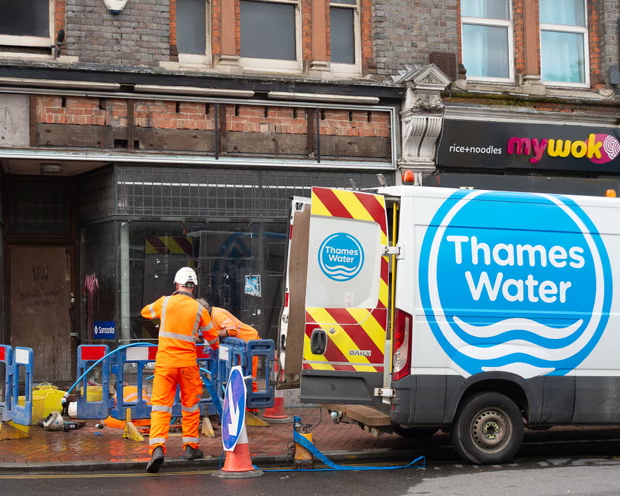
The precarious future of Britain’s largest water utility company is facing severe complications today. A multi-billion pound rescue package for Thames Water is now under threat from political chaos. Government insiders suggest that leadership uncertainty within Downing Street is stalling the critical negotiations. Ministers had been working diligently to secure a private takeover for the struggling utility giant. This complex deal involves an ambitious consortium of creditors led by American firm Elliott Management. Officials initially expected the parties to finalize this emergency agreement within the current month. However, high-level government sources confirm that negotiations have recently hit a significant roadblock. This sudden friction stems directly from the growing instability surrounding Prime Minister Keir Starmer.
Speculation about a potential change in the nation’s political leadership is rising rapidly. The most prominent figure positioned to succeed the current prime minister is Andy Burnham. The Greater Manchester mayor has consistently advocated for bringing utility companies into public ownership. Furthermore, his core political supporters are urging him to nationalize Thames Water immediately. A senior official within the environment department described the current situation as deeply volatile. They noted that political developments are changing daily, creating immense uncertainty for everyone. This official acknowledged that Starmer might not survive as prime minister until next year. However, department staff are equally frustrated by continuous media leaks from corporate creditors. They expressed deep dissatisfaction that sensitive details of the package keep appearing in print. The same source added that the top of government currently offers little direction.
In response to these concerns, a government spokesperson provided a brief official statement. They insisted that the current administration will always act firmly in the national interest. The spokesperson claimed the utility remains financially stable despite the ongoing political media storm. Nevertheless, officials stand ready for all eventualities regarding the firm’s immediate future. This preparation includes applying for a special administration regime if conditions worsen significantly. Thames Water has desperately tried to avoid total financial collapse for two full years. The company accumulated a staggering debt pile of seventeen billion pounds over decades. This massive financial burden built up steadily following the original privatization of water utilities. Executives attempted to sell the entire business last year to stabilize their operations. However, their preferred investment bidder unexpectedly pulled out of the deal very late.
The current group of creditors provided three billion pounds in emergency funding last year. These corporate lenders are now demanding significant concessions before signing the new agreement. Specifically, they want a complete write-off of millions of pounds in environmental fines. Regulators issued these heavy penalties after the company dumped raw sewage into waterways. The investors also demand a major reduction in required environmental investments until thirty thirty. Government sources have defended this controversial corporate rescue plan until very recently. Officials argued that full public control would cost taxpayers one hundred billion pounds. This massive sum would supposedly be required to compensate all private sector creditors. However, several independent financial experts have strongly disputed this enormous government cost estimate.
Industry experts argue that ministers are not legally obligated to compensate these investors. They point to the terrible financial state of the firm as justification for this. Additionally, lenders have already extracted billions of pounds in profits over previous decades. If this current rescue deal collapses, the company will enter special administration immediately. This legal process represents a form of temporary nationalization managed by the state. The government would then choose between two distinct options for the utility’s future. Officials could either sell the business to the highest bidder or nationalize it. Burnham is currently aiming to win an upcoming byelection in the Makerfield constituency. This expected electoral victory would allow him to challenge Starmer for the leadership. He believes the government must be more willing to take utilities into ownership.
The ambitious politician recently highlighted his successful reform of Manchester’s local bus network. He noted that public control successfully delivered affordable two-pound fares for regular passengers. Burnham believes this successful socialist principle should apply directly to energy and water. Many of his prominent political supporters strongly echo this desire for public water. These allies include Compass, an influential thinktank run by close associate Neal Lawson. This specific organization has been running a high-profile campaign for full public ownership. Lena Swedlow, the deputy director of Compass, spoke out strongly against the deal. She stated that refusing to move the company into special administration is shortsighted. Swedlow warned that private rescue plans mean taking more debt to service debt.
Earlier this month, another influential political figure added pressure to the current government. Member of Parliament Yuan Yang wrote a detailed essay regarding the water crisis. Yang represents the Tribune group, which maintains very close ties to the Manchester mayor. Her widely read essay called for ministers to utilize the special administration regime. However, sources within the environment department believe the political pressure is widespread now. They suggest that any Labour leader would find this private deal difficult to approve. Even a weakened Starmer would struggle to accept the terms demanded by creditors. Meanwhile, representatives for the creditors are defending their proposed market-based rescue plan. A spokesperson for the London and Valley consortium released an official statement today. They argued their plan is the fastest route to solving these complex problems.
The corporate consortium insists their solution requires absolutely no funding from British taxpayers. They believe that implementing a credible market solution immediately is the right answer. The group warned that triggering special administration would create unnecessary and dangerous delays. This legal intervention would completely restart the lengthy process of fixing the business. Furthermore, it would increase financial uncertainty for thousands of dedicated utility employees. Such a delay would also destabilize the wider engineering and maintenance supply chain. Lenders argue it would ultimately delay improvements that everyday water customers deserve. A spokesperson for Thames Water also provided a brief update on their position. They stated the company is working hard to secure a stable future. Management remains focused on delivering operational turnarounds and protecting the local environment.
Related News:
 Tories Push to Dilute Labour’s Workers’ Rights Bill
 Trump’s UK Ambassador Urges North Sea Drilling to Strengthen US Ties
 Rachel Reeves Set to Break Labour Pledge and Raise Income Tax
 Thinktanks Urge Rachel Reeves to Reform UK Tax System
 Company linked to Michelle Mone owes £39m in tax
MPs Press Rachel Reeves to Hike Gambling Taxes
Company linked to Michelle Mone owes £39m in tax
MPs Press Rachel Reeves to Hike Gambling Taxes
 Cuts to home insulation funding threaten UK climate goals
 Millionaires group urge Reeves to introduce wealth tax to ‘lift kids out of poverty’
 PM Highlights UK Business at G20 in South Africa
 English Mayors Set to Introduce Tourist Taxes
 Starmer Says Labour’s Economic Plan Needs Years to Deliver
BBC bosses ‘right to stick by their guns’ against Trump, says minister
Starmer Says Labour’s Economic Plan Needs Years to Deliver
BBC bosses ‘right to stick by their guns’ against Trump, says minister
 China Dependence Threatens UK Energy Supply Chains and Jobs
 MPs warn AI financial risks threaten UK stability
 MPs warn AI financial risks threaten UK stability
 UK Government Borrowing Drops to £11.6bn in December
 Labour Must Revive High Streets to Avoid Election Collapse
 Barclays drops Global Counsel after Mandelson link scrutiny
 Unsustainable gaps in franchise policing, MPs warn
 UK shelves £110m border project amid trade strain
 UK Sees Record £30.4bn Budget Surplus, Boosting Reeves’ Position
 Ministers Urged to Ban Crypto Political Donations
 Reeves Must Back Defence Plan or Face Dismissal, Says Unite Chief
 OBR Reform Row Deepens Before Spring Forecast
 UK Doubles Steel Tariffs to 50% to Protect Domestic Plants
 Starmer Adviser Urges New Profit Cap on Energy Firms
 Fuel Duty Relief Plea Amid Middle East Oil Crisis
 OpenAI Halts Stargate UK Project Amid Energy Crisis
 Reform UK funding: mystery billionaire revealed
 BBC News Faces Deep Cuts in 2,000 Job Plan
 Silent Tracks: Rail Line Without Passengers
 Labour Faces Internal Pressure for Bold Economic Shift
 Labour Factions Propose Bold Tax Cuts Amid Leadership Storm
 UK Pushes for New EU Goods Trade Deal
 Reeves Fights to Keep Treasury Role Amid Labour Turmoil
 UK Urged to Build EU Rejoin Consensus, Says Miliband
 UK Supply Chains Face Major Risks From Global Instability
 Hospitality Traders to Exploit Summer VAT Cut Loophole
 Andy Burnham Enlists Economic Heavyweights for Leadership Bid
 Great Britain Faces £90bn Electricity Grid Rewire Bill
 Burnham Promises Relief on Cost of Living Crisis
 Burnham unveils £65m drought aid for farmers
 Kemi Badenoch Unveils ‘Golden Rule’ to Halve Spending Cuts for Deficit Reduction at Tory Conference
 Reeves Faces Setback as Labour May Miss Homes Target
M&S Profits More Than Halve After Cyber-Attack
Reeves Faces Setback as Labour May Miss Homes Target
M&S Profits More Than Halve After Cyber-Attack
 Reeves rejects £1bn plea for NHS redundancy payouts
 PM Condemns Leaks, Vows Loyalty to Ministers and Stability
 Major Rent Reform Ends No-Fault Evictions in England
 Starmer Faces Parliamentary Battles Over UK-EU ‘Reset’ Plan
 ScottishPower Tops List of Worst UK Energy Suppliers
 Trump Fed bid heads to Supreme Court
 Artificial intelligence will cost jobs, admits Liz Kendall
 Mandelson Faces Police Inquiry Over Epstein Leak
 Morgan McSweeney downfall shocks Labour leadership
 UK Unemployment Rate Climbs to 5.2% Peak
 Farage Unveils Reform UK Frontbench Team
 Wales Approves Assisted Dying Bill Consent
 Corbyn Leads Your Party in Coordinated Left-Flank Strategy
 Asylum Seekers to Work After Year-Long Wait
 Starmer Row as Greens Demand Apology
 Gordon Brown urges court for crimes against children
 Inquiry into HMRC child benefit errors launched by NAO
 Rising Costs Force Families to Rethink Days Out
 Relationship with Trump may be beyond repair, Starmer warned
 UK Government Poised to Revive Stalled Hillsborough Law
 UK Staycations Rise as Travel Fears Grow
 Welsh Labour Faces Potential Historic Election Defeat
 Major test for Labour as polls open in Great Britain
 Keir Starmer Struggles to Secure His Grip on Downing Street
 Farage Faces Standards Probe Over Cash Property Purchase
 Reeves to Fast-Track Clean Energy Amid Iran Crisis
 Secret Role of UK Security Services in Troubles Amnesty Law
 Tube Strike Brings Capital to a Standstill Over Shift Disputes
 BP Stands Firm on Amanda Blanc Amid Boardroom Storm
 UK House Prices Drop For Third Month Due To War Fears
 The Hidden Crisis Eroding Trust in British Communities
 Deepfake Abuse on X Sparks Safety Concerns for Dissidents
 Sainsbury’s Boss Optimistic As Grocery Inflation Eases
 Farage Warns Sky News Following Financial Inquiry
 Ann Widdecombe, Formidable Political Figure, Dies at 78