Published: 19 May 2026. The English Chronicle Desk. The English Chronicle Online.
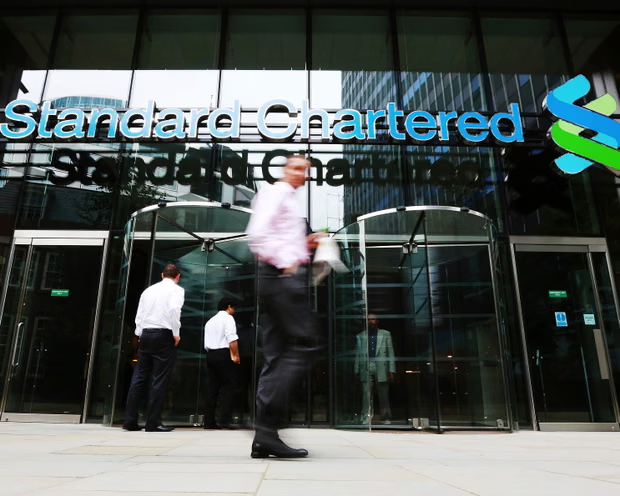
The banking sector faces a massive transformation as technology redefines the future of corporate workforces. Standard Chartered has announced a sweeping plan to restructure its international operations over four years. This strategy involves the reduction of more than seven thousand positions within its global network. The London-headquartered lender stands as one of the first major financial institutions to take this step. Executives explicitly cited the rapid adoption of artificial intelligence as the primary driver for change. This initiative aims to make the bank significantly leaner while boosting its long-term profitability. Furthermore, the strategy will help the firm tackle fierce competition from emerging digital platforms.
The banking group outlined these comprehensive restructuring measures during a major strategy update on Tuesday. Plans indicate the lender will reduce fifteen percent of its back-office roles by 2030. This decision translates into roughly seven thousand eight hundred redundancies across specific operational departments. Currently, the multinational financial firm employs more than fifty-two thousand staff in these positions. The company maintains a total workforce of nearly eighty-two thousand people across the globe. Chief Executive Bill Winters stated that automation will heavily drive this upcoming workforce reduction. He also emphasized that the widespread adoption of artificial intelligence remains central to this shift.
Management believes that some affected employees will have opportunities to reskill for other roles. However, the deepest job cuts will primarily impact the bank’s extensive back-office hubs. These operational centres include major facilities located in Chennai, Bengaluru, Kuala Lumpur, and Warsaw. Winters explained that the strategy is not simply a traditional cost-cutting exercise for the firm. Instead, the bank is replacing certain lower-value human capital with substantial financial investment capital. The institution is directing massive resources into sophisticated software systems to upgrade its infrastructure. These cuts coincide with the announcement of higher return targets for the bank’s shareholders.
The strategy update arrives as Standard Chartered concludes a decade-long effort to transform its business. Previously, the global institution was frequently viewed by analysts as a potential takeover target. Today, the group has successfully repositioned itself as a steadily profitable and independent lender. This move to streamline operations comes as global firms slash jobs by deploying AI. Many international corporations are using advanced automation tools to improve overall organizational efficiency. Global lenders are also scrambling to integrate new artificial intelligence models into daily workflows. Simultaneously, financial firms must defend their vast networks against rapidly rising cyber threats.
Winters expressed immense confidence in the ongoing automation of the bank’s core systems. He noted that artificial intelligence will serve as a huge facilitator for these goals. The technology acts as an essential enabler for the bank’s long-term operational evolution. Recent industry research supports the idea that automation will dramatically reshape the financial sector. A study released by Morgan Stanley estimated significant risks for European banking employment. The Wall Street bank suggested AI could threaten over two hundred thousand jobs. This massive figure represents about ten percent of all banking roles across Europe.
Most financial companies have already started using artificial intelligence to boost daily productivity. However, very few executives have made an explicit link between technology and layoffs. Many corporations prefer to suggest that advanced technology will merely slow down hiring. They argue that automation will naturally fill the gaps left by retiring employees. In contrast, the Swedish buy now pay later company Klarna took bolder action. The fintech firm announced in late 2024 that it had frozen all hiring. Their internal artificial intelligence systems successfully performed the work of hundreds of staff.
The strategy update also arrives at a crucial time for internal corporate governance. Standard Chartered is actively seeking to quell persistent market speculation about succession planning. Winters has enjoyed an impressive eleven-year stint at the helm of the bank. The board recently confirmed he will remain in his role for several years. This continuity ensures the chief executive can fully see through the latest strategic plan. The bank must deliver stronger growth despite facing intense and unpredictable geopolitical uncertainty. This volatility continues to cloud the economic outlook for several key international markets.
Financial analysts have warned that Asia-Pacific banks face unique economic pressures this year. These institutions may need to raise loan-loss provisions if regional conflicts drag on. Higher energy costs and weaker economic growth will likely strain individual corporate borrowers. Standard Chartered focuses its commercial operations heavily on the Asia-Pacific region and Africa. Consequently, the lender set aside one hundred and ninety million dollars recently. This sum equals roughly one hundred and forty-two million pounds in UK currency. These precautionary provisions link directly to the ongoing conflict in the Middle East.
The bank created this financial cushion during the first three months of this year. Despite these heavy global headwinds, leadership remains highly optimistic about the company’s future. Winters firmly stated that the financial institution is extremely resilient against market shocks. He dismissed concerns regarding the negative impact of geopolitical and market risks on targets. The bank believes its upgraded digital infrastructure will safeguard profits during turbulent times. Shareholders are watching closely to see if this technological pivot yields the promised rewards. The transition from human labor to automated systems represents a pivotal corporate milestone.
This bold strategy will undoubtedly influence how rival institutions approach their own staffing needs. Competitors are observing Standard Chartered to measure the true efficiency of automated banking. If successful, this model could accelerate similar layoffs across the entire global financial sector. Employees in back-office roles worldwide face an increasingly uncertain future due to technology. The balance between human expertise and machine efficiency remains a delicate corporate challenge. For now, London’s prominent lender is moving full steam ahead with its plan. The coming years will reveal whether artificial intelligence can truly replace traditional banking roles.
Related News:
 Reeves Faces Setback as Labour May Miss Homes Target
 Virgin Trains Moves Closer to Challenging Eurostar Monopoly
 Trump’s UK Ambassador Urges North Sea Drilling to Strengthen US Ties
 Ryanair Chief UK Economy ‘Doomed’ Under Labour
 M&S Profits More Than Halve After Cyber-Attack
 Earl of Yarmouth Faces £1.3m Legal Bill Over Family Estate
 Millionaires group urge Reeves to introduce wealth tax to ‘lift kids out of poverty’
 From Lego to Pokémon: How Adults Are Driving UK Toy Market Growth
 New laws to bolster UK’s defences against cyber attacks on NHS, transport and energy
 Canada Passes Carney’s First Budget in Tight Parliamentary Vote
 Starmer Says Labour’s Economic Plan Needs Years to Deliver
 Virgin Media Fined £23.8m Over Telecare Safety Failures
 Starmer Faces Parliamentary Battles Over UK-EU ‘Reset’ Plan
 Reeves Pub Business Rates U-Turn Calms Labour Revolt
 ScottishPower Tops List of Worst UK Energy Suppliers
 Markets Slide As Gold Rally Signals Risk From Trump Greenland Tariff Plan
 UK Eyes Global Investment with Visa Fee Refunds
 City & Guilds pay surge sparks backlash amid £22m cuts
 UK Inflation Hits 3.4% in December, Ending Five-Month Decline
 Trump Fed bid heads to Supreme Court
 ‘Black Tax’: Burden, Pride and Survival for African Workers
 AI job losses UK: Britain faces sharper employment shock
 India-EU Free Trade Deal Marks Historic Economic Shift
 Telstra AI jobs cuts as automation drive expands
 BT Names New Openreach Chief Amid Major Fibre Expansion
 UK Banks Plot Payment Backup Amid Trump Fears
 UK Unemployment Rate Climbs to 5.2% Peak
 UK shelves £110m border project amid trade strain
 Rachel Reeves Faces Middle East Conflict Test
 Grocery Inflation Rises Amid War Fears
 BrewDog sold Highland estate for knockdown price after abandoning reforestation plans
 Rising Costs Force Families to Rethink Days Out
 Oil Slides, Stocks Jump on Trump Peace Signals
 UK inflation held at 3% before global energy price hit
 Ticketmaster Fees Rise Despite Recent US Junk Fee Crackdown
 M&S Demands Urgent Action on Rising Violent Retail Crime
 New Era for Sick Pay as Millions Gain Critical Rights
 Oil Prices Surge as Trump Issues New Deadline to Iran
 US and Iran Agree to Two-Week Provisional Ceasefire
 Stefano Gabbana Resigns as Chair of Italian Luxury Giant
 Rolls-Royce SMR Secures £600m Boost for Nuclear Future
 Aegon Sells Historic UK Arm to Standard Life for £2bn
 Central Bank Chiefs Hold Crisis Simulation in Washington
 UK Staycations Rise as Travel Fears Grow
 Former Brexit Chief Calls for Rejoining the EU
 Albanese Rejects Gas Export Tax Push
 Oil Prices Surge Above $120 Amid Iran Blockade Fears
 Silent Tracks: Rail Line Without Passengers
 Trump approval plunges amid Iran war fears
 Tough Fiscal Realities Await Next Scottish Government
 DeepMind Staff Vote to Unionize Over US Military Contract
 Global Conflict Hits Home As Bullock Warns Of Economic Pain
 STV Election Coverage Disrupted Amid Bitter Pay Dispute
 Aramco Surges as East-West Pipeline Counters Gulf Tensions
 High Stakes in Beijing as Trump and Xi Meet Amid Global Turmoil
 Lotus Boss Pledges Future to Norfolk and Seeks State Support
 Trump and Xi Convene in Beijing for Historic High-Stakes Summit
 High Street Crisis: Fears Grow Over Post Office Closures
 UK Firms Freeze Spending as Iran Conflict Bites
 Rubles and Resilience: How Russia-China Border Towns Thrive
 Reeves to Fast-Track Clean Energy Amid Iran Crisis
 Oil Markets Face ‘Red Zone’ Threat Amid Iran Crisis
 Belfast Approves Pilot Extension of Sunday Trading Hours
 Albanese Defends Tax Reforms Amid Emotional Speech
 Tube Strike Brings Capital to a Standstill Over Shift Disputes
 BP Stands Firm on Amanda Blanc Amid Boardroom Storm
 UK House Prices Drop For Third Month Due To War Fears
 Top Chefs Back Andy Burnham to Save UK Hospitality Sector
 GSK Secures Landmark $10.6bn Deal for Nuvalent
 UK Economy Suffers a Sharp Downturn as Iran Conflict Bites
 AI Scams Push UK Investment Fraud Past £220m
 Rethinking the Blueprint for Youth Employment in Britain
 Sainsbury’s Boss Optimistic As Grocery Inflation Eases
 UK Households Suffer Squeeze As Disposable Incomes Drop
 Creditors Eye Thames Water Even Under Nationalisation
 Record £28m Fine for Virgin Media Over Cancellation Woes
 Jet2 Sees Summer Surge Despite Global Tensions
 Ukraine Creates Long-Range Strike Command
 BBC Faces Real Jeopardy as Licence Fee Income Declines
 Thames Water Future Remains Uncertain Amid Funding Crunch