Published: 7 August 2026
The English Chronicle Desk
The English Chronicle Online
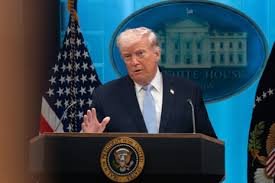
The United States has taken another significant step in its ongoing economic and technological rivalry with China after President Donald Trump announced sweeping new trade measures targeting polysilicon, a vital material used in semiconductor manufacturing and solar panel production. The White House confirmed that imported polysilicon and products containing the material will face a new 15% tariff beginning later this year, alongside the introduction of minimum import pricing designed to prevent overseas producers from undercutting American manufacturers.
The latest move marks another chapter in Washington’s broader effort to strengthen domestic supply chains while reducing reliance on Chinese-controlled industries that are increasingly viewed as essential to national security. The decision follows a months-long federal investigation examining whether dependence on imported polysilicon threatens the United States’ economic resilience and technological leadership.
Officials argue the new policy is not simply another tariff announcement but part of a long-term industrial strategy aimed at rebuilding America’s advanced manufacturing base. The administration believes the measure will encourage greater investment in domestic production, safeguard critical industries, and reduce vulnerabilities that have developed over decades as manufacturing shifted overseas.

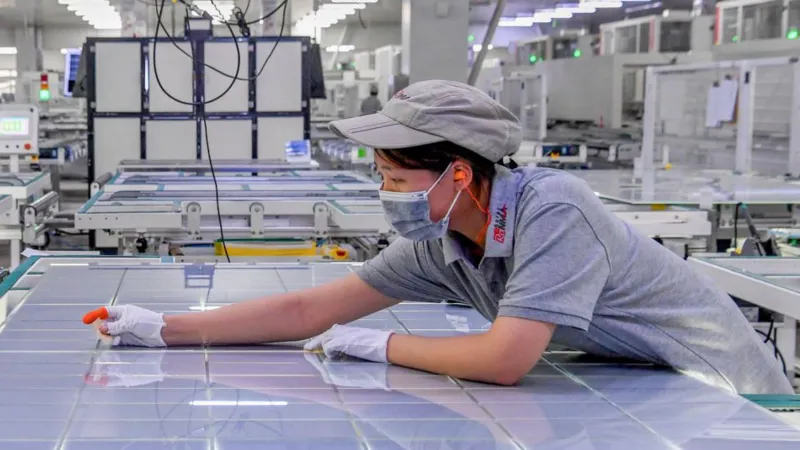
Polysilicon occupies a unique position in today’s global economy. It serves as one of the most important raw materials for producing semiconductor wafers, which power everything from smartphones and laptops to military communication systems, artificial intelligence processors and advanced medical equipment. It is also a key component in photovoltaic cells used across the renewable energy sector.
Because of its importance across multiple strategic industries, governments worldwide increasingly view access to polysilicon as an issue extending beyond ordinary trade policy. Instead, it has become intertwined with national security, economic competitiveness and geopolitical influence.
President Trump signed the executive order after receiving recommendations from Commerce Secretary Howard Lutnick, whose department concluded that American producers continue to face intense pricing pressure from foreign suppliers. The administration says artificially low-priced imports have significantly weakened domestic manufacturers over the past two decades.
According to the White House, the United States once accounted for nearly half of global polysilicon production. That dominance has steadily eroded, leaving American producers responsible for only a small fraction of worldwide output. Officials attribute much of that decline to aggressive industrial policies adopted by China, including heavy government subsidies, low-cost financing and extensive state support for manufacturing expansion.
Trump argued that allowing foreign competitors to dominate such a strategically important material poses unacceptable risks for the country’s economic future.
“For decades, overseas competitors have benefited from unfair practices that weakened American industry,” the administration stated while outlining the new policy. “These measures are intended to restore competitiveness, protect critical supply chains and ensure long-term national security.”
The executive order introduces two major changes. First, imports of polysilicon and selected related products will face a 15% tariff. Second, minimum import prices will be established to prevent foreign producers from selling products below designated thresholds, a practice American manufacturers have long argued distorts fair market competition.
Officials believe both mechanisms working together will create more stable market conditions for domestic producers while encouraging companies to invest in new production facilities within the United States.
The administration also pledged additional financial incentives aimed at expanding American manufacturing capacity. While specific details remain under development, officials indicated that federal support will focus on increasing domestic production of materials considered essential to semiconductor manufacturing and other advanced technologies.
Industry analysts note that the policy could provide a major boost for the few remaining large-scale American polysilicon manufacturers. Companies including Hemlock Semiconductor and German-owned Wacker Chemie’s U.S. operations are expected to benefit from reduced pressure from lower-priced imports.
Supporters of the move argue that rebuilding domestic production will strengthen America’s position in the increasingly competitive global technology sector. They point out that semiconductor supply chains have become central to everything from artificial intelligence development and defence technology to consumer electronics and modern infrastructure.
Recent geopolitical tensions have reinforced concerns about concentrated supply chains, particularly where production is dominated by a single country.

China currently holds an overwhelming share of global polysilicon manufacturing capacity after investing heavily in the sector for years. That dominance has enabled Chinese companies to become major suppliers for both semiconductor manufacturers and renewable energy firms worldwide.
Washington has repeatedly expressed concern that such concentration creates strategic vulnerabilities. American policymakers argue that excessive dependence on imported critical materials leaves domestic industries exposed to future political disputes, export restrictions or supply disruptions.
The tariff announcement therefore reflects a broader shift in U.S. industrial policy that increasingly favours domestic production of strategically significant goods rather than relying on globalised manufacturing networks.
Related News:
 Trump Tariffs Could Cut Northern Ireland Exports to the US by 15%, Research Suggests
 Uncertainties Loom for Businesses and Consumers After Trump’s Tariff Changes
 Canada Eyes Trade Talks After US Supreme Court Tosses Trump Tariffs
 US Will Not Back Out of Tariff Deals with UK and Others, Says Trump Trade Representative
 Trump’s tariff strategy collapse sows global chaos and confusion
 Trump’s new tariff takes effect at lower than expected rate
 What Tariffs Has Trump Introduced and Why?
 Canada’s Finance Minister Says US Unlikely to Lift Tariffs
 Why Asian Firms Are Not Cheering Trump Tariff Ruling
 Why Asian Firms Are Not Cheering Trump Tariff Ruling
 India and Canada Seal Series of Deals as Carney and Modi Reset Ties
 India and Canada Reset Ties with Landmark Nuclear Energy Deal
 China Exports Surge Despite Trump Tariffs
 Gas on the Line: Will the Iran War Squeeze India’s Piped Gas Next?
 Capitol Attack Anniversary Sparks Deep Political Divide
 Uber Faces Sexual Assault Trial in Arizona, Safety Record Scrutinised
 German Supermarket Aldi to Open 180 US Stores This Year
 Trump targets Iran trade with 25% tariff warning
 Canada-China trade gains momentum in new strategic partnership
 Trump Receives Machado’s Nobel Medal in White House Meeting
 Fears of New Arms Race as US-Russia Nuclear Weapons Treaty Expires
 Venezuela’s Opposition Says Party Leader Kidnapped Hours After Being Freed
 Iran Says ‘Guiding Principles’ Agreed With US at Nuclear Talks
 Live Markets Bet on Spring Rate Cut as Inflation Falls
 Sanders Condemns Billionaire ‘Greed’ in California Tax Debate
 ‘We’re Still on Edge’: Toy Firms Look to US Supreme Court as Tariffs Hit Profits

 Bill Gates ‘Took Responsibility’ Over Epstein Ties in Staff Meeting, Foundation Says
 US ‘Suitcase Murderer’ Deported From Bali After 11 Years in Jail
 US Trade Court Orders Tariff Refunds in Setback for Trump Administration
 Iran Rejects Ceasefire, Warns Trump With Chilling Message
 Abramovich Chelsea Sale Cash Faces Jersey Probe
 US Launches Probe into Trading Partners Including EU, China, and India
 IMF Predicts Global Economic Crisis Due to Gulf Unrest
 Chain of Fire: US Bunker Busters Strike Major Iranian Ammo Depot in Isfahan
 Trump Slams Europe as Transatlantic Tensions Boil Over
 The Draft Debate: Anxiety Rises as Iran Conflict Persists
 ‘Targeting the Truth’: US Journalist Shelly Kittleson Abducted in Central Baghdad
 ‘The 42-Day Rally’: Asian Markets Surge as Trump Signals ‘Rapid’ Iran Exit
 Can Congress Stop US Sports Teams From Moving Cities?
 Trump Issues Stark Warning After Strike On Iran’s Largest Bridge
 The Moral Crisis Looming Within the American Chain of Command
 US and Iran Agree to Two-Week Provisional Ceasefire
 Trump Signals Hope for New Iran Talks as Ceasefire Fades
 Ian Katz to Step Down as Channel 4 Content Chief
 Middle East Conflict Risks UK Food Supply Chains This Summer
 Trump Starts $166bn Tariff Refund Process
 Ukraine Urges UK to Seize Russian Oil Tankers
 US Calls Australia Media Law “Foreign Extortion”
 Trump’s Approval Hits Record Low Amid Economic Crisis
 Trump Threatens UN Budget Cuts as US Pushes ‘Trade Over Aid’ Agenda
 Tensions Emerge in Netanyahu-Trump Alliance
 US Awaits Iran Reply on New Ceasefire Proposal
 US Cities See 42% Drop in Canadian Visits Under Trump 2.0
 Big Tobacco Under Fire Over Controversial New Ad Campaign
 Democrats release 2024 election report amid fierce backlash
 Tulsi Gabbard exits after turbulent intelligence tenure
 Hormuz Talks Near Critical Stage
 UK Urged to Build EU Rejoin Consensus, Says Miliband
 Former ICC prosecutor condemns US sanctions
 Trump Ballroom Project Faces Rising Costs
 Trump Approves $700m Coal Industry Investment
 New York Consumer Watchdog Tackles Corporate Lawbreaking
 UFC at the White House: Glory Marred by Bitter Smears
 The Dreamers Losing Jobs Under Trump’s Red Tape
 Battle for Washington: Mayoral Race Braces for Trump
 Trump Halts Senate Hearing for Intel Pick Jay Clayton
 Trump Signs Historic Iran Peace Plan to Avert Depression
 Is JD Vance the Ultimate Fall Guy for Trump’s Shaky Iran Deal?
 Why Some African Nations Are Rejecting Trump Aid
 Trump’s New Vision for 250 Years of US Expansion
 Trump Refuses to Sign Housing Bill, But Law Takes Effect
 US Launches New Strikes on Iran as Trump Issues Stark Warning to Tehran
 China Criticises UK Decision to Nationalise British Steel, Warning Against Politicising Trade
 Chinese Company Seeks Compensation Following British Steel Nationalisation
 US Unveils Fresh Tariffs on Global Trading Partners
 US Eyes Frozen Iran Funds for Shipping Damage
 US Borrowing Costs Hit 19-Year High as Federal Reserve Holds Interest Rates Steady
 Russian Missile Strike on Kyiv Kills at Least 14
 US, RWE Reach Major Deal as Offshore Wind Projects End