Published: 22 May 2026. The English Chronicle Desk. The English Chronicle Online.
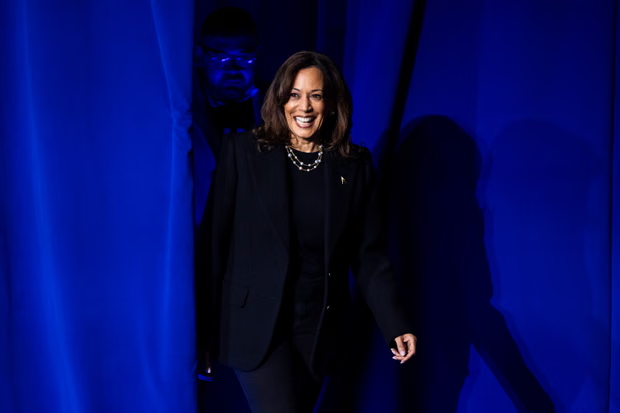
The Democratic party has finally published its highly anticipated postmortem report regarding the devastating 2024 election defeat. This release comes after an initial decision to suppress the document triggered a wave of intense anger. Ken Martin, the chair of the Democratic National Committee, officially made the extensive analysis public on Friday afternoon. The release was accompanied by a direct personal apology to party members across the nation. Many members were deeply offended by the original plan to hide the party autopsy report. This internal document examines how Vice President Kamala Harris lost to Donald Trump last November. It also looks closely at how the party lost control of both congressional houses.
Originally, Martin strongly declined to share the report with the general public or media. He argued that the party needed to focus entirely on upcoming midterm election battles. The chair also claimed he wanted to avoid reopening painful wounds from the campaign. However, this strategic decision backfired completely and sparked a massive internal leadership crisis instead. Senior Democrats quickly accused the party leadership of actively hiding critical campaign failure data. The controversial 192-page document was authored by veteran Democratic campaign strategist Paul Rivera. The published version includes a bold red disclaimer running across the top of pages. This warning states clearly that the DNC cannot independently verify the author’s claims.
The underlying research completely lacks raw source material, interviews, or foundational data sets. Because of these missing elements, party officials feel unable to stand behind the text. The document focuses heavily on key voter demographics that abandoned the Harris campaign nationwide. These groups include Hispanic voters, working-class men, and rural communities in vital swing states. The text carefully compares the vice president’s poor performance to successful down-ballot local Democrats. Specifically, it contrasts her loss with the victory of North Carolina Governor Josh Stein. Rivera notes that the Harris team essentially wrote off rural areas during autumn. The campaign wrongly assumed that massive urban and suburban turnout would save them.
The author bluntly concludes that the math simply does not work that way. According to the text, Stein won because he avoided abstract cultural arguments entirely. The governor chose instead to focus on practical economic issues affecting everyday families. The report insists that Democrats must abandon divisive identity politics to win again. It provides an in-depth analysis of historic campaign spending and modern advertising strategies. The text highlights a pressing need to actively involve voters in message creation. Strategists must stop simply pushing corporate top-down messaging onto an uninspired electorate. Surprisingly, the autopsy fails to deeply examine President Joe Biden’s initial re-election bid.
The text avoids discussing the serious political implications of Biden running at age eighty-one. It also bypasses his sudden decision to hand the campaign over to Harris. Furthermore, the report completely ignores America’s controversial foreign policy approach to the Middle East. It makes absolutely no mention of the Gaza conflict or its electoral impact. This omission is particularly striking given extensive polling data on the topic last year. Many young and progressive voters explicitly cited foreign policy as their reason for defection. The document also entirely avoids investigating whether racism or sexism impacted Harris’s historic bid.
Martin openly acknowledged these major analytical gaps during his recent press statements this week. The party chair admitted he was not proud of the final product. He explicitly cautioned members that the text would not meet their high standards. However, he insisted that public transparency was vital for rebuilding essential voter trust. Martin explained that when he received the document, it was not ready. He noted that fixing the report would require starting the process completely over. Researchers would have to redo every single interview and rebuild every data set. The embattled chair also pointed to recent successful off-year local election results instead.
Democrats have recently prevailed or improved their margins in several important state races. Martin argued that dwelling on past failures could blunt this newfound political momentum. He stated that shelving the report initially was meant to prevent a distraction. Ironically, that protective choice created an even larger and more damaging public distraction. For that error in professional judgment, Martin offered a sincere and humble apology. Public mistrust remains high because the report features multiple internal qualifiers and corrections. These notes openly question the author’s accuracy, timeline, and general lack of evidence. One specific qualifier directly undermines Rivera’s description of the Capitol riots in Washington.
The author wrote that five people died during the chaos of January sixth. An interposed remark from the DNC notes that this claim contradicts public reporting. In truth, five individuals died within thirty-six hours of that violent historic event. Furthermore, four responding police officers tragically died by suicide in the following months. This factual error has further damaged the credibility of Rivera’s overall campaign analysis. External progressive groups have also reacted with immense fury to the published text. The pro-Palestinian IMEU Policy Project issued a scathing public statement against party leaders. They demanded that the DNC release all hidden internal data immediately today.
The advocacy group claims that DNC officials already reviewed their own extensive data. That internal data supposedly proved Biden’s Middle East policy was a net negative. Activists argue that party elites are intentionally hiding the true extent of voter anger. This omission represents a deliberate attempt to shield leadership from necessary policy shifts. Currently, the party remains completely locked out of power across Washington DC. This situation has intensified an already contentious debate about the future Democratic platform. Rank-and-file members are demanding immediate political and generational change from top officials.
These deep ideological tensions are currently flaring up in primary contests nationwide. Activists from Maine to California are challenging moderate establishment candidates for local office. They want a complete overhaul of the party’s messaging and leadership structure. Younger voters are pushing for more aggressive stances on climate change and economics. Meanwhile, moderate members fear that moving further left will alienate suburban swing voters. The newly released autopsy report has clearly failed to unify these opposing factions. Instead, it has provided more ammunition for those demanding total structural reform. The lack of rigorous data has left many questions unanswered for organizers.
The party must now prepare for challenging midterm elections without clear consensus. Candidates are left to navigate a fractured national landscape on their own. Some will likely emulate Josh Stein’s economically focused North Carolina campaign model. Others will continue to champion progressive social causes to mobilize diverse urban coalitions. The DNC now faces the difficult task of managing these deep divisions. Martin’s position as party chair remains precarious as calls for resignation persist. The coming months will determine if the party can move past this. Rebuilding a winning coalition requires addressing the errors this report tried to ignore.
Related News:
 Capitol Attack Anniversary Sparks Deep Political Divide
 Trump Labels Renee Good a ‘Paid Agitator’ After Minneapolis ICE Killing
 Trump targets Iran trade with 25% tariff warning
 Trump Receives Machado’s Nobel Medal in White House Meeting
 Thousands Protest ICE Operations in Nationwide US Day of Action
 Epstein Files Reveal Trump Officials’ Emails with Financier
 Thousands Protest ICE in New York Against Trump Deportation Campaign
 US-Cuba Negotiations Shift as Oil Blockade Looms
 Ukraine war briefing: Zelenskyy offers help to Saudi Crown prince on combatting Iranian drones
 New Policy Allows US Troops to Carry Personal Firearms
 Michigan Battleground: Middle East Crisis Stirs US Senate Race
 Congresswoman Condemns Trump Over Iran Conflict
 Trump Signals Hope for New Iran Talks as Ceasefire Fades
 Trump’s Presidency: A House of Cards Collapsing?
 GOP Senator Criticizes Trump’s Feud With Pope Leo XIV
 Trump Starts $166bn Tariff Refund Process
 Investigation Into Anti-Trump Motives After Gala Shooting
 UK Urged to Adopt ‘Trade Bazooka’ Against Tariff Threats
 USS Gerald R Ford Ends Record Naval Deployment
 Trump orders US troop pullout from Germany
 Indiana Republicans Defy Trump in Key Vote Test
 Tensions Emerge in Netanyahu-Trump Alliance
 Fear and Betrayal: The Chilling Case of Kouri Richins
 Trump in Beijing: The Strongman Fantasy Made Flesh
 Trump Tightens Grip on GOP with Primary Victory
 US judge dismisses Kilmar Abrego Garcia indictment
 Tulsi Gabbard exits after turbulent intelligence tenure
 Former ICC prosecutor condemns US sanctions
 Trump Weighs Retreat from Controversial $1.8bn Slush Fund
 Trump Allies Funded Hidden Network to Discredit US Vote
 UFC at the White House: Glory Marred by Bitter Smears
 The Dreamers Losing Jobs Under Trump’s Red Tape
 Battle for Washington: Mayoral Race Braces for Trump
 Trump Urged to Condemn UFC Fighter Over Obama Slurs
 Trump Halts Senate Hearing for Intel Pick Jay Clayton
 The Obama Center: Hope and Anxiety on Chicago’s South Side
 US Military Pacific Boat Strike Kills Three People
 FBI Chief Faces Backlash Over Premature Social Media Posts
 Trump’s Mount Rushmore Speech: A Divisive Anniversary
 House Democrats Divided Over Israel Military Funding Bid
 Houthis Strike Saudi Arabia as Middle East Tensions Rise
 Federal Immigration Shift: Officers Leave Louisiana for Minneapolis
 Friedman Uninvited From 2024 Adelaide Writers’ Week
 Trump press secretary attacks reporter over ICE question
 Spoof “Make America Go Away” Caps Rally Denmark Over Greenland
 Trump Fed bid heads to Supreme Court
 Partial US Government Shutdown Hits Homeland Security Funding
 New Poll Reveals Reform UK Stance on British Citizenship
 New Zealand Covid Response Praised Despite Lingering Scars
 Diplomacy on the Brink: Pakistan’s Risky Peace Mission
 Teenage Titan: Sooryavanshi Smashes IPL Records
 Canadian Mother and Daughter Released From ICE Detention
 Reform UK Pledges To Halt Visas Over Reparations Demands
 US and Iran Agree to Two-Week Provisional Ceasefire
 Israel Defies Ceasefire as Lebanon Operations Persist
 Pakistan Brokers Historic Peace Deal Amid Rising Tensions
 Islamabad Hosts Historic Peace Talks Between Iran and USA
 Security Alert Near Israeli Embassy as Police Investigate
 Machado Rallies in Madrid as Venezuela Stays Frozen Out
 Louisiana Tragedy: Eight Children Die in Mass Shooting
 US-Iran Standoff: Will Trump Deploy Ground Troops?
 High Stakes in Beijing as Trump and Xi Meet Amid Global Turmoil
 Trump and Xi Convene in Beijing for Historic High-Stakes Summit
 Aussie Race Row: Coalition Accused of Scapegoating
 Trump Pledges 5,000 Troops for Poland in U-Turn
 Tony Abbott Returns as New Liberal Party President
 Discontent grows around Putin amid war strain
 Teaching Machines Right From Wrong in the Digital Age
 Oman Defies US Pressure Over Strategic Strait of Hormuz
 Ex-CIA Agent Accused of $40m Gold Theft and Fake Spy Unit
 Aukus Deal Facing Fierce Backing and Historic Criticism
 Tragic Loss of Australian Sprinter Jemma Stapleton
 Russian Tanker Captain Remanded in UK Court After Channel Seizure
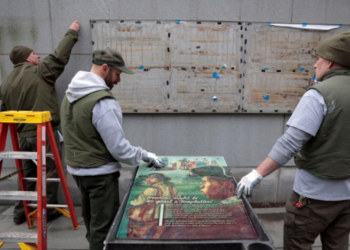 US Courts Back Trump on Park Signage Removals
 US Airman Avoids British Court in Indecent Exposure Case
 Trump Swaps Planes Amid Iran Tensions
 Rotterdam Museum Honours Artist With Peanut Butter Floor
 Bangkok Nightclub Blaze Claims 30 Lives Amid Negligence Probe
 Yemen Accuses Iran of Violating National Sovereignty
 Florida Executes One of Its Oldest Death Row Prisoners