Published: 22 April 2026. The English Chronicle Desk. The English Chronicle Online.
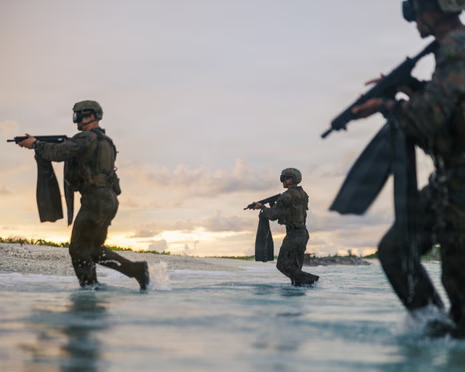
The doomsday scenario that Donald Trump swore he would never countenance is nearing. Many fear a major deployment could embroil the US in a Middle East forever war. A two-week ceasefire in the war with Iran is coming to an abrupt end. Prospects for renewed negotiations now seem to be hanging by a very thin thread. The chances of the president breaking that pledge and ordering an incursion are rising. Despite increasing hopes for a lasting peace, the administration has deployed more forces. This is a clear signal of readiness for a significant and potentially bloody escalation. By the time the task force arrives, ten thousand additional troops will have been sent. These forces have been moved since hostilities were paused back on the eighth of April.
Ali Vaez is the Iran project director at the International Crisis Group today. He suggested that if we pay attention to Trump’s actions, an invasion is likely. We have not seen him deploy significant military assets without eventually using them as well. He has often used American military might when he has sent it to regions. He has sent thousands of troops, so the odds of an invasion are much higher. There is a very clear risk of mission creep occurring in this volatile region. The regime in Tehran may have reached a similar conclusion regarding these recent military movements. Mohammad Bagher Ghalibaf is the speaker of the Iranian parliament and a lead negotiator. He said on Monday that the regime was ready to deploy new cards on the battlefield.
Analysts say Iran’s military planners have spent years assiduously preparing for a massive land invasion. Judging by the rhetoric of senior figures, they are actually relishing the potential prospect. Abbas Araghchi is the Iranian foreign minister who led two rounds of peace talks recently. When asked if Iran feared a ground invasion, he was aggressively defiant in tone. He noted that they are waiting for them because they are confident they can confront. He stated that it would be a big disaster for the Americans who attempt it. Ashkan Hashemipour is an Iran analyst at the University of Oxford who studied these remarks. He does not think it is just rhetoric because Iran is doing quite well. They are fighting in the skies and the sea, but they are strong on land.
Fuelling Iranian confidence is the fact that the republic has fought off a prior invasion. The long war with Iraq was the proving ground for the current generation of leaders. Triggered when Saddam Hussein ordered Iraqi forces to invade, it turned into a bloody grind. It ended in a stalemate after ideologically driven Iranian forces repelled the better-equipped army. Iraq had been supplied by the west as well as the Soviet Union during that conflict. Nader Hashemi is a professor of Middle East and Islamic politics at Georgetown University. He said that war was a foundational experience for the Iranian hardliners and local conservatives. They viewed it as a major attempt by the United States to undermine their revolution.

There are clear lines that the republic draws from that history to this current war. From their perspective, what is happening now proves their previous fears were absolutely correct today. The greatest power in the world is trying to topple the republic and now plans occupation. Militarily and technologically outmatched by the US, the IRGC would depend on many asymmetric tactics. They would lean heavily on guerrilla warfare in the event of a large US invasion. To give maximum flexibility, the force has been divided into thirty-one smaller provincial units. This overrides the need for a centralised command that could be eliminated by recent US strikes.
Saeid Golkar is a politics professor at the University of Tennessee who studies this military structure. The plan was devised after the US-led invasion of Iraq in the year 2003. The idea is to break Iran into a mosaic with each piece defending itself independently. A vital role would be played by the conventional armed forces known as the Artesh. Under changes from 2009, the Artesh was broken into rapid action units across the country. The purpose was freeing local commanders from the need to rely on a central command. The main role would be to compel US forces to fight two different wars simultaneously. The IRGC-led unconventional war rests on support from the youth volunteer force called Basij.
The Basij became famous for human wave attacks on Iraqi forces during the eighties conflict. They were driven by a fervent revolutionary desire to attain martyrdom for their Shia faith. The key unit would be the Imam Hussein battalion named after a historic religious figure. But Golkar played down the significance, describing it as an instrument of intense domestic repression. He doubted many members would fight, citing a decline in devoutness and unhappiness with leadership. With Trump’s focus on reopening the strait, ground troops might not hit the main land. They could be limited to occupying islands in the Gulf off the southern coast. Such deployments would leave US troops vulnerable to sudden missile and drone attacks by Iran.
The Iranian regime is also likely to pressure its proxy Houthi allies in Yemen. This could close the shipping lane between the Red Sea and the Indian Ocean entirely. That would cause global energy prices to rocket in a very short amount of time. Vaez said that there is no military solution to safely reopen the strait for trade. Even if Trump occupies the southern shore and all the islands, drones remain dangerous. They could fire from much farther inland to disrupt traffic on the narrow strait. That could pave the way for the denouement of a land war that lasted decades. Iran has been preparing for this after years of shadow conflict with Washington worldwide.
The same guerrilla tactics used in other countries will likely greet any US invasion force. Roadside bombs made from improvised explosive devices were perfected in Iraq by the late commander. But Golkar notes one vital difference regarding the absence of a meddling outside power today. In Iraq, it was Iran that tried to create a quagmire for the American forces. Because there are no external countries to support an insurgency here, it will be different. The outcome will likely hinge on the attitudes of a disaffected population and American patience. Any kind of ground invasion would probably entail significant casualties on the US side itself. Vaez added that Trump may have already forfeited public support from local regime opponents today.
Public opinion is turning against this war and putting troops on the ground helps leadership. If there are American boots on Iranian soil, the IRGC would consider them easy targets. They would definitely try to significantly bump up the casualty numbers for the American forces. They know that the dual scenario of high energy prices and casualties would destroy Trump.
Related News:
 Capitol Attack Anniversary Sparks Deep Political Divide
 Saudi Officials Report Zubaidi Flee Before Yemen Peace Talks
 UK Targets in New York Bomb Threat Hoax: Man Jailed
 Gambia Supreme Court Hears Case to Overturn FGM Ban
 Trump targets Iran trade with 25% tariff warning
 Rudd successor: Defence chief and former ministers considered
 US Senate rejects resolution limiting Trump military powers
 Venezuela regime claims release of political prisoners signals new era
 Gulf states warn Trump Iran strikes risk wider Middle East war
 Machado Trump medal gesture reshapes Venezuela power struggle
 Greenland defence seen as shared Nato duty amid troop arrivals
 Geopolitical football: Iran, Trump and the World Cup clash
 Canada-China trade gains momentum in new strategic partnership
 Trump Receives Machado’s Nobel Medal in White House Meeting
 Syria President Declares Victory as Ceasefire Reached with SDF
 US Considers Asylum for British Jews Amid Rising Antisemitism
 Trump slams UK ‘stupidity’ over Chagos Islands, eyes Greenland takeover
 Trump Tightens Grip on EU and UK Energy Supply
 Shinzo Abe’s killer receives life sentence in Japan
 China General Under Investigation Amid Leadership Purge
 Philippines ferry disaster leaves 15 dead, dozens missing
 Cambridge Faces Scrutiny Over Arms Investment Transparency
 Files Link Andrew to Epstein Dinner After Prison Release
 Epstein UAE Emails Shake British Royal Andrew’s Legacy
 Christchurch gunman seeks to vacate guilty plea
 Liberal Fallout: Taylor Challenge Casts Shadow Over Sussan Ley’s Leadership
 Infantino Faces Russia Threat and Trump Concerns at Uefa Congress
 Concerns rise for Canberra boy amid Iran detention fears
 Ukraine, Russia Meet in Geneva Ahead of War Anniversary
 Caribbean Leaders Urge Dialogue Amid US Oil Embargo on Cuba
 Anthony Albanese Must Uphold Rights for All Australians
 Ukraine Sends Drone Experts to Defend US Bases in Jordan
 New Zealand Covid Response Praised Despite Lingering Scars
 Abramovich Chelsea Sale Cash Faces Jersey Probe
 Yvette Cooper: UK Must Follow Principles, Not US Pressure
 US Strike on IRIS Dena Strains Strategic Indian Security Ties
 Slovenia Election: A Nation at a Crossroads
 Jury Rules Meta and YouTube Liable for Addictive Design
 Saudi Arabia Urging US to Keep Up Iran Attacks
 Trump Softens Cuba Oil Stance as Russian Tanker Nears
 The Woman Guarding Earth From the Threat of Asteroids
 IMF Predicts Global Economic Crisis Due to Gulf Unrest
 California Defies Trump With Strict New AI Standards
 Germany Grapples With AI Abuse Following TV Star Scandal
 Exiled Tycoon Warns of New Russian Attacks on UK Soil
 Labor Under Fire Over Stalled University Fee Reform
 LA 2028: Millions of Affordable Olympic Tickets Announced
 Trump Slams Europe as Transatlantic Tensions Boil Over
 Inside the Deceptive Machine: A Former Producer Speaks Out
 Italy Faces Third Successive World Cup Absence After Loss
 Starmer Urges Ambitious EU Ties Amid Middle East Conflict
 Spain Faces Backlash Over Xenophobic Chants in Egypt Draw
 A Global Voice For Justice: Stephen Lewis Dies At Age 88
 Trump Issues Stark Warning After Strike On Iran’s Largest Bridge
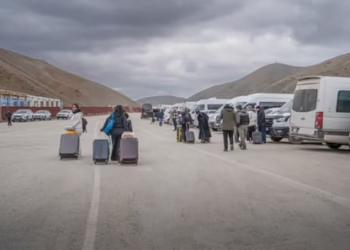 Hope and Fear as Iranians Flee Across the Turkish Border
 Tragic End to Outback Search as Floods Claim a Life
 Ben Roberts-Smith Arrested Over Alleged War Crimes
 Reform UK Pledges To Halt Visas Over Reparations Demands
 US and Iran Agree to Two-Week Provisional Ceasefire
 Starmer visits Gulf as US and Iran agree ceasefire
 Gaza Child Arrives in UK for Life-Changing Care
 Israel Defies Ceasefire as Lebanon Operations Persist
 Own an Entire Australian Town for the Price of a UK Flat
 Pakistan Brokers Historic Peace Deal Amid Rising Tensions
 Netanyahu Vows Continued Lebanon Strikes Amid Peace Talks
 UK Holds Firm on Strait of Hormuz Amid Trump Pressure
 Rory McIlroy Eyes New Horizons After Masters Defence
 Trump Signals Hope for New Iran Talks as Ceasefire Fades
 Reeves Slams Trump Over Iran War Lack Of Exit Plan
 US and Iran Pursue Extension of Ceasefire via Pakistan
 Trump’s Islamabad Gamble: The High Stakes of a New Iran Deal
 Wall Street Hits Historic High Amid Hopes for Iranian Peace
 Ian Katz to Step Down as Channel 4 Content Chief
 Middle East Conflict Risks UK Food Supply Chains This Summer
 The General’s Gambit: Pakistan’s New Role in Global Peace
 England Eye Landmark 500th Game Glory in Iceland
 Mexico, Spain and Brazil call for Cuba dialogue amid crisis
 US Forces Seize Iranian Ship Near Hormuz Blockade
 Pakistan’s Ambitious Bid for Middle East Peace
 Trump Starts $166bn Tariff Refund Process