Published: 12 May 2026. The English Chronicle Desk. The English Chronicle Online.
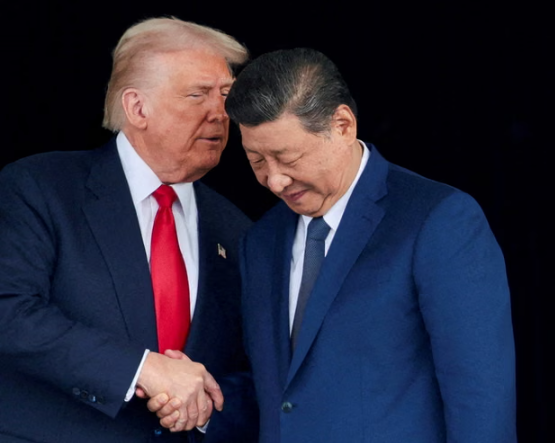
The eyes of the world are fixed firmly on Beijing this week. US President Donald Trump is set to arrive for a crucial summit. His meeting with President Xi Jinping comes at a truly pivotal moment. The two leaders have not met on Chinese soil since late 2017. Much has changed in the years that have passed since that visit. A second trade war and a global pandemic have strained their ties. Now a fresh conflict in the Middle East adds a new layer. The scheduled talks on 13-15 May were nearly derailed by recent events. In February, a White House official first confirmed this significant diplomatic trip. The initial focus of the summit was the ongoing bilateral trade war. However, the geopolitical landscape shifted dramatically just one week after that. Trump approved joint military strikes with Israel against targets located in Iran. This sparked a new war that has alarmed leaders in Beijing. The ramifications of this conflict have spread far beyond the regional borders. This instability forced a temporary postponement of the highly anticipated presidential summit. Now the two leaders finally prepare to meet face to face again. China has shifted its own agenda to address these urgent new realities. Beijing remains very keen to avoid the return of aggressive trade tariffs. Last year, some US tariffs reached a staggering peak of 145 percent. A truce was eventually reached in October during talks in South Korea.  But the threat of renewed economic pressure still looms over Chinese markets. Modern concerns have evolved beyond simple trade barriers and manufacturing export costs. Reopening the Strait of Hormuz has become a top priority for China. Half of the crude oil used by China passes through that waterway. China has built large stockpiles to insulate itself from sudden energy shocks. It also maintains a highly diversified energy mix to protect its industry. Despite these precautions, the risk of a global recession remains very high. The International Monetary Fund warned that the Iran war could be devastating. About a fifth of the total Chinese GDP is tied to exports. If global spending power drops, the Chinese economy will inevitably suffer greatly. Ali Wyne of the International Crisis Group spoke on this last week. He noted that no country benefits from the continuation of this conflict. China may be better prepared than other Asian nations for short disruptions. However, a long-term closure of the strait would be deeply problematic indeed. The central question is what China will do to resolve the conflict. Reports suggest Beijing has already pushed Iran toward the negotiating table recently. Last week, Foreign Minister Abbas Araghchi visited his counterpart in the Chinese capital. Wang Yi called for a comprehensive cessation of all regional military hostilities. He also stated that China supports Iran in safeguarding its national sovereignty. The United States is now looking for China to exert more pressure. Treasury Secretary Scott Bessent wants Beijing to help reopen the vital waterway. This dynamic puts Trump in an unusual and perhaps uncomfortable diplomatic position. He must now ask the Chinese leader for help with Iranian influence. Professor Dali Yang noted that Trump is rarely in such a position. This leverage could help Beijing during discussions on trade and Taiwan issues. Despite the trade war, China saw a record 1.2 trillion dollar surplus. The United States remains the largest buyer of goods produced in China. The relationship has been described as two people engaged in sumo wrestling. Both sides have wrestled to a draw without a clear winner emerging. Analysts do not expect a major breakthrough on a new trade deal. They expect a broadly worded statement that allows both sides to win. An extension of the October truce seems to be the likeliest outcome. Professor Da Wei of Tsinghua University recently shared his own expert views. He argued that Beijing primarily seeks stability and a predictable business environment. Uncertainty is often more damaging than the actual level of the tariffs. But the issue of arms sales to Taiwan remains a major friction. Last year, the US Congress approved a massive eleven billion dollar package. The State Department reportedly stalled this sale ahead of the Beijing summit. Beijing wants to see the entire arms deal cancelled by the president. On Friday, the legislature in Taiwan approved a separate twenty-five billion budget. This special defence budget was smaller than the government had originally sought. It will cover purchases from the US but not domestic weapon production.
  The State Department suggested that delaying domestic production helps the Communist Party. Beijing understands that the US Congress has oversight of these arms sales. However, they may push Trump for concessions regarding his official diplomatic rhetoric. A shift from not supporting independence to opposing it would be significant. Such a change would align with the worldview held by the CCP. Foreign Minister Wang Yi called Taiwan the biggest risk to bilateral relations. He urged the US to open new space for cooperation on Taiwan. Beijing currently views the Trump administration as softer than previous American governments. Trump has already relaxed some restrictions on selling advanced semiconductors to China. He has also shown less vocal support for Taiwan than his predecessors. Some reports suggest he ordered the Pentagon to soften its strategic language. Trump even mentioned he expected a big hug from Xi in Beijing. This perceived respect for the Chinese leader is appreciated within the capital. The summit represents a chance to manage differences in a volatile world. Both nations seem ready to explore new frameworks for trade and investment. The inclusion of business leaders like Elon Musk shows the economic focus. However, the shadow of the Iran conflict will hang over every meeting. The world is watching to see if these two powers can cooperate. Global stability may depend on the personal chemistry between these two men.
Related News:
 Canada-China trade gains momentum in new strategic partnership
 India-EU Free Trade Deal Marks Historic Economic Shift
 Keir Starmer meets Xi to strengthen UK-China economic relations
 UK Experts Raise Alarm Over Machinery Export to Armenian Firm
 Caffè Nero Warns Coffee Prices May Rise Again
 Abramovich Chelsea Sale Cash Faces Jersey Probe
 Stocks rise as Trump offers Iran peace plan
 US Military Weighs Perilous Moves to Reopen Hormuz
 IMF Predicts Global Economic Crisis Due to Gulf Unrest
 Manila Transport Crisis: Fuel Costs Hit Breaking Point
 Trump Slams Europe as Transatlantic Tensions Boil Over
 Trump Issues Stark Warning After Strike On Iran’s Largest Bridge
 Middle East Conflict Sparks Global Food Price Surge
 Albanese Flies to Singapore to Bolster Fuel Security
 US and Iran Agree to Two-Week Provisional Ceasefire
 Norwegian Group Eyes South Yorkshire Steel Revival
 Ian Katz to Step Down as Channel 4 Content Chief
 Middle East Conflict Risks UK Food Supply Chains This Summer
 Cost of Conflict: UN Warns of Lost Lives in Iran War
 BP Profits Surge Amidst Middle East Conflict Crisis
 Ukraine Urges UK to Seize Russian Oil Tankers
 US Calls Australia Media Law “Foreign Extortion”
 Oil Prices Surge Above $120 Amid Iran Blockade Fears
 Europe’s AI Sector Faces Sovereignty Crisis Over US Deals
 Trump Offers EU Independence Day Deadline For Trade Deal
 US Cities See 42% Drop in Canadian Visits Under Trump 2.0
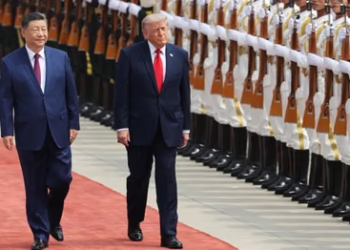 Trump and Xi Convene in Beijing for Historic High-Stakes Summit
 Big Tobacco Under Fire Over Controversial New Ad Campaign
 Rubles and Resilience: How Russia-China Border Towns Thrive
 UK Urged to Build EU Rejoin Consensus, Says Miliband
 Cash Registers Stall Japan’s Promised Food Tax Relief
 Trump Floats Fresh Tariffs on 60 Nations Over Forced Labour
 The Exploding Australian Black Market For Nicotine
 Japan Suffers Plastic Shortage Due to Middle East Crisis
 Steel Tensions Rise Between United Kingdom and European Union
 New York Consumer Watchdog Tackles Corporate Lawbreaking
 Levi’s Sues Globe Over Infringing Pocket Tabs
 BYD Aims for Global Car Supremacy Within Five Years
 Trump Signs Historic Iran Peace Plan to Avert Depression
 Gas Prices Fall Below $4 Following US-Iran Peace Deal
 Remote Mine Sites Face Deep Culture Crisis
 EU Slashes Steel Quotas But Grants UK Favourable Rates
 Inflation Eases to 3.5% Amid Fragile US-Iran Tensions
 Reeves Faces Setback as Labour May Miss Homes Target
 Trump’s UK Ambassador Urges North Sea Drilling to Strengthen US Ties
 Millionaires group urge Reeves to introduce wealth tax to ‘lift kids out of poverty’
 Starmer Says Labour’s Economic Plan Needs Years to Deliver
 Starmer Faces Parliamentary Battles Over UK-EU ‘Reset’ Plan
 Friedman Uninvited From 2024 Adelaide Writers’ Week
 ScottishPower Tops List of Worst UK Energy Suppliers
 UK Unemployment Rate Climbs to 5.2% Peak
 New Zealand Covid Response Praised Despite Lingering Scars
 Rising Costs Force Families to Rethink Days Out
 Security Alert Near Israeli Embassy as Police Investigate
 US-Iran Standoff: Will Trump Deploy Ground Troops?
 Investigation Into Anti-Trump Motives After Gala Shooting
 Silent Tracks: Rail Line Without Passengers
 Putin Signals War End as Russian Momentum Stalls
 Romania’s Judicial Crisis: A System Under Siege
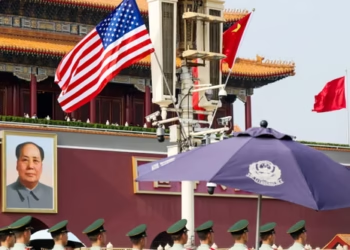 Scepticism and tight security as Beijing braces for Trump
 Philippine Senator Flees After Days Under Senate Siege
 High Street Crisis: Fears Grow Over Post Office Closures
 UK Firms Freeze Spending as Iran Conflict Bites
 Reeves to Fast-Track Clean Energy Amid Iran Crisis
 Secrecy Down Under: Albanese Faces FoI Scandal
 Oil Markets Face ‘Red Zone’ Threat Amid Iran Crisis
 Tony Abbott Returns as New Liberal Party President
 Belfast Approves Pilot Extension of Sunday Trading Hours
 Discontent grows around Putin amid war strain
 Tube Strike Brings Capital to a Standstill Over Shift Disputes
 BP Stands Firm on Amanda Blanc Amid Boardroom Storm
 Teaching Machines Right From Wrong in the Digital Age
 Oman Defies US Pressure Over Strategic Strait of Hormuz
 Trump Urged to Condemn UFC Fighter Over Obama Slurs
 US Military Pacific Boat Strike Kills Three People
 Sainsbury’s Boss Optimistic As Grocery Inflation Eases
 Trump’s Mount Rushmore Speech: A Divisive Anniversary
 Trump Swaps Planes Amid Iran Tensions
 Yemen Accuses Iran of Violating National Sovereignty
 Houthis Strike Saudi Arabia as Middle East Tensions Rise