Published: 20 May 2026. The English Chronicle Desk. The English Chronicle Online.
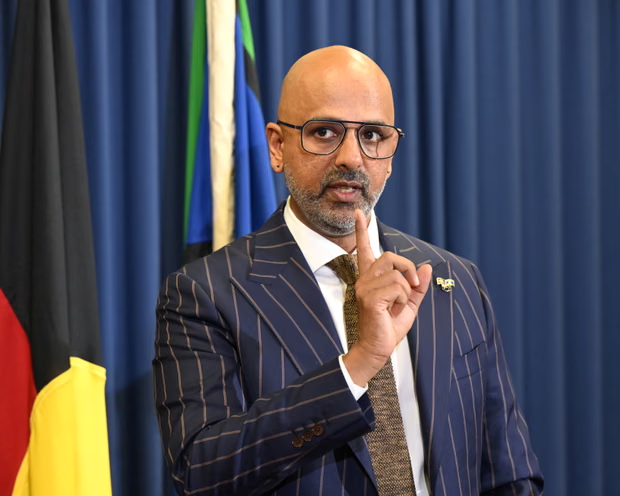
Australia faces a profound political crisis over intense immigration debates gripping the entire nation. The federal race discrimination commissioner recently launched a fierce attack against major political factions. Giridharan Sivaraman claimed that conservative politicians are actively dehumanising vulnerable migrant communities across the country. He targeted both the populist One Nation party and the official federal political opposition. According to Sivaraman, these groups are tapping into deep historical veins of systemic racism. He delivered these blunt warnings during a human rights seminar hosted in Brisbane. The event brought together leading legal experts to discuss growing cultural divisions.
The commissioner argued that politicians use newcomers as convenient scapegoats for complex economic woes. He noted that migrants get blamed for everything from housing shortages to traffic congestion. Sivaraman even suggested that rising grocery prices are unfairly blamed on recent arrivals. This political strategy relies heavily on implicit racial bias to achieve electoral success. People often identify immigrants simply by skin colour, distinct accents, or foreign names. The commissioner stated this rhetoric echoes dangerous colonial mindsets about superior social status. He believes certain factions still project the idea that some people belong more. This creates an exclusive hierarchy that threatens the core fabric of multicultural Australia.
The intense scrutiny comes immediately after the opposition alliance announced strict new border proposals. Opposition leader Angus Taylor previously claimed that many new migrants represent net economic drains. He publicly advocated for a revamped system that would openly discriminate based on values. Taylor made these controversial immigration targets the absolute centrepiece of his budget reply speech. The opposition plan involves capping annual migrant intakes directly alongside local housing construction rates. Furthermore, the conservative alliance wants to ban non-citizens from accessing vital welfare schemes. This includes restricting access to unemployment benefits, age pensions, and disability support networks.
Taylor defended his policy by linking high immigration levels to strained public infrastructure. He argued that mass migration currently outpaces the development of roads and schools. The country cannot build hospitals fast enough to accommodate rapid population growth, he claimed. In his parliamentary speech, Taylor emphasised that public services are facing breaking points. He insists his stance addresses practical resource management rather than promoting cultural division. However, Sivaraman anticipates a severe escalation in racially motivated hostility over coming years. This predicted surge in discrimination poses a massive challenge for human rights advocates.
To combat this trend, the commissioner calls for unprecedented levels of cross-cultural solidarity. He believes working class citizens must unite regardless of their specific racial backgrounds. Sivaraman argues that white workers must realise how racism directly harms their interests. He asserts that systemic discrimination remains a primary cause of widespread economic inequality. True social solidarity cannot exist until diverse communities recognize their shared financial struggles. The commissioner intends to focus his upcoming term on fostering these essential community connections. He insists that structural change requires moving past superficial political rhetoric altogether.
In immediate response, Angus Taylor shifted the blame toward current government policy failures. He clarified that conservative criticisms target administrative incompetence rather than the migrant communities. Taylor maintained that controlled migration remains incredibly important for the future of Australia. He argued that intake numbers became unsustainably high while housing construction plummeted down. The previous annual migration peak reached over half a million individuals within a year. This massive influx occurred while domestic housing targets fell consistently behind schedule, he noted. Taylor claimed that young local citizens can no longer afford standard home ownership.
The opposition leader accused the ruling Labor government of missing critical construction goals. He stated that national housing development is currently falling short by seventy thousand homes. This supply gap creates immense competition in the rental market for everyday citizens. Meanwhile, a prominent spokesperson for One Nation leader Pauline Hanson rejected all accusations. The right-wing party denied being populist, racist, or dehumanising toward incoming foreigners. The spokesperson claimed the party holds absolutely no inherent malice toward foreign nationals. One Nation merely advocates for lower immigration to decrease overall demand for domestic housing.
The fierce debate highlights a growing global trend regarding immigration and resource allocation. Similar political arguments routinely echo across the United Kingdom and continental European nations. Observers note that infrastructure strain frequently fuels nationalist political movements in Western democracies. The Australian controversy illustrates how quickly economic anxiety can transform into cultural confrontation. Human rights organisations warn that aggressive political rhetoric often leads to real-world violence. They urge politicians to exercise extreme caution when discussing minority groups during campaigns. The situation in Australia remains highly volatile as elections approach over the horizon.
International watchdogs are monitoring the situation closely due to potential human rights implications. Australia has previously faced global criticism regarding its strict offshore asylum seeker policies. The current domestic debate threatens to further damage the international reputation of the country. Legal experts suggest that restricting welfare access for non-citizens could face constitutional challenges. Such measures might violate international treaties to which Australia remains a committed signatory. The political division shows no signs of resolving ahead of upcoming federal elections. Both sides appear deeply entrenched in their respective ideological positions for the future.
Community leaders are working tirelessly to defuse tensions within suburban neighbourhoods across Australia. They emphasize the immense positive contributions that immigrants bring to local economies daily. Migrants fill critical shortages in healthcare, agricultural sectors, and high-tech industries nationwide. Dehumanising these essential workers threatens to destabilize key sectors of the domestic economy. Many independent politicians are calling for a more balanced approach to regional development. They suggest decentralising population growth away from congested major cities like Sydney. This strategy could alleviate infrastructure pressures without resorting to divisive social rhetoric.
The role of the race discrimination commissioner remains vital during these testing times. Sivaraman faces the difficult task of balancing free political speech with public safety. His public criticism of major political figures represents a bold and risky move. It has drawn praise from progressive circles but intense anger from conservative commentators. The ongoing dispute ensures that immigration will dominate national headlines for months ahead. Australia stands at a crucial crossroads regarding its identity as a welcoming nation. The ultimate outcome will shape the social and economic landscape for future generations.
Related News:
 Capitol Attack Anniversary Sparks Deep Political Divide
 Saudi Officials Report Zubaidi Flee Before Yemen Peace Talks
 UK Targets in New York Bomb Threat Hoax: Man Jailed
 Gambia Supreme Court Hears Case to Overturn FGM Ban
 Trump targets Iran trade with 25% tariff warning
 US Senate rejects resolution limiting Trump military powers
 Gulf states warn Trump Iran strikes risk wider Middle East war
 Machado Trump medal gesture reshapes Venezuela power struggle
 Geopolitical football: Iran, Trump and the World Cup clash
 Canada-China trade gains momentum in new strategic partnership
 Syria President Declares Victory as Ceasefire Reached with SDF
 Shinzo Abe’s killer receives life sentence in Japan
 China General Under Investigation Amid Leadership Purge
 Philippines ferry disaster leaves 15 dead, dozens missing
 Cambridge Faces Scrutiny Over Arms Investment Transparency
 Epstein UAE Emails Shake British Royal Andrew’s Legacy
 Christchurch gunman seeks to vacate guilty plea
 Infantino Faces Russia Threat and Trump Concerns at Uefa Congress
 Concerns rise for Canberra boy amid Iran detention fears
 Ukraine Sends Drone Experts to Defend US Bases in Jordan
 Abramovich Chelsea Sale Cash Faces Jersey Probe
 Yvette Cooper: UK Must Follow Principles, Not US Pressure
 Jury Rules Meta and YouTube Liable for Addictive Design
 Saudi Arabia Urging US to Keep Up Iran Attacks
 The Woman Guarding Earth From the Threat of Asteroids
 Germany Grapples With AI Abuse Following TV Star Scandal
 Exiled Tycoon Warns of New Russian Attacks on UK Soil
 LA 2028: Millions of Affordable Olympic Tickets Announced
 Trump Slams Europe as Transatlantic Tensions Boil Over
 Inside the Deceptive Machine: A Former Producer Speaks Out
 Spain Faces Backlash Over Xenophobic Chants in Egypt Draw
 A Global Voice For Justice: Stephen Lewis Dies At Age 88
 Hope and Fear as Iranians Flee Across the Turkish Border
 Reform UK Pledges To Halt Visas Over Reparations Demands
 US and Iran Agree to Two-Week Provisional Ceasefire
 Starmer visits Gulf as US and Iran agree ceasefire
 Gaza Child Arrives in UK for Life-Changing Care
 Pakistan Brokers Historic Peace Deal Amid Rising Tensions
 UK Holds Firm on Strait of Hormuz Amid Trump Pressure
 Trump Signals Hope for New Iran Talks as Ceasefire Fades
 Reeves Slams Trump Over Iran War Lack Of Exit Plan
 US and Iran Pursue Extension of Ceasefire via Pakistan
 Trump’s Islamabad Gamble: The High Stakes of a New Iran Deal
 Ian Katz to Step Down as Channel 4 Content Chief
 The General’s Gambit: Pakistan’s New Role in Global Peace
 Mexico, Spain and Brazil call for Cuba dialogue amid crisis
 Pakistan’s Ambitious Bid for Middle East Peace
 Trump Starts $166bn Tariff Refund Process
 Israeli Soldiers Jailed Over Vandalism of Lebanese Statue
 Trump Weighs Sending Afghan Allies to the Congo
 Pentagon Shakes Up Navy Leadership Amid Hormuz Blockade
 Trump Threatens UK With Big Tariff Over Tech Tax
 Prominent Voices Challenge Palestine Action Ban
 Security Scrutiny After Washington Shooting Incident
 Merz Criticises US Approach in Iran Conflict
 UK Envoy Sparks Controversy Over Special Relationship Claims
 Ukraine Urges UK to Seize Russian Oil Tankers
 US Calls Australia Media Law “Foreign Extortion”
 The Billionaire’s Secretary and the £1m Fraud
 Ukraine strikes Tuapse as oil disaster worsens
 Brewing Tension: Taiwan Baristas Rebrand for World Stage
 Tensions Emerge in Netanyahu-Trump Alliance
 Mission to the World’s Edge: A Heroic Rescue in Tristan
 US and Mexico Face Heatwave as Floods Batter South Africa
 Mexico’s Missing: State Complicity in a Growing Crisis
 French Patient Told Hantavirus Was Just Anxiety
 The Long Way Home: Australia’s High-Stakes Virus Mission
 Putin Signals War End as Russian Momentum Stalls
 Romania’s Judicial Crisis: A System Under Siege
 Lee Lai Makes History with Landmark Stella Prize Victory
 Philippine Senator Flees After Days Under Senate Siege
 Alberta Separatist Bid Blocked by Canadian Court
 Canadian Court Blocks Alberta Independence Referendum Bid
 Big Tobacco Under Fire Over Controversial New Ad Campaign
 Bolsonaro Son Tape Scandal Sparks Massive Brazil Backlash
 Court Upholds Landmark Win for Transgender Rights
 Tragedy in the Maldives: Inside the Deep Sea Rescue
 Liberal Senator Criticises Immigration Rhetoric
 Senate Moves to Restrict Trump’s War Powers on Iran
 ICC Arrest Warrant Threat Sparks West Bank Retaliation