Published: 15 May 2026. The English Chronicle Desk. The English Chronicle Online.
The political world watched closely as Donald Trump arrived in Beijing for his highly anticipated summit. The American leader seemed entirely at peace surrounded by the rigid pageantry of the Chinese capital. He managed the first day of his high-stakes visit with an unusual level of diplomatic care. Rather than challenging his hosts, he chose to offer praise by declaring the nation beautiful. This display of deference stood in stark contrast to his usual aggressive rhetoric back home. Observers noted that his behaviour reflected a deep fascination with absolute political control and authority.
In the United States, Trump has often tested the traditional boundaries of a constitutional democracy. He has frequently discredited democratic elections and attacked the credibility of major academic institutions. Journalists have faced harsh accusations from him, sometimes even being branded as treasonous actors. In Beijing, however, he found a system where his authoritarian yearnings are fully realised. The tightly controlled environment seemed to provide the exact political validation he frequently seeks. He appeared deeply comforted by a state that suppresses dissent and commands absolute public obedience.
This orderly atmosphere clearly brought out a very different side of the American president. He has historically acted like a destructive force during visits to European democratic nations. Leaders in London, Paris, and Berlin have routinely experienced his unpredictable and insulting outbursts. Yet, in one of the world’s most repressive regimes, his conduct was remarkably subdued. This strange, uncharacteristic deference surprised many seasoned diplomats who accompanied the American delegation. The usual bombastic nature of his international travel was replaced by a quiet circumspection.
The shift in his demeanor became apparent before he even touched down in China. Trump did not speak to reporters during the long flight on Air Force One. This silence was highly unusual for a leader who typically craves constant media attention. Furthermore, he refrained from posting any updates on his preferred platform, Truth Social. The silence suggested a deliberate choice to maintain a respectful distance before the meetings began. It seemed he wanted to avoid any premature controversy that might upset his hosts.
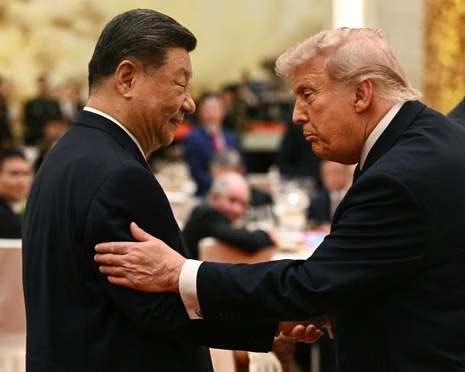
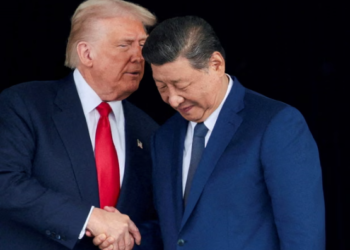
When the presidential limousine finally pulled up at the Great Hall of the People, tension was visible. Trump emerged from the vehicle and immediately began to fiddle nervously with his suit jacket. He adjusted the clothing multiple times before deciding to button it up securely for the cameras. This small gesture suggested an uncharacteristic level of anxiety before meeting President Xi Jinping. He had previously predicted that the Chinese leader would greet him with a large embrace. The actual greeting was not a hug, but it featured a very warm handshake.
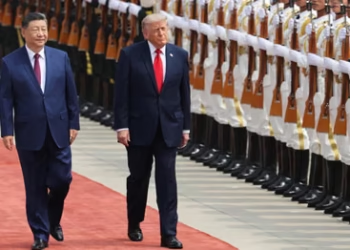
As the two men walked together along the expansive red carpet, the visual was striking. Both leaders are septuagenarians of similar physical stature and moved with a deliberate pace. They walked side by side, looking very much like two birds of a feather. Trump undoubtedly relished the clinical, military pomp that characterised the grand arrival ceremony. The welcoming display featured martial music and rows of troops holding bayoneted rifles. Elite ceremonial units marched in perfect lockstep across the vast concrete expanse of Tiananmen Square.
The American national anthem played loudly as a twenty-one gun salute echoed through the area. This level of military display holds a special significance for the current American president. Last year, Trump famously organised a massive military parade in Washington to celebrate his birthday. He has also expressed intense fascination with the physical uniformity of the Chinese military. He once joked that their identical heights meant one could play pool on their helmets. The display in Beijing offered the exact kind of flawless discipline he admires.
During the ceremony, Trump stopped to applaud a large group of energetic young children. These children enthusiastically waved colorful bouquets of flowers alongside American and Chinese flags. They delivered the kind of theatrical adulation that Trump rarely receives from public crowds at home. He later remarked that he was particularly impressed by the happiness of those children. The staged perfection of the moment clearly resonated with his desire for uncritical public praise. It set a cooperative, non-confrontational tone for the serious political discussions that followed.
The two official delegations eventually sat down around a giant table for two hours of talks. Trump immediately delivered the sort of fawning praise he usually demands from his own cabinet. He looked directly at the Chinese president and called him a truly great leader. He acknowledged that people in America often dislike hearing him praise foreign autocrats. However, he insisted on saying it anyway because he believes it is the absolute truth. He concluded his opening remarks by stating it was an honor to be Xi’s friend.
Despite the warm words, it was clear that Xi remained firmly in the driving seat. The Chinese leader later struck a much less convivial note regarding regional security issues. He issued a stern warning about the future of Taiwan and its geopolitical status. Xi warned that poor handling of the issue could cause the countries to collide. Such a clash would place the entire US-China relationship in an extremely dangerous situation. This direct challenge would normally provoke a furious response from the self-proclaimed American storm.
Instead of fighting back, Trump chose to remain completely silent on the sensitive matter. When reporters shouted urgent questions about Taiwan, the president ignored them and walked away. This passive stance continued later that evening during an opulent state banquet. Xi offered a toast suggesting that making America great could coexist with Chinese rejuvenation. The teetotal American president was so polite that he actually sipped the served wine. His own speech was mild, meek, and strictly adhered to a very dull script.
The evening lacked the usual rhetorical flourishes that define his domestic political campaign rallies. He avoided his typical stylistic deviations and simply invited Xi to Washington this September. The banquet menu itself seemed carefully designed to appease Trump’s notoriously unadventurous culinary palate. It featured a unique fusion of classic Chinese dishes and familiar American comfort foods. Guests were served lobster in tomato soup, crispy beef ribs, and traditional Beijing roast duck. The meal also included slow-cooked salmon in mustard sauce and pan-fried pork buns.
The guest list for the event reflected the unique nature of the modern Trump administration. Right-wing media figures Pete Hegseth and Stephen Miller were present at the prestigious dinner. Prominent technology executives like Tim Cook, Jensen Huang, and Elon Musk also attended. Musk spent much of the evening pulling funny faces whenever photographers requested a picture. The president’s son, Eric Trump, was also seated among the high-profile international guests. Eric currently runs the family business, representing a clear and routine conflict of interest.
The presence of the younger Trump highlighted the ethical norms of this presidential era. Critics noted that a similar move by political rivals would face intense media scrutiny. In Washington, Trump must deal with a messy democracy that constantly challenges his authority. Citizens can openly mock him, politicians talk back, and voters can remove him from office. China offers a stark contrast with its absolute order and lack of political opposition. The country features familiar Western brands alongside extensive state surveillance and facial recognition technology.
Trump has previously praised Xi for controlling nearly one and a half billion people iron-fistedly. He called the Chinese leader a brilliant guy, regardless of whether people approve. This admiration explains why the American agenda for this summit appeared remarkably limited in scope. No one in the US delegation is pushing for human rights or democratic reforms. There are no discussions about climate change or structural economic changes within the Chinese market. Instead, Trump simply needs economic favors to help his struggling domestic polling numbers.
He wants China to purchase Boeing aircraft and assist with ongoing geopolitical tensions in Iran. Decades ago, President Richard Nixon made a historic visit that fundamentally changed the world. Few analysts believe that anyone will make similar historic claims for Trump’s 2026 summit. Past meetings clearly highlighted the profound differences between democratic leaders and powerful global autocrats. Today, as Trump embraces the pageantry of Beijing, telling the two apart has become difficult.
Related News:
 Capitol Attack Anniversary Sparks Deep Political Divide
 Trump Labels Renee Good a ‘Paid Agitator’ After Minneapolis ICE Killing
 Trump targets Iran trade with 25% tariff warning
 Trump Receives Machado’s Nobel Medal in White House Meeting
 Thousands Protest ICE Operations in Nationwide US Day of Action
 Epstein Files Reveal Trump Officials’ Emails with Financier
 Thousands Protest ICE in New York Against Trump Deportation Campaign
 US-Cuba Negotiations Shift as Oil Blockade Looms
 Ukraine war briefing: Zelenskyy offers help to Saudi Crown prince on combatting Iranian drones
 New Policy Allows US Troops to Carry Personal Firearms
 Michigan Battleground: Middle East Crisis Stirs US Senate Race
 Congresswoman Condemns Trump Over Iran Conflict
 Trump Signals Hope for New Iran Talks as Ceasefire Fades
 Trump’s Presidency: A House of Cards Collapsing?
 GOP Senator Criticizes Trump’s Feud With Pope Leo XIV
 Trump Starts $166bn Tariff Refund Process
 Investigation Into Anti-Trump Motives After Gala Shooting
 UK Urged to Adopt ‘Trade Bazooka’ Against Tariff Threats
 USS Gerald R Ford Ends Record Naval Deployment
 Trump orders US troop pullout from Germany
 Indiana Republicans Defy Trump in Key Vote Test
 Tensions Emerge in Netanyahu-Trump Alliance
 Fear and Betrayal: The Chilling Case of Kouri Richins
 Trump Tightens Grip on GOP with Primary Victory
 Democrats release 2024 election report amid fierce backlash
 US judge dismisses Kilmar Abrego Garcia indictment
 Tulsi Gabbard exits after turbulent intelligence tenure
 Former ICC prosecutor condemns US sanctions
 Trump Weighs Retreat from Controversial $1.8bn Slush Fund
 Trump Allies Funded Hidden Network to Discredit US Vote
 UFC at the White House: Glory Marred by Bitter Smears
 The Dreamers Losing Jobs Under Trump’s Red Tape
 Battle for Washington: Mayoral Race Braces for Trump
 Trump Urged to Condemn UFC Fighter Over Obama Slurs
 Trump Halts Senate Hearing for Intel Pick Jay Clayton
 The Obama Center: Hope and Anxiety on Chicago’s South Side
 US Military Pacific Boat Strike Kills Three People
 FBI Chief Faces Backlash Over Premature Social Media Posts
 Trump’s Mount Rushmore Speech: A Divisive Anniversary
 House Democrats Divided Over Israel Military Funding Bid
 Houthis Strike Saudi Arabia as Middle East Tensions Rise
 US National Guard Member Killed in DC Shooting
 Federal Immigration Shift: Officers Leave Louisiana for Minneapolis
 Friedman Uninvited From 2024 Adelaide Writers’ Week
 Trump press secretary attacks reporter over ICE question
 Spoof “Make America Go Away” Caps Rally Denmark Over Greenland
 Trump Fed bid heads to Supreme Court
 Partial US Government Shutdown Hits Homeland Security Funding
 New Poll Reveals Reform UK Stance on British Citizenship
 New Zealand Covid Response Praised Despite Lingering Scars
 Diplomacy on the Brink: Pakistan’s Risky Peace Mission
 Teenage Titan: Sooryavanshi Smashes IPL Records
 Canadian Mother and Daughter Released From ICE Detention
 Reform UK Pledges To Halt Visas Over Reparations Demands
 US and Iran Agree to Two-Week Provisional Ceasefire
 Israel Defies Ceasefire as Lebanon Operations Persist
 Islamabad Hosts Historic Peace Talks Between Iran and USA
 Security Alert Near Israeli Embassy as Police Investigate
 US-Iran Standoff: Will Trump Deploy Ground Troops?
 High Stakes in Beijing as Trump and Xi Meet Amid Global Turmoil
 Australia Joins UK-Led Mission to Reopen Vital Strait
 Trump and Xi Convene in Beijing for Historic High-Stakes Summit
 Court Upholds Landmark Win for Transgender Rights
 Fragile Truce Shattered as Violence Escapes Diplomatic Control
 Secrecy Down Under: Albanese Faces FoI Scandal
 Tony Abbott Returns as New Liberal Party President
 Discontent grows around Putin amid war strain
 Teaching Machines Right From Wrong in the Digital Age
 Oman Defies US Pressure Over Strategic Strait of Hormuz
 Ex-CIA Agent Accused of $40m Gold Theft and Fake Spy Unit
 Aukus Deal Facing Fierce Backing and Historic Criticism
 Tragic Loss of Australian Sprinter Jemma Stapleton
 Russian Tanker Captain Remanded in UK Court After Channel Seizure
 US Courts Back Trump on Park Signage Removals
 US Airman Avoids British Court in Indecent Exposure Case
 Trump Swaps Planes Amid Iran Tensions
 Rotterdam Museum Honours Artist With Peanut Butter Floor
 Bangkok Nightclub Blaze Claims 30 Lives Amid Negligence Probe
 Yemen Accuses Iran of Violating National Sovereignty
 Florida Executes One of Its Oldest Death Row Prisoners