Published: 04 June 2026. The English Chronicle Desk. The English Chronicle Online.
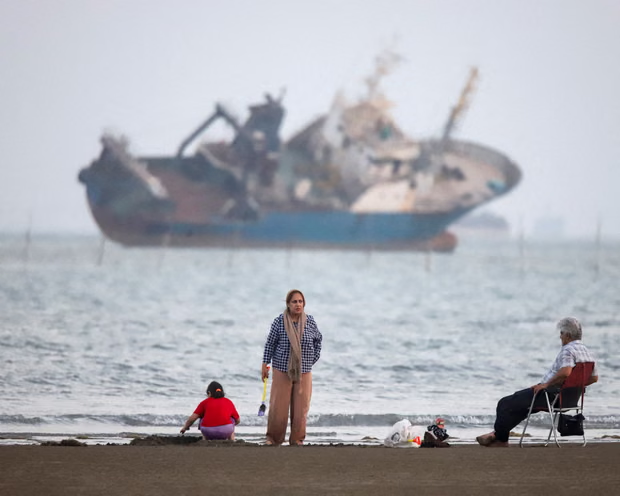
The Sultanate of Oman is firmly resisting intense pressure from the United States government. Washington wants the Gulf nation to break its long-standing diplomatic links with Iran. Muscat insists it is only negotiating with Tehran over future maritime management systems. This proposed system regulates the highly strategic and volatile Strait of Hormuz waterway. Oman stresses that any future system must fully comply with international law. The nation aims to implement a legal regime after thorough global consultation. It plans to consult closely with the UN International Maritime Organization.
Traditionally, Oman has successfully adopted the crucial role of a back-channel mediator. The longtime American ally shares vital physical stewardship of the narrow strategic strait. This unique position allows Muscat to remain neutral during complex regional diplomatic disputes. Such disputes have previously caused deep fissures across other parts of the Gulf. However, the traditional neutrality practiced by the sultanate definitely has its limits. The Omani government remains highly critical of Israel regarding international law violations. Muscat also issued a strong statement condemning recent Iranian attacks on regional neighbours. These specific Iranian military strikes targeted the sovereign territories of Bahrain and Kuwait.
Recent off-the-cuff remarks by Donald Trump threw Oman into the global spotlight. The American president controversially threatened to bomb the peaceful and neutral Gulf sultanate. Furthermore, the US Secretary of State Marco Rubio confirmed deep American suspicions. Rubio gave testimony before the influential Senate Foreign Affairs Committee this week. He claimed no country supports Iranian actions in the straits except Iran. Rubio explicitly suggested that Oman has dangerously flirted with the current Iranian position.
Oman has actively tried to avoid entering an official slanging match. The sultanate refuses to engage directly with the volatile rhetoric of Donald Trump. Instead, Omani officials have focused on direct communication with senior American leaders. Omani Ambassador Talal bin Suleiman al-Rahbi held urgent calls last week. He spoke directly with the United States Treasury Secretary Scott Bessent regarding security. Al-Rahbi also conducted meetings inside the State Department to reassure American officials. The ambassador assured Washington that Muscat strongly opposes any system of maritime tolls. He emphasized that Oman will firmly uphold the global principle of navigation freedom.
Meanwhile, Iran announced its willingness to restore normal shipping levels within a month. This return to prewar levels depends on an agreement to reopen the strait. However, Tehran has established an organization called the Persian Gulf Strait Authority. The US Treasury has already placed strict economic sanctions on this new body. Shipping companies must now seek direct permission from this authority to pass through. Iran wants to make this controversial plan compliant with existing international law. It is proposing a non-discriminatory fee to make it palatable to Oman.
Arman Khorsand defended the proposed fees in an official public statement this week. Khorsand heads Iran’s Department of Environment Center for International Affairs and Conventions. He stated the objective is not simply charging vessels for passing through. The real goal is securing vital resources to address severe regional environmental damage. Fees will also compensate for actions that undermine the principle of innocent passage. Khorsand argued that American military operations have inflicted massive long-term environmental costs. He stated that those responsible for damage must bear the costs of remediation.
However, some Iranian commentators have urged their government to exercise extreme caution. Saeed Laylaz warned against earning direct income from managing the strategic global strait. He argued this policy could lead to hostile joint coalitions forming against Iran. Laylaz believes greater national prosperity will come from creating a zone of peace. Meanwhile, Deputy Speaker Ali Nikzad said parliament is working on maritime legislation. Lawmakers are currently merging three different draft laws regarding the new regime. This definitive legislation will outline how government maritime operations function in the strait. The new laws will also clarify whether this regime is strictly temporary.
International maritime authorities remain deeply unconvinced by these arguments from the Iranian government. The International Maritime Organization Secretary General Arsenio Dominguez addressed the United Nations recently. Dominguez told the Security Council there is no legal basis for fees. He stated countries cannot impose tolls or discriminatory conditions on international straits. Despite this, some Omani politicians have shown sympathy for specific service charges. They believe charging for genuine and tangible maritime services could be legally justified.
Mohammed Suleiman Tamim al-Hinai serves on the influential Shura Council of Oman. He stated Oman consistently upholds freedom of navigation under maritime law principles. Al-Hinai reminded the council of previous statements made by the transport minister. The Omani foreign minister also confirmed that the nation respects international maritime law. Therefore, the sultanate does not impose any transit fees on the strait. Instead, Oman provides essential services like protection, rescue, and vital navigation support.
The United States government remains deeply suspicious of these secret Omani plans. Washington fears Oman is privately developing a complex system of maritime fees. American officials believe these fees would be completely indistinguishable from illegal tolls. Oman has consistently assisted commercial and military ships since the conflict began. The sultanate provides critical navigation guidance and complex search and rescue operations. Omani teams also regularly deliver urgent medical assistance to international ship crews.
In contrast, the Persian Gulf Strait Authority is trying to project international legitimacy. The authority wants to show that firms are complying with its rules. It published official figures showing over three hundred shipping companies applied for permits. The main destination for departing vessels was Asian countries, including China. India was also listed as a primary destination for these departing cargo ships. The main destination for incoming vessels was the United Arab Emirates ports. Recent United States military attacks targeted strategic Iranian radar installations in the region. These precise strikes were designed to deprive Iran of vital maritime surveillance tools. Washington wants to stop Iran from institutionalizing its policing of the strait.
The US Treasury issued a strict clarification regarding these payments on Friday. The government stated American citizens cannot receive services from the Iranian regime. This strict prohibition applies regardless of whether an official payment is made. The ban specifically includes all services related to guarantees of safe passage. This creates severe legal complications for international shipping firms operating in the region.
Under the United Nations Convention on the Law of the Sea, rules exist. Coastal states may regulate passage through territorial waters for specific legal reasons. These valid reasons include maritime safety, environmental protection, and general maritime order. Coastal nations may also impose charges for specific services rendered to vessels. However, these charges must be applied transparently and without any discrimination.
American suspicions regarding Oman date back to the start of the conflict. The Omani Foreign Minister Badr al-Busaidi appeared on American television networks then. He spoke just before the launch of the joint Israeli-US war. Al-Busaidi pleaded publicly for international diplomats to allow more time for talks. Oman had been actively mediating the sensitive talks between the opposing sides. The foreign minister stated a comprehensive diplomatic agreement was almost within reach. The situation remains highly tense as diplomatic maneuvering continues across the region.
Related News:
 Saudi Officials Report Zubaidi Flee Before Yemen Peace Talks
 UK Targets in New York Bomb Threat Hoax: Man Jailed
 Gambia Supreme Court Hears Case to Overturn FGM Ban
 Trump targets Iran trade with 25% tariff warning
 US Senate rejects resolution limiting Trump military powers
 Gulf states warn Trump Iran strikes risk wider Middle East war
 Machado Trump medal gesture reshapes Venezuela power struggle
 Geopolitical football: Iran, Trump and the World Cup clash
 Canada-China trade gains momentum in new strategic partnership
 Syria President Declares Victory as Ceasefire Reached with SDF
 Shinzo Abe’s killer receives life sentence in Japan
 China General Under Investigation Amid Leadership Purge
 Philippines ferry disaster leaves 15 dead, dozens missing
 Cambridge Faces Scrutiny Over Arms Investment Transparency
 Concerns rise for Canberra boy amid Iran detention fears
 Ukraine Sends Drone Experts to Defend US Bases in Jordan
 Abramovich Chelsea Sale Cash Faces Jersey Probe
 Yvette Cooper: UK Must Follow Principles, Not US Pressure
 Jury Rules Meta and YouTube Liable for Addictive Design
 Saudi Arabia Urging US to Keep Up Iran Attacks
 The Woman Guarding Earth From the Threat of Asteroids
 Exiled Tycoon Warns of New Russian Attacks on UK Soil
 LA 2028: Millions of Affordable Olympic Tickets Announced
 Trump Slams Europe as Transatlantic Tensions Boil Over
 Inside the Deceptive Machine: A Former Producer Speaks Out
 Spain Faces Backlash Over Xenophobic Chants in Egypt Draw
 A Global Voice For Justice: Stephen Lewis Dies At Age 88
 Hope and Fear as Iranians Flee Across the Turkish Border
 Reform UK Pledges To Halt Visas Over Reparations Demands
 US and Iran Agree to Two-Week Provisional Ceasefire
 Starmer visits Gulf as US and Iran agree ceasefire
 Pakistan Brokers Historic Peace Deal Amid Rising Tensions
 Trump Signals Hope for New Iran Talks as Ceasefire Fades
 US and Iran Pursue Extension of Ceasefire via Pakistan
 Trump’s Islamabad Gamble: The High Stakes of a New Iran Deal
 The General’s Gambit: Pakistan’s New Role in Global Peace
 Mexico, Spain and Brazil call for Cuba dialogue amid crisis
 Pakistan’s Ambitious Bid for Middle East Peace
 Israeli Soldiers Jailed Over Vandalism of Lebanese Statue
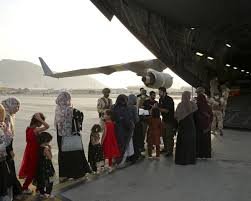 Trump Weighs Sending Afghan Allies to the Congo
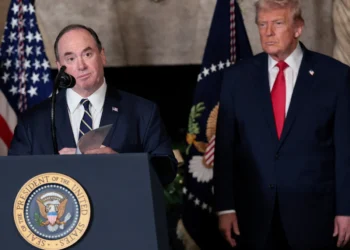 Pentagon Shakes Up Navy Leadership Amid Hormuz Blockade
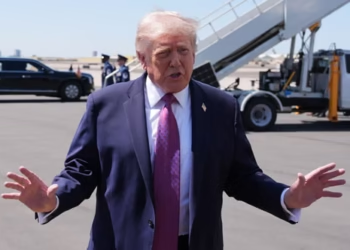 Trump Threatens UK With Big Tariff Over Tech Tax
 Prominent Voices Challenge Palestine Action Ban
 Security Scrutiny After Washington Shooting Incident
 Merz Criticises US Approach in Iran Conflict
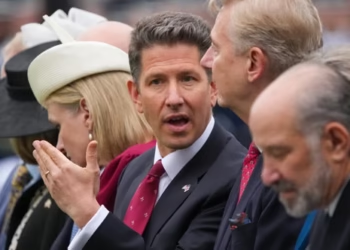 UK Envoy Sparks Controversy Over Special Relationship Claims
 Ukraine Urges UK to Seize Russian Oil Tankers
 US Calls Australia Media Law “Foreign Extortion”
 The Billionaire’s Secretary and the £1m Fraud
 Ukraine strikes Tuapse as oil disaster worsens
 Brewing Tension: Taiwan Baristas Rebrand for World Stage
 Tensions Emerge in Netanyahu-Trump Alliance
 Mission to the World’s Edge: A Heroic Rescue in Tristan
 US and Mexico Face Heatwave as Floods Batter South Africa
 Mexico’s Missing: State Complicity in a Growing Crisis
 French Patient Told Hantavirus Was Just Anxiety
 The Long Way Home: Australia’s High-Stakes Virus Mission
 Putin Signals War End as Russian Momentum Stalls
 Romania’s Judicial Crisis: A System Under Siege
 Lee Lai Makes History with Landmark Stella Prize Victory
 Philippine Senator Flees After Days Under Senate Siege
 Alberta Separatist Bid Blocked by Canadian Court
 Canadian Court Blocks Alberta Independence Referendum Bid
 Big Tobacco Under Fire Over Controversial New Ad Campaign
 Bolsonaro Son Tape Scandal Sparks Massive Brazil Backlash
 Court Upholds Landmark Win for Transgender Rights
 Tragedy in the Maldives: Inside the Deep Sea Rescue
 Liberal Senator Criticises Immigration Rhetoric
 Senate Moves to Restrict Trump’s War Powers on Iran
 ICC Arrest Warrant Threat Sparks West Bank Retaliation
 Uefa Transforms Men’s Major Tournament Qualification
 Taliban Codifies Strict New Marriage and Divorce Legislation
 Tony Abbott Returns as New Liberal Party President
 Tiger Escape Shatters Peace in Germany
 Tulsi Gabbard exits after turbulent intelligence tenure
 Discontent grows around Putin amid war strain
 Trump Diplomacy Faces Hurdles from Tehran to Tbilisi
 Teaching Machines Right From Wrong in the Digital Age
 Trump Faces Legal Blow Over Global Tariffs
 Washington Brokerage Sparking Hope Amid Regional Firestorms