Published: 27 April 2026. The English Chronicle Desk. The English Chronicle Online.
British business leaders are now calling for the government to urgently develop a powerful new economic defensive mechanism. The British Chambers of Commerce has formally urged ministers to construct an EU-style trade bazooka to protect national interests against aggressive tariff threats. As transatlantic tensions rise, the lobby group argued that the country’s current inadequate economic security is putting vital growth and jobs at risk. Representing thousands of diverse firms across the nation, the group urged Prime Minister Keir Starmer to take the lead in protecting Britain from future external crises. The report highlighted what it described as years of neglect by successive governments regarding the nation’s broader economic resilience and stability. Geopolitical tensions, the lingering impact of Brexit, the global pandemic, and ongoing wars in Ukraine and the Middle East mean that businesses are currently navigating an increasingly fraught backdrop for international trade.
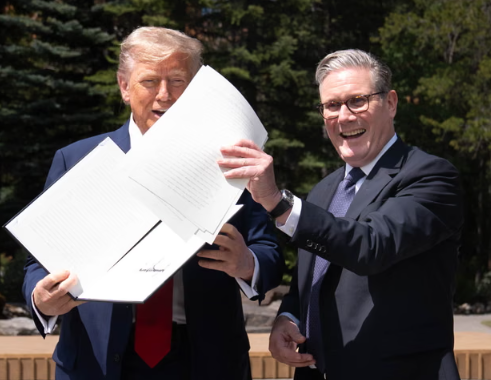
The situation escalated significantly last week when the United States President threatened to impose a heavy tariff on the United Kingdom unless it drops its digital services tax. This specific tax currently impacts large American technology companies operating within the British market and raising significant revenue for the national treasury. In a comprehensive new report setting out recommendations to help stop the decline of British competitiveness in an increasingly unstable world, the chamber said that urgent steps were required to protect companies from punitive policies implemented by other countries. Among its top priorities was for the United Kingdom to mimic the European Union by creating its own version of a trade bazooka to deter other countries from making threats designed to bully Britain into changing its established economic policies.
Brussels’ own trade bazooka, more formally known as its anti-coercion instrument, enables that bloc to impose sweeping restrictions on goods and services trade with an aggressor state. These aggressive measures can involve limiting access to public procurement programmes and financial markets, as well as imposing strict restrictions on property rights and foreign direct investment. The chamber also urged ministers to take a more robust approach to the EU’s Made in Europe agenda to ensure that domestic businesses had a secure role in wider European supply chains. It also called for British firms to play a much larger role in domestic defence procurement, and for the Prime Minister to create a new dedicated economic security cabinet committee to oversee these essential developments.
 The British Chambers of Commerce stated in its report that the government must add a trade bazooka to its arsenal of responses to threats of economic coercion. New legislation should include specific powers for ministers to use a range of levers, from duties to market access, to enhanced investment scrutiny and subsidy control. But there must also be appropriate safeguards included to protect the United Kingdom’s various commercial interests throughout this complex process. Shevaun Haviland, the director general of the chamber, said it was clear that the government should prepare to take a more muscular response amid the increasingly fraught global landscape. She emphasized that the United Kingdom’s inadequate economic security has become a significant drag on growth, competitiveness, and national strength, yet it is still not given the focus and urgency it demands.
The United Kingdom’s minister for trade, Chris Bryant, responded by saying that this report correctly identifies that free and fair trade is essential to the prosperity of the nation, and the government wants to ensure open markets are not distorted by those who try to use trade as a weapon. He noted that the administration has already taken action, from identifying eight key sectors as part of a modern industrial strategy to strengthening supply chains to reduce vulnerability to market shocks, and seeking views if the nation needs additional, last-resort tools to defend against acts of economic pressure if diplomacy is not enough. He added that he was in Europe recently to lobby on behalf of businesses as part of the government’s own campaign, and he looks forward to continuing to work with the chamber and stakeholders to keep the country open and secure.
Britain hitting United States service-sector firms with retaliatory measures would carry substantial risks given the massive scale of American economic involvement in the United Kingdom. The United States remains Britain’s largest single trading partner, accounting for about a fifth of the nation’s total global trade, and American companies also have more than six hundred billion pounds invested across the country. The digital services tax has remained a point of contention for several years, generating nearly one billion pounds annually, and the government has previously stated it will remain in place until a global agreement on international digital taxation is finalized. The current threat from the White House highlights the delicate balance between maintaining sovereign economic policy and preserving a crucial and historically deep alliance with the world’s largest economy. As the government considers its next steps, the debate over how best to shield the domestic economy from international coercion is expected to intensify across all levels of political and business discourse. Providing businesses with a clear sense of stability and protection against sudden, punitive tariffs is likely to remain a central theme in ongoing policy discussions between Downing Street and the business community as they navigate these uncertain times.
Related News:
 Ukraine war briefing: Zelenskyy offers help to Saudi Crown prince on combatting Iranian drones
 Trump Starts $166bn Tariff Refund Process
 Fear and Betrayal: The Chilling Case of Kouri Richins
 Capitol Attack Anniversary Sparks Deep Political Divide
 British skier killed in La Plagne avalanche tragedy
 Trump targets Iran trade with 25% tariff warning
 China embassy London approval expected this week
 UK Presses On With Chagos Handover Despite Trump Criticism
 Shinzo Abe’s killer receives life sentence in Japan
 Thousands Protest ICE Operations in Nationwide US Day of Action
 Epstein Files Reveal Trump Officials’ Emails with Financier
 Thousands Protest ICE in New York Against Trump Deportation Campaign
 US-Cuba Negotiations Shift as Oil Blockade Looms
 Sydney Protest Pepper Spray Clash During Herzog Visit
 UK Experts Raise Alarm Over Machinery Export to Armenian Firm
 California Democrats Vow Trump Reckoning
 UK suspends study visas for four nations to curb asylum
 Jordanian Arrested in Philippines Over Bondi Beach Terror Links
 Thousands Protest Iran Strikes Outside US Embassy London
 US Bombers Arrive at RAF Base Amid Rising Iran Tensions
 UK Prepares Aircraft Carrier for Middle East Crisis
 HMS Dragon to Head to Cyprus Amid Rising Tensions
 Starmer Praised for Stance on Trump and Iran Conflict
 Yvette Cooper: UK Must Follow Principles, Not US Pressure
 Inside the Deceptive Machine: A Former Producer Speaks Out
 Trump Facing Backlash Over Firing of Cabinet Women
 Trump Mocks Starmer and UK Carriers in White House Speech
 Can King Charles Calm Trump on Key US Visit?
 Gaza Child Arrives in UK for Life-Changing Care
 Melania Trump Denies Ties to Epstein and Ghislaine Maxwell
 Congresswoman Condemns Trump Over Iran Conflict
 Trump Signals Hope for New Iran Talks as Ceasefire Fades
 Trump’s Presidency: A House of Cards Collapsing?
 GOP Senator Criticizes Trump’s Feud With Pope Leo XIV
 Prominent Voices Challenge Palestine Action Ban
 Charles Faces Trump Test in High-Stakes US Visit
 UK Stands Firm on Falklands Amid US Rift
 Investigation Into Anti-Trump Motives After Gala Shooting
 BP Profits Surge Amidst Middle East Conflict Crisis
 Aukus Submarine Plan Faces Critical Failures
 USS Gerald R Ford Ends Record Naval Deployment
 Indiana Republicans Defy Trump in Key Vote Test
 Tensions Emerge in Netanyahu-Trump Alliance
 World Cup Ticket Price Surge Leaves Many National Teams Stunned
 Trump in Beijing: The Strongman Fantasy Made Flesh
 Tragedy in the Maldives: Inside the Deep Sea Rescue
 US Ebola Case Sparks Urgent Global Screening Measures
 Trump Tightens Grip on GOP with Primary Victory
 Uefa Transforms Men’s Major Tournament Qualification
 Democrats release 2024 election report amid fierce backlash
 Tulsi Gabbard exits after turbulent intelligence tenure
 UK Urged to Build EU Rejoin Consensus, Says Miliband
 Former ICC prosecutor condemns US sanctions
 Trump Weighs Retreat from Controversial $1.8bn Slush Fund
 Teaching Machines Right From Wrong in the Digital Age
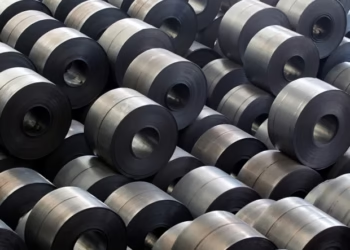 Steel Tensions Rise Between United Kingdom and European Union
 One Year On: Air India Crash Survivor Demands Answers
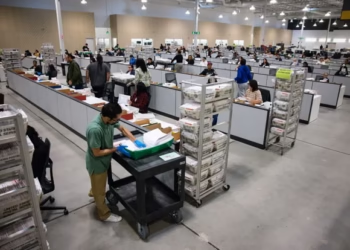 Trump Allies Funded Hidden Network to Discredit US Vote
 UFC at the White House: Glory Marred by Bitter Smears
 The Dreamers Losing Jobs Under Trump’s Red Tape
 Tragedy in Pakistan Sparks Fury
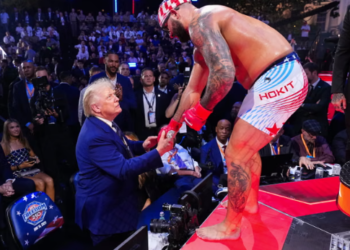 Trump Urged to Condemn UFC Fighter Over Obama Slurs
 Russian Tanker Captain Remanded in UK Court After Channel Seizure
 Controversial London Property Show Sparks Legal Fury
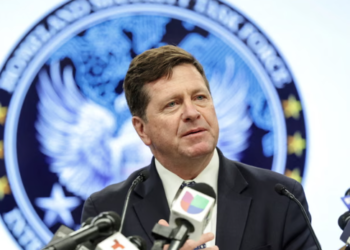 Trump Halts Senate Hearing for Intel Pick Jay Clayton
 Kremlin-Backed Saboteurs Target UK Capital and State Democracy
 The Obama Center: Hope and Anxiety on Chicago’s South Side
 US Military Pacific Boat Strike Kills Three People
 What Burnham in Number 10 Means for the Future of Britain
 AI Lawyer Triumphs in Landmark English Court Victory
 Scouts Introduce Badges For AI And Digital Skills
 Morocco Beat Dutch in Wild World Cup Penalty Drama
 FBI Chief Faces Backlash Over Premature Social Media Posts
 The Last Stand of English Cricket’s Greatest Partners
 Trump’s Mount Rushmore Speech: A Divisive Anniversary
 UK Charity Funds Illegal Hebron Settlement Expansion
 US Airman Avoids British Court in Indecent Exposure Case
 Heartbreak After Surrogacy Sperm Mix-Up
 House Democrats Divided Over Israel Military Funding Bid
 Houthis Strike Saudi Arabia as Middle East Tensions Rise