Published: 05 August 2026 | The English Chronicle Desk | The English Chronicle Online
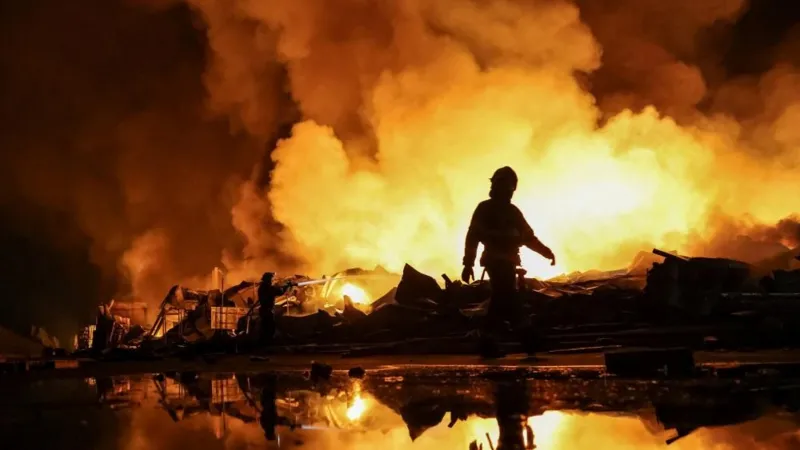
At least 14 people have been killed and dozens more injured after a Russian ballistic missile strike hit Ukraine’s capital Kyiv, according to Ukrainian officials, in one of the deadliest attacks on the city in recent months.
The overnight assault caused widespread damage to residential areas, emergency services said, with rescue teams searching through collapsed buildings as they worked to locate survivors trapped beneath rubble.
The strike has intensified fears that the war between Russia and Ukraine is entering another dangerous phase, with Kyiv continuing to face repeated attacks despite ongoing diplomatic efforts aimed at finding a possible path towards ending the conflict.
Ukrainian authorities described the attack as a deliberate assault on civilian areas, while Russia has continued to claim that its military operations are targeting strategic locations connected to Ukraine’s defence capabilities.
The missile strike struck Kyiv during the night, when many residents were asleep.

Emergency workers were immediately deployed to affected areas as explosions damaged buildings, shattered windows and caused fires.
Local officials said residential neighbourhoods were among the areas affected, increasing concerns about civilian casualties.
The death toll rose as rescue workers continued searching damaged structures.
Authorities warned that the number of casualties could increase as emergency teams completed their operations.
Kyiv Mayor Vitali Klitschko said the attack had caused significant destruction and urged residents to follow safety instructions during future air raid warnings.
Ukrainian officials said Russia used ballistic missiles during the attack, weapons that travel at extremely high speeds and can be difficult to intercept.
Ballistic missiles follow a high-arcing trajectory before striking their targets, leaving defenders with limited time to respond.
Ukraine has repeatedly requested additional air defence systems from its international partners, arguing that stronger protection is needed to defend cities from missile and drone attacks.
Western countries have provided Ukraine with advanced defence equipment, including systems designed to intercept incoming missiles, but Ukrainian officials say the scale of Russian attacks continues to put pressure on available resources.
Following the explosions, rescue teams worked through the night to search damaged buildings.
Firefighters, police officers and emergency medical personnel were involved in operations to clear debris and provide medical assistance.
Some residents were evacuated from damaged properties, while others gathered outside waiting for information about relatives and friends.
Officials said emergency workers faced difficult conditions as they attempted to reach areas affected by collapsed structures.
Search operations can take hours or even days after major strikes because rescuers must carefully remove rubble while trying to avoid further collapses.
The latest attack highlights the continued danger faced by civilians living in Ukrainian cities more than four years after Russia launched its full-scale invasion.
Although front-line fighting remains concentrated in eastern and southern regions, major cities including Kyiv continue to experience missile and drone attacks.
Residential buildings, energy infrastructure and public facilities have frequently been targeted during the conflict.
The attacks have disrupted daily life for millions of Ukrainians, with residents regularly forced to seek shelter during air raid alerts.
Many families have experienced repeated displacement, damage to homes and the loss of loved ones.
The strike prompted condemnation from Ukrainian officials and international partners.
Ukraine’s government called for stronger action from allies, arguing that continued attacks demonstrate the need for increased pressure on Moscow.
European and US officials have previously criticised Russian missile strikes against civilian areas and called for accountability for alleged violations of international law.
Russia has rejected accusations that it intentionally targets civilians, saying its military operations focus on Ukrainian military-related sites.
However, Ukrainian authorities and international organisations have repeatedly documented civilian deaths caused by missile and drone attacks.
The attack comes as diplomatic efforts continue to explore possible ways to end the war.
Several countries have attempted to encourage negotiations between Moscow and Kyiv, but major disagreements remain over territory, security guarantees and political conditions.
Previous discussions have failed to produce a lasting ceasefire.
The continued exchange of missile strikes has raised doubts about whether meaningful progress can be achieved without stronger diplomatic pressure.
Ukrainian officials have argued that Russia’s attacks demonstrate the need for continued international support.
Ukraine’s ability to defend its cities has become a central issue in the conflict.
Russian forces have launched large numbers of missiles and drones against Ukrainian targets, forcing Kyiv to rely heavily on Western-supplied defence systems.
Ukraine has repeatedly appealed for additional equipment, particularly systems capable of intercepting ballistic missiles.
Military analysts say air defence remains one of the most important factors in protecting civilians and critical infrastructure.
However, maintaining sufficient supplies remains a challenge because many defence systems require expensive missiles that take time to produce.
Kyiv remains the political and symbolic centre of Ukraine.
Although Russian forces failed to capture the capital at the beginning of the invasion, the city has remained a key target for long-range attacks.
The government, military leadership and international diplomatic missions are based in Kyiv, making the city strategically significant.
Attacks on the capital also carry psychological importance, as Russia seeks to demonstrate its ability to strike deep inside Ukrainian territory.
The latest deaths add to the growing civilian toll of the war.
Behind official casualty numbers are thousands of families affected by the conflict, including people who have lost homes, relatives and livelihoods.
Humanitarian organisations have repeatedly warned that civilians continue to bear the greatest burden of the fighting.
Medical workers, emergency responders and volunteers remain under constant pressure as they respond to repeated attacks.
Officials have warned that further attacks could occur as the conflict continues.
Both sides have expanded their use of long-range weapons, increasing the risk for civilians far from the battlefield.

Ukraine has strengthened cooperation with allies to improve its defence capabilities, while Russia continues producing and deploying missiles and drones.
Analysts say the ability to protect civilian populations will remain a major challenge as the war enters another phase.
The Russian ballistic missile strike on Kyiv, which killed at least 14 people, has once again highlighted the devastating human cost of the war in Ukraine.
As rescue teams continue their work and officials assess the full damage, the attack has renewed calls for stronger international efforts to protect civilians and find a diplomatic solution.
With missile exchanges continuing and negotiations still uncertain, millions of Ukrainians remain facing the daily reality of a conflict that shows no immediate sign of ending.
Related News:
 Trump Says US Will Act on Greenland ‘Whether They Like It or Not’
 Trump Receives Machado’s Nobel Medal in White House Meeting
 Thousands Protest ICE Operations in Nationwide US Day of Action
 Epstein Files Reveal Trump Officials’ Emails with Financier
 Thousands Protest ICE in New York Against Trump Deportation Campaign
 US Must Be Prudent When Supplying Arms to Taiwan, Xi Tells Trump
 Fears of New Arms Race as US-Russia Nuclear Weapons Treaty Expires
 Trump’s Iran Endgame Unclear After Mixed Messaging on War Aims
 Trump Seeks to Delay Meeting With Xi
 Trump orders US troop pullout from Germany
 Indiana Republicans Defy Trump in Key Vote Test
 Tensions Emerge in Netanyahu-Trump Alliance
 Former ICC prosecutor condemns US sanctions
 US Launches New Strikes as Iran Says Civilian Infrastructure Hit
 Houthis Strike Saudi Arabia as Middle East Tensions Rise
 Russia losses Ukraine war peace talks intensify amid rising deaths
 Trump Escalates Minnesota Immigration Surge Amid Rising Tensions
 Trump Threatens Strong Action If Iran Executes Protesters
 Machado Trump medal gesture reshapes Venezuela power struggle
 US Considers Asylum for British Jews Amid Rising Antisemitism
 EU Says US Ties Have Suffered ‘Big Blow’ After Greenland Crisis
 Trump Praises ‘Terrific’ Petro After White House Talks
 US Military Says Two Killed in Strike on Alleged Drug Boat in Eastern Pacific
 Venezuela’s Opposition Says Party Leader Kidnapped Hours After Being Freed
 ‘He Did It for Us’: US Soldier Recalls Jesse Jackson’s Efforts to Free Him and Two Other POWs
 Iran Says ‘Guiding Principles’ Agreed With US at Nuclear Talks
 Stephen Colbert Says CBS Spiked Interview With Democrat Over FCC Fears
 US Urges Iran to Make Deal as Military Presence Rises
 UK Has Not Given US Permission to Use RAF Bases for Iran Strikes
 US ‘Suitcase Murderer’ Deported From Bali After 11 Years in Jail
 American Citizen Killed in Cuba Boat Shooting, U.S. Officials Say
 Hopes and Fears as US Iranians Take to Streets After Toppling of Supreme Leader
 Iran, the US, and a World Cup That Starts in Three Months
 Trump Faces Questions Over Iran Conflict Plan
 UK Will Allow US to Use Bases to Strike Iranian Missile Sites, PM Says
 Israel Launches Fresh Strikes on Tehran & Beirut; US Warns “Hardest Hits” Ahead
 US Senate Backs Trump War Powers Amid Iran Missile Barrage
 US Senate Vote Fails to Rein in Trump War Powers on Iran
 UK Prepares Aircraft Carrier for Middle East Crisis
 Pete Hegseth Iran War Remarks Spark Alarm
 Iran War Puts Trump at Political Risk Amid Rising Prices
 Iran Rejects Ceasefire, Warns Trump With Chilling Message
 Yvette Cooper: UK Must Follow Principles, Not US Pressure
 Trump’s Confidence Undimmed — But Every Iran Option Carries Risk
 Wary Allies Signal No Easy Path in Iran Crisis
 Chain of Fire: US Bunker Busters Strike Major Iranian Ammo Depot in Isfahan
 ‘Targeting the Truth’: US Journalist Shelly Kittleson Abducted in Central Baghdad
 ‘The Warthog’s Stopover’: American Tank Busters Land at Lakenheath En Route to the Gulf
 Michigan Battleground: Middle East Crisis Stirs US Senate Race
 The Moral Crisis Looming Within the American Chain of Command
 Trump Signals Hope for New Iran Talks as Ceasefire Fades
 Charles Faces Trump Test in High-Stakes US Visit
 US Calls Australia Media Law “Foreign Extortion”
 USS Gerald R Ford Ends Record Naval Deployment
 US Court Ruling Reshapes Voting Rights Landscape
 US states redraw maps after voting rights ruling
 Giuliani hospitalised in critical condition
 Trump Threatens UN Budget Cuts as US Pushes ‘Trade Over Aid’ Agenda
 US Court Restores Abortion Pill Access Temporarily
 “The Tightrope Walk”: Lula and Trump Meet at White House to ‘Recalibrate’ Fractured Alliance
 US Awaits Iran Reply on New Ceasefire Proposal
 Tulsi Gabbard exits after turbulent intelligence tenure
 Hormuz Talks Near Critical Stage
 Discontent grows around Putin amid war strain
 House Curbs Trump’s War Powers in Rare Rebellion
 Trump-Netanyahu Call Fuels Iran Talk Crisis
 Zelensky Invites Putin to Direct Peace Talks
 Israel Strikes Iran After Missile Attack
 European Allies Set Peace Terms for Ukraine
 Trump’s Iran Legacy Hangs on Tehran Deal
 Trump Helps Clear Balogun for Belgium World Cup Clash
 Why Some African Nations Are Rejecting Trump Aid
 Trump’s Major Recruitment Drive Targets Border Patrol Growth
 Trump’s New Vision for 250 Years of US Expansion
 Trump’s Hormuz U-Turn Raises Doubts Over Iran Strategy
 US Launches New Strikes on Iran as Trump Issues Stark Warning to Tehran
 ICE Arrests Human Rights Lawyer Who Fled Chinese Crackdown
 US Unveils Fresh Tariffs on Global Trading Partners
 Trump Hosts Zelensky and Netanyahu as Ukraine and Iran Conflicts Shape Global Agenda
 Iran Denies Direct US Talks as Oman Continues Diplomatic Mediation