Published: 15 July 2026 | The English Chronicle Desk | The English Chronicle Online
A human rights lawyer who fled China after facing pressure from authorities has been arrested by US immigration officials, raising concerns among advocates who say the case highlights the challenges faced by activists seeking protection abroad.
The arrest of the lawyer, who had previously worked on sensitive legal cases in China, has drawn attention from human rights groups and immigration advocates. They argue that people who escape political persecution should receive proper protection and that their cases must be handled carefully.
The incident has renewed debate over the treatment of political activists, asylum seekers and foreign nationals living in the United States.
The lawyer had built a reputation in China for defending individuals involved in politically sensitive cases.
Human rights lawyers in China have often represented people facing accusations linked to freedom of expression, religious rights, government criticism and civil liberties.
However, such work has frequently brought pressure from authorities.

Over the past decade, many Chinese rights lawyers and activists have reported surveillance, intimidation, detention and restrictions on their professional activities.
The lawyer’s decision to leave China came after facing what supporters describe as increasing pressure connected to his legal work.
China has faced international criticism over its treatment of human rights lawyers and civil society activists.
A major crackdown on legal professionals began in 2015, when dozens of lawyers and activists were detained in what became known as the “709 crackdown”.
Authorities said the actions targeted people suspected of threatening national security, while critics argued they were aimed at silencing independent legal voices.
Since then, human rights organisations have continued to report restrictions on lawyers working on politically sensitive cases.
For many activists, leaving China has become the only option to continue their work or protect their families.
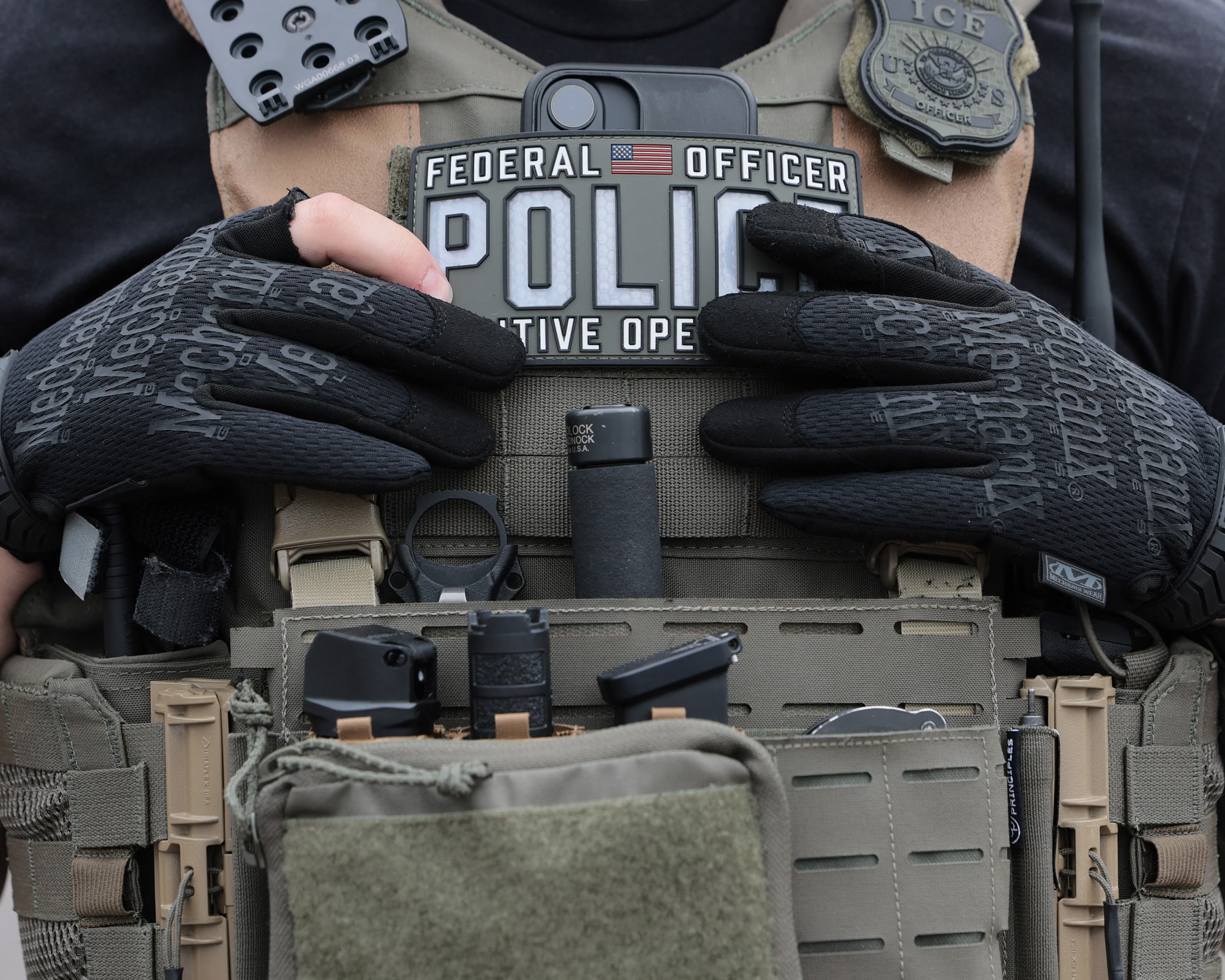
The lawyer was arrested by US Immigration and Customs Enforcement (ICE), the agency responsible for enforcing federal immigration laws.
The circumstances surrounding the arrest have attracted attention because of the lawyer’s background and claims of political persecution.
Immigration officials have stated that enforcement actions are based on legal procedures and individual cases.
However, supporters of the lawyer argue that his history as a human rights defender should be taken into consideration.
They have urged authorities to carefully review his situation and ensure that he is not placed at risk of returning to a country where he fears persecution.
Human rights organisations have expressed concern over the arrest.
They argue that individuals who flee authoritarian governments often face complex legal challenges after arriving in safer countries.
Activists say democratic countries have a responsibility to protect people who have faced persecution for defending fundamental rights.
They have called for transparency in immigration proceedings and a fair assessment of the lawyer’s claims.
The case highlights broader challenges faced by political refugees around the world.
Many activists leave their home countries after experiencing threats, imprisonment or harassment.
When they arrive in another country, they often must navigate complicated immigration systems while trying to rebuild their lives.
Supporters say governments must balance immigration enforcement with humanitarian responsibilities.
They argue that political background and risk of persecution should be carefully considered in such cases.
The arrest comes amid wider debates in the United States over immigration enforcement.
ICE has increased efforts in recent years to identify and remove individuals who officials say do not have legal permission to remain in the country.
Supporters of stricter enforcement argue that immigration laws must be applied consistently.
Critics, however, say aggressive enforcement can sometimes affect vulnerable individuals, including asylum seekers and people fleeing political persecution.
The case involving the Chinese lawyer has become part of this broader national discussion.
China’s human rights record has been the subject of international debate for years.
Governments and rights organisations have raised concerns about restrictions on freedom of speech, press freedom, religious practices and political activism.
Beijing has rejected many of these criticisms, saying its policies are necessary to maintain stability and national security.
Chinese authorities have argued that individuals targeted by law enforcement are not being punished for activism but for violating legal rules.
Human rights advocates say legal protection is especially important for people who have challenged powerful governments.
They argue that lawyers defending civil liberties play a crucial role in protecting vulnerable communities.
Without independent legal professionals, critics say individuals facing government pressure may have limited ability to defend themselves.
The treatment of human rights lawyers has therefore become an important measure of broader respect for legal rights.
The arrest could have implications beyond one individual.
Rights groups say cases involving activists who flee authoritarian governments send a message about how countries treat defenders of democracy and human rights.
They argue that countries offering refuge must ensure that their systems do not unintentionally place vulnerable people in danger.

The case may also influence discussions about how immigration authorities handle individuals with political persecution claims.
The future of the human rights lawyer’s case will depend on ongoing legal proceedings and immigration reviews.
Supporters are expected to continue calling for protection, while authorities will assess the matter under US immigration law.
The situation highlights the difficult balance between enforcing immigration rules and protecting individuals who claim they fled persecution.
For human rights advocates, the case serves as a reminder of the risks faced by activists around the world and the importance of ensuring that those who defend civil liberties are not left without protection.
Related News:
 Trump to Recheck Green Cards from 19 Nations After DC Attack
 Russia losses Ukraine war peace talks intensify amid rising deaths
 Trump Escalates Minnesota Immigration Surge Amid Rising Tensions
 Trump: US Stands Ready to Help Iran Find Freedom Amid Widespread Unrest
 Trump Administration Probe of Fed’s Powell Draws Pushback
 Trump Threatens Strong Action If Iran Executes Protesters
 Trump Receives Machado’s Nobel Medal in White House Meeting
 Greenland Crisis Forces Europe to Draw a Line With Trump
 Iran Cannot Be Bombed Into Democracy, Only Helped There
 Historic Abu Dhabi Talks Bring US, Ukraine and Russia Together
 EU Says US Ties Have Suffered ‘Big Blow’ After Greenland Crisis
 Thousands Protest ICE Operations in Nationwide US Day of Action
 Trump Praises ‘Terrific’ Petro After White House Talks
 Fears of New Arms Race as US-Russia Nuclear Weapons Treaty Expires
 New Nuclear Talks Between US and Iran Begin in Geneva
 ‘He Did It for Us’: US Soldier Recalls Jesse Jackson’s Efforts to Free Him and Two Other POWs
 Stephen Colbert Says CBS Spiked Interview With Democrat Over FCC Fears
 US Urges Iran to Make Deal as Military Presence Rises
 Billionaire Les Wexner Tells US Lawmakers He Was ‘Naive’ and ‘Conned’ by Epstein
 Inside Kyiv’s resolve as conflict nears five‑year mark
 What to Watch for During Trump’s State of the Union Address
 Clinton Testimony Erupts in Fiery Exchange
 American Citizen Killed in Cuba Boat Shooting, U.S. Officials Say
 Hillary Clinton Tells House Panel She ‘Had No Idea’ of Epstein’s Crimes
 Hopes and Fears as US Iranians Take to Streets After Toppling of Supreme Leader
 Iran, the US, and a World Cup That Starts in Three Months
 Britain’s Position and Trump Vows to Press On in Iran Conflict
 Trump Faces Questions Over Iran Conflict Plan
 Trump’s Iran Endgame Unclear After Mixed Messaging on War Aims
 Rubio Responds to Reported Strike on Iranian School
 US Senate Backs Trump War Powers Amid Iran Missile Barrage
 US Senate Vote Fails to Rein in Trump War Powers on Iran
 Trump Removes Kristi Noem From Homeland Security Role
 UK Prepares Aircraft Carrier for Middle East Crisis
 Pete Hegseth Iran War Remarks Spark Alarm
 Iran War Puts Trump at Political Risk Amid Rising Prices
 Iran Rejects Ceasefire, Warns Trump With Chilling Message
 Trump’s Confidence Undimmed — But Every Iran Option Carries Risk
 Fox News Cut In Over Trump King Charles Claim
 Trump Seeks to Delay Meeting With Xi
 Trump’s Harsh Rhetoric on Iran Sparks Global Alarm
 The Academic Chill: Beijing Condemns ‘Hostile’ US Questioning After Researcher’s Death
 Midnight Fire: Israel and Hezbollah Exchange Strikes as Trump Lashes Out at Tehran
 Charles Faces Trump Test in High-Stakes US Visit
 US Court Ruling Reshapes Voting Rights Landscape
 US states redraw maps after voting rights ruling
 Trump orders US troop pullout from Germany
 Trump likens US Navy actions to ‘pirates’
 Trump approval plunges amid Iran war fears
 Giuliani hospitalised in critical condition
 Trump Threatens UN Budget Cuts as US Pushes ‘Trade Over Aid’ Agenda
 Trump warns Iran as Middle East tensions surge again
 US ‘Narco Boat’ Strikes Draw Global Outcry
 US Court Restores Abortion Pill Access Temporarily
 Ohio Primaries Set Stage for Crucial Midterms
 Tensions Emerge in Netanyahu-Trump Alliance
 US Awaits Iran Reply on New Ceasefire Proposal
 Hormuz Talks Near Critical Stage
 Former ICC prosecutor condemns US sanctions
 Gunman Killed After White House Security Shootout
 Trump Claims Iran Peace Deal Near Completion
 House Curbs Trump’s War Powers in Rare Rebellion
 Trump-Netanyahu Call Fuels Iran Talk Crisis
 Zelensky Invites Putin to Direct Peace Talks
 Republicans Defy Trump on Ukraine Aid Bill
 Israel Strikes Iran After Missile Attack
 Trump Presidency Reignites America’s Founding Debate: How Much Presidential Power Is Too Much?
 Trump Helps Clear Balogun for Belgium World Cup Clash
 Why Some African Nations Are Rejecting Trump Aid
 Trump’s Major Recruitment Drive Targets Border Patrol Growth
 Trump’s New Vision for 250 Years of US Expansion
 Israel Angered by Trump Backing Turkey Fighter Deal
 Mystery Grows Over Mitch McConnell’s Health
 Trump Ally Lindsey Graham Dies at 71 After Sudden Illness
 Mitch McConnell Explains Senate Absence After Fall
 Senate Halts Defense Bill Over Iran Clashes
 Trump’s Hormuz U-Turn Raises Doubts Over Iran Strategy
 Trump Warns Iran of Strikes Unless Talks Resume
 China Detains US Scientist Linked to North Korea Nuclear Research
 US Launches New Strikes as Iran Says Civilian Infrastructure Hit