Published: 15 July 2026. The English Chronicle Desk. The English Chronicle Online.
Washington has recently plunged into a bitter political standoff over national security priorities. Senate Democrats successfully blocked the critical advancement of a massive defense spending bill. This dramatic move occurred late on Tuesday afternoon during a highly tense legislative session. The deliberate delay protests President Donald Trump regarding his administration’s renewed hostilities with Iran. The National Defense Authorization Act normally passes with broad bipartisan support every single year. However, recent weeks have featured the absolute fiercest exchange of fire between the nations. This sustained military escalation has heavily amplified frustration among various worried Democratic lawmakers.
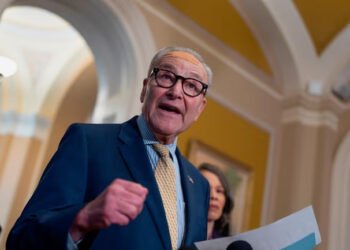
The United States remains deeply entangled in a devastating Middle Eastern regional conflict today. Lawmakers had actually passed a comprehensive war powers resolution just last month in Washington. That crucial legislation was explicitly intended to force an immediate and lasting bilateral ceasefire. The administration appears to have entirely ignored this clear congressional mandate regarding the conflict. Chuck Schumer currently serves as the top Democrat in the United States Senate chamber. He stated that his unified party simply could not support advancing the defense measure. Schumer firmly believes Congress cannot debate routine national security while ignoring an urgent crisis.
He powerfully argued that passing the defense bill would normalize an incredibly dangerous situation. Republicans genuinely want the Senate to approve the defense budget without acknowledging the war. Schumer passionately asserted that Congress cannot safely ignore the most urgent global security crisis. Every single Democratic senator in attendance voted firmly against advancing the crucial defense measure. This unified opposition successfully denied the sixty votes necessary to clear basic procedural hurdles. The legislative barricade represents a significant escalation in domestic political tensions over foreign policy.
International observers are closely watching this unprecedented congressional gridlock with growing alarm and concern. The volatile situation in the Middle East has severe implications for global maritime trade. Trump had recently threatened to impose a hefty financial fee on international shipping vessels. He initially suggested a twenty percent security tax for ships transiting the Strait of Hormuz. This vital international waterway handles a massive portion of the essential world petroleum supplies. Any disruption there sends immediate shockwaves through the interconnected global economy and financial markets. He eventually backed down from this controversial tariff idea early on Tuesday morning.
Despite dropping the transit fee, he vowed to maintain the strict American naval blockade. He promised to sustain the maritime blockade of various important Iranian commercial shipping ports. The president discussed these complex issues during a White House meeting with Iraqi leadership. Ali al-Zaidi serves as the current Iraqi prime minister amidst this ongoing regional instability. Trump told the visiting prime minister that he ultimately opposed imposing the transit fee. However, he maintained that the United States unfairly shoulders global maritime protection responsibilities alone. The president argued it is fundamentally unjust to protect the strait for the world.
This abrupt change in presidential rhetoric did nothing to mollify very angry Democratic critics. Chuck Schumer responded swiftly and quite harshly to the latest White House policy pivot. The Democratic leader claimed that Trump has absolutely no clue regarding coherent Iranian strategy. He boldly described the current administration approach as a direct recipe for utter disaster. Schumer heavily emphasized that the president completely lacked any coherent plan or exit strategy. This remarkably reckless foreign war has now painfully dragged on for one hundred thirty-six days.
Nothing has fundamentally changed since the initial violent outbreak of these bloody regional hostilities. Republicans have grown increasingly incensed at the unexpected partisan blockade of the defense bill. The stalled legislation would authorize over one trillion dollars in essential military defense spending. This massive federal budget perfectly aligns with the specific financial requests made by the president. The currently stalled bill contains crucial pay increases for dedicated American service members globally. It also provides essential funding for advanced unmanned weapons and sophisticated counter-drone defensive technologies.
Military leaders consistently insist these modern systems are absolutely necessary for future global conflicts. They argue that deterring global rivals requires significant investments in advanced technological military warfare. John Thune currently serves as the highly influential Republican majority leader in the Senate. He delivered a rather blistering critique of his political opponents ahead of the procedural vote. Thune angrily accused Democrats of allowing petty obstructionist politics to determine their legislative actions. He claimed this negative behavioral pattern has dominated their legislative agenda for eighteen months.
The Republican leader expressed deep hope that Democrats would reconsider their stubborn partisan stance. He strongly urged them to place support for uniformed personnel above simple political maneuvering. The resulting legislative stalemate leaves vital national defense funding in a very precarious limbo. Observers in the United Kingdom are closely analyzing these highly chaotic Washington political developments. British commercial shipping interests rely heavily on the completely safe passage of international fleets. A prolonged maritime crisis in the Strait of Hormuz directly threatens critical European energy security.
Furthermore, the alarming absence of a stable American defense budget creates widespread global uncertainty. Traditional allies generally depend on consistent American military presence to deter aggressive regional actors. The current political standoff highlights a profound and rapidly growing ideological division within Washington. The legislative branch is aggressively attempting to claw back constitutional war-making powers and authority. The executive branch strongly resists any perceived congressional encroachment upon presidential military command decisions. This constitutional friction adds another wonderfully complex layer to the ongoing international diplomatic crisis.
International diplomats secretly fear the domestic political fight might prolong the Middle Eastern conflict. The complete lack of basic bipartisan consensus genuinely weakens the diplomatic negotiating position globally. Foreign adversaries could potentially exploit this highly visible disunity within the United States government. The Iranian government is undoubtedly monitoring this unprecedented congressional gridlock with extremely intense interest. Tehran might incorrectly perceive the delayed defense authorization as a distinct sign of American weakness. This unfortunate perception could potentially embolden further aggressive actions across the highly volatile Middle East.
As the legislative stalemate continues, political pressure heavily mounts on both major American factions. Democrats must vigorously defend their controversial decision to essentially block troop pay and modernization. They strongly maintain that stopping a perpetual and aimless foreign war remains their highest priority. Republicans must adequately address growing public anxieties regarding an open-ended military commitment in the Gulf. American voters are increasingly weary of continuous and remarkably expensive overseas military entanglements altogether. The approaching election cycle heavily influences the complex political calculations driving this congressional standoff.
The broader global community urgently requires a rapid diplomatic resolution to this dangerous situation. A sudden diplomatic breakthrough in the Middle East seems incredibly unlikely at this particular moment. The blocked national defense bill serves as a dramatic symptom of much deeper systemic issues. Lawmakers must eventually find a reasonable legislative compromise to properly fund their essential military obligations. The entire world watches anxiously as Washington painfully wrestles with its profound internal political demons. The coming weeks will clearly determine the ultimate trajectory of this truly unprecedented political standoff.
Related News:
 Putin Intensifies Territorial Demands Before US Talks
 Trump to Recheck Green Cards from 19 Nations After DC Attack
 Trump Escalates Minnesota Immigration Surge Amid Rising Tensions
 Greenland Faces Pivotal Summit Over Arctic Power Struggle
 Trump Threatens Strong Action If Iran Executes Protesters
 Trump Receives Machado’s Nobel Medal in White House Meeting
 EU Says US Ties Have Suffered ‘Big Blow’ After Greenland Crisis
 Thousands Protest ICE Operations in Nationwide US Day of Action
 Epstein Files Reveal Trump Officials’ Emails with Financier
 Thousands Protest ICE in New York Against Trump Deportation Campaign
 Trump Praises ‘Terrific’ Petro After White House Talks
 Clinton Testimony Erupts in Fiery Exchange
 Trump Faces Questions Over Iran Conflict Plan
 UK Prepares Aircraft Carrier for Middle East Crisis
 Pete Hegseth Iran War Remarks Spark Alarm
 Trump’s Harsh Rhetoric on Iran Sparks Global Alarm
 Trump Faces Crisis as Iran Reopens Hormuz Tensions
 Charles Faces Trump Test in High-Stakes US Visit
 UK Stands Firm on Falklands Amid US Rift
 US Court Ruling Reshapes Voting Rights Landscape
 US states redraw maps after voting rights ruling
 Trump orders US troop pullout from Germany
 Judge halts deportation of Yemeni refugees in US
 Trump likens US Navy actions to ‘pirates’
 Trump approval plunges amid Iran war fears
 Giuliani hospitalised in critical condition
 Ohio’s Battle for Trust: Democrats Vying to Flip the Buckeye State
 Trump Threatens UN Budget Cuts as US Pushes ‘Trade Over Aid’ Agenda
 Trump warns Iran as Middle East tensions surge again
 US ‘Narco Boat’ Strikes Draw Global Outcry
 Indiana Republicans Defy Trump in Key Vote Test
 US Court Restores Abortion Pill Access Temporarily
 Ohio Primaries Set Stage for Crucial Midterms
 Afghan Families Left in Limbo Face Risk of Deportation
 Tensions Emerge in Netanyahu-Trump Alliance
 US Awaits Iran Reply on New Ceasefire Proposal
 Hormuz Talks Near Critical Stage
 Trump’s Revenge Drive Deepens GOP Divide
 Former ICC prosecutor condemns US sanctions
 Gunman Killed After White House Security Shootout
 Trump Claims Iran Peace Deal Near Completion
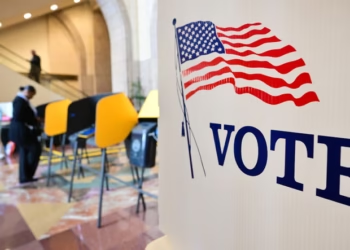 US Midterm Primaries: Democrats Target Key Republican Seats
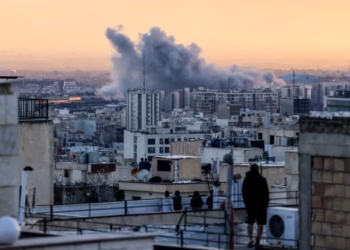 House Curbs Trump’s War Powers in Rare Rebellion
 Mystery Grows Over Mitch McConnell’s Health
 Trump Jokes, Jabs and Press Tensions at WHCA Dinner
 Houthis Strike Saudi Arabia as Middle East Tensions Rise
 Is America Ready for an AOC Presidential Run?
 Trump dismisses concerns over 250-day carrier deployment
 BBC to Apologise Over Edited Trump Speech Amid Backlash
 Britain deploys RAF specialists to assist Belgium with drone threats
 Greene Pushes Epstein Files Amid Trump Fallout
 December Run-Off in Chile as Election Produces No Winner
 Shadow Fleet at Sea: Europe’s Battle Against Illicit Oil Shipping
 Georgians Defy Government Crackdown After Year of Protests
 Trump press secretary attacks reporter over ICE question
 Greenland Crisis Forces Europe to Draw a Line With Trump
 Trump Fed bid heads to Supreme Court
 Pentagon Signals Reduced Role in Deterring North Korea
 Partial US Government Shutdown Hits Homeland Security Funding
 Sinema payment row deepens after $9,000 transfer claim
 UK and US Drop in Global Corruption Index Rankings
 Nurses’ families fear breakup under UK immigration crackdown
 Canberra Poster Seizure Sparks Free Speech Row
 Evo Morales Returns After Mysterious Absence
 Jacinda Ardern Moves To Australia Following Her US Fellowships
 Jacinda Ardern Move Sparks Kiwi Reflection
 Nick Greiner Warns Over Election Review Fallout
 Adelaide University Faces Backlash Over Event Cancellation
 Injured Mojtaba Khamenei Elevated as Iran Leader
 Gordon Brown urges court for crimes against children
 Pakistan Targets Militant Hideouts in Afghanistan
 Air Canada CEO Faces Outcry Over Recent Language Misstep
 Relationship with Trump may be beyond repair, Starmer warned
 Trump Signals Hope for New Iran Talks as Ceasefire Fades
 Trump Brokers Landmark Lebanon Ceasefire Amid Regional Hopes
 Investigation Into Anti-Trump Motives After Gala Shooting
 Trump Announces 3-Day Russia–Ukraine Ceasefire Deal
 Fear and Betrayal: The Chilling Case of Kouri Richins
 Trump Sends 5,000 More US Troops to Poland
 AOC Backs El-Sayed in Tight Michigan Senate Primary